
Key takeaways
- Light oak, walnut, off-white, and matte black can all look good beside a gray sofa, but they create very different rooms. The question what color tv stand with gray couch is best answered by checking whether your sofa reads warm…
Light oak, walnut, off-white, and matte black can all look good beside a gray sofa, but they create very different rooms. The question what color tv stand with gray couch is best answered by checking whether your sofa reads warm or cool, noting the floor finish, and deciding whether the cabinet should blend in or stand out.
As an Amazon Associate we earn from qualifying purchases.
By KK Home Furnishings Editorial Team
Match the TV Stand Color to the Room, Not Just the Couch
A gray couch is a useful neutral anchor, not a command to buy gray furniture. Color choice becomes easier when you compare the sofa fabric against a white card, the floor and the wall in the same light. Start with undertones, then decide the cabinet’s visual weight and finish before comparing specific pieces.
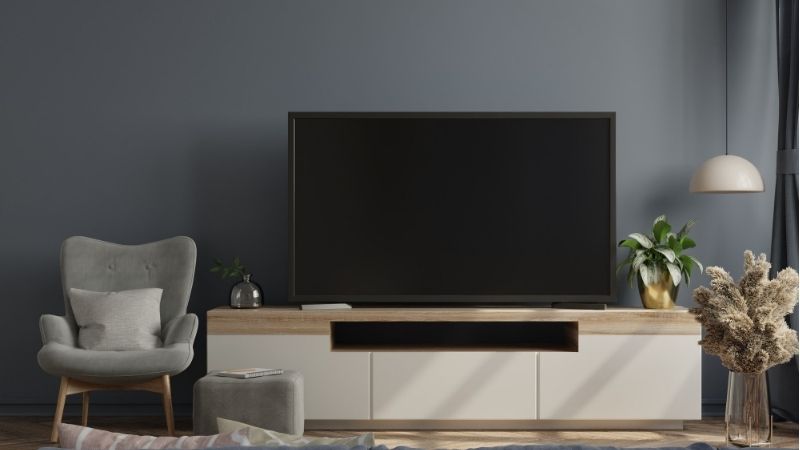
Read Whether the Sofa Is Warm, Cool, or Truly Neutral
Gray upholstery may lean blue, green, beige or brown. Put a plain white paper sample against an inconspicuous sofa area and compare the fabric with your rug and walls. If the sofa looks slightly beige beside white, consider creamy paint or warm wood before choosing a crisp, icy-white stand.
Benjamin Moore describes greige as a warmer beige-gray and cool grays as more blue- or green-leaning; it also advises testing color in the room’s lighting [Benjamin Moore, accessed October 2026]. This principle is useful for upholstery too, but no paint swatch can establish the exact color of a woven sofa.
Check the Flooring, Walls, and Larger Wood Pieces
The stand is another large surface in a room that already includes flooring, trim, tables and often a broad rug. Compare those finishes first. A honey-colored floor may welcome a warm oak cabinet, while weathered gray flooring can look more coherent with bleached oak, off-white or a deliberately contrasting black.
Sherwin-Williams recommends studying undertones when pairing flooring, stain and finishes, since lighting changes how wood appears [Sherwin-Williams, accessed October 2026]. Matching every item to one identical wood stain is unnecessary; a similar warm or cool direction is often a simpler, more forgiving target.
Choose Contrast and Sheen Before a Specific Shade
A black stand creates a clear edge against pale upholstery, while a cream cabinet recedes near light walls. Neither effect is automatically better. Decide whether the television wall needs an anchor or should feel quieter, then check the stand’s dimensions, storage and television rating independently of the finish.
Gloss changes the visual impression as much as color: reflective lacquer can mirror windows and lamps, while a low-sheen front usually looks softer during TV viewing. Put finish samples at cabinet height, not only beside the cushion, and observe them from your normal seat in both afternoon and evening light.
| Room and sofa | Stand color | Why it can work | Watch out for |
|---|---|---|---|
| Light gray sofa, bright walls | Matte black | Crisp contrast without matching the couch | Can look heavy in a narrow, dark space |
| Warm gray or greige sofa | Natural oak | Echoes beige and earthy undertones | Yellow-orange stain may conflict with cool floors |
| Cool blue-gray sofa | Soft white | Calm, light media wall | Cream-heavy paint may read mismatched |
| Charcoal sofa, compact room | Light oak | Lifts the wall without stark white | Very pale wood can look washed out under warm lamps |
| Mid-gray sofa, warm hardwood | Medium walnut | Layered warmth and depth | Dark floors plus dark cabinetry may compress the room |
| Neutral gray sofa, simple decor | Muted sage or deep navy | Controlled color accent | Strong saturation may dominate nearby decor |
Six Color Pairings for Different Gray-Sofa Rooms
These are room-specific color decisions, not six products ranked as if a single finish could win everywhere. Choose the situation that most resembles your upholstery, flooring and daylight. Treat each recommendation as a starting palette, then bring a real cabinet finish sample into the room before ordering.
Light Gray Sofa in a Bright Room: Try Matte Black
A pale gray couch and warm white walls can make a living room feel almost monochrome. A matte black TV stand gives the screen and storage a deliberate base without asking the rug or throw pillows to provide all the definition. Repeat black sparingly in a lamp stem or picture frame to connect the pieces.
The pairing works especially well when the stand has a simple, low profile rather than a tall block of dark doors. Black cabinets are visually stronger than open light shelves, so place a sample or dark cloth near the wall to see whether the media zone becomes too dominant from the main seating position.
Check finish maintenance before buying: dark flat fronts can show pale dust, while high-gloss black can reflect lights and television movement. A textured or low-sheen surface may be easier to live with, although its cleaning rules depend on the exact material and manufacturer. Do not trade needed ventilation for cleaner lines.
Warm Gray or Greige Couch: Pair With Natural Oak
When gray upholstery reads beige in morning light, natural-looking oak is an easy partner. The wood brings warmth without demanding a new color palette; a cream throw and earthy rug can connect the TV stand to the sofa. Prefer visible, moderate grain if the rest of the room is quiet rather than highly patterned.
Not every cabinet labeled oak shares one undertone. Some veneers look golden, others pale or pinkish, and laminates may copy wood only in print. Compare the actual finish beside a cushion and the floor. If the floor is extremely orange, a restrained neutral oak may bridge the sofa more comfortably than another intense yellow wood.
This is a color-coordination choice, not a guarantee about material quality. The appearance of solid wood, veneer and foil finishes varies by construction and light exposure; durability depends on the particular product. Prioritize approved TV load, stable assembly and room for devices, then select the grain you prefer.
Cool Blue-Gray Sofa: Choose Soft White or Cool Off-White
A blue-leaning gray sofa can sit comfortably with a soft white media stand, especially when the walls, stone or floor also read cool. A slightly gray-white finish keeps the palette coherent while letting the couch remain the main upholstered feature. The result can feel understated without the cabinet disappearing entirely.
Beware the difference between crisp white and yellow cream. A creamy white door can appear unexpectedly warm next to a steel-blue sofa and cool gray rug; that contrast might be attractive, but it should look intentional. Test the samples in your room rather than trusting a retailer’s studio photo or an online color name.
White finishes are not maintenance-free. On a textured door, dust may settle into grooves; bright gloss can reflect a window or ceiling fixture. Look at the cabinet face from the TV seat under the room’s usual lights and confirm its finish can be cleaned according to the manufacturer’s instructions.
Charcoal Couch in a Small Room: Lighten With Pale Oak
A charcoal sofa already contributes a sizable dark shape. A pale oak TV stand can lift the opposite side of a small room without requiring stark white furniture. Natural grain provides gentle variation, and a light rug between the sofa and stand can prevent the two dark and light elements from looking disconnected.
A very bleached wood tone may seem gray in cool daylight but much warmer under indoor bulbs. Examine the sample when you actually watch television. If the stand sits against a bright white wall, a mid-light oak can provide enough contrast to keep the cabinet readable without adding another dark rectangle.
The priority is balancing visual mass, not proving that any finish physically enlarges a room. Open legs, a lower profile and fewer exposed accessories can make a cabinet feel lighter regardless of its color. Keep the television safely supported by furniture designed for it; color has no bearing on load rating.
Mid-Gray Couch on Warm Hardwood: Consider Walnut
Medium or dark walnut can work beautifully when a gray sofa sits on warm hardwood. The cabinet adds richness and relates to brown or amber floor notes without copying the floor exactly. This is most convincing when the TV stand shares the room’s general undertone but has enough contrast to remain distinct.
If both the floor and stand are dark, choose another light surface to keep the room from feeling weighted down: an area rug, the wall, or a light-toned occasional chair. A reddish walnut stain may clash with a very yellow oak floor, so compare actual wood samples together before deciding which variation belongs in the room.
Wood finishes change appearance in daylight and artificial light [Sherwin-Williams, accessed October 2026]. Sample boards are therefore more useful than guessing from color names. Also check whether the surface is real veneer, stained solid wood or laminate, because care instructions and repair options can differ widely.
Neutral Gray Couch and Simple Decor: Add Sage or Navy
A fairly neutral gray couch leaves room for one restrained color statement. Muted sage offers an earthy, relaxed television wall, while a deep desaturated navy brings more contrast. Choose one family based on the room’s rug, artwork and curtains rather than assuming every green or blue looks right with every gray.
For sage, repeat a related green sparingly in a plant pot or print. For navy, let the cabinet become the sole substantial blue element and keep larger surfaces neutral. In either case, a gentle, chalky finish often reads quieter during TV viewing than a highly glossy or brightly saturated door front.
A painted or colorful stand should still function as media furniture. Check that the doors allow comfortable device access, cables have an approved route, and the intended screen is within the model’s limits. In homes with children, follow CPSC guidance to anchor televisions and furniture appropriately [CPSC, 2025].
Frequently Asked Questions
The final color decision often comes down to finish rather than hue: the same white may look creamy or icy, and the same wood name may cover very different stains. Compare physical samples in daylight and at night, and use the following checks to settle the details that photographs cannot show.
Is a white or black TV stand better with a gray couch?
Both can work. White usually blends more easily with pale walls and makes the cabinet visually quieter; black offers a clear border and suits rooms already using dark accents. The more useful decision is whether your television wall needs definition or a softer background.
Compare the finish against your specific sofa fabric and wall at normal viewing distance. Off-white can be creamy or cool, and black can look blue-toned or brown-toned in different light. Use a sample and reject finishes that produce distracting reflections during an evening show.
Can I mix a brown wood TV stand with a gray sofa?
Yes. Brown wood is often a strong pairing, especially when the room also contains timber floors, leather or warm textiles. Choose the wood’s undertone before worrying about making every brown object match exactly; a gray couch does not require furniture in grayscale.
Bring the wood sample beside the upholstery and floor. If two surfaces look unrelated, a rug or small accessory carrying both tones may help connect them. Avoid using a retailer’s generic “walnut” or “oak” label as proof that a finish is the right color for your room.
Does the TV stand have to match my coffee table?
No. Matching the style and visual weight matters more than buying an identical wood stain. A black metal coffee table can pair with an oak media stand, and a painted TV cabinet can sit near a wooden coffee table when their shapes and surrounding colors feel deliberate.
If you mix finishes, look for one repeated detail such as black legs, oak accents or similar hardware. Avoid crowding the room with several unrelated statement finishes competing for attention. The stand’s size and television compatibility still matter independently of its relationship to the coffee table.
Can I repaint an existing TV stand instead of replacing it?
Often, if the cabinet material and manufacturer’s care guidance allow refinishing. Solid wood, veneer, laminate and factory-coated boards need different preparation, primers and finishing methods. First identify the surface; not every cabinet is suitable for sanding or repainting.
Do not paint ventilation openings, safety labels, moving electrical parts or hardware that must operate freely. Remove and reassemble doors only according to the product instructions. When the finish cannot be safely changed, small accessories or a different wall color may achieve the contrast you want.
Final Thoughts
For a gray couch, warm oak is a flexible way to add softness, matte black creates definition, and off-white can make a compact room feel lighter. Walnut is a good choice when the floor supports its undertone; sage or navy suits a room that needs personality. Test actual finishes beside your sofa before committing.
