Key takeaways
- Leave a few inches of clearance around walls and fixed equipment so flooring does not buckle when temperatures change.
- Put heavy shelving on the concrete or on purpose-built pads if the flooring manufacturer does not approve point loading.
- Use a simple cardboard template around posts, drains, and cabinets before cutting a roll or planning tile rows.
- Keep absorbent mats dry underneath; periodically lift them, clean the slab, and check for trapped moisture.
What's inside
The best garage flooring is not necessarily the thickest, toughest-looking option. In a compact garage, the right surface should protect the slab, make parking easier, control mess, and leave enough flexibility for storage, tools, and everyday movement. Flooring also affects how the room feels: a clean, continuous surface can make a crowded garage seem more orderly and usable.
This guide compares interlocking tiles, rolled PVC flooring, and absorbent parking mats so you can match the material to your garage habits, climate, and budget. You’ll learn what to measure, which features matter under a vehicle, and how to choose a surface that works with cabinets, shelving, and other space-saving upgrades.
As an Amazon Associate we earn from qualifying purchases.




Start With the Garage You Actually Have
Measure the usable floor area, not simply the room’s advertised dimensions. Account for walls, steps, water heaters, workbenches, shelving, and the door’s swing or track. In a small garage, a full-floor installation may be less practical than covering the parking zone and leaving a narrow service path around storage.
Next, inspect the slab. Flooring can hide minor cosmetic flaws, but it will not solve standing water, active leaks, or significant cracks. Clean and dry the concrete first, then check whether the floor slopes toward the garage door. That slope matters when choosing between a solid roll, which can hold water at its edges, and an open-grid tile that allows drainage.
Choose Between Tiles, Rolls, and Mats
Interlocking tiles are the most adaptable choice for garages that do double duty as workshops, gyms, or storage rooms. Damaged sections can be replaced individually, and the installation can be shaped around posts or cabinets. Plastic tiles also create a visual boundary between parking and work areas. The trade-off is that seams can collect grit, and some open designs need a clean, reasonably level base.
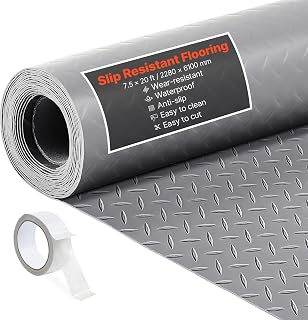
Rolled flooring creates a broad, uninterrupted surface with fewer seams. It is often easier to sweep and gives a small garage a calmer, less visually busy appearance. The VEVOR Garage Floor Roll uses a diamond-plate PVC surface, while the 8×20 FT Garage Floor Mat uses a thicker PVC-style roll with included tape. Rolls are convenient beneath a vehicle, but they need careful positioning and may shift or curl if the edges are not settled properly.
Parking mats are the simplest solution when your main goal is protecting the concrete beneath one car. An oversize garage parking mat can catch rainwater, road salt, oil drips, and melting snow without requiring a wall-to-wall installation. It is especially useful for renters or for a garage whose storage layout may change soon.
Match the Surface to Traffic and Mess
Look beyond a product’s headline load rating. A parked car spreads weight across four tires, while a loaded tool chest or jack concentrates pressure in smaller areas. For a workshop, choose a commercial-grade material with a firm surface and dependable interlocking connection. Swisstrax Ribtrax PRO tiles, for example, use commercial-grade polypropylene and a snap-together design.
For wet climates or vehicles that bring in slush, drainage and cleanup are more important than a perfectly smooth appearance. SnapLock RaceDeck Free-Flow tiles use an open-grid design that lets water move below the walking surface. That can help keep puddles from sitting beneath tires, although the concrete underneath still needs a route for water to escape.
If oil, fertilizer, paint, or muddy equipment is common, prioritize stain resistance and easy maintenance. A solid PVC roll is quick to wipe, while a textured tile may hide dust but require more deliberate cleaning. Absorbent mats are useful for liquid capture, but they should be lifted and dried periodically rather than left over damp concrete indefinitely.
Plan Installation Around Storage
Small garages reward flooring that can be installed in zones. Before laying anything, mark the parking footprint with painter’s tape and identify where cabinet doors, drawers, and bins must open. Flooring that rises even slightly at an edge can interfere with rolling tool chests or make a tight walkway feel narrower.
Interlocking tiles usually need no adhesive, making them the easiest to remove or reconfigure. The Garage Floor Tiles Interlocking Garage Flooring set is a practical example of a modular plastic option designed for oil resistance and heavy rolling loads. Keep a few spare tiles if possible; storing replacements in the garage is easier than trying to match a later production run.
For rolls, allow the material to acclimate in the garage before final placement. Unroll it on a clean surface, flatten visible waves, and use tape only after confirming the fit. Avoid permanently bonding flooring over damp concrete. A removable installation is often the smarter choice when you may reorganize cabinets or change the garage’s purpose.
Consider Comfort, Appearance, and Maintenance
Flooring influences more than durability. Dark surfaces can make dust and salt obvious, while lighter gray options reflect more light and make shelves easier to see. A cushioned or slightly resilient surface can be more comfortable during repairs, but very soft flooring may show impressions beneath heavy storage.
Use the finish to support organization: a contrasting tile border can define a work zone, while a large mat can visually reserve the parking bay. Sweep regularly, remove grit before it reaches the seams, and follow the manufacturer’s cleaning instructions. Do not assume that a non-slip finish is equally safe when covered with oil, ice, or fine dust.
Tips
- Leave a few inches of clearance around walls and fixed equipment so flooring does not buckle when temperatures change.
- Put heavy shelving on the concrete or on purpose-built pads if the flooring manufacturer does not approve point loading.
- Use a simple cardboard template around posts, drains, and cabinets before cutting a roll or planning tile rows.
- Keep absorbent mats dry underneath; periodically lift them, clean the slab, and check for trapped moisture.
Frequently Asked Questions
What is the best garage flooring for a small garage?
Modular interlocking tiles are usually the most flexible because you can cover only the areas that need protection and work around storage. A large parking mat is better when you want the lowest-commitment solution with minimal installation.
Are garage floor tiles better than a roll?
Neither is universally better. Tiles are easier to replace and customize, while rolls have fewer seams and are often faster to sweep. Choose tiles for an active workshop or frequently changing layout; choose a roll for broad, simple vehicle coverage.
Can garage flooring go over cracked concrete?
It can cover minor surface cracks, but first remove loose material and address moisture. Significant movement, uneven areas, or an active leak can damage the flooring and create a trip hazard. Repair the slab when necessary rather than relying on the covering to conceal the problem.
Do garage mats prevent oil from reaching concrete?
They can greatly reduce contact when correctly sized and maintained, but no mat should be treated as a substitute for prompt cleanup. Check the edges after a spill and clean both the mat and the concrete beneath it.
Conclusion
The best garage flooring in 2026 is the option that fits your space, not merely the one with the most impressive specifications. Choose interlocking tiles for adaptability, a PVC roll for a clean continuous surface, or a parking mat for focused protection beneath one vehicle. Measure carefully, solve moisture issues first, and let your storage plan guide the layout. In a small garage, thoughtful coverage is usually more useful than simply covering everything.