Key takeaways
- Measure your room’s clearances before ordering: aim for at least 24 inches of walking path on the access side, and check that the mattress height still lets drawers and doors swing free.
- Unbox the mattress in the room where it will live. A compressed hybrid is manageable in a stairwell; an expanded 14-inch queen is not.
- If you want under-bed storage, pair a thicker mattress with a low platform rather than a thin mattress on a tall frame — you gain usable height without raising the sleep surface.
- Give a new hybrid 48 to 72 hours to fully expand and air out before judging firmness or smell, ideally with a window cracked.
What's inside
In a studio apartment or a compact bedroom, a mattress is rarely just a mattress. It is the single largest object in the room, the thing that dictates walking paths, whether a dresser fits along the far wall, and how much usable floor you have left when the bed is made. Hybrid mattresses — pocketed coils layered under foam — have become the default recommendation for most sleepers, but the small-space calculation is different. Height changes how a room reads. Edge structure decides whether you can sit on the perimeter to tie your shoes. Whether the bed breathes properly matters more when it sits within arm’s reach of three walls.
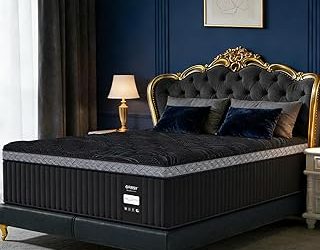
This guide walks through how to choose a hybrid mattress when square footage is tight: how profile height interacts with under-bed storage and window sightlines, why coil zoning matters for a bed you cannot walk all the way around, what cooling layers actually do in a poorly ventilated room, and how to use a long sleep trial as real protection rather than marketing copy. Below are the picks I keep coming back to for compact rooms, followed by the reasoning you can apply to any model you’re weighing.
As an Amazon Associate we earn from qualifying purchases.


Start With Profile Height, Not Firmness
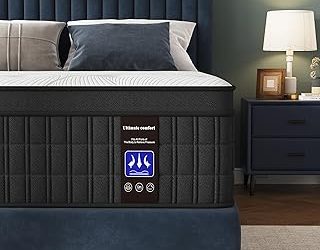
Mattress thickness is the first specification that should influence a small-room decision, and it is the one most buyers skip. A 14-inch hybrid on a standard platform frame puts the sleep surface around 26 to 30 inches off the floor. That reads tall — visually heavy in a room under about 120 square feet, and it eats into the wall space above where a headboard or floating shelf might go. A 12-inch profile like the DreamCloud sits lower, keeps sightlines to the window open, and generally makes a small room feel taller. Conversely, a 16-inch build gives you serious under-bed clearance if you pair it with a low frame, which turns the space beneath into legitimate storage for flat bins. Decide which trade you want before you shop: visual lightness, or storage volume.
Match Coil Zoning To How You Actually Reach The Bed
When a bed is pushed against a wall or wedged into a corner, you enter and exit from one side, and you sit on the same spot every day. That concentrates wear and load in a way a centered bed never sees. Zoned coil systems — the 7-zone construction in the Sweetnight CoolNest and the 16-inch luxury hybrid, or the targeted hip and shoulder support in the zoned pocket-spring queen — distribute that load more evenly and keep the perimeter from collapsing. Look specifically for reinforced edge coils. A firm edge is the difference between a usable seat and a slumped border that makes the bed feel smaller than it is.
Cooling Layers Matter More In Enclosed Rooms
Small bedrooms tend to have one window, limited cross-breeze, and a bed surrounded by walls or furniture on multiple sides. Airflow around the mattress is restricted, so the mattress has to handle heat internally rather than relying on the room. This is where hybrids earn their keep — the coil layer is essentially an open cavity that moves air, which all-foam beds cannot replicate. Gel-infused foam, as in the Novilla hybrid, and multi-stage breathable pillow tops like the CoolNest’s give you a second line of defense. If you run warm and your room does not ventilate well, treat cooling construction as a requirement rather than an upgrade.
Read The Trial Period As A Fit Test
A 365-night trial, offered by DreamCloud, Sleepmax, and several of the zoned hybrids listed above, is genuinely useful in a small space because some problems only surface after weeks of living with the bed. You discover the drawer no longer clears the mattress edge, or the height makes the closet door awkward, or you cannot get out of bed without waking a partner. A full-year window lets you catch spatial issues, not just comfort ones. Confirm return logistics before buying: in a walk-up or narrow hallway, how a returned mattress leaves the building is a practical question.
Verify Certifications And Materials
CertiPUR-US certification indicates the foam has been tested for emissions and restricted substances — worth prioritizing in a room with limited air exchange, where off-gassing lingers longer. Fiberglass-free construction, which Sleepmax and the zoned pocket-spring queen both specify, matters because fiberglass fire barriers can shed if a cover is removed or damaged. In a compact room where the bed sits close to everything you own, containment is harder. Choose the safer material spec.
Tips
- Measure your room’s clearances before ordering: aim for at least 24 inches of walking path on the access side, and check that the mattress height still lets drawers and doors swing free.
- Unbox the mattress in the room where it will live. A compressed hybrid is manageable in a stairwell; an expanded 14-inch queen is not.
- If you want under-bed storage, pair a thicker mattress with a low platform rather than a thin mattress on a tall frame — you gain usable height without raising the sleep surface.
- Give a new hybrid 48 to 72 hours to fully expand and air out before judging firmness or smell, ideally with a window cracked.
Frequently Asked Questions
Is a hybrid mattress too heavy for an apartment floor or platform bed?
Hybrids weigh more than all-foam beds, typically 70 to 120 pounds for a queen, but that is well within the load rating of any standard platform or slatted frame. Confirm slat spacing is 3 inches or less; wider gaps allow sagging over time regardless of mattress type.
Does a thinner mattress mean less support?
Not inherently. Support comes from coil gauge, zoning, and foam density rather than total height. A well-built 12-inch hybrid can outperform a poorly constructed 16-inch one. Extra inches usually add comfort layers, which affects the feel more than the underlying support.
Can I use a hybrid mattress with a bunk bed or loft frame?
Check the frame’s guardrail height first. Most loft and bunk frames require a mattress under 8 inches so the rail stays effective, which rules out nearly every 12-inch-plus hybrid. For those setups, look at low-profile options instead.
How do I keep a hybrid from making a small room feel crowded?
Keep the frame simple and low, skip a bulky headboard in favor of a wall-mounted panel or nothing at all, and use fitted bedding that does not pool on the floor. Visual clutter around the bed does more to shrink a room than the mattress itself.
Conclusion
The best hybrid mattress for a small space is the one whose height, edge structure, and cooling behavior match the room you actually have rather than the room in the product photography. Measure first, decide whether you want visual openness or under-bed storage, prioritize zoned coils and reinforced edges if you sleep against a wall, and use a long trial period to confirm the fit in practice. Any of the picks above will sleep well; the right one for you is determined by the tape measure.