Key takeaways
- Outdoor furniture: 1,000–1,500 PSI for metal, plastic, and durable painted surfaces. Use lower pressure on wicker, rattan, soft wood, and anything with loose joints.
- Cars and bicycles: 1,200–1,900 PSI, with a wide spray pattern and adequate distance from the finish.
- Decks and fences: 1,200–2,000 PSI for softwood; up to about 2,500 PSI may suit sound hardwood or composite after testing.
- Patios and driveways: 2,000–3,000 PSI is commonly useful for concrete and pavers, although stained or cracked surfaces need a gentler approach.
- Heavy masonry or neglected concrete: 3,000 PSI or more can help, but these machines are larger, louder, and less forgiving.
What's inside
When you are organizing a small patio, garage, balcony, or utility area, a pressure washer can be remarkably useful—but the wrong PSI can create more cleanup than it solves. Too little pressure leaves grime behind, while too much can scar wood, strip paint, damage outdoor furniture, or force water into seams and cushions.
The best PSI for a pressure washer depends on the surface, not simply on the machine’s maximum rating. This guide explains practical PSI ranges for common household jobs, how GPM changes cleaning performance, and which features make a washer easier to store and control in a compact home.
As an Amazon Associate we earn from qualifying purchases.


Recommended PSI by Cleaning Task
For most household work, a washer in the 1,500–2,500 PSI range offers the best balance of cleaning power and control. Use the lowest effective setting, keep the nozzle moving, and test an inconspicuous area first.
- Outdoor furniture: 1,000–1,500 PSI for metal, plastic, and durable painted surfaces. Use lower pressure on wicker, rattan, soft wood, and anything with loose joints.
- Cars and bicycles: 1,200–1,900 PSI, with a wide spray pattern and adequate distance from the finish.
- Decks and fences: 1,200–2,000 PSI for softwood; up to about 2,500 PSI may suit sound hardwood or composite after testing.
- Patios and driveways: 2,000–3,000 PSI is commonly useful for concrete and pavers, although stained or cracked surfaces need a gentler approach.
- Heavy masonry or neglected concrete: 3,000 PSI or more can help, but these machines are larger, louder, and less forgiving.
PSI Is Only Half the Cleaning Equation
PSI measures water pressure, while GPM measures water flow. A washer with higher GPM can remove loosened dirt faster and cover more area, even when its PSI is lower. For routine home use, roughly 1.2–2.0 GPM is usually practical; larger gas models may reach 2.4–2.6 GPM and work more quickly on broad driveways.
Be cautious with “maximum PSI” figures. They often describe a brief peak rather than the pressure delivered during continuous cleaning. Compare the working pressure, flow rate, hose length, and included nozzles—not just the biggest number on the box.
Choosing Between Electric and Gas
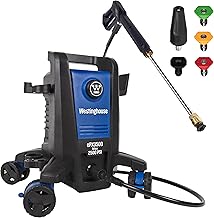
Electric washers are typically the better fit for apartments, compact garages, and homes where storage space is limited. The Westinghouse ePX3500 Electric Pressure Washer, for example, combines a compact footprint with a 2,500 PSI maximum rating, an onboard soap tank, and an anti-tipping design. It is well suited to furniture, cars, patios, and occasional fence cleaning.
Gas machines make more sense when you regularly clean large concrete areas or need to work away from an outlet. The Westinghouse WPX3400 Gas Pressure Washer and DeWalt DXPW3300-S both provide substantially more flow than many compact electric units. That extra capacity is useful for driveways, but it also means more fuel, maintenance, noise, and storage planning.
Nozzles, Distance, and Surface Protection
The nozzle can change the practical force of a pressure washer dramatically. A wide-angle nozzle is safer for furniture and painted surfaces, while a narrower spray concentrates energy for concrete and stubborn grime. Avoid using a zero-degree tip on household surfaces unless you have a specific professional reason and considerable experience.
Start several feet away, hold the wand at a shallow angle, and move in smooth passes. Never aim directly at electrical outlets, window seals, vents, light fixtures, furniture joints, or cushion seams. For delicate pieces, a garden hose, soft brush, and mild cleaner may be the safer—and faster—choice.
Foam attachments can improve organization as well as cleaning: applying detergent first helps loosen soil before rinsing. A short-wand foam cannon can be convenient around cars and patio furniture, while the Sooprinse High Pressure Washer Gun offers a replacement-gun option with quick-connect nozzles. Check connector sizes and washer compatibility before ordering.
Features That Matter in a Small Space
Compact storage is not a minor detail. Look for onboard hose or cord management, an upright design, sturdy wheels, and a wand holder that keeps accessories together. A smaller machine that is easy to retrieve will usually be used more often than a powerful unit buried behind seasonal items.
Replacement guns and extension wands can also restore a washer without requiring a new machine. The GDHXW High Power Washer Gun includes an extension wand, adapters, and nozzle tips, while the Pressure Washer Accessory Short Wand Foam Cannon is designed for tighter handling near vehicles and furniture. Verify the hose thread, quick-connect style, maximum supported PSI, and included O-rings before purchase.
Tips
- Match the nozzle and pressure to the most delicate surface you will clean, not the dirtiest one.
- Use detergent approved for pressure washers, and rinse plants, walls, and furniture promptly after washing.
- Do not use a pressure washer on cushions, unfinished wood, peeling paint, or fragile wicker unless the manufacturer allows it.
- Drain the hose and wand after use, then store the machine upright in a dry, frost-free location.
Frequently Asked Questions
Is 2,000 PSI enough for home use?
Yes. Around 2,000 PSI is sufficient for many cars, fences, patios, outdoor furniture, and light concrete cleaning when paired with a suitable nozzle and enough water flow.
Is higher PSI always better?
No. Excess pressure increases the chance of chipped paint, etched concrete, damaged wood fibers, and forced water intrusion. Higher PSI is helpful only when the surface can safely handle it.
What PSI should I use on outdoor furniture?
Begin around 1,000–1,200 PSI with a wide spray. Durable plastic and metal may tolerate more, but painted wood, wicker, rattan, and older finishes should be cleaned at lower pressure or by hand.
Should I buy an electric or gas pressure washer?
Choose electric for compact storage, lower maintenance, and occasional household cleaning. Choose gas when you routinely clean large areas and value faster flow over quiet operation and easy storage.
Conclusion
For most homes, the best pressure washer is not the one with the highest advertised PSI. A manageable electric model around 1,500–2,500 PSI is a versatile starting point, while higher-flow gas units suit frequent driveway and large-area work. Prioritize controllable pressure, useful nozzles, safe handling, and compact storage so the machine helps keep your home—and the space around it—organized.