Key takeaways
- Reserve the top shelves for lightweight, rarely used items.
- Use eye-level cubes for daily essentials.
- Load the bottom with heavy items to keep the unit stable.
A bedroom with no closet forces a reckoning: every sweater, shoe, and spare blanket has to live in the open, and if you do not plan for it, the room reads as chaos. The good news is that closetless rooms, common in older homes and studio apartments, actually invite some of the most flexible storage strategies available, because you are no longer constrained by a fixed builder-grade box.
This guide lays out a practical system for organizing a small, closetless bedroom in 2026, working from the walls inward. The goal is a room that stores a full wardrobe without feeling like a warehouse, using freestanding and hanging pieces that you can rearrange whenever the space demands it.
As an Amazon Associate we earn from qualifying purchases.




⚡ Save on Your Next PC — Amazon Prime
Prime members get fast free shipping on the systems above, plus early access to Prime Day & Black Friday PC deals. New members get a 30-day free trial.
Watch: How to Organize a Small Bedroom without a Closet — Video Review
Build a Freestanding Wardrobe Zone
Without a closet, a portable wardrobe becomes your anchor. A unit like the Jofuler Portable Closet gives you a hanging rod and shelving in a footprint you choose, so it fits an awkward alcove that a built-in never could. Position it against the longest unbroken wall and treat it as the room’s primary clothing hub, then organize everything else around it.
Reclaim Vertical Space with Cube Bookcases
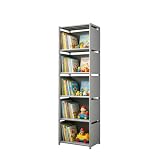
In a small room, the floor is scarce but the walls are tall. A 5-cube bookcase such as the RIIPOO Book Shelf turns unused vertical air into storage for folded clothes, books, and baskets. Going up rather than out keeps the floor clear, which is what makes a compact room feel livable instead of cramped.
- Reserve the top shelves for lightweight, rarely used items.
- Use eye-level cubes for daily essentials.
- Load the bottom with heavy items to keep the unit stable.
Divide Drawers with Fabric Organizers
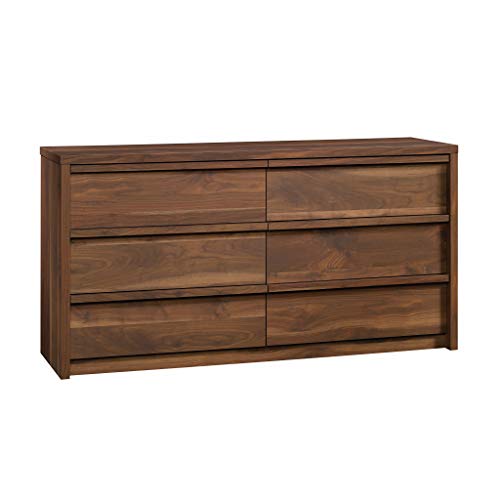
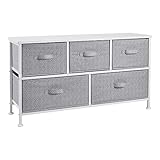
A dresser only works if its drawers are subdivided. Sock and underwear dividers like the Bructhun Sock Drawer Organizer keep small items from becoming a tangled pile, while a wide fabric unit such as the Amazon Basics 5-Drawer Storage Organizer handles bulkier folded clothes. The Cidaziya Expandable 3-Drawer Dresser flexes to fit narrow gaps, which closetless rooms tend to have in odd places.
Exploit the Backs of Doors and High Walls
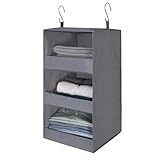
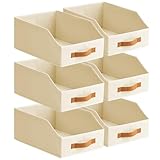
Every closetless room has doors and empty upper walls begging to be used. A three-shelf hanging organizer like the GRANNY SAYS unit drapes over a door or rod to store shoes and folded items in space that would otherwise sit idle. Large collapsible bins such as the Homsorout Fabric Storage Bins tuck onto high shelves for seasonal storage you access only twice a year.
Tips
- Keep off-season clothing in labeled collapsible bins on the highest shelf to free daily-access space.
- Choose one consistent bin color to make the open storage look deliberate rather than accidental.
- Leave a clear visual path from door to bed so the eye reads openness even in a packed room.
- Add a slim behind-the-door organizer before buying any new floor furniture.
Frequently Asked Questions
What replaces a closet in a room that has none?
A freestanding portable wardrobe like the Jofuler Portable Closet is the closest one-to-one substitute, offering a hanging rod and shelves you can position anywhere. Pair it with a dresser and open shelving for a complete system.
How do I store clothes without making the room look cluttered?
Contain everything. Use matching fabric bins, subdivide drawers, and keep only a curated few items on open display. Uniform containers turn visible storage into an intentional design element.
Is vertical or horizontal storage better in a small room?
Vertical almost always wins when floor space is limited. Tall cube bookcases and stacked bins store the same volume in a fraction of the footprint, keeping the floor open and the room feeling larger.
Can I add a closet without construction?
Yes. Portable wardrobes and hanging garment systems create closet function with zero building, and they leave with you when you move, which is ideal for renters.
Conclusion
A closetless bedroom is a blank canvas, not a curse. Anchor the room with a portable wardrobe, go vertical with cube shelving, subdivide every drawer, and exploit doors and high walls. Contain it all in matching bins, and the room stores a full wardrobe while still feeling calm and open.