Key takeaways
- Daily seating: choose a rigid frame rated for 500-plus pounds.
- Occasional storage only: a collapsible fabric ottoman saves money and space.
- Kids’ rooms: prioritize the safety hinge above all else.
The foot of the bed is prime bedroom real estate that most people leave empty. A storage chest or ottoman bench parked there does triple duty: it hides spare bedding, gives you a seat to pull on shoes, and visually grounds the bed the way a rug grounds a living room. Choosing the right one, though, means weighing load capacity, hinge safety, and dimensions against how you actually plan to use it.
This guide breaks down exactly how to pick an end-of-bed storage chest in 2026, covering the measurements, materials, and safety features that separate a piece you love from one you regret. Get these right and the foot of your bed goes from dead zone to hardest-working spot in the room.
As an Amazon Associate we earn from qualifying purchases.


⚡ Save on Your Next PC — Amazon Prime
Prime members get fast free shipping on the systems above, plus early access to Prime Day & Black Friday PC deals. New members get a 30-day free trial.
Watch: How to Choose a Storage Chest for Your Bedroom’s End-of-Bed — Video Review
Measure the Bed, Not Just the Chest
An end-of-bed chest should span roughly two-thirds to three-quarters of your bed’s width so it looks proportioned rather than stranded. For a queen, that means a bench around 40 to 50 inches wide; a piece like the Tbfit 50.8-inch Ottoman with Storage suits a king or a generous queen, while a 31.5-inch model such as the JIUYOTREE Foldable Storage Ottoman fits a full or twin. Measure the walkway behind it too, leaving at least 24 inches to move comfortably.
Match Load Capacity to Your Use
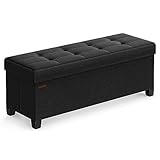
If the chest doubles as seating, weight rating matters. A bench like the SONGMICS Storage Ottoman is rated to hold well over 600 pounds, meaning two adults can sit without worry. For a piece that only stores blankets and rarely gets sat on, a lighter foldable ottoman is plenty. Be honest about whether this is furniture you will perch on daily or just open occasionally.
- Daily seating: choose a rigid frame rated for 500-plus pounds.
- Occasional storage only: a collapsible fabric ottoman saves money and space.
- Kids’ rooms: prioritize the safety hinge above all else.
Insist on a Safety Hinge
The single most important feature on any lift-top chest is a slow-close safety hinge that prevents the lid from slamming shut on fingers. The Tbfit ottoman and the Fluted Storage Bench both build in safety hinges, which is non-negotiable in a home with children or pets. A heavy lid without this feature is a genuine hazard, so verify it before you buy.
Decide Between Fixed and Mobile
Most chests sit still, but some, like the Fluted Storage Bench with four wheels, roll out for cleaning or reconfiguring the room. Wheels add flexibility in a space you rearrange often, while a fixed-leg model like the SONGMICS bench with legs offers rock-solid stability and a slightly more formal look. Consider how static your bedroom layout really is.
Tips
- Store bulky comforters in the chest during summer to free closet shelves.
- Line the interior with a breathable liner to keep stored linens fresh.
- Pick a fabric or finish that echoes your headboard for a pulled-together look.
- Test the lid’s hinge in person or check reviews specifically for slow-close function.
Frequently Asked Questions
How wide should an end-of-bed bench be?
Aim for two-thirds to three-quarters of your bed’s width. A queen pairs well with a 40-to-50-inch bench, while a king can carry a piece up to 60 inches like the Tbfit 50.8-inch ottoman comfortably.
Can a storage ottoman really support someone sitting on it?
Rigid-frame models like the SONGMICS bench are rated well past 600 pounds and handle daily seating easily. Collapsible fabric ottomans are meant mainly for storage and light, occasional sitting.
Why does the hinge type matter so much?
A slow-close safety hinge stops the heavy lid from slamming down on fingers, which is essential in homes with children. Always confirm a lift-top chest includes this feature before purchasing.
What should I store in an end-of-bed chest?
Spare blankets, seasonal bedding, extra pillows, and off-season clothing are ideal. Keeping bulky linens here frees valuable closet space and puts them right where you swap them out.
Conclusion
The perfect end-of-bed chest starts with the right proportions, then layers on the load rating and safety hinge your household needs. Measure your bed and walkway, decide whether you need seating or storage or both, and the foot of your bed becomes the most functional square footage in the room.