Key takeaways
- Prepare a sofa delivery checklist, verify the order, record visible issues and follow your seller’s inspection and damage-reporting process.
What's inside
Before signing for a sofa, compare the delivered item with your order, inspect the accessible surfaces, and record any discrepancy accurately. Read what the receipt asks you to confirm. Delivery procedures differ, so arrange the inspection process with your seller in advance instead of assuming every carrier permits the same checks.
Prepare the order record before the truck arrives
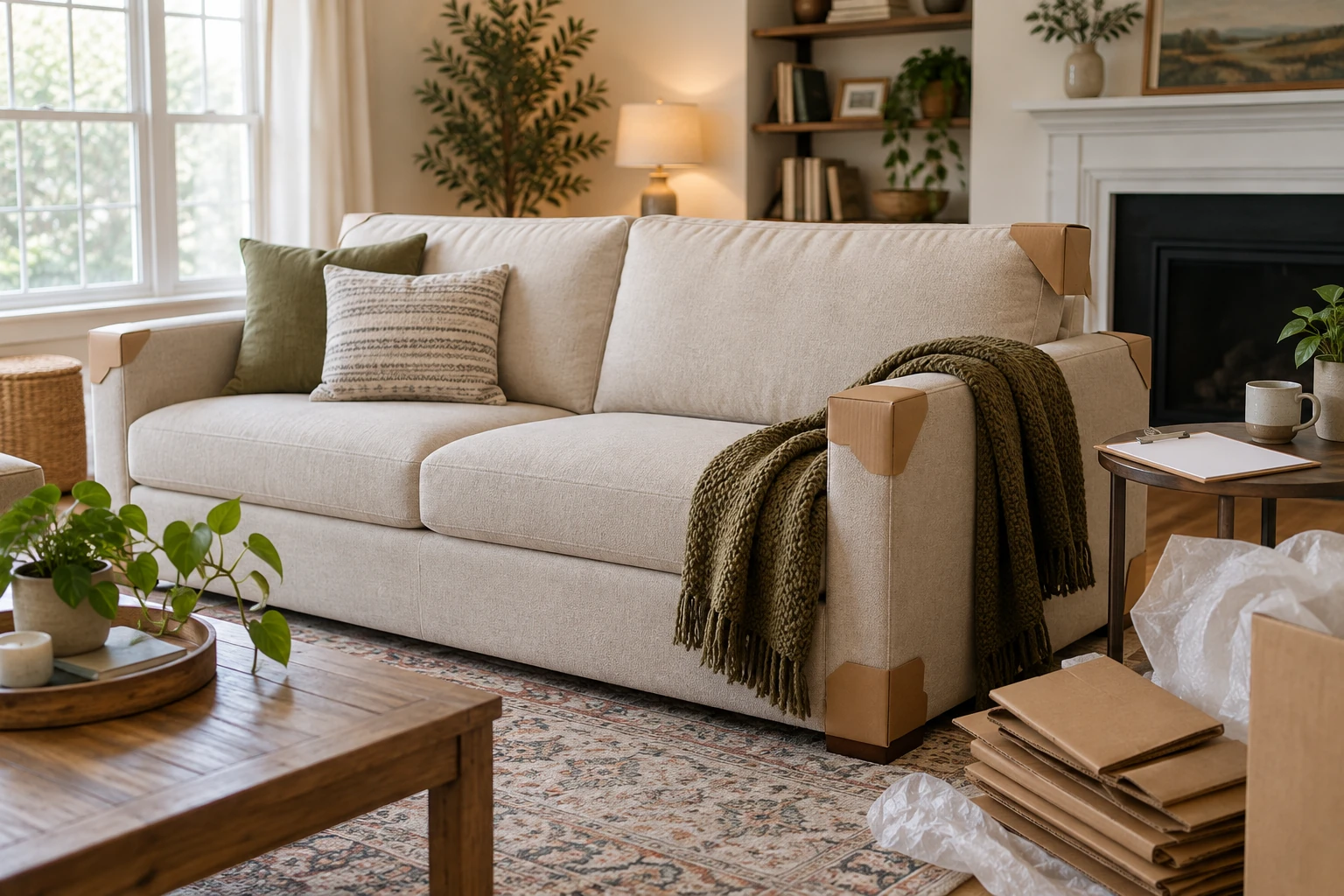
Keep the order number, sofa model, upholstery name or code, configuration, and included components together. For a sectional, include the itemized modules and an orientation drawing. A familiar color is not enough to establish that the correct item was delivered.
Also save the delivery service description, damage-reporting instructions, and contact details for the actual seller. An online brand store and an independently operated local store may have different procedures. Use the policy that applies to your purchase, and check it again near delivery day.
For context, Ashley’s online terms describe signatures acknowledging receipt, inspection, and good condition for its stated delivery methods. Its online returns page asks customers to inspect on delivery or pickup and gives a three-business-day reporting period for damaged or defective White Glove and Doorstep deliveries. That example is specific to the listed purchase channels and service types, not a universal deadline.
Match identity before inspecting finish
Ask to compare the delivery label with the order. Check the model and upholstery identifiers, package or module count, and any separate legs, cushions, connectors, or power supplies listed for the purchase. Do not infer that a missing accessory was never included just because it is not immediately visible.
For a sectional, compare the module arrangement with the order diagram. Left and right terminology can be confusing across brands; check the model codes and defined viewpoint. Our sectional orientation guide explains how to make that record before delivery.
| Check | What to note | Useful evidence |
|---|---|---|
| Identity | Model, cover and module match | Order and item-label photograph |
| Packaging | Visible tears, crushing or wet areas | Whole package and close view |
| Upholstery | Visible marks, tears or seam issues | Overall position and close detail |
| Exposed frame and feet | Visible damage or missing parts | Accessible area, without dismantling |
| Included operation | Demonstration completed or not checked | Brief factual note |
| Delivery record | Issue recorded and next step confirmed | Receipt copy and case reference |
Inspect in ordinary light
Once the team has placed the sofa as agreed, look over the front, arms, back, accessible sides, cushions, and exposed feet. Take an overall photograph before close-ups so a mark’s location is clear. Check the floor and doorway for any issue you noticed during placement without interrupting the team while they are handling a heavy item.
Different fabric pile directions or compressed cushions can alter appearance. Record what you see without declaring a cause you cannot establish. “Dark line on outside left arm” is more useful than an unsupported claim about manufacturing or transport. Ask the seller to assess uncertain observations.
Do not crawl beneath an unsupported sofa, remove the dust cover, or open mechanisms for inspection. For a powered or reclining model, ask the delivery team to demonstrate normal operation if that is included and safe in the installed position. Record an untested function as untested, rather than forcing it or assuming it works.
Worked example: describe the issue precisely
This is an illustrative delivery record. The order calls for a three-seat sofa in a specified fabric. The labels match, but there is a small tear on the outer right arm. The buyer photographs the whole sofa, the label, and the tear with a nearby ruler for scale, without pulling at the material.
The buyer asks the team to record the visible tear and contacts the seller through its stated channel. The saved note includes the delivery time, order number, location of the damage, photographs, and case reference. It does not claim that recording the issue automatically guarantees a refund or a particular remedy.
Read the receipt and confirm the next step
If an acknowledgment describes the item as inspected and undamaged, do not treat it as an unrelated attendance form. Ask how the provider records a discrepancy and contact the seller before making a decision if the process is unclear. Whether to accept, refuse, or arrange a follow-up depends on the applicable process and the actual issue.
Keep a copy of the completed record and your message to the seller. A verbal promise is harder to follow up than a case number with an agreed next step. If the service leaves the sofa boxed, document that the internal condition was not yet inspected and follow the seller’s unboxing and reporting instructions promptly.
After the team leaves
Retain packaging where the applicable instructions require it, unless removal was part of the service. Check remaining accessible areas and included items without starting repairs or cleaning a disputed mark. Report additional findings through the designated channel with the existing case reference.
A useful inspection is an accurate condition record, not an attempt to diagnose every possible defect at the doorway. Prepare the paperwork, verify the item, document what is visible, and leave uncertain causes for the seller to assess.