Key takeaways
- Check frame identifiers, approved connectors, supports and the finished layout before adding a new chaise to an older modular sofa system.
What's inside
You can add a chaise to an existing modular sofa only when the new module is compatible with that sofa’s exact frame system and intended configuration. Matching fabric, seat height or collection name is not enough. Before ordering, identify the old sofa, identify the proposed module and obtain a supported connection diagram for the pair.
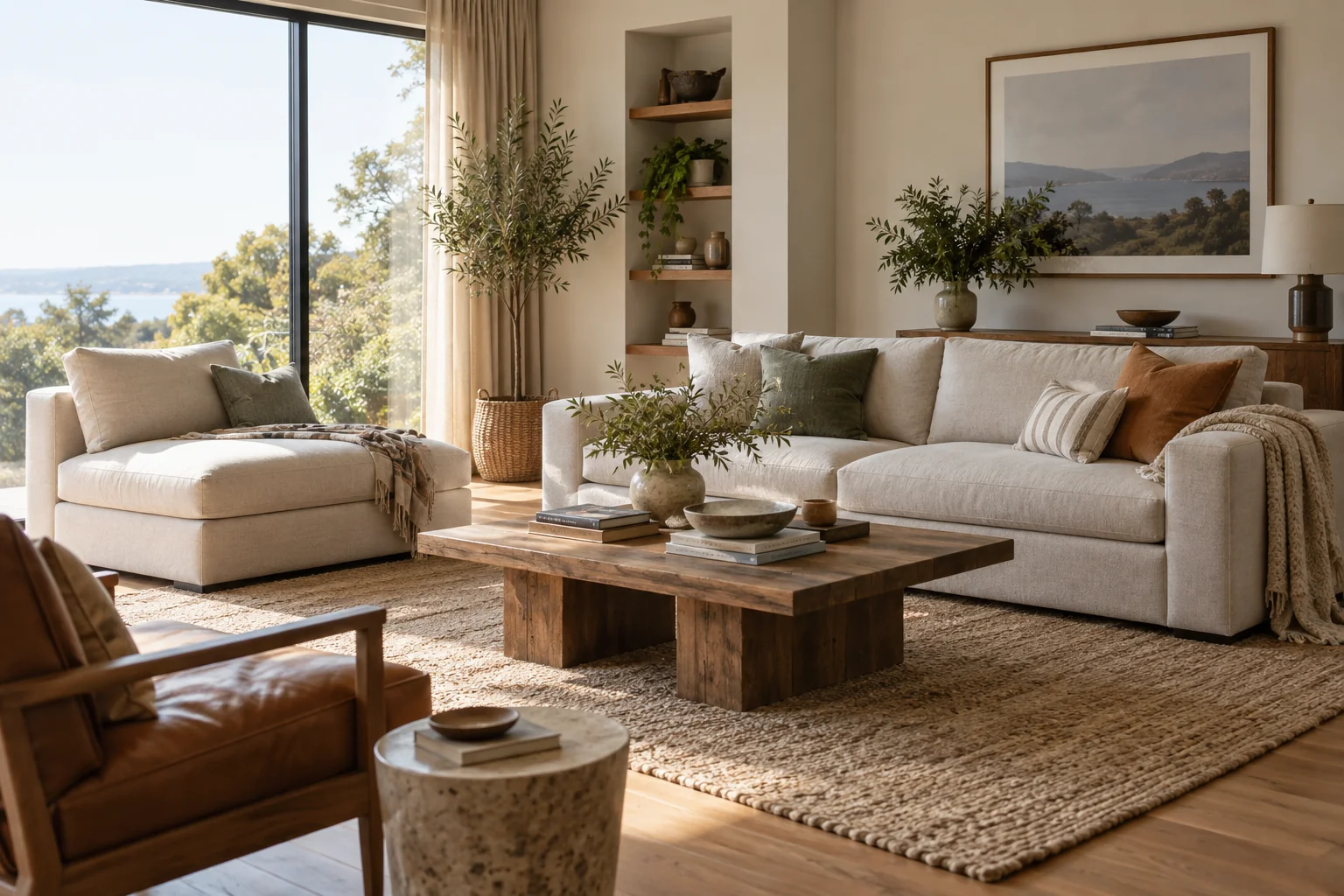
This guide is a purchase and compatibility worksheet, not a retrofit instruction. It does not recommend drilling frames, replacing connector systems or joining unrelated seating with improvised brackets. A separate ottoman may provide a different seating arrangement, but it does not turn an incompatible module into an approved chaise extension.
Find the identity of the sofa you already own
Start with the order confirmation, assembly booklet and accessible product label. Record the manufacturer, full model name, frame or article number, approximate purchase date and market of purchase. Photograph the label without tipping or dismantling heavy furniture unsafely. If access is difficult, ask the manufacturer where to find the identifier.
Write down the configuration as well: a sofa with two fixed arms, an open-ended module, a corner combination or another arrangement. An add-on may require a particular open side or different supporting parts. “Modular” describes a system with options; it does not mean every piece can connect in every position.
If the sofa is secondhand and its identity is uncertain, send clear overall and label photographs to the maker. Do not turn a visual resemblance into a model identification. A retailer’s current collection photograph may show a revised design that uses a familiar name.
Separate structural compatibility from cover compatibility
Ask two different questions: will the frames connect and be supported as intended, and will the upholstery pieces fit and look acceptable? A replacement cover advertised for an older sofa says nothing by itself about whether a current chaise frame connects to it.
Likewise, a shared fabric name does not ensure identical appearance across production runs or after years of use. Decide whether a visible difference would bother you, but settle the structural question first. A perfect color match cannot compensate for an unsupported connection.
Use the manufacturer’s configuration evidence
For a concrete example, IKEA’s archived January 2024 US KIVIK buying guide describes combining sofas with chaise and corner sections. That establishes that the documented system has combination options. It does not establish that every older KIVIK frame, every regional version or any similarly named module is interchangeable.
Use an applicable guide to identify the approved arrangement, then ask support to confirm your exact old and new article numbers when generations or regions differ. Save the reply and diagram before ordering. If no one can confirm the combination, treat compatibility as unresolved rather than likely.
Build a compatibility worksheet
| Check | Existing sofa | Proposed chaise or required evidence |
|---|---|---|
| Identity | Frame number, date and market | Exact module number and current listing |
| Connection position | Which side is intended to open | Approved drawing showing that position |
| Connectors | Documented original system | Specified mating parts and quantity |
| Support | Existing legs and supporting pieces | Any additional legs or supports in the diagram |
| Arm arrangement | Fixed or removable according to instructions | Required arm, end panel or cover changes |
| Finished footprint | Current width and depth | Whole approved combination dimensions |
| Confirmation | Photos and identifiers supplied | Written compatibility answer and date |
Mark each row confirmed, unresolved or incompatible. An empty row is not a pass. Check what comes in the chaise package and what is separately supplied; a diagram showing a part does not necessarily mean that part is included with the particular listing you are buying.
Worked example: similar appearance, different decision
In this illustrative case, a household owns a five-year-old sofa called Series A. A seller offers a current Series A chaise in the same named gray fabric. The listing gives dimensions and photos but does not identify which older frames it supports. The household records the existing frame number and asks for confirmation against the new module number.
If the maker supplies a compatible diagram and a complete parts list, the next step is checking the finished layout and order contents. If the answer is only “the fabric should match,” the structural question remains unanswered. The practical decision is to pause that purchase or choose a separately supported furniture arrangement, not to experiment with connectors after delivery.
Check the enlarged layout before ordering
Use the dimensions of the entire approved combination. Do not simply add the chaise’s advertised width to the old sofa: shared arms or overlapping connection areas can change the finished measurement. Mark the resulting footprint in the room and check walking routes, doors, drawers and access to other seating.
Confirm the delivery dimensions and route as a separate task. An assembled chaise that fits the room may arrive in a carton that cannot negotiate the entry. Save the return conditions and any assembly requirements before removing packaging.
On arrival, compare the supplied identifiers and parts with the confirmed order. Follow the exact assembly instructions and stop if the documented parts do not match. Your compatibility record should lead to a supported combination with all its required components, not a collection of similar-looking pieces that need an improvised solution.