Key takeaways
- 85-inch overall length clears most standard apartment doorways
- Chaise attaches left, right, or middle for layout changes
- 48-inch chaise seat depth versus 22-inch standard seat
Shopping for genuine hide that also rearranges is harder than it looks, because many listings mix real leather with coated panels. This guide sorts six verified sectionals, separating true leather from leather-look, and the main trade-off is clear: a roomy modular leather sofa often eats wall space you may not have.
As an Amazon Associate we earn from qualifying purchases.
By KK Home Furnishings Editorial Team
How to Choose a Modular Leather Sofa
Choosing the right configuration means reading past the showroom photo. Because these listings change with stock, ZIP code, and the exact module you select, confirm the numbers on the live page before you commit. Three axes decide most purchases: the leather itself, how the pieces actually join, and the footprint your room can absorb.
Genuine Leather on Contact and Secondary Surfaces
Not every panel labeled leather touches you. IKEA’s FINNALA, for example, uses GRANN top-grain leather on the contact zones while the non-contact surfaces are BOMSTAD coated fabric, so the hide you feel at 21.625 inches of ordinary seat depth differs from the backs and sides. Households with kids or pets should confirm exactly which surfaces are genuine.
Get this wrong and you pay a leather price for a part-coated piece, then watch the coated sections age differently from the hide over several years. PU panels can crack or peel where real leather would patina, which turns into an uneven, costly look long after the return window has closed.
How the Modules Actually Join
A sofa that arrives in boxes is not automatically expandable. West Elm’s Remi and Harmony use alligator-clip connections between pieces, which lets you reconfigure a four-piece layout, while Burrow’s Nomad attaches its chaise on the left, right, or middle. Renters who move often, or anyone planning to add seating later, should prioritize a documented clip or bracket system.
Confuse split shipping with true modularity and you may be stuck with a fixed shape you cannot grow. Article’s Cigar, for instance, only reverses its two assembled pieces, with no confirmed stand-alone add-on module, so a future third seat could mean buying an entirely new set rather than one extra piece.
Installed Width and Seat Depth by Configuration
Overall footprint, seat depth, and chaise projection are three different numbers. West Elm’s Harmony reference plan measures 122 inches wide by 120 inches deep, yet its usable seat depth is 20 inches with the back and lumbar cushions in place, or 34 inches without them. Measure your doorways and the two walls a corner plan will occupy before ordering.
Skip this step and a sectional that looked fine online can block a walkway or refuse to clear a 30-inch doorway. A heavy corner piece, such as a configuration listed around 427 pounds, also complicates delivery up stairs and can force a second visit, adding cost months before you enjoy the seat.
Top Picks
Each pick below is matched to a specific use case rather than ranked, because set prices, hides, and delivery costs are not resolved on a single page across these makers. Every row is a real brand and model you can verify today. Reopen the listing on purchase day to lock your color, arm facing, and final configuration.
| Product | Best For | Key Spec | Watch Out For |
|---|---|---|---|
| Burrow Nomad Leather Sofa Sectional with Moveable Chaise | Repositionable chaise | 85 L x 61 chaise depth x 33 H in | Three-seat layout, not a corner arrangement |
| IKEA FINNALA 4-Seat Leather Sectional with Chaise | Leather contact surfaces plus storage chaise | 126.75 W x 64.625 chaise depth in | BOMSTAD PU-coated fabric on non-contact surfaces |
| West Elm Remi Modular Leather 4-Piece Sectional | A low-backed modular lounge | 108 W x 72 D x 26 H in | 26-in back is low-profile, not high-back support |
| West Elm Harmony Modular Leather 4-Piece Sectional | Large deep-cushion corner seating | 122 W x 120 D x 37 H in | 122 x 120-in plan consumes two long walls |
| West Elm Melbourne Leather 3-Piece L-Shaped Sectional | A medium-firm leather corner | 116 W x 116 D x 32.5 H in | Heavy configuration raises delivery concerns |
| Article Cigar Leather Reversible Sectional | Full-aniline leather with reversible layout | 92 W x 94.5 D x 26 H in | Reversible only; no confirmed add-on modules |
Burrow Nomad Leather Sofa Sectional with Moveable Chaise — Best for a repositionable chaise
Best For: Shoppers who want a single chaise they can shift from one end to the other as a room changes.
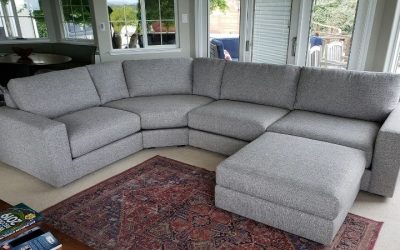
Among these picks, the Nomad is the one built around a chaise you can relocate rather than commit to a fixed corner. Where the West Elm sectionals lock into an L once clipped, Burrow lets the chaise attach on the left, right, or middle, so a narrow living room can flex as your layout or furniture arrangement shifts over time.
Burrow lists this three-seat model at 85 inches of overall length and 33 inches tall, with a 61-inch chaise depth measured as overall projection, not seat depth. The ordinary seat depth is 22 inches while the chaise seat depth reaches 48 inches. It sits in the premium leather tier, so check the current price for your chosen hide.
At 85 inches, the Nomad clears most standard doorways and suits apartments where a full corner sectional would not fit. Its main uncertainty is price: the chosen leather and upgrades can move the final total, and the ZIP-based checkout was not verified, so confirm the exact kit rather than trusting a collection starting figure.
Pros:
- 85-inch overall length clears most standard apartment doorways
- Chaise attaches left, right, or middle for layout changes
- 48-inch chaise seat depth versus 22-inch standard seat
Cons:
- Three-seat layout is compact, not a corner arrangement
- ZIP-based checkout price and final variant not yet verified
Who Should Buy It: Buy it for a flexible chaise in a tight room; those needing a true corner should pick the Harmony instead.
IKEA FINNALA 4-Seat Leather Sectional with Chaise — Best for leather contact surfaces plus storage
Best For: Buyers who want genuine hide where their skin rests, plus a storage chaise, without paying for all-leather sides.
FINNALA earns its place by putting real top-grain leather exactly where it counts and spending less elsewhere. Unlike the all-leather West Elm and Article picks, IKEA uses GRANN hide on the contact zones and BOMSTAD coated fabric on the backs and sides, a deliberate trade that keeps a four-seat sectional in reach for more budgets.
IKEA lists the assembled piece at 126.75 inches wide with a 64.625-inch chaise depth measured as overall projection. Ordinary seat depth is 21.625 inches, while the chaise seat depth runs 49.25 inches. Pricing sits in the accessible mid-range for leather sectionals, so check the current price and confirm the exact article number before ordering.
Before buying, confirm the GRANN leather scope on the live page, since the coated panels age differently from hide. This is also the pick where a US buyer should verify the SB 1019 disclosure label and the California TB 117-2013 flammability labeling on the specific SKU. At nearly 127 inches, it needs a wide wall and a clear delivery path.
Pros:
- GRANN top-grain leather on all contact seating zones
- 126.75-inch assembled width with a 49.25-inch chaise seat depth
- 64.625-inch chaise projection measured overall, not seat depth
Cons:
- BOMSTAD PU-coated fabric covers non-contact backs and sides
- 126.75-inch width is unsuitable for many narrow rooms
Who Should Buy It: Buy it to save on leather you never touch; for all-over hide, choose the Melbourne or Cigar instead.
West Elm Remi Modular Leather 4-Piece Sectional — Best for a low-backed modular lounge
Best For: People who prefer a low, lounge-height leather sectional they can clip into different shapes over time.
Remi is the relaxed, low-slung option in this group, aimed at lounging rather than upright support. Its alligator-clip connections let you rearrange the four pieces, something the reversible Article set cannot match, and its genuine-leather build comes with care instructions you should follow to keep the finish even across years of use.
West Elm’s print page lists the 108-inch reference configuration at 108 inches wide, 72 inches deep, and 26 inches tall overall, with a 26-inch seat depth and a low 17-inch seat height. Leather sectionals from design retailers like this typically land in the premium tier, so check the current price once you specify your hide.
The low 26-inch back is the catch: it reads modern but offers little head or neck support, so taller sitters may want the 37-inch Harmony. Because the print page is a configuration builder, the leather color and final checkout price must be chosen at order, and the exact four-piece layout should be confirmed before you buy.
Pros:
- Alligator-clip connections let four pieces reconfigure over time
- 108-by-72-inch installed footprint with 26-inch seat depth
- Low 17-inch seat height suits a relaxed lounge
Cons:
- 26-inch back is low-profile, not high-back support
- Leather color and checkout price must be specified at order
Who Should Buy It: Buy it for a low lounge you can reshape; taller sitters wanting back support should choose the Harmony.
West Elm Harmony Modular Leather 4-Piece Sectional — Best for large deep-cushion corner seating
Best For: Households with a large room who want deep, cushioned corner seating and real clip-together modularity.
Harmony is the big, sink-in corner option, the pick for a family room where floor space is not the constraint. It combines top-grain leather with the same alligator-clip modularity as Remi but in a far deeper, taller frame, giving the lounging depth the low Remi and the compact Burrow simply cannot provide.
The 122-inch reference plan measures 122 inches wide, 120 inches deep, and 37 inches tall. Seat depth is 20 inches with the back and lumbar cushions in place, or 34 inches without them, a genuine fork you should test for your body. This sits in the premium tier, so check the current price for your leather.
The honest limit is scale: a 122-by-120-inch plan swallows two long walls, so measure before committing. West Elm also rates the cushion softness at 1 of 5 on its own subjective scale, which is not a standardized firmness figure, so confirm comfort in a showroom rather than trusting the number where you can.
Pros:
- Top-grain leather with alligator-clipped modular components you can reconfigure
- 20-inch seat depth with cushions, 34 inches without them
- 122-by-120-inch corner plan for deep family-room seating
Cons:
- 122-by-120-inch footprint consumes two long walls in a room
- Softness rated 1/5 on West Elm’s own subjective scale
Who Should Buy It: Buy it for a spacious deep corner; small-room shoppers should pick the Burrow Nomad or Remi instead.
West Elm Melbourne Leather 3-Piece L-Shaped Sectional — Best for a medium-firm leather corner
Best For: Buyers wanting an all-leather L-shaped corner with a medium-firm seat they will keep for years.
Melbourne is the balanced all-leather corner here, firmer than the deep Harmony and more supportive than the low Remi. Its top-grain hide covers the piece rather than mixing in coated panels like the IKEA option, and modular add-on pieces exist within the collection, so you can plan a larger L as your space allows.
West Elm lists the 116-inch corner configuration at 116 inches wide, 116 inches deep, and 32.5 inches tall, with a 25-inch seat depth and a 19-inch seat height. Top-grain leather corners like this typically sit in the premium tier, so check the current price and confirm your leather choice before ordering.
The recurring concern here is weight: one selected retail page lists this configuration around 427 pounds, which complicates stair deliveries and floor planning, and may require extra help or a second delivery attempt. West Elm also rates the seat firmness 3 of 5 on its own scale, so judge comfort directly rather than against another brand’s number.
Pros:
- Top-grain leather across the piece, no coated panels
- 116-by-116-inch corner plan with 25-inch seat depth
- Collection offers modular add-on pieces for a larger L
Cons:
- Configuration listed around 427 pounds complicates stair delivery
- Firmness rated 3/5 on the maker’s non-standardized scale
Who Should Buy It: Buy it for a firm all-leather corner; those on a tighter budget should consider the IKEA FINNALA instead.
Article Cigar Leather Reversible Sectional — Best for full-aniline leather with a reversible layout
Best For: Leather purists who want full-aniline pull-up hide and a layout they can flip, not expand.
Cigar is for the shopper who prizes leather character above reconfigurability. Its 100 percent top-grain full-aniline pull-up hide develops a lived-in patina that the more protected leathers on the other picks are designed to resist, making it the most natural-looking option here, provided you accept that the layout reverses rather than expands.
Article lists the Indiana Brown, SKU 28146, at 92 inches wide, 94.5 inches deep, and 26 inches tall, with a 27-inch seat depth and a low 15-inch seat height. Article listed it around $4,099 as a displayed price in October 2026, not a final ZIP-based checkout total, so reconfirm the current price and shipping before ordering.
The real limitation is modularity: this set reverses its one sofa and one loveseat but has no confirmed stand-alone add-on module, so growing it later likely means a new purchase, not an extra piece. Full-aniline leather also marks and ages visibly, so expect to condition it and accept patina rather than a wipe-clean synthetic surface.
Pros:
- 100 percent top-grain full-aniline pull-up leather across the set
- 27-inch seat depth with a low 15-inch seat height
- 92-by-94.5-inch layout reverses between sofa and loveseat
Cons:
- Reverses only; no confirmed stand-alone add-on module system
- Full-aniline leather marks and patinas, needs regular conditioning
Who Should Buy It: Buy it for natural aniline leather character; those needing future expansion should pick a clip-together West Elm model instead.
Frequently Asked Questions
These answers address the questions buyers ask most about leather modularity, drawn only from the manufacturer listings reviewed above. Treat them as a starting point, then confirm the specifics on the live product page, since stock, selected modules, color, and your ZIP code can all change what you actually receive at checkout.
Is a modular leather sofa always 100% real leather on all sides?
No. The word leather on a tag does not guarantee hide on every panel. Article’s Cigar, by contrast, is one of the few here specified as 100 percent top-grain full-aniline leather, while many sectionals reserve genuine hide for contact zones only. Always read the materials breakdown panel by panel before assuming full coverage.
What changes the answer is the specific SKU and even the color you select, since some finishes or variants swap materials. If the listing is vague, ask the retailer which surfaces are top-grain versus coated, and get it in writing before you order, because return shipping on a large sectional is rarely free.
Can a modular leather sofa be rearranged without tools?
Often, yes, if the maker uses hand-fastened clips or brackets rather than bolts. West Elm’s Remi and Harmony join with alligator clips that engage without a wrench, so a two-person team can reshape the layout in minutes. The bigger obstacle is weight, not hardware, since a single hide-covered module can be awkward to carry.
The condition to watch is your flooring. Repositioning a heavy leather sectional across hardwood or tile can scratch the surface, so use felt pads or glides and lift rather than drag. If a listing does not describe its connector type, assume you will need help and clear a path before delivery day.
What is the difference between reversible and expandable modular sofas?
Reversible means you can flip or mirror the existing pieces; expandable means the collection sells extra modules you can clip on later. The two are easy to confuse. A set like Article’s Cigar changes orientation but not seat count, while West Elm’s collections list add-on pieces that genuinely grow the footprint.
Which you need depends on your five-year plan. If your household may grow or you might move to a larger room, prioritize a documented add-on program and confirm the specific extra modules are still in production. A reversible-only design is fine when your seat count is settled and unlikely to change.
What should I check before adding another module next year?
Confirm three things first: that the exact piece is still sold, that its leather color still matches, and that the connector style is unchanged. Leather dye lots and finishes drift over a year, so a West Elm add-on ordered later may not perfectly match a top-grain hide bought today, even under the same product name.
The condition that trips people up is discontinuation. Retailers retire collections and colorways, so before you count on expanding, check that the module and your shade remain in the catalog, and keep your original order details. If availability looks uncertain, buy the larger configuration now rather than gambling on next year.
Final Thoughts
The right choice here comes down to matching one real constraint to one verified pick: a flexible chaise for tight rooms, genuine contact-surface hide on a budget, a deep corner for a big space, or natural aniline character you are happy to maintain. No single modular leather sofa wins outright, so confirm your exact dimensions, leather scope, and checkout variant before you commit.