Key takeaways
- Walkway clearance: Leave at least 30 inches for a main path and 24 inches for a secondary path. In a 10×12 ft bedroom with a queen bed (60×80 inches), a chest deeper than 20 inches placed opposite the foot of the bed will leave less than 24 inches to walk through.
- Drawer extension: You need 20 to 24 inches of open space in front of the chest to fully pull out drawers. Add the chest depth (e.g., 18 inches) + extension (22 inches) = 40 inches total floor space required when in use.
- Door and closet swing: Measure door swing arcs. A 30-inch-wide chest placed behind a bedroom door needs at least 2 inches of clearance so the door handle doesn’t hit it.
- Wall space: In apartments, the only uninterrupted wall is often 28 to 36 inches between a window and corner. A 26-inch-wide chest fits there; a 32-inch chest does not.
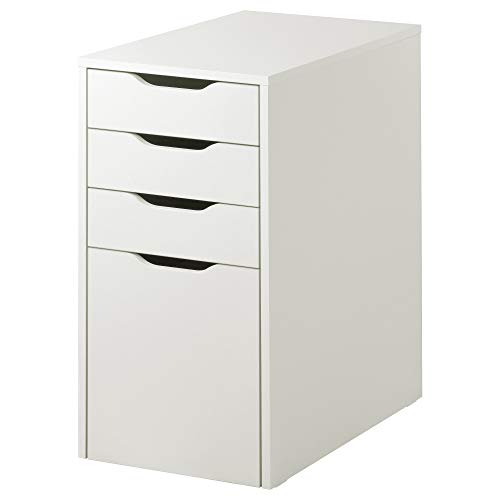
The best small chest of drawers for tight spaces is 26 to 30 inches wide, 16 to 20 inches deep, and 30 to 44 inches tall with 3 to 5 drawers — compact enough to fit beside a bed or in an entryway while still holding a full wardrobe rotation for one person.
For most apartments and small bedrooms, this size hits the sweet spot: narrow enough to keep walkways clear, tall enough to maximize vertical storage without overwhelming a 10×10 ft room. Below is how to pick the right one for your space, what materials actually hold up, and which types work best by situation.
What Counts as “Small” and How to Measure for It
A standard chest of drawers is typically 32 to 40 inches wide and 18 to 22 inches deep. A small chest of drawers cuts that width by 15-25% while keeping drawer depth usable for folded clothes. Anything under 30 inches wide qualifies as small, but under 24 inches starts to limit what you can store.
| Measurement | Small Chest (Compact) | Standard Chest | Why It Matters in Tight Spaces |
|---|---|---|---|
| Width | 24 – 30 inches | 32 – 40 inches | Every 2 inches saved keeps walkways and door swings clear |
| Depth | 15 – 19 inches | 18 – 22 inches | 16-inch depth fits folded sweaters; over 20 inches blocks narrow hallways |
| Height | 30 – 44 inches | 44 – 54 inches | Taller than 44 inches can feel top-heavy in rooms with 8 ft ceilings |
| Drawer Interior | 22″W x 13″D x 5-6″H | 30″W x 16″D x 6-7″H | Small drawers still fit 12-15 folded t-shirts or 6-8 pairs of jeans |
| Weight Capacity (per drawer) | 15 – 30 lbs | 25 – 40 lbs | Important for denim, towels, or files if used as office storage |
Before you buy, map your clearance:
- Walkway clearance: Leave at least 30 inches for a main path and 24 inches for a secondary path. In a 10×12 ft bedroom with a queen bed (60×80 inches), a chest deeper than 20 inches placed opposite the foot of the bed will leave less than 24 inches to walk through.
- Drawer extension: You need 20 to 24 inches of open space in front of the chest to fully pull out drawers. Add the chest depth (e.g., 18 inches) + extension (22 inches) = 40 inches total floor space required when in use.
- Door and closet swing: Measure door swing arcs. A 30-inch-wide chest placed behind a bedroom door needs at least 2 inches of clearance so the door handle doesn’t hit it.
- Wall space: In apartments, the only uninterrupted wall is often 28 to 36 inches between a window and corner. A 26-inch-wide chest fits there; a 32-inch chest does not.
Best Types of Small Chests by Situation
Compact chests fall into four main forms. The right one depends less on style and more on where it will live and what you need to store.
1. Vertical 3-Drawer Chest (26-30″W x 18″D x 32-36″H)
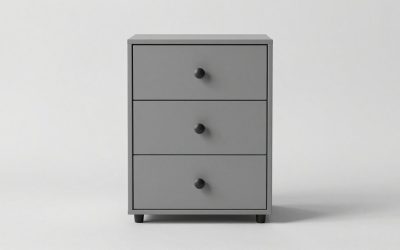
Best for small bedrooms and rentals. This is the most space-efficient option because it uses vertical height instead of floor area. Three deep drawers (6 to 7 inches tall inside) hold bulky items better than five shallow ones. Look for models around 28 inches wide — wide enough for folded pants without creasing, narrow enough for the wall beside a closet. Usually $200–$450 in engineered wood, $500–$900 in solid wood.
Choose this if you need one chest to hold most of your folded wardrobe and you have at least 36 inches of wall width.
2. Tall Narrow 5-Drawer Chest (22-28″W x 16″D x 42-48″H)
Best for ultra-tight apartments and corners. At 22 to 24 inches wide, it slides into gaps other furniture can’t use — between a wardrobe and wall, or at the end of a galley hallway. Five drawers let you sort by category (socks, shirts, workout clothes) but each drawer is shallower. Check that the unit includes an anti-tip strap; tall, narrow chests are more prone to tipping when top drawers are open.
Choose this if floor space is under 5 square feet and you prioritize sorting over bulk storage.
3. Low Wide 3-Drawer Dresser (28-30″W x 16-18″D x 22-30″H)
Best for entryways, under windows, or as a nightstand alternative. This height doubles as a surface for keys, lamps, or a TV in a studio. In an entryway, the lower height keeps sightlines open and meets the typical 18-inch seating height if you add a cushion on top. Depth matters most here — stay under 18 inches deep so it doesn’t block traffic in a 36-inch-wide hallway.
Choose this if you need storage plus a usable top surface and have horizontal wall space but low ceiling clearance or a window above.
4. Fabric Drawer Chest with Steel Frame (24-30″W x 14-16″D x 28-34″H)
Best for renters, closets, and kids’ rooms. Fabric bins on a metal frame weigh 20 to 35 lbs total versus 60 to 110 lbs for wood, making moves easier. Drawers are lighter (capacity usually 10 to 15 lbs each) and the top is not meant for heavy items like a TV. Fabric breathes, which helps in closets, but sags over time if overloaded.
Choose this if you move frequently, need closet organization, or want a lightweight option usually $80–$200.
Material and Construction Trade-Offs
What a small chest is made of determines its weight, durability, and how it handles humidity and daily use — differences that matter more in small spaces where furniture gets bumped and moved often.
| Material | Typical Weight (30″W Chest) | Weight Limit Per Drawer | Pros | Cons |
|---|---|---|---|---|
| Solid Wood (pine, rubberwood, poplar) | 70 – 110 lbs | 25 – 40 lbs | Most durable, can be refinished, holds screws best, withstands humidity changes | Heaviest, most expensive, can be over 30 inches deep with traditional frames |
| Engineered Wood (MDF, particleboard with veneer/laminate) | 55 – 85 lbs | 15 – 30 lbs | Affordable, stable finish, wide style choice, usually lighter than solid wood | Swells with moisture, cam-lock joints loosen after 2-3 moves, can’t be sanded |
| Metal Frame + Fabric Drawers | 20 – 35 lbs | 10 – 15 lbs | Ultra-light, easy assembly, no tip risk if not freestanding, cheap to replace | Drawers sag and collect dust, not suitable for heavy or sharp items, fabric stains |
| Metal + Engineered Wood Hybrid | 45 – 65 lbs | 20 – 30 lbs | Stronger than all-fabric, modern look, better drawer slides than budget wood | Mixed materials can show wear unevenly, welds can loosen if dragged |
Construction details to check regardless of material:
- Drawer slides: Ball-bearing side slides rated for 30-45 lbs last longer than wood-on-wood or plastic center glides, which stick when overloaded or in humid apartments.
- Drawer bottoms: Look for 0.2 to 0.3-inch plywood or MDF bottoms that are grooved into the drawer sides, not just stapled. Stapled 1/8-inch fiberboard bottoms bow under jeans and towels within a year.
- Back panel: A solid 0.2-inch plywood back nailed every 4-6 inches keeps the chest square. Thin cardboard backs held with staples allow racking.
- Feet vs. plinth: Legs (4-6 inches high) make it easier to clean underneath and look lighter visually. A plinth base is more stable on uneven floors but traps dust.
Decision Matrix: Match Your Situation to the Right Small Chest
| Your Situation | Best Choice | Key Spec to Prioritize |
|---|---|---|
| Small apartment (500-700 sq ft), move every 1-2 years | Fabric + steel frame or hybrid metal/wood | Weight under 40 lbs, flat-pack box under 48 inches long |
| Renter with plaster or drywall restrictions | Low wide 3-drawer under 30″H | Height that doesn’t require anti-tip anchoring, under 50 lbs |
| Small bedroom with queen bed in 10×12 ft room | Vertical 3-drawer, 28″W x 18″D | Depth under 19 inches to preserve 30-inch walkway |
| Entryway or hallway under 42 inches wide | Low chest 15-16 inches deep | Depth 15-16 inches max so traffic flows |
| Kids and pets, daily wear and spills | Solid wood or high-quality engineered wood with laminate top | Wipeable surface, interlocking drawers, anti-tip kit included |
| Need extra surface for TV, mirror, or lamp in studio | Vertical 3-drawer at 30-34″H with solid top | Top weight capacity 40-60 lbs, solid wood or 0.75-inch MDF top |
| Back pain or limited bending | Taller 4-5 drawer at 40-44″H | Top drawer at 36-40 inches high so no deep bending needed |
Assembly, Moving and What Actually Wears Out First
Small chests are marketed as easy, but size doesn’t always mean simple.
- Box size and doorway fit: A 30-inch-wide engineered wood chest usually ships in a box 32x20x16 inches and weighs 55 to 85 lbs. Measure your elevator (often 36 inches deep) and apartment doorway (standard 28 to 30 inches interior). Boxes over 50 inches long may not turn in tight stairwells in pre-war buildings.
- Assembly time: Fabric + metal frames take 15 to 30 minutes with no tools beyond an Allen key. Engineered wood chests with 3-5 drawers take 60 to 120 minutes and need 12 to 20 cam locks plus drawer slide alignment — the step where drawers end up crooked if not done on a level floor.
- What fails first: On engineered wood, it’s the cam locks and drawer bottoms after 18 to 36 months of daily opening, especially in humid climates. On fabric chests, it’s the fabric stitching at the handle and the hook-and-loop fasteners holding the fabric to the frame. On solid wood, it’s the drawer slides — replaceable for $15–$30 per pair.
- Moving tip for renters: Remove drawers completely and move the carcass separately. Carrying a loaded 70 lb chest stresses joints far more than carrying it empty in two trips. Keep the anti-tip strap and wall anchors; landlords in many states now require them for chests over 30 inches tall.
- Floor protection: Small chests concentrate weight on four feet. Add felt pads (at least 1.5 inches diameter) to prevent dents in vinyl plank and to make leveling easier on uneven floors common in older apartments.
How to Make a Small Chest Hold More Without Looking Crowded
A small chest of drawers can store as much as a larger one if you use the interior well. Use drawer dividers or shallow boxes (5 inches tall max) to create two rows per drawer instead of stacking. File-fold t-shirts and sweaters vertically so you see every item when the drawer is open — this fits 30-40% more than stacking flat. Reserve the top drawer for daily items (socks, underwear) and the bottom drawer for less-used seasonal items, since bottom drawers are hardest to access in tight spaces where you can’t step back.
If you need more surface storage, add a 24 to 28 inch wall shelf 18 inches above the chest rather than buying a wider chest. It holds books, baskets, or perfume without increasing the footprint, and keeps the chest top clear.
FAQ
Can a small chest of drawers fit in a closet?
Yes, if your closet is at least 26 inches deep. A 24-inch-wide fabric or wood chest at 14 to 16 inches deep fits inside a standard 24-inch-deep reach-in closet with the door closed, leaving 8 to 10 inches for hanging clothes above if you remove one shelf. Measure interior closet width — many are only 28 to 32 inches between side walls.
How much clearance do I need to open drawers in a hallway?
You need the chest depth plus 20 to 24 inches in front of it. For a 16-inch-deep chest, that means 36 to 40 inches total from the wall. In a 36-inch-wide hallway, place the chest on the long wall and ensure the opposite wall has no obstructions so drawers can fully extend.
Is a 3-drawer or 5-drawer small chest better for clothes?
Three drawers are better for bulky items like sweaters, jeans, and towels because each drawer is deeper (6 to 8 inches). Five drawers are better for sorting small items like socks, accessories, and kids’ clothes. If you only buy one chest for all clothing, a 3-drawer or 4-drawer model is more versatile.