Key takeaways
- Distribution matters more than total weight. A 40 lb microwave pushed against the wall stresses the bracket far less than a 40 lb box hanging off the front edge.
- Shelf material is the limiter. A hollow-core MDF shelf will sag under 40 lbs even if the bracket is rated for 100 lbs. Solid wood, plywood-core, or steel-reinforced shelves are required for heavy use.
- Stud connection is non-negotiable for heavy loads. Use a stud finder and confirm with a finish nail. If you cannot hit at least two studs, choose a shorter shelf or add a cleat.
What's inside
- Weight Capacity: What a 24-Inch Deep Shelf Can Actually Hold
- Bracket Types for 24-Inch Depth
- Installation Realities: Stud Spacing, Wall Types, and Sag Prevention
- Where 24-Inch Depth Is Worth It (And Where It Isn’t)
- Material and Construction Trade-Offs
- Decision Matrix: Which Setup Fits Your Situation
- Assembly, Moving, and What Wears First
- FAQ
24 inch deep floating shelves can safely hold 30 to 100 pounds per shelf when mounted into wall studs with heavy-duty concealed brackets, but capacity drops to 15 to 25 pounds if you only hit one stud or use drywall anchors alone. That extra depth makes them ideal as countertop replacements, garage storage ledges, and closet organizers, but it also creates more leverage on the wall, so bracket type and stud spacing matter more than with standard 10 or 12-inch shelves.
- Weight Capacity: What a 24-Inch Deep Shelf Can Actually Hold
- Bracket Types for 24-Inch Depth
- Installation Realities: Stud Spacing, Wall Types, and Sag Prevention
- Where 24-Inch Depth Is Worth It (And Where It Isn’t)
- Material and Construction Trade-Offs
- Decision Matrix: Which Setup Fits Your Situation
- Assembly, Moving, and What Wears First
- FAQ
Weight Capacity: What a 24-Inch Deep Shelf Can Actually Hold
The deeper the shelf, the more torque it puts on the wall. A 24-inch deep shelf acts like a lever – weight placed at the front edge pulls down and out with much more force than the same weight on a 12-inch shelf. Manufacturers often list optimistic limits, so use these real-world ranges for planning:

BAYKA Rustic Brown Floating Shelves 22.5in, Set of 2, Wall Mount Wood Shelf
Included for '24 Inch Deep Floating Shelves: Weight Capacity, Installation and Uses' because the listing specifies Set of 2 and Wall Mount Wood Shelf, details this guide uses to compare options.
View on Amazon
Amada 24 Inch Floating Shelves with Invisible Brackets, Set of 2, White
Included for '24 Inch Deep Floating Shelves: Weight Capacity, Installation and Uses' because the listing specifies Set of 2 and White, details this guide uses to compare options.
View on Amazon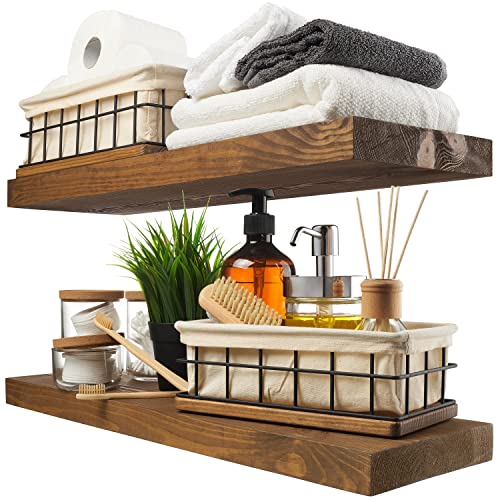
Solid Wood Floating Shelves for Wall 24 Inch Walnut, Wooden Bathroom Shelf
Included for '24 Inch Deep Floating Shelves: Weight Capacity, Installation and Uses' because the listing specifies Wooden Bathroom Shelf, details this guide uses to compare options.
View on Amazon
Amada 24 Inch Floating Shelves with Invisible Brackets, Set of 2, Black
Included for '24 Inch Deep Floating Shelves: Weight Capacity, Installation and Uses' because the listing specifies Set of 2 and Black, details this guide uses to compare options.
View on Amazon| Bracket Type | Studs Hit (16″ Spacing) | Evenly Distributed Load | Front-Edge Load (Heavy Items) | Best For |
|---|---|---|---|---|
| Concealed Single Rod (1/2″ diameter, 2 rods per stud) | 2 studs (32″ wide shelf) | 35-50 lbs | 20-30 lbs | Decor, folded clothes, light pantry items |
| Heavy-Duty Concealed Bracket Bar (Welded steel plate + 3-4 rods) | 2 studs | 65-85 lbs | 40-55 lbs | Small appliances, books, tool bins |
| Heavy-Duty Concealed Bracket Bar | 3 studs (48″ wide shelf) | 80-100 lbs | 60-75 lbs | Microwave, printer, garage storage totes |
| Concealed Bracket + Drywall Anchors Only (No studs) | 0 studs | 15-25 lbs | 10-15 lbs | Decor only – not recommended for 24″ depth |
| Exposed L-Bracket or Industrial Lip Bracket | 2 studs | 75-110 lbs | 50-70 lbs | Maximum capacity, garages and workshops |
Three rules determine where you land in that range:
- Distribution matters more than total weight. A 40 lb microwave pushed against the wall stresses the bracket far less than a 40 lb box hanging off the front edge.
- Shelf material is the limiter. A hollow-core MDF shelf will sag under 40 lbs even if the bracket is rated for 100 lbs. Solid wood, plywood-core, or steel-reinforced shelves are required for heavy use.
- Stud connection is non-negotiable for heavy loads. Use a stud finder and confirm with a finish nail. If you cannot hit at least two studs, choose a shorter shelf or add a cleat.
Bracket Types for 24-Inch Depth
1. Concealed Floating Bracket Bar
This is the true floating look – a thick steel bar screws horizontally to the wall across multiple studs, with long rods that slide into routed channels inside the shelf. For 24-inch depth, look for rods that are at least 10.5 to 12 inches long and 1/2-inch steel. Short 7-inch rods designed for 12-inch shelves will sag and eventually fail. Quality kits usually run $40-$90 per shelf bracket bar.
2. Concealed Single Rods or Floating Dowels
Individual rods that screw directly into studs without a connecting bar. They are cheaper and easier to retrofit, but alignment is harder and they provide less resistance to rotation. Acceptable for light to medium loads on 24-inch shelves if you use 4 to 6 rods per shelf and hit every stud. Not ideal for kitchens or garages with heavy items.
3. Exposed L-Brackets and Industrial Brackets
Not invisible, but far stronger and easier to install correctly. A pair of 24-inch deep steel L-brackets rated at 100 lbs per pair can outperform most concealed systems because the vertical leg distributes load down the wall. Choose this style if you need to store cast iron, power tools, or bulk pantry goods and you prefer function over a seamless look. Painted steel or powder-coated options blend well in garages and laundry rooms.
Installation Realities: Stud Spacing, Wall Types, and Sag Prevention
Standard residential stud spacing in the US is 16 inches on center, with some older homes and garages at 24 inches on center. A 36-inch wide shelf will span two studs on 16-inch spacing, while a 48-inch shelf will span three. Always center the bracket bar so you hit the maximum number of studs.
- Drywall over wood studs: Ideal. Use 2.5 to 3-inch lag screws or structural wood screws into studs. Pre-drill the shelf and wall plate.
- Plaster over lath: Use a stud finder rated for plaster and probe to confirm. Lath alone will not hold a 24-inch shelf.
- Concrete, brick, or block: Requires masonry anchors (concrete sleeve or wedge anchors). Capacity is excellent, but drilling needs a hammer drill and depth matters more with deep shelves.
- Metal studs: Do not mount 24-inch deep floating shelves to metal studs alone for heavy loads. Add a horizontal plywood backer board screwed to multiple studs, or use toggle bolts rated for shear plus a reinforcing cleat.
To prevent sag over time, choose a shelf thickness of 1.5 to 2.25 inches for 24-inch depth. Thinner 1-inch boards will deflect even under light loads when spanning more than 30 inches. For shelves wider than 42 inches, look for internal steel reinforcement or a center bracket, or keep heavy items over the stud locations rather than the center span.
Clearance and Room Fit You Should Measure First
A 24-inch shelf sticks out as far as a standard kitchen base cabinet. Before you buy, check these clearances:
- Above a counter or desk: Leave 18 to 20 inches of vertical clearance between the countertop and the bottom of the shelf so you can use the counter below. Above a desk, 20 to 24 inches prevents head bumps and allows a monitor.
- Above a sofa or bed: Mount at least 12 to 15 inches above the highest point of headboard or sofa back to avoid contact, and keep shelf depth in mind when standing up from seating.
- In a 10×12 ft room or walk-in closet: A 24-inch shelf on one wall leaves about 8 to 9 feet of usable floor depth. Avoid placing deep shelves on both opposing walls in narrow rooms or on walls in front of door swings. Hallways and reach-in closets under 24 inches deep cannot accommodate this size without blocking access.
- Garage over workbench: Mount 24 to 28 inches above the work surface to keep tools visible and to allow storage bins to slide in and out without hitting the ceiling.
Where 24-Inch Depth Is Worth It (And Where It Isn’t)
Kitchens
Use it as an open pantry or appliance shelf. A 24-inch shelf at 54 inches from the floor can hold a microwave, stand mixer, or stacked plates if properly anchored to 2 to 3 studs. Keep it within 36 to 48 inches wide to maximize stud contact and avoid sag. Do not use 24-inch depth directly above a stove – heat and grease collect, and depth can interfere with vent hoods which typically require 30 inches clearance above cooktops.
Garages and Workshops
This is the strongest use case. 24-inch depth matches standard storage tote widths (16 to 18 inches) and allows bins to sit fully on the shelf. Exposed brackets are usually better here than concealed for weight and durability. Plan for 100 lbs per shelf when storing paint cans, hardware, or automotive fluids, and keep chemicals toward the wall side.
Closets and Dressing Areas
A 24-inch deep floating shelf creates a dresser-like surface inside a walk-in closet for folded sweaters, handbags, or shoe boxes without a bulky dresser. In reach-in closets, it only works if the closet is at least 26 to 28 inches deep. For linen closets, the depth is perfect for folded towels and bedding – limit stacks to 18 inches high to avoid toppling.
Home Office and Living Room
Use as a floating desk or media console only if the bracket is rated for continuous load and the shelf is solid core. A 24-inch depth provides proper forearm support for a laptop (standard desks are 24 to 30 inches deep) but needs heavy-duty concealed hardware hitting three studs. For display only, lighter hardware is fine.
Material and Construction Trade-Offs
| Shelf Construction | Typical Thickness | Weight of Shelf Itself (48″ wide) | Sag Resistance | Best For / Limitations |
|---|---|---|---|---|
| Solid Hardwood (maple, oak, walnut) | 1.5″ – 2″ | 25-38 lbs | Excellent | Highest strength and longevity; usually $120-$350 per shelf; heavy to install, needs 2 people |
| Plywood Core with Hardwood Veneer | 1.5″ – 2″ | 20-30 lbs | Very Good | Stable, less prone to warping than solid wood; good balance of cost and strength |
| MDF / Engineered Wood (Hollow Core) | 1.5″ – 2″ | 12-18 lbs | Poor to Fair | Light and affordable ($40-$110); sags under sustained weight; not for garages or kitchens |
| MDF (Solid Core) | 1.5″ | 18-24 lbs | Fair | Better than hollow core but still moisture-sensitive; keep away from sinks |
| Powder-Coated Steel / Metal | 1.5″ – 2″ (folded) | 15-22 lbs | Excellent | Maximum durability for garages; industrial look; can be noisy without shelf liners |
If the listing does not state core type, assume hollow-core MDF. For any heavy use, ask for solid, plywood, or reinforced core and confirm rod diameter before buying.
Decision Matrix: Which Setup Fits Your Situation
- Small apartment, light decor and books: Choose a 24-inch deep plywood-core shelf, 36 inches wide, with a concealed bracket bar hitting 2 studs. Keeps weight under 50 lbs distributed, preserves floor space.
- Renters who cannot open walls: Avoid 24-inch floating shelves unless you can hit studs with minimal patching. A freestanding shelving unit or exposed brackets with fewer, larger anchors that patch easily may be better. If you do install floating, keep loads under 30 lbs and save brackets for move-out repair.
- Family with kids and pets: Choose solid wood or metal with a heavy-duty bar hitting 3 studs and round the front edge. Mount higher (60+ inches) and anchor heavy items toward the wall. Avoid MDF – edges chip and sag invites climbing.
- Garage or utility storage: Choose exposed 24-inch steel L-brackets on every stud plus a solid wood or steel shelf. Prioritize capacity over concealed look.
- Kitchen appliance shelf: Choose 1.75-inch+ plywood-core or solid wood, 36-48 inches wide, heavy-duty concealed bar, 3 studs, with 18-20 inches clearance above counter.
Assembly, Moving, and What Wears First
Expect a 48-inch wide solid wood 24-inch deep shelf to ship in a box weighing 30 to 45 lbs and measuring 50 x 26 x 4 inches. You will need a doorway at least 28 inches wide to maneuver it flat, and a second person to lift and slide it onto rods. Plywood and MDF ship lighter but are bulkier and prone to corner damage – inspect edges before installing.
Installation typically takes 45 to 90 minutes per shelf with a level, stud finder, drill, and 4-foot level. The most common failure is not level drilling – rods that are off by 1/8 inch over 12 inches will show as a visible tilt after loading. Use the paper template included in most kits and verify rod level before sliding the shelf on.
What wears first is not usually the bracket, but the shelf itself. MDF sags in the center after 6 to 12 months under constant load, and veneer peels near sinks or garages with humidity swings. Solid wood may develop a slight finish scuff at the front edge where bins slide. Add felt liners or shelf liners to reduce abrasion and moisture contact.
FAQ
Can I put a 24-inch deep floating shelf on drywall without studs?
Not for anything heavy. Drywall anchors alone typically hold 15 to 25 lbs on this depth and will eventually pull out due to leverage. Always anchor into studs for kitchen, garage, or closet storage.
How far apart should floating shelves be vertically?
For storage, space them 15 to 18 inches apart to fit bins and small appliances. For display with vases or books, 12 to 15 inches is enough. If you plan to slide storage totes in and out, measure the tote height plus 2 inches of finger clearance.
Will a 24-inch shelf sag in the middle?
It will if it is hollow-core MDF, too thin, or spans more than 36 inches without reinforcement. Choose 1.5 inches or thicker, plywood or solid wood core, and keep heavy weight over stud locations. If you need 48 inches wide, use a heavy-duty bar that hits three studs.