Key takeaways
- Overall dimensions: 36 inches wide x 48 inches high x 12 inches deep. This width fits 20-25 standard paperbacks per shelf. The 12-inch depth accommodates most books (average hardcover is 6-9 inches deep) with 3-4 inches of clearance in front to prevent books from hanging over the edge.
- Shelf spacing: 11-12 inches between shelves for general use. Use 8-9 inches for paperbacks only, and 13-14 inches if you store large art books or binders. Adjustable shelves are ideal if you mix sizes.
- Shelf thickness: Use 3/4-inch (19mm) material minimum. Thinner 1/2-inch shelves will sag under book weight within months on any span over 24 inches.
- Room fit: Leave at least 30 inches of clearance in front of the bookshelf for access and to open nearby doors. In a 10×12 ft room, a 36-inch wide unit leaves enough space for a desk or armchair alongside. Allow 1-2 inches from the side wall for baseboards and airflow. If placing against a wall longer than 72 inches, you can build two units side-by-side and anchor them together.
- Weight limits: Books are heavy. An average linear foot of books weighs 20-30 lbs. A 36-inch shelf fully loaded can hold 60-90 lbs. Your total loaded bookshelf can easily exceed 250-300 lbs, so wall anchoring and strong joinery are non-negotiable.
What's inside
To build a sturdy 36″W x 48″H x 12″D freestanding bookshelf for standard hardcovers and paperbacks, you need 3/4-inch plywood or solid wood boards, a cut list of two 48″ sides, five 34.5″ shelves (including top and bottom), and a 1/4″ plywood back panel, assembled with wood glue and screws or dado joints, using a circular saw or table saw, drill/driver, and a level.
Choose the Right Size Before You Cut
A bookshelf that holds books without sagging or tipping depends on getting the proportions right first. The dimensions below are designed for a medium 4-shelf unit that fits most living rooms, bedrooms, and home offices without overwhelming the space or blocking doorways.
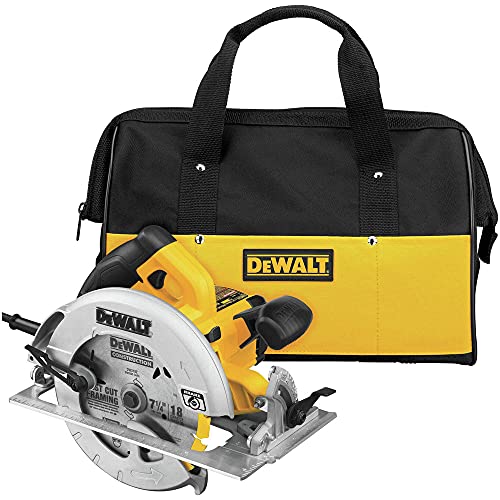
DEWALT Circular Saw, 7-1/4 inch, Pivoting with up to 57 Degree Bevel, Corded (DWE575SB)
Included for 'How to Build a Bookshelf: Step-by-Step Guide with Measurements and Tools' because the listing specifies 7-1/4 inch and Pivoting with up to 57 Degree Bevel, details this guide uses to compare options.
View on Amazon
DEWALT 7-1/4-Inch Circular Saw, Lightweight, Corded (DWE575)
Included for 'How to Build a Bookshelf: Step-by-Step Guide with Measurements and Tools' because the listing specifies Lightweight and Corded (DWE575), details this guide uses to compare options.
View on Amazon
DEWALT 20V MAX XR Brushless Cordless 7-1/4 in. Circular Saw Kit with Battery and Charger (DCS590WW1)
Included for 'How to Build a Bookshelf: Step-by-Step Guide with Measurements and Tools' as a relevant option in this category; details come from the product listing.
View on Amazon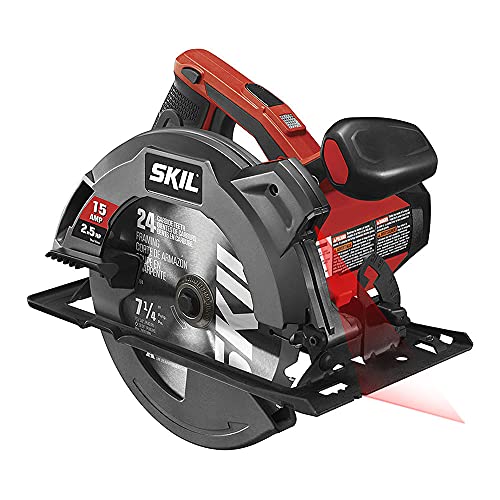
SKIL 15 Amp 7-1/4 Inch Circular Saw with Single Beam Laser Guide - 5280-01
Included for 'How to Build a Bookshelf: Step-by-Step Guide with Measurements and Tools' because the listing specifies 5280-01, details this guide uses to compare options.
View on Amazon- Overall dimensions: 36 inches wide x 48 inches high x 12 inches deep. This width fits 20-25 standard paperbacks per shelf. The 12-inch depth accommodates most books (average hardcover is 6-9 inches deep) with 3-4 inches of clearance in front to prevent books from hanging over the edge.
- Shelf spacing: 11-12 inches between shelves for general use. Use 8-9 inches for paperbacks only, and 13-14 inches if you store large art books or binders. Adjustable shelves are ideal if you mix sizes.
- Shelf thickness: Use 3/4-inch (19mm) material minimum. Thinner 1/2-inch shelves will sag under book weight within months on any span over 24 inches.
- Room fit: Leave at least 30 inches of clearance in front of the bookshelf for access and to open nearby doors. In a 10×12 ft room, a 36-inch wide unit leaves enough space for a desk or armchair alongside. Allow 1-2 inches from the side wall for baseboards and airflow. If placing against a wall longer than 72 inches, you can build two units side-by-side and anchor them together.
- Weight limits: Books are heavy. An average linear foot of books weighs 20-30 lbs. A 36-inch shelf fully loaded can hold 60-90 lbs. Your total loaded bookshelf can easily exceed 250-300 lbs, so wall anchoring and strong joinery are non-negotiable.
Tools and Materials: What You Actually Need
Essential Tools
You do not need a full workshop. For this build, choose one cutting option and one drilling option:
- For cutting: Table saw gives the cleanest, straightest rips for plywood. A circular saw with a straight-edge guide is a more affordable alternative and works well in small spaces. A miter saw helps for accurate crosscuts on solid wood boards.
- For joining: Cordless drill/driver, countersink bit, tape measure, speed square, and 24-inch level.
- For reinforcing: Clamps (at least 2 x 24-inch bar clamps), wood glue, 120 and 220-grit sandpaper.
- Optional but recommended: Pocket-hole jig for hidden screws, brad nailer for attaching the back panel, and a router with a 3/4-inch straight bit if you plan dado joints.
Cut List and Materials for a 36″W x 48″H x 12″D Bookshelf
This cut list assumes 3/4-inch plywood or edge-glued pine boards. All measurements are finished sizes. Buy one sheet of 3/4″ x 4′ x 8′ plywood and one sheet of 1/4″ x 4′ x 4′ plywood for the back.
| Part | Quantity | Dimensions (Thickness x Width x Length) | Notes |
|---|---|---|---|
| Sides (Uprights) | 2 | 3/4″ x 12″ x 48″ | Grain runs vertically |
| Top & Bottom Shelves | 2 | 3/4″ x 12″ x 34.5″ | Fits between sides (36″ – 1.5″) |
| Fixed Middle Shelf | 1 | 3/4″ x 12″ x 34.5″ | Adds rigidity, prevents racking |
| Adjustable Shelves | 2 | 3/4″ x 11.75″ x 34.25″ | Slightly shallow/narrow for pin clearance |
| Back Panel | 1 | 1/4″ x 35.25″ x 47.25″ | Prevents racking, keeps books from touching wall |
| Face Frame Strips (optional) | 2 | 3/4″ x 1.5″ x 48″ | Covers plywood edges on front of sides |
Hardware: 1-1/4″ wood screws (approx. 40), 3/4″ brad nails for back panel, shelf pins (8-12), wood glue, and two L-brackets or anti-tip furniture straps for wall anchoring. If using solid wood boards, allow for wood movement and do not glue the back panel solid.
Step-by-Step: How to Build the Bookshelf
Step 1: Cut All Pieces and Sand
Measure twice, cut once. Rip your plywood to 12-inch widths first, then crosscut to length. Label each piece. Sand all parts with 120-grit, then 220-grit before assembly, especially interior faces that are harder to sand later. Keep the best-looking face outward for the sides.
Step 2: Mark Shelf Positions
Lay both side panels flat, insides facing up. Mark a line 3/4″ from the bottom for the bottom shelf (which sits between the sides, not under them, for strength). Then mark the top shelf flush with the top ends. Mark the fixed middle shelf at 24″ from the bottom. This creates two 15.5″ openings on the bottom half and top half, ideal for most books. If using adjustable shelves, mark pin holes now: two parallel rows 2″ from front and back edges, holes every 2″ vertically, using a shelf-pin jig for accuracy.
Step 3: Cut Joinery
Choose your joint method. For the strongest, longest-lasting shelf, cut 3/4″ wide x 1/4″ deep dadoes at your marks for the fixed shelves (bottom, middle, top). A router or table saw with dado stack works best. If you do not have a router, drill pilot holes and use two 1-1/4″ screws per side per shelf with glue and countersinking instead. Dadoes increase weight capacity by 30-40% and prevent shelves from pulling out under load.
Step 4: Assemble the Frame
Apply wood glue in the dadoes or on the shelf ends. Stand one side panel upright, insert the bottom, middle, and top shelves, then attach the second side. Check for square by measuring diagonally corner-to-corner; both measurements should match within 1/16″. Drive screws if not using dado-only glue joints. Use clamps to hold until screws are set. Add the adjustable shelves later, do not fix them now.
Step 5: Attach the Back Panel
The back is structural, not just cosmetic. Lay the assembled frame face-down on a flat floor. Square the frame again, then position the 1/4″ plywood back so it sits inset 1/4″ from the outer edges of the sides/top/bottom. Nail or screw every 6-8 inches around the perimeter and into the fixed middle shelf. This single step prevents the bookshelf from racking or wobbling side-to-side.
Step 6: Add Face Frame and Finish
If using plywood, glue and nail the 1.5-inch face strips to the front edges of the sides to hide the plies. Fill screw holes with wood filler, let dry, sand flush. Apply finish before loading books: water-based polyurethane (usually $30-$50 per quart) is durable and low-odor, while linseed oil or hardwax oil highlights wood grain. Always finish both sides of shelves to reduce warping.
Step 7: Anchor and Load
Move the empty bookshelf to its final position. It will weigh 45-60 lbs empty. Check that it fits through doorways (standard interior door is 28-30 inches wide, so a 12-inch deep unit passes easily sideways). Anchor to wall studs with furniture straps or L-brackets at the top. Place heaviest books on the bottom fixed shelf, lighter paperbacks up top. Leave 1 inch of space behind books for air circulation to prevent mildew.
Joinery and Material Choices: What Holds Weight Best
Material Comparison for Bookshelves
| Material | Sag Resistance (36″ Span) | Weight Capacity Per Shelf | Cost Range (2026) | Best For |
|---|---|---|---|---|
| 3/4″ Solid Hardwood (Oak, Maple) | Excellent | 80-100 lbs | Usually $80–$150 per board | Heirloom builds, heavy art books |
| 3/4″ Hardwood Plywood (Birch, Oak Veneer) | Very Good | 70-90 lbs with dadoes | Usually $60–$90 per 4×8 sheet | Best strength-to-cost for most DIYers |
| 3/4″ Pine / Whitewood Boards | Good | 60-75 lbs | Usually $20–$40 per 12″ board | Budget, painted finishes |
| 3/4″ MDF / Particleboard | Poor – sags over time | 40-50 lbs max | Usually $35–$55 per sheet | Light decor, not recommended for books |
| Metal Brackets + Wood Shelves | Excellent | 100+ lbs if anchored to studs | Usually $40–$80 for brackets | Industrial look, renters who need wall shelves |
Joinery Weight Trade-Off
Not all joints carry weight equally. On a 34.5-inch shelf span:
- Dado + glue: Strongest wood-only joint. Supports 80-90 lbs per shelf without metal hardware. Prevents shelf sag and pull-out.
- Pocket screws + glue: Strong, hidden, requires jig. Supports 70-80 lbs. Good alternative if you cannot cut dadoes.
- Butt joint with screws only: Easiest for beginners. Supports 60-70 lbs. Must use at least 2 screws per end and always add a back panel or shelf will loosen.
- Shelf pins (for adjustable shelves): Supports 40-60 lbs per shelf depending on pin diameter. Use 1/4″ metal pins, not plastic, and drill 1/2″ deep holes.
For a bookshelf that will be moved between homes, avoid MDF entirely. MDF screws strip easily, the material swells with humidity, and a loaded MDF unit can weigh 70+ lbs but break when carried. Plywood with dado joints will survive multiple moves and can be disassembled if you use screws rather than nails on the back panel.
Durability, Assembly and Moving Realities
A solid wood bookshelf will outlast engineered wood by 10-20 years if finished properly. What wears first is not the wood, but the finish on the top edge where objects are slid on and off, and the shelf pin holes if overloaded. Apply two extra coats of polyurethane to the top shelf and the front edges.
Boxed flat-pack bookshelves typically ship at 50-75 lbs and are difficult to carry up stairs alone. A DIY plywood unit is similar in weight but more rigid. Build it in the room where it will live if your hallway is narrow or has tight turns under 32 inches. If you are a renter who cannot drill into walls, make the unit shorter and wider (30″H x 48″W) for a lower center of gravity, or add a 3-inch base kick to prevent tipping and place the heaviest items on the lowest shelf.
FAQ
How deep should a bookshelf be for books?
11 to 12 inches deep is standard. It fits hardcovers with room to spare and keeps the footprint small. Go to 14-16 inches only for oversized art books or if you plan to store bins.
How far apart should bookshelf shelves be?
12 inches apart fits 90% of books. If you store mostly paperbacks, 9 inches maximizes storage. For mixed collections, make at least two shelves adjustable.
How do I prevent shelves from sagging?
Use 3/4-inch material, keep spans under 36 inches, add a fixed middle shelf for support, and use dado or pocket-screw joinery. Adding a 1×2 hardwood edge strip glued to the front of each shelf also increases stiffness by about 25%.
Do I need to anchor a 48-inch bookshelf to the wall?
Yes. Any bookshelf taller than 30 inches or loaded with more than 100 lbs should be anchored to wall studs with straps or brackets. This is essential in homes with children, pets, or on carpet where the unit can lean.