Key takeaways
- A whole home air purifier and humidifier is usually two HVAC modules working together, not one box, and filtration and humidity are measured on separate scales. This guide compares four current paired systems on MERV, particle capture, and gallons per…
A whole home air purifier and humidifier is usually two HVAC modules working together, not one box, and filtration and humidity are measured on separate scales. This guide compares four current paired systems on MERV, particle capture, and gallons per day so neither number hides the other.
As an Amazon Associate we earn from qualifying purchases.
By KK Home Furnishings Editorial Team
How to Choose a Whole-Home Air Purifier and Humidifier System
A whole-home setup pairs an air cleaner with a humidifier in your ductwork, so these criteria keep the two functions apart: separating filtration from humidification metrics, reading MERV and particle capture, checking gallons per day for moisture, and confirming the system fits your HVAC and its static pressure.
Separate Filtration From Humidification Metrics
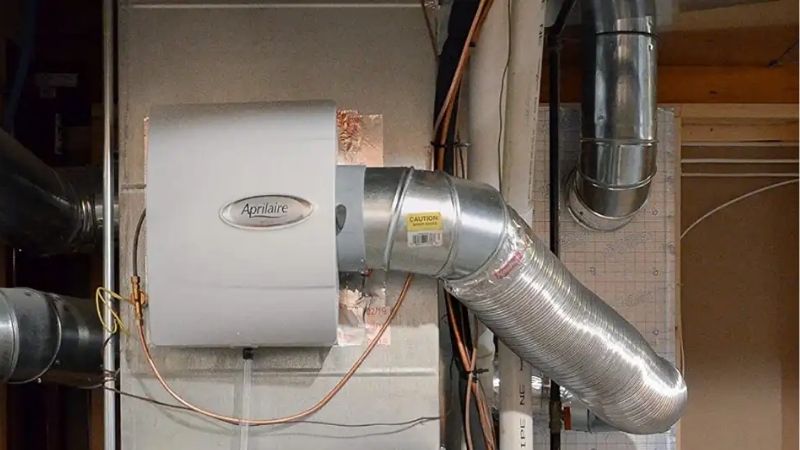
Filtration and humidification are different jobs measured on different scales, and a whole-home system does both through separate modules. The air cleaner is rated by MERV and particle capture, while the humidifier is rated in gallons per day, so never combine the two into a single performance score when comparing systems.
Judge each module against your need: filtration for allergens, dust, and smoke, and humidification for dry winter air. A system strong on one is not automatically strong on the other, so match the air cleaner to your air-quality concern and the humidifier to your home’s dryness rather than trusting one headline rating alone.
Because the metrics are independent, a high MERV does not offset a small humidifier or the reverse. Confirm both specs for the exact paired modules, since mixing a strong filter with an undersized humidifier leaves winter air dry, and pairing a big humidifier with a weak filter leaves particles in the air you breathe.
MERV and Particle Capture
MERV rates how well a filter captures particles, and the picks here span MERV 11 to 15. The Carrier Infinity lists MERV 15 with up to 95% capture of 1-to-3-micron particles, while the Honeywell F300 is a MERV-11-class electronic air cleaner, so higher MERV generally means finer capture at the cost of more airflow resistance.
Match MERV to your concern and your blower’s capacity, since a very high MERV can restrict airflow on some systems. The AprilAire 5000 uses MERV-10 media rated to perform like MERV 15 under AHRI 680 testing, which shows why the test condition matters as much as the number when comparing one air cleaner to another here.
MERV is not CADR, so do not compare a whole-home MERV rating to a portable unit’s CADR figure. A higher MERV captures finer particles but adds static pressure, so confirm your blower can handle it, because an overly restrictive filter can reduce airflow and strain the HVAC system it was meant to clean the air for.
Gallons per Day for Humidification
Humidifier output is rated in gallons per day, and the picks here range from about 17.5 to 34. The Carrier Performance humidifier lists up to 34 gallons per day, the Lennox 17 and the Honeywell HE360 17.5, so match the output to your home’s size and dryness rather than assuming any whole-home humidifier covers every house.
Size output to the square footage and how dry the climate runs, since a larger or leakier home needs more gallons per day. A unit rated for 17 gallons may suit a smaller or tighter house, while a very dry climate or a large home leans toward the higher-output options, so the home, not the label, sets the right number.
Gallons per day is a capacity rating, not a room-coverage guarantee, and it depends on your HVAC runtime and humidistat setting. Confirm the output against your home size, since an undersized humidifier runs constantly without reaching target humidity, while an oversized one can over-humidify and risk condensation on cold windows.
HVAC Compatibility and Static Pressure
A whole-home system installs into your ductwork, so it must fit the HVAC and its airflow. Filters add static pressure: the Honeywell F300 lists a pressure drop around 0.15 to 0.26 inches of water at 500 feet per minute, a number that matters because too much resistance reduces airflow through the whole HVAC system.
Confirm your blower can handle the added resistance and that the humidifier’s electrical and water needs are met, such as the Lennox humidifier’s 24-volt, 0.5-amp supply. These are integrated components, so a professional should verify duct size and static pressure before installation rather than assuming any module drops into any system.
Because these systems tie into the HVAC, installation and compatibility are part of the real cost, not an afterthought. Get a contractor to check static pressure and blower capacity, since a mismatch can reduce heating and cooling airflow, and factor professional installation into the budget rather than treating these as plug-in devices.
Top Whole-Home Combinations
These four are current paired whole-home systems compared on MERV and particle capture for the air side and gallons per day for the humidifier; all require professional HVAC installation, so treat pricing as a quote-based premium and read filtration and humidification as two separate numbers rather than one.
| Product | Best For | Key Spec | Watch Out For |
|---|---|---|---|
| Carrier Infinity Air Purifier + Performance Humidifier | Best overall system | MERV 15; up to 95% capture (1-3 micron); up to 34 gal/day | Professional HVAC install |
| AprilAire Model 5000 + humidifier | High filtration | MERV-10 media, MERV-15-equivalent (AHRI 680); 95% capture | Media performance is test-based |
| Honeywell F300 + HE360 | Serviceable electronic air cleaner | MERV 11; 0.15-0.26 in.w.g. drop; 17.5 gal/day | Electronic cells need cleaning |
| Lennox Healthy Climate + HCWB17 | Simple HVAC pairing | 17 gal/day; 24V / 0.5A humidifier | Filtration sold separately |
Best Overall System – Carrier Infinity + Performance Humidifier
This Carrier pairing suits homeowners who want strong filtration and high humidifier output in one coordinated system. The Infinity air purifier lists MERV 15 with up to 95% capture of 1-to-3-micron particles, and the Performance humidifier up to 34 gallons per day, so both modules are rated at the top of this group.
The MERV-15 filtration and the 34-gallon output make it the most capable pairing here for a larger or dry home. Because both modules come from one maker, they are designed to work together in the Infinity control system, which simplifies setup compared with mixing components from different brands in the same ductwork.
The trade-off is that high MERV adds static pressure, so a contractor must confirm the blower can handle it first. Like all of these, it requires professional HVAC installation rather than a simple plug-in, so budget for the install and the air-filter and water-panel replacements that keep both modules performing over the years.
Best High-Filtration Setup – AprilAire 5000 + AprilAire Humidifier
The AprilAire 5000 fits homes that prioritize fine particle capture above all else. It uses MERV-10 media rated to perform like MERV 15 under AHRI 680 testing, with about 95% capture, so its filtration leans high while the paired AprilAire humidifier handles moisture, keeping the two functions on separate, clearly stated ratings.
The media-plus-performance approach is the draw, combining a replaceable media filter with electronic enhancement for high capture at a manageable airflow cost. For allergy or smoke concerns, that high effective MERV is the highlight, so it reads as the pick when filtration matters more than maximum humidifier output does.
Because its rating is test-based, confirm the AHRI 680 context rather than reading MERV 15 as identical to a standard pleated filter. It still installs into the HVAC and needs professional setup, so plan for media replacement on schedule, since a loaded media filter raises static pressure and cuts airflow through the system.
Best Serviceable Electronic Air Cleaner – Honeywell F300 + HE360
The Honeywell F300 paired with the HE360 humidifier suits owners who want a cleanable electronic cell. The F300 is a MERV-11-class electronic air cleaner with a listed pressure drop around 0.15 to 0.26 inches of water at 500 feet per minute, and the HE360 adds about 17.5 gallons per day of humidification output.
The electronic cell is washable rather than disposable, which can lower long-term filter costs for diligent owners. Its lower pressure drop is easier on the blower than a very high-MERV media filter, so it reads as the pick when static pressure is a concern and someone will actually clean the cell on a regular schedule.
The catch is maintenance: an electronic cell must be cleaned regularly or its capture drops, so it trades filter purchases for a cleaning chore. It installs into the HVAC and needs professional setup, and the 17.5-gallon humidifier suits a moderate home rather than a very large or extremely dry one in deep winter.
Best Simple HVAC Pairing – Lennox Healthy Climate Components
The Lennox pairing fits owners who want straightforward whole-home humidification tied into a Lennox system. The HCWB17 humidifier lists about 17 gallons per day on a 24-volt, 0.5-amp supply, a modest, simple output suited to a smaller home or a milder climate rather than a large, very dry house in the depth of winter.
The simplicity is the draw: a bypass-style humidifier with modest electrical needs integrates cleanly into a compatible HVAC system. For a home that mainly needs winter moisture and pairs it with a separate Lennox air-cleaning component, it reads as the practical, lower-complexity choice rather than a maximum-performance setup.
Because the air-cleaning side is a separate component, confirm which filter accompanies it rather than assuming high MERV. It still requires professional installation and a water line, and the 17-gallon output suits smaller homes, so size it to your square footage before assuming it will keep a large house at target humidity.
Frequently Asked Questions
These answers cover what whole-home buyers ask most, from whether one box can do both jobs, to what MERV and gallon ratings a home needs, and when a renter or a home without ducted, forced-air HVAC is better served by portable room units instead of a ducted, professionally installed whole-home system.
Can one unit purify and humidify a whole house?
Usually not from a single box; a whole-home setup is typically two HVAC modules, an air cleaner and a humidifier, working in the same ductwork. The air cleaner captures particles and the humidifier adds moisture, so they are separate components with separate ratings rather than one appliance doing both jobs at once.
Because the functions are separate, you size each one on its own: MERV and capture for the filter, gallons per day for the humidifier. A system strong on filtration is not automatically strong on humidity, so confirm both modules suit your home rather than assuming one coordinated label covers both needs equally well.
The two tie into the HVAC and run when the blower runs, so installation and compatibility matter as much as the ratings. Have a contractor confirm duct size and static pressure, since the modules only perform as rated when the system moves enough air through both of them during normal heating and cooling cycles.
What MERV rating do I need?
It depends on your concern and your blower, with the picks here spanning MERV 11 to 15. A higher MERV captures finer particles, useful for allergies or smoke, but it adds airflow resistance, so the right rating balances capture against what your HVAC can push without straining the blower or cutting heating and cooling airflow.
MERV is not the same as a portable unit’s CADR, so do not compare the two directly when sizing a whole-home filter. Confirm your system can handle the static pressure a high-MERV filter adds, since an overly restrictive filter reduces airflow and can make the furnace or air handler work harder than it was designed to.
Test conditions matter too, as the AprilAire 5000’s MERV-15-equivalent rating under AHRI 680 shows. Read the context behind a number rather than the number alone, and have a contractor verify compatibility, because the best MERV on paper is the wrong choice if it chokes airflow through your particular ductwork and blower.
How many gallons per day of humidification do I need?
It depends on home size and dryness, with the picks here ranging from about 17 to 34 gallons per day. A smaller or tighter home may be fine near 17 gallons, while a large home or a very dry climate leans toward the higher-output units, so the square footage and climate set the number rather than a single label.
Gallons per day is a capacity rating, not a coverage guarantee, and it depends on HVAC runtime and the humidistat setting. An undersized humidifier runs constantly without reaching target humidity, while an oversized one can over-humidify, so match the output to the home to avoid both dry air and condensation on cold windows.
Confirm the output against your home before buying, and remember whole-home humidifiers run through the ductwork when the system is on. In a very dry winter, a large home may need the top of this range, so size the humidifier to the house rather than assuming a mid-range gallon figure will keep every room comfortable.
Are portable units ever a better choice?
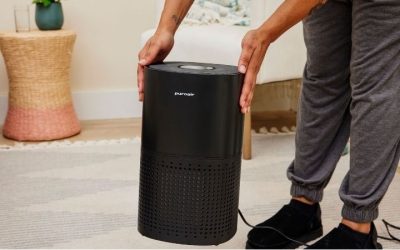
Yes; renters and homes without ducted, forced-air HVAC are often better served by portable room units. A whole-home system needs compatible ductwork and professional installation, so if you cannot modify the HVAC or do not have forced air, portable purifiers and humidifiers deliver filtration and moisture room by room instead.
Portable units also let you treat only the rooms you use and move them as needed, which suits apartments and spaces without central air. The trade-off is per-room coverage and more devices to maintain, so weigh the flexibility against the convenience of a single ducted system that treats the whole house at once each day.
Decide by your home and tenancy first: own a house with compatible forced-air HVAC and a whole-home system makes sense; rent or lack ducts and portable units win. A whole-home setup is an installed investment, so it fits long-term owners more than renters who cannot alter the ductwork or take the system along when they move.
Final Thoughts
Choosing a whole home air purifier and humidifier means reading filtration and humidification as two separate ratings, not one score. The Carrier leads on MERV 15 and 34 gallons a day, the AprilAire on filtration, the Honeywell F300 on a serviceable cell, and the Lennox on simple pairing, so have a contractor confirm the HVAC fit first.