Key takeaways
- The best dining room table pads protect the tabletop itself from heat, water, and scratches, not just cushion a tablecloth, so a custom fit and a real heat rating matter most. This guide compares four current custom table pads on…
The best dining room table pads protect the tabletop itself from heat, water, and scratches, not just cushion a tablecloth, so a custom fit and a real heat rating matter most. This guide compares four current custom table pads on fit method, thickness, and heat resistance.
As an Amazon Associate we earn from qualifying purchases.
By KK Home Furnishings Editorial Team
How to Choose Dining Room Table Pads
A table pad is judged by how well it fits and protects, so these criteria stay practical: measuring the table with and without its leaves, comparing pad thickness, checking the manufacturer’s heat rating, and choosing a soft underside that protects the finish rather than scratching the tabletop it sits on.
Measure the Table With and Without Leaves
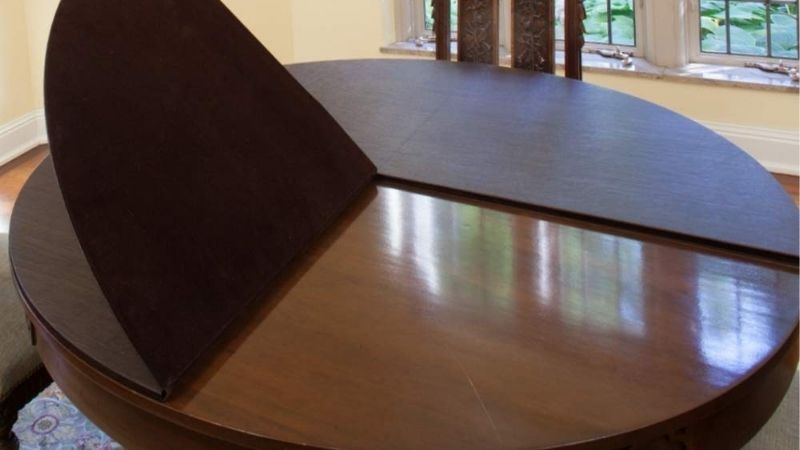
A custom pad only protects if it fits exactly, so measure the tabletop precisely, including any leaves you use. Custom pads are made to the tabletop’s dimensions, so record the length and width with and without leaves, since a pad sized only for the closed table leaves the leaves unprotected when the table is extended for guests.
Measure the actual tabletop rather than adding allowance, since makers cut to your figures unless they request extra. Follow the maker’s measuring instructions, because adding your own allowance can make a pad too large, and these pads are custom and generally non-returnable, so an accurate measurement is the single most important step here.
For tables with leaves, order pad sections to match each configuration you use, since one pad cannot cover every size. A sectioned pad protects both the closed and extended table, so plan for the leaves, because a pad that only fits the closed table forces the bare, extended leaves to take the heat and spills the pad was bought to prevent.
Compare Pad Thickness
Thickness affects both protection and how the pad handles, and these pads list around half an inch. A half-inch pad, as all four here list, cushions against impact and insulates against heat, so compare the thickness, since a thicker pad protects better against dents and hot dishes but is bulkier to store between uses at home.
Match thickness to your use, since a table used heavily for hot dishes benefits from the insulation a half-inch core provides. A thinner pad stores more easily but cushions less, so weigh protection against storage, because the half-inch standard here balances real protection with a pad you can still slide behind furniture when not in use.
Thickness is not the same as heat rating, so do not assume a thicker pad resists more heat on its own. The two are separate specs, since heat resistance comes from the materials and rating, not thickness alone, so check both, because a half-inch pad with a strong heat rating protects differently than one judged on thickness alone here.
Check the Manufacturer’s Heat Rating
Heat resistance is the headline protection, and these pads list ratings up to 550 degrees Fahrenheit for hot dishes. A high rating means the pad withstands hot serving dishes without transferring heat to the finish, so check the figure, since a pad rated up to 550 degrees Fahrenheit guards the tabletop from the hot cookware a dinner brings.
Treat the rating as a ceiling, not a license to place anything on it, since a very hot pan can still mark a pad over time. A 550-degree rating protects against typical serving temperatures, so use trivets for the hottest cookware, because the rating describes resistance, not that hot cookware can never damage the pad under any use at all.
Match the rating to how you actually use the table, since a table that regularly holds hot dishes needs the full rating. For light use the rating is margin, so it is reassurance rather than a daily test, because the heat rating matters most when serving straight from the oven, where it keeps the heat off the finish beneath the dish.
Choose a Soft Underside That Protects the Finish
The underside is what touches the tabletop, so it must protect the finish rather than scratch it over time. A soft, non-abrasive backing like felt or flannel guards the wood, so check the underside material, since a pad with a hard or rough backing can scratch the very finish it was bought to protect over months of use.
Match the underside to your tabletop, since a delicate or high-gloss finish needs a particularly soft, clean backing. A felt-style underside cushions and grips without marking, so confirm the material, because the pad sits in direct contact with the finish, and a backing that traps grit can abrade the surface each time the pad shifts.
A locking system also affects the underside, since sections must align without exposing the hard core to the finish below. The Elite model uses magnetic locking to hold sections together, so the join stays smooth, because sections that shift can expose an edge to the tabletop, and a clean, aligned underside keeps the whole pad protecting evenly.
Top Picks
These four are current custom table pads compared on fit method, thickness, and heat rating rather than price alone; three are fully price-verified and one is quote-based, so confirm the live price and provide exact tabletop measurements before ordering, since custom pads are made to your figures and non-returnable.
| Product | Best For | Key Spec | Watch Out For |
|---|---|---|---|
| Table Pads Pro Rectangular | Best overall | 0.5 in; up to 550 degrees F; dense fiberboard core | Custom, measure exactly |
| Table Pads Pro Custom Shape | Oval or unusual shapes | 0.5 in; up to 550 degrees F; custom shape | Trace edges carefully |
| Elite #5001 | Magnetic-locking alternative | 0.5 in; up to 550 degrees F; magnetic locks | Higher price tier |
| Ohio Table Pad Company | Quote-based custom option | 0.5 in; up to 550 degrees F; made-to-order | Price quote-based |
Best Overall – Table Pads Pro Rectangular Custom Pad
The Table Pads Pro Rectangular pad suits most standard dining tables that need reliable, all-round protection. It lists a half-inch thickness, a heat rating up to 550 degrees Fahrenheit, and a dense fiberboard core, so it combines real insulation with a sturdy core, which makes it the all-round pick for a rectangular tabletop at a mid price.
The dense fiberboard core and half-inch thickness are the draw, cushioning against impact while the 550-degree rating guards against hot dishes. It reads as the pick for a standard rectangular table, so it suits most dining rooms, provided you measure the tabletop exactly, since the pad is cut to your figures and made to order each time.
The catch is that, like any custom pad, it is made to your measurements and generally non-returnable, so measure carefully first. Order leaf sections if your table extends, and use trivets for the hottest cookware, since the 550-degree rating protects against typical serving heat but is not a guarantee against any possible damage at all.
Best for Oval or Unusual Shapes – Table Pads Pro Custom Shape Pad
The Table Pads Pro Custom Shape pad fits tables that are not simple rectangles, such as oval or irregular tops. It lists a half-inch thickness and a heat rating up to 550 degrees Fahrenheit in a custom shape, so it protects an oval or unusually shaped tabletop that a standard rectangular pad simply could not cover correctly.
The custom shape is the draw, following the tabletop’s actual outline rather than forcing a rectangle onto a curved or irregular table. It reads as the pick for an oval or shaped table, so it suits dining rooms with non-standard tops, provided you trace the edges accurately, since the pad is cut to match the shape you supply the maker.
The catch is that tracing a complex edge correctly is harder than measuring a rectangle, so follow the maker’s template instructions. As a custom pad it is non-returnable, so the tracing must be right, and use trivets for very hot cookware, since the 550-degree rating resists typical heat but does not make the pad impossible to damage.
Best Magnetic-Locking Alternative – Elite Model #5001
The Elite #5001 suits buyers who want sections that lock together cleanly on a larger or extending table. It lists a half-inch thickness, a heat rating up to 550 degrees Fahrenheit, and magnetic section locking, so it holds multi-section pads aligned, which keeps the join smooth on a table that needs more than one pad section.
The magnetic locking is the standout, keeping sections from shifting so no hard edge is exposed to the finish between them. It reads as the pick when a table uses multiple sections or leaves, so it suits larger dining tables where aligned sections matter, provided the higher price fits the budget for the added magnetic locking feature.
The catch is price, since it sits above the Table Pads Pro options in this group, so weigh the magnetic locking against the cost. Measure exactly and order leaf sections as needed, since it is custom and non-returnable, and use trivets for the hottest dishes, as the 550-degree rating is resistance rather than total immunity to heat.
Best Quote-Based Custom Option – Ohio Table Pad Company
The Ohio Table Pad Company option fits buyers who want a made-to-order pad and a direct quote rather than a listed price. It lists a half-inch thickness and a heat rating up to 550 degrees Fahrenheit as a made-to-order pad, so it covers the same protection with pricing handled through a custom quote for your specific table.
The made-to-order, quote-based approach is the draw for an unusual table or specific requirements a standard listing may not cover. It reads as the pick when you want to discuss the order directly, so it suits a bespoke need, provided you are comfortable requesting a quote, since the current price is not published and is set per individual order.
The catch is that the price is quote-based and not verified, so confirm the cost before ordering rather than assuming a figure. Provide exact measurements, since it is custom and non-returnable, and use trivets for very hot cookware, because the 550-degree rating protects against typical serving heat but is not a promise against all damage.
Frequently Asked Questions
These answers cover what table-pad buyers ask most about ordering a custom pad, from how to measure a table with leaves, to how much heat a pad really withstands, and how to store sections safely when the pad is not protecting the tabletop between meals and family gatherings in the dining room.
How do I measure for a custom table pad?
Measure the tabletop’s exact length and width, including any leaves you use, since a custom pad is cut to those figures. Record the dimensions with and without leaves, because the maker cuts to your measurements, and a pad sized only for the closed table leaves the extended leaves unprotected when the table is opened for guests.
Do not add your own allowance unless the maker requests it, since they generally cut to the exact figures you provide them. Follow the maker’s measuring guide, because adding allowance can make the pad oversized, and custom pads are typically non-returnable, so an accurate measurement is the most important step in the whole order process.
For complex shapes, trace the edges with the maker’s template rather than estimating, since a curve must match exactly. Order separate leaf sections for each configuration you use, because one pad cannot cover both the closed and extended table, and matching sections to the table’s sizes is what keeps the whole surface protected at meals.
How much heat can a table pad withstand?
The pads here list heat ratings up to 550 degrees Fahrenheit, which covers typical hot serving dishes without transferring heat to the finish. That rating guards the tabletop from the warmth a dinner service brings, so a high figure matters, since the pad’s main job is keeping heat off the wood beneath the serving dishes at dinner.
Treat the rating as resistance, not immunity, since a very hot pan placed directly can still mark a pad over time. Use trivets for the hottest cookware, because a 550-degree rating protects against normal serving temperatures but does not mean hot cookware can never damage the pad, so the rating is a safeguard rather than a free license.
Match the rating to your use, since a table that regularly holds hot dishes relies on the full heat resistance of the pad. For light use the rating is margin, so it is reassurance rather than a daily test, because the heat rating matters most when serving straight from the oven, where it keeps the heat off the finish underneath the dish.
Do table pads protect against water and scratches too?
Yes; a good pad guards against water, scratches, and impacts as well as heat, since its job is protecting the finish overall. The pad sits between the tabletop and whatever is placed on it, so it catches spills and prevents scratches, which makes it useful beyond heat, especially on a table used daily rather than only for formal meals.
The soft underside also protects the tabletop from the pad itself, since a felt-style backing cushions without marking the finish. A non-abrasive underside is key, because a hard or gritty backing could scratch the surface it protects, so confirm the underside material, as the pad touches the finish directly every single time it is placed.
For full coverage, keep the pad on during daily use rather than only for gatherings, since spills and scratches happen anytime. A pad that fits exactly stays put and protects consistently, so an accurate fit matters, because a loose or mismeasured pad can shift and expose part of the tabletop to the spills and scratches it should catch.
How should I store a table pad when it is not in use?
Store the pad flat or standing on edge in a dry place, since custom pads are rigid and should not be bent or creased. Keep sections together, because a half-inch rigid pad can warp if stored under weight or in a damp spot, so a flat or upright position in a closet or against a wall keeps it true for the next use at home.
For sectioned pads, keep the sections aligned and the locking hardware clean, since magnetic or other locks must seat properly when reassembled. Store them as a set, because mixing or bending sections makes them harder to align later, and a clean locking system ensures the sections lock flush without exposing an edge to the finish.
Avoid storing the pad where it bears weight or sits in humidity, since both can warp a rigid pad over time. A protected, dry spot preserves the fit, because a warped pad no longer sits flat against the tabletop, and a pad that does not lie flat protects unevenly and can rock dishes placed on the table during a family meal.
Final Thoughts
Choosing dining room table pads well comes down to an exact custom fit, the right thickness, a real heat rating, and a soft underside. The Table Pads Pro Rectangular leads overall, the Custom Shape suits oval tables, the Elite adds magnetic locking, and the Ohio option is quote-based, so measure the tabletop exactly first.