Key takeaways
- Width (side to side): 7.5 to 8 inches
- Depth (back of crown to brim tip): 10 to 11 inches
- Crown height: 5 to 6 inches, a little taller for high-crown fitted caps
- Weight: 3 to 5 ounces
A wall-mounted baseball hat rack is the most space-efficient way to store caps: a 3-foot strip of wall can hold anywhere from 6 caps on a display shelf to 30 or more on a clip-style rack, and because caps weigh only 3 to 5 ounces each, even a full rack rarely carries more than 10 pounds. The right choice depends on whether you want to show off the fronts of your caps or pack as many as possible into a small space.
This guide compares the main wall rack styles by capacity per foot, explains how far apart to space hooks and rows, and covers mounting so the rack stays put and your crowns keep their shape.
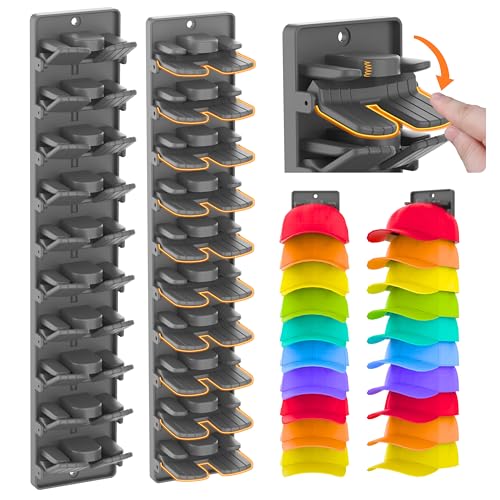
BRUBEQO Hat Organizer for Baseball Caps 2 Packs with Built-in Spring Clips - Wall Mount Closet Hat Rack Holder,Storage for Door/Closet Display Hat Racks Hanger (Strong Adhesive & Screws) Matte Black.
Included for 'Baseball Hat Rack for the Wall: Caps per Foot, Spacing and Mounting' because the listing specifies Wall Mount Closet Hat Rack Holder, details this guide uses to compare options.
View on Amazon
MACOPRO Cap Racks for Baseball Caps, Hat Organizer Holder for Wall, 2 Pack
Included for 'Baseball Hat Rack for the Wall: Caps per Foot, Spacing and Mounting' because the listing specifies Hat Organizer Holder for Wall and 2 Pack, details this guide uses to compare options.
View on AmazonKnow the Size of a Cap
Every spacing decision starts with the cap itself. A typical adult structured baseball cap measures about:
- Width (side to side): 7.5 to 8 inches
- Depth (back of crown to brim tip): 10 to 11 inches
- Crown height: 5 to 6 inches, a little taller for high-crown fitted caps
- Weight: 3 to 5 ounces
Unstructured “dad hats” are softer and can overlap more tightly, while structured fitted caps and flat-brim snapbacks need more room to avoid denting the front panels.
Wall Hat Rack Styles Compared
| Rack style | How caps sit | Caps per 3 ft of wall | Wall depth used | Crown-friendly? | Typical price |
|---|---|---|---|---|---|
| Floating display shelf | Upright, front facing out | 4-5 per shelf | 8-10 in | Best | $20-$60 per shelf |
| Peg or hook rail | Hung by back strap | 5-6 per row | 3-4 in | Good | $15-$50 |
| Individual crown mounts | Over a dome-shaped holder, front facing out | 4-5 per row | 9-11 in | Best | $3-$8 per mount |
| Vertical clip strips | Clipped by strap, stacked in columns | 20-36 (4-6 columns) | 10-11 in | Fair | $15-$40 |
| Grid or wire panel with hooks | Hung or clipped in rows | 15-25 | 4-11 in | Fair | $25-$70 |
| Over-door rack (on a wall-facing door) | Clipped in columns | 18-24 per door | About 1 in plus caps | Fair | $15-$35 |
Which Style Fits Your Collection
Under 15 caps: display shelves or crown mounts
Small collections look best when each cap gets its own space. Floating shelves 8 to 10 inches deep let caps sit upright with brims facing out. Space caps about 8 inches center to center and stack shelves 8 to 9 inches apart vertically. Individual crown mounts, small dome-shaped holders screwed to the wall, support the cap from the inside and keep structured fronts from creasing, which makes them a popular choice for signed or vintage caps.
15 to 40 caps: peg rails or clip strips
A hook rail with pegs at 6 to 7 inch spacing is the simplest mid-size option. Hang caps by the back strap or closure so the brims point down. Two rails mounted 10 inches apart roughly double capacity. For a denser layout, vertical clip strips hold caps by the strap in columns, each cap overlapping the one below. Plan 5 to 6 inches of vertical space per cap and 8 to 9 inches between columns, so a 3-foot-wide by 3-foot-tall area can hold 24 to 30 caps.
40 caps and up: grid panels or a dedicated wall
Large collections benefit from a modular system that grows: a gridwall or slatwall panel with hooks, or several clip-strip columns side by side. A 4 x 6 foot section can store 60 to 80 caps. At that point, consider whether some caps should rotate into closed storage to protect them from dust and light.
Spacing and Height Guidelines
| Measurement | Recommended | Why |
|---|---|---|
| Horizontal spacing (side by side, upright) | 8-9 in center to center | Prevents brims from touching |
| Horizontal spacing (hanging by strap) | 6-7 in | Caps hang edge-on and overlap slightly |
| Vertical spacing between shelves or rows | 8-10 in | Room for a 6 in crown plus fingers to lift it |
| Top row height | No higher than about 72 in | Most adults can reach without a step |
| Bottom row height | About 36 in, or 24 in for kids | Above furniture, still easy to see |
| Clearance from a door swing | At least 12 in | Stops brims getting knocked |
Mounting It So It Stays Up
Caps are light, but racks get pulled on every time someone grabs a hat, so the fixing method matters more than the static weight.
- Find a stud if you can. Studs in most U.S. homes run every 16 inches. A 32-inch rack catches two of them, which is ideal for peg rails and clip panels.
- Use proper anchors in drywall. Where studs do not line up, threaded self-drilling anchors or toggle bolts rated at 25 pounds or more per anchor give a wide margin. Avoid the small plastic expansion plugs often bundled with racks.
- Consider adhesive strips only for single mounts. Removable adhesive hooks rated for 3 to 5 pounds can hold one or two caps each, which suits renters, but they can fail in humid rooms or on textured paint.
- Level before you drill. A rack even a quarter inch off level is noticeable once a row of brims lines up across it.
- Load and test. Tug firmly on the rack before hanging caps; it should not shift.
Hat Rack Ideas for the Wall
- Entryway peg rail: a short rail with five pegs near the front door for the caps you wear daily, mounted around 60 inches high.
- Closet back wall: clip strips inside a closet hide the collection and protect it from sunlight.
- Bedroom feature wall: a grid of crown mounts in even rows, spaced 9 inches apart, turns a collection into wall art.
- Kids’ room: a low wooden peg rail at 36 to 42 inches so children can hang their own caps.
- Behind a door: an over-door clip rack on a door that stays open against a wall, adding 20-plus caps without using wall space.
- Shelf plus hooks: a single shelf for display caps with hooks underneath for everyday ones.
Protecting Caps on a Wall
- Keep them out of direct sun. Cotton and polyester caps fade noticeably in a sunny spot over a single summer. Choose a wall that does not face a window, or use UV-filtering film.
- Avoid sharp hooks on the crown. Hanging a structured cap by the button or top of the crown can crease it; hang by the strap or support from inside.
- Dust every few weeks. A lint roller or soft brush keeps dark caps looking new; open racks collect more dust than closed storage.
- Do not hang damp caps. Let a sweaty cap air-dry on a rounded form first; damp caps clipped flat can mildew or set a crease.
Quick Picks by Situation
- Small apartment or renter: over-door clip rack or adhesive single hooks.
- Collector with valuable caps: individual crown mounts or display shelves away from windows.
- Family entryway: a sturdy peg rail screwed into studs.
- Maximum caps, minimum wall: vertical clip strips in a closet.