For accidents on a rug, a portable spot cleaner beats a full machine, but only if the tank lasts and the hose reaches. The best handheld carpet cleaner pet stains shoppers reach for publishes its clean and dirty tank sizes and its hose length, so you are not refilling every few square feet.
As an Amazon Associate we earn from qualifying purchases.
By KK Home Furnishings Editorial Team
How to Choose a Handheld Carpet Cleaner for Pet Stains
A portable cleaner is judged on how long it runs before a refill and how far it reaches, then on the pet tool that scrubs set-in messes. These criteria start with tank size and hose reach, then cover the pet-specific tool and the weight and running costs that decide how often you will actually use it.
Tank Capacity and Run Time
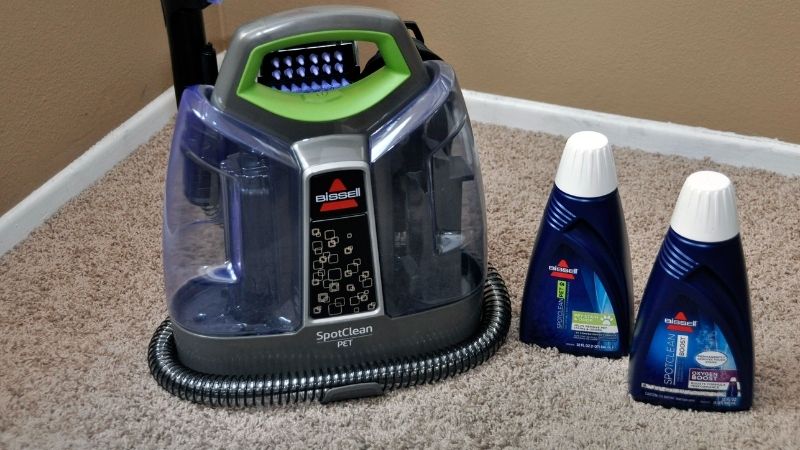
The clean-water tank sets how long you clean before refilling, and the dirty tank sets how long before emptying. The BISSELL Little Green Pet Pro holds 64 ounces of clean and 48 of dirty water, while the Hoover CleanSlate holds 40 and 23 ounces; the larger tanks mean fewer trips to the sink on a big accident.
Match the tank to your jobs. A single pet spot needs little water, but a cat that misses the box repeatedly, or a dog with a muddy day, rewards a bigger clean tank. Remember the dirty tank fills faster than you expect, so a small recovery tank is the quiet bottleneck on a long cleaning session.
Published suction and wattage claims are not comparable across brands, so do not rank units by those numbers. Tank sizes and the recovery tank are the figures that actually shape your session; a bigger motor does not clean a stain faster if you are stopping every few minutes to empty a tiny dirty tank.
Hose and Tool Reach
Reach decides whether you can clean stairs, a car, or the far side of a sofa without dragging the whole unit. The BISSELL lists a five-foot hose, the Hoover about four and a half feet, and the Shark StainStriker roughly four feet three inches. A longer hose keeps the base steady while you work at a distance.
Think about where your pet stains actually land. Stairs and upholstery need a hose that reaches and a tool that fits tight spots, like the Hoover’s seven-inch tool, while open rug areas are more forgiving. Measure the distance from a likely outlet or resting spot to your worst stain zones before choosing a reach.
A short hose is not a dealbreaker on open floors, but it forces you to move the base constantly on stairs. Pair reach with the tool shape: a narrow tool scrubs grout lines and crevices, while a wider head covers a rug faster, so match the included tools to the surfaces your pets target most often.
Pet-Specific Cleaning Tool
Set-in pet stains need agitation, not just suction, which is where a dedicated pet tool earns its place. The Rug Doctor Pet Portable includes a Dual-Action Pet Tool built to scrub stubborn, dried accidents, while BISSELL, Hoover, and Shark each include their own pet-oriented brush tools for lifting hair and residue.
Scrubbing breaks up the stain so the solution and suction can do their work; a plain nozzle often just rinses the surface. For old or repeated accidents, favor a powered or stiff-bristled tool. Pre-treat the spot, let the solution dwell, then agitate, since rushing the dwell time is the most common reason a stain lingers.
A spot cleaner lifts the stain, but odor control is a separate job. Enzyme cleaners break down the proteins that make pets return to the same spot, so pair the tool with an appropriate solution and clean to the pad where a stain has soaked in, because surface cleaning alone leaves the scent that invites a repeat.
Weight, Maintenance and Running Cost
Weight decides whether the cleaner comes out for small messes or stays in the closet. The Shark StainStriker is about 8.5 pounds and the BISSELL around 11, so the lighter unit is easier to carry upstairs. A corded model like the Shark, rated near 450 watts, needs an outlet within reach of the stain you are treating.
Maintenance is the hidden chore: rinse the tanks, clear the hose, and dry the tool after each use, or odor and mildew build up inside the unit itself. A cleaner that is a pain to empty and rinse gets used less, so weigh how fiddly the tank and hose are to clean against how often your pets create work.
Budget for recurring costs, mainly the cleaning solution, which you replace far more often than the machine. Over a year the solution can rival a slice of the purchase price, so factor it in alongside any replacement filters or brushes, and remember a portable spot cleaner supplements, rather than replaces, a full-size carpet cleaner.
Top Picks
Not every portable cleaner publishes a tank size, so the table below leads with each unit’s strongest verified spec, whether tank and reach or the pet tool itself. Each handheld carpet cleaner pet stains pick has a clear job, and the Rug Doctor is here for scrubbing power rather than capacity, which it does not publish.
| Product | Best For | Key Spec | Watch Out For |
|---|---|---|---|
| BISSELL Little Green Pet Pro 3909 | Best overall | 64/48 oz tanks; 5 ft hose; 11 lb | Heaviest of the group to carry |
| Hoover CleanSlate Pet | Best for tight spots | 40/23 oz tanks; 4.5 ft hose; 7-in tool | Smaller recovery tank fills faster |
| Shark StainStriker PX201 | Best lightweight pick | 4.3 ft hose; 8.5 lb; corded | Needs an outlet near the stain |
| Rug Doctor Pet Portable 93390 | Best for set-in stains | Dual-Action Pet scrubbing tool | Tank size and hose reach not published |
BISSELL Little Green Pet Pro 3909: Best Overall
The BISSELL Little Green Pet Pro 3909 leads on the specs that define a spot cleaner: a 64-ounce clean tank, a 48-ounce dirty tank, and a five-foot hose. It suits homes with frequent or larger pet accidents. It sits in the mid tier, so check the current price, and plan for ongoing solution cost.
Its advantage is endurance: the larger tanks mean fewer trips to the sink on a big job, and the long hose reaches stairs and upholstery while the base stays put. Pre-treat the stain, let the solution dwell, then use the pet tool to agitate before suction, which lifts set-in messes far better than a quick pass.
The honest downside is weight: at about 11 pounds it is the heaviest here, so carrying it upstairs is more of a chore than with the Shark. Rinse the tanks and dry the hose after each use to avoid odor inside the unit, and budget for replacement solution, the cost you repeat far more than the machine.
Hoover CleanSlate Pet: Best for Tight Spots
The Hoover CleanSlate Pet is the pick for stairs and upholstery, pairing 40-ounce clean and 23-ounce dirty tanks with a roughly four-and-a-half-foot hose and a seven-inch tool. It suits homes whose pet stains land on furniture and steps. It lands in the budget-to-mid tier, so verify today’s price before ordering.
Its strength is maneuverability: the seven-inch tool and compact body get into crevices a wider head misses, and the hose reaches most steps without moving the base. Pre-treat and agitate set-in spots, since even a good tool rinses rather than lifts if you skip the dwell time the solution needs to work.
The trade-off is the 23-ounce recovery tank, which fills faster than you expect on a big accident, so you empty it more often. For a single pet spot that is fine, but for a whole muddy hallway the BISSELL’s larger tanks save trips. Rinse and dry the tanks after use to keep odor from building up.
Shark StainStriker PX201: Best Lightweight Pick
The Shark StainStriker PX201 is the lightweight pick at about 8.5 pounds, with a roughly four-foot-three hose and a corded, near-450-watt motor. It suits people who want a cleaner that is easy to grab for small, frequent messes. It sits in the budget-to-mid tier, so confirm the live price before buying.
Its advantage is portability: lighter to carry upstairs and quick to deploy for a fresh accident, where speed matters most. The included pet tool agitates the spot; treat and dwell first, since prompt cleaning of a fresh stain prevents it from setting and keeps odor from soaking into the pad underneath the carpet.
The caveat is that it is corded, so you need an outlet within reach of the stain, unlike where a longer hose would help. Wattage is not a stain-removal score, so judge it on reach and weight rather than the motor number, and rinse and dry the tool and tank after each use to prevent interior odor.
Rug Doctor Pet Portable 93390: Best for Set-In Stains
The Rug Doctor Pet Portable 93390 is the pick when stains are old and stubborn, built around a Dual-Action Pet Tool made to scrub dried accidents that a plain nozzle only rinses. It suits homes fighting set-in or repeated spots. It sits in the mid tier, so confirm the current price before you order it.
Its strength is agitation: the pet tool works the solution into the fibers so suction can lift what has dried in, which is exactly what old stains need. Pre-treat with an enzyme solution, let it dwell, then scrub and extract, cleaning down to the pad where a repeated accident has soaked below the surface.
The honest caveat is data: unlike the others, its tank size and hose reach are not published here, so you cannot compare its run time or reach directly. Judge it on the scrubbing tool rather than capacity, confirm the current tank and cord details on the listing, and budget for the solution it uses.
Frequently Asked Questions
Pet owners shopping for a spot cleaner ask the same practical questions about capacity, power, and odor. Each answer below leads with the short version, then the condition that changes it, so you can match a handheld carpet cleaner pet stains setup to your home rather than a spec that looks impressive on the box.
Does a handheld cleaner replace a full carpet cleaner?
No, it supplements one. A portable spot cleaner is built for individual stains, upholstery, stairs, and cars, where its small tanks and hose shine. For deep-cleaning a whole room’s carpet, a full-size upright or a rental machine covers the area far faster and holds enough water to finish without constant refills.
The deciding factor is area. A spot cleaner is perfect for the accident your pet just had, but asking it to refresh an entire living room means emptying a small dirty tank over and over. Use the handheld for targeted messes and reserve a full machine or rental for seasonal, whole-room cleaning.
Many homes keep both: a handheld ready for daily accidents and access to a full cleaner for the big jobs. If you only buy one, choose the spot cleaner if pet accidents are your main problem, since fresh stains treated quickly cause less long-term damage than a quarterly deep clean can ever undo.
How big a tank do I really need?
It depends on how much you clean at once. For single pet spots, even a 40-ounce clean tank like the Hoover’s lasts several accidents, while a home with frequent or larger messes benefits from the BISSELL’s 64-ounce tank and 48-ounce recovery. The recovery tank is the one that usually fills first.
Think in sessions, not stains. If you treat one spot and stop, a small tank is fine; if you work through a hallway of accidents, a bigger clean tank and especially a bigger dirty tank save repeated trips to the sink. Match it to your worst typical day, not your best, so you never refill mid-job.
Remember that a huge tank adds weight and water you may not need. A heavier full unit is harder to carry upstairs, so balance capacity against how often you clean small, quick messes versus occasional large ones, and choose the size that keeps the cleaner convenient enough that you actually reach for it.
Does more wattage mean better stain removal?
No. Wattage measures power draw, not cleaning performance, and it is not a stain-removal score. A higher-watt motor does not lift a set-in stain faster if the tool, solution, and dwell time are wrong. Judge a cleaner on tank size, reach, and the pet tool rather than the motor number on the box.
What actually removes a stain is the combination of pre-treatment, dwell time, agitation, and suction. A dedicated pet tool that scrubs the fibers matters far more than watts, since agitation breaks up what has dried into the carpet so the solution and suction can finally extract it from the pad.
Suction claims are also not comparable between brands, so ignore marketing numbers and focus on method. Treat the stain, let the solution work, scrub, then extract, and repeat if needed. A modest machine used correctly beats a powerful one used in a hurry, especially on older, repeated pet accidents.
How do I stop my pet returning to the same spot?
Clean to the pad and use an enzyme solution. Pets return to a spot because scent remains below the surface, so a surface-only clean invites a repeat. An enzyme cleaner breaks down the proteins a plain detergent leaves behind, which is what actually removes the odor that draws them back to the same place.
Treat the stain promptly and let the enzyme dwell per its instructions, then extract thoroughly. For a stain that has soaked in, you may need more than one pass, since the odor sits deeper than the visible mark. A spot cleaner with a good pet tool helps work the solution down into the fibers.
Address the cause as well as the stain. Repeated accidents can signal a litter-box or house-training issue, so pair cleaning with the underlying fix. For stubborn odor, cleaning to the pad and, in severe cases, treating or replacing the padding underneath may be the only way to break the cycle for good.
Final Thoughts
The right handheld carpet cleaner pet stains setup is the one whose tank and reach match where your pet makes a mess, with a tool that scrubs rather than rinses, not the biggest motor number. Before ordering, measure from an outlet to your worst stain zones and plan for enzyme solution, since cleaning to the pad is what stops a pet returning.