Key takeaways
- The point of corner shelves for living room use is turning dead corner space into storage, so the spec that matters most is the footprint into each wall, not the number of tiers. A tall unit with a small footprint…
The point of corner shelves for living room use is turning dead corner space into storage, so the spec that matters most is the footprint into each wall, not the number of tiers. A tall unit with a small footprint buys vertical storage without eating floor space.
How to Choose Corner Shelves
Judge corner shelves by the footprint they take into each wall first, then height, shelf load where published, and anchoring. Footprint is the defining spec because the whole idea is using a corner efficiently, and shelf load is published for only some units here, so it works as a secondary check rather than the main ranking.
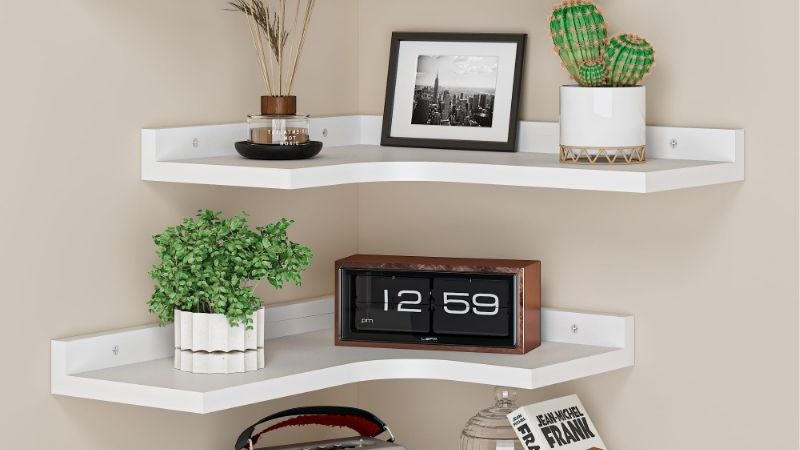
Measure Both Walls
A corner unit extends along two walls, so measure the space you have on each before buying. IKEA lists the FRÖSJÖN at a 13.75 by 13.75-inch footprint, Tribesigns lists its 7-Tier at 13.39 by 13.39 inches, and Latitude Run lists a 5-tier glass unit at 11.8 by 11.8 inches, so each claims a different wall reach.
Check the reach along both walls against furniture, outlets, and trim that sit near the corner, since a unit that fits one wall can collide with a sofa or baseboard on the other. The footprint into each wall, not just the overall size, is what decides whether the shelf tucks neatly into your specific corner.
A wider corner unit like the Tribesigns 5-Tier at 19.68 by 18.9 inches reaches further along each wall, offering more shelf area but claiming more of the corner. Match the footprint to how much wall space the corner can spare, since the goal is to use dead space without crowding the room around it.
Footprint, Not Tier Count
Do not choose by tier count alone, since more tiers on a small footprint can mean cramped, shallow shelves. The real question is how much usable storage you get for the floor space claimed, so a tall unit like the Tribesigns 7-Tier at 78.74 inches packs more vertical storage onto a compact 13.39-inch footprint.
Height is how a corner unit earns its keep, trading a small floor footprint for vertical storage, so weigh height against footprint rather than counting shelves. A 78.74-inch tower and a 54-inch unit offer very different total storage even on similar footprints, which the tier number alone does not capture.
Taller units demand more careful anchoring and suit storage you can reach, so balance the height with practicality. The efficient pick is the one that gives the most usable storage for the corner it occupies, which means reading footprint and height together instead of being drawn in by a high tier count.
Shelf Loads
Shelf load matters for what you can store, but it is published for only some units here, so treat it as a secondary check. Tribesigns lists its 7-Tier at 40 pounds per shelf and Latitude Run lists its glass unit at 22 pounds per shelf, while IKEA does not publish a load for the FRÖSJÖN.
Where a per-shelf figure exists, match it to your contents: 40 pounds per shelf handles books and heavier decor, while a 22-pound glass shelf suits lighter decor and plants. Because load is not published across the board, use it to decide placement of heavy items rather than as the main way to rank these units.
Be wary of a total-load claim without a per-shelf split, as with the Tribesigns 5-Tier’s 300-pound total figure. Do not divide a total by the number of shelves to guess a per-shelf rating, since that is not how the load distributes, so treat an unsplit total as unconfirmed for any single shelf.
Anchor Tall Units
Tall, narrow corner units can tip, so anchoring is a safety requirement, not an option. IKEA states the FRÖSJÖN must be anchored, and Tribesigns includes an anti-tip kit with its 7-Tier, while anchoring is less clearly specified on the glass and wider Tribesigns units, so plan to secure any tall shelf to the wall.
Anchoring matters most for the tallest units and in homes with children or pets, since a loaded top shelf raises the tipping risk. Use the included anti-tip hardware where provided, or add a furniture anchor suited to your wall, and keep heavier items on lower shelves to lower the center of gravity.
Where anti-tip provision is not clearly stated, as on the Latitude Run and wider Tribesigns units, treat aftermarket anchoring as essential rather than assuming the unit is stable. A corner shelf full of books or decor is top-heavy, so securing it to the wall is what keeps the storage safe in a busy living room.
Best Corner Shelves
Each pick below leads with its footprint into each wall and height, the specs that decide corner fit and storage, plus per-shelf load and anti-tip where published. Measure both walls before you choose, and check the current price and anchoring provision before you buy any of these units.
| Product | Best For | Key Spec | Watch Out For |
|---|---|---|---|
| Tribesigns 7-Tier | Best vertical storage | 13.39×13.39 in footprint; 78.74 in tall; 40 lb/shelf; anti-tip kit | Tall; anchor before loading |
| Latitude Run 5-Tier Glass | Best for the tightest corner | 11.8×11.8 in footprint; 54 in tall; 22 lb/shelf | Anti-tip not clearly stated |
| IKEA FRÖSJÖN | Best minimalist corner shelf | 13.75×13.75 in footprint; 61.375 in tall; must anchor | Per-shelf load not published |
| Tribesigns 5-Tier Corner Shelf | Best for a wide corner | 19.68×18.9 in footprint; 300 lb total claim | Per-tier split unclear; do not divide |
Tribesigns 7-Tier – Best Vertical Storage
The Tribesigns 7-Tier is the pick for maximum vertical storage, at a compact 13.39 by 13.39-inch footprint, a 78.74-inch height, 40 pounds per shelf, and an included anti-tip kit. It packs the most height and the clearest per-shelf load onto a small corner footprint, which is exactly the efficiency this category is about.
The tall tower uses a corner’s vertical space fully, and the 40-pound-per-shelf rating handles books and heavier decor that lighter units cannot. The included anti-tip kit makes anchoring straightforward, which matters at nearly 79 inches tall, so it combines real storage capacity with a built-in safety measure out of the box.
The trade-off is simply its height, which demands anchoring before loading and puts upper shelves out of easy reach for some. Secure it with the included kit, keep heavy items low, confirm the compact footprint fits your corner, and check the current price at the retailer before buying this tall storage tower.
Latitude Run 5-Tier Glass – Best for the Tightest Corner
The Latitude Run 5-tier glass unit is the pick for the smallest corner, at an 11.8 by 11.8-inch footprint, a 54-inch height, and 22 pounds per shelf on tempered glass. Its slim footprint reaches the least into each wall, making it the best fit where space along the corner is very limited.
The tempered glass and compact size suit a decorative display of lighter items, and the 22-pound-per-shelf rating is published, so you know its limits. For a tight living-room corner where a bulkier wooden tower would intrude, the glass unit adds vertical storage with a minimal visual and physical footprint.
The cautions are the lighter 22-pound shelf rating, which suits decor and plants rather than heavy books, and that anti-tip provision is not clearly stated. Keep loads light, add an aftermarket anchor for safety, confirm the small footprint fits, and check the current price at the retailer before buying this glass unit.
IKEA FRÖSJÖN – Best Minimalist Corner Shelf
The IKEA FRÖSJÖN is the minimalist pick, at a 13.75 by 13.75-inch footprint and a 61.375-inch height, with IKEA stating it must be anchored. Its clean, simple design suits a living room where the shelf should blend in, offering a mid-height corner unit with a tidy, unobtrusive footprint.
The moderate height and compact footprint make it a balanced choice for everyday corner storage and display, and the required anchoring is a clear safety instruction to follow. For a pared-back look that still uses the corner’s vertical space, the FRÖSJÖN fits well within a simply styled room.
The key caveat is that IKEA does not publish a per-shelf load for it, so treat heavy loading cautiously and keep weight reasonable until you confirm limits. Follow the must-anchor instruction without exception, confirm the footprint suits your corner, and check the current price at the retailer before buying this minimalist shelf.
Tribesigns 5-Tier Corner Shelf – Best for a Wide Corner
The Tribesigns 5-Tier is the pick for a wider corner, at a 19.68 by 18.9-inch footprint with a stated 300-pound total load claim. Its larger footprint reaches further along each wall, giving broader, roomier shelves that suit a corner with space to spare and plenty more to display or store.
The wider shelves hold larger items than the narrow towers, making it a good fit for a generous living-room corner. The 300-pound total figure suggests a sturdy unit overall, and the extra width is the main reason to choose it over the slimmer options when your corner can accommodate the larger footprint.
The caution is that the 300-pound figure is a total claim without a clear per-tier split, so do not divide it to assume a per-shelf rating. Keep heavy items low and loads conservative per shelf until the split is confirmed, add anchoring for safety, and check the current price at the retailer before buying.
Plan Your Shelves
Once you have the right unit, planning what goes where makes it both safe and attractive. Keeping heavy books low, decor high, handling plants and moisture carefully, and leaving some negative space turns a corner shelf from a cluttered stack into a functional, good-looking part of the living room.
Heavy Books Low
Put heavy items like books on the lower shelves, which keeps the unit’s center of gravity down and reduces tipping risk. On a unit with a published per-shelf rating like the Tribesigns 7-Tier’s 40 pounds, the lower shelves are where that capacity matters most, so load weight there and reserve upper shelves for lighter things.
Loading heavy up high makes a tall corner unit top-heavy and more likely to tip, which is the opposite of what you want on a narrow tower. Keeping the heaviest contents low works with the anchoring to keep the unit stable, especially important on the tallest shelves in a home with children or pets.
This also respects the shelf loads where they are published and plays it safe where they are not, as on the IKEA unit. Treating the lower shelves as the home for heavy items is a simple habit that keeps corner shelves for living room use both safe and stable under a real load of books.
Decor High
Reserve the upper shelves for lighter decor, which suits both safety and display. Lighter items up high keep the center of gravity low and show off decorative pieces at eye level or above, so a glass unit’s 22-pound-per-shelf rating or an unrated IKEA shelf is well matched to vases, frames, and small plants on top.
Displaying decor high also keeps fragile or valuable items out of easy reach of children and pets, which the lower, heavier shelves do not. Arranging the unit with weight at the bottom and visual interest at the top is a reliable way to make a corner shelf look intentional rather than merely full.
On a tempered-glass unit like the Latitude Run, keeping the top shelves light is also kinder to the glass, which is rated for modest loads. Matching lighter decor to the upper, lower-rated shelves is both the safe and the stylish choice, letting the unit store heavier items below without strain.
Plants and Moisture
If you display plants, account for water and moisture, which can damage shelves and finishes over time. Use saucers under pots and wipe spills promptly, especially on wood or engineered-panel units, since repeated moisture can warp or stain shelving that is not designed to handle standing water.
A tempered-glass unit like the Latitude Run tolerates the occasional splash better than wood, but even then standing water and humidity around plants need managing. Keep heavier planters on lower, higher-rated shelves and lighter pots up high, pairing the moisture plan with the load plan so neither the shelf nor its finish suffers.
Group plants where light suits them and where drips will not cascade onto items below, which a corner unit’s stacked shelves make a real consideration. Thoughtful placement keeps plants healthy and the shelf intact, so the greenery enhances the living room rather than slowly damaging the very unit it sits on.
Negative Space
Resist filling every shelf, since some empty space makes the display look deliberate rather than crammed. Leaving negative space between groupings lets each item stand out and keeps a tall corner unit from feeling cluttered, which matters more in a living room where the shelf is on view than in a utility space.
Negative space also keeps loads reasonable, which works with the per-shelf ratings and the anchoring to keep the unit safe. A shelf packed to its limit on every tier is both visually heavy and physically stressed, so spacing items out serves appearance and stability at the same time on a corner display.
Vary the heights and spacing of what you display, and let a few shelves breathe, so the eye moves across the unit rather than hitting a wall of stuff. This finishing touch is what turns well-chosen, well-loaded corner shelves into an attractive feature rather than simply more storage stacked into the corner.
Final Thoughts
The best corner shelves for living room use match a small footprint into each wall to the vertical storage you need, with anchoring to keep a tall unit safe. Compare the Tribesigns, Latitude Run, and IKEA options on footprint and height, treat shelf load as a secondary check, never divide a total load claim, anchor tall units, and check the price.