The mount matters more than the shelf count, so the smartest way to shop corner shelves for bathroom storage is to settle how the unit attaches before counting tiers. The four below are compared on install type, corner footprint, drainage and the surfaces each one actually sticks to, so the one you pick suits your wall and your wet zone.
As an Amazon Associate we earn from qualifying purchases.
By KK Home Furnishings Editorial Team
How to Choose Corner Shelves for Bathroom Storage
Choosing corner shelves for bathroom storage starts with how the unit mounts, not how many shelves it has, because the wrong attachment fails no matter how roomy the tiers. The four criteria below move from mount type, to the corner measurement that decides fit, to drainage in the shower zone, to matching the fixing to your surface.
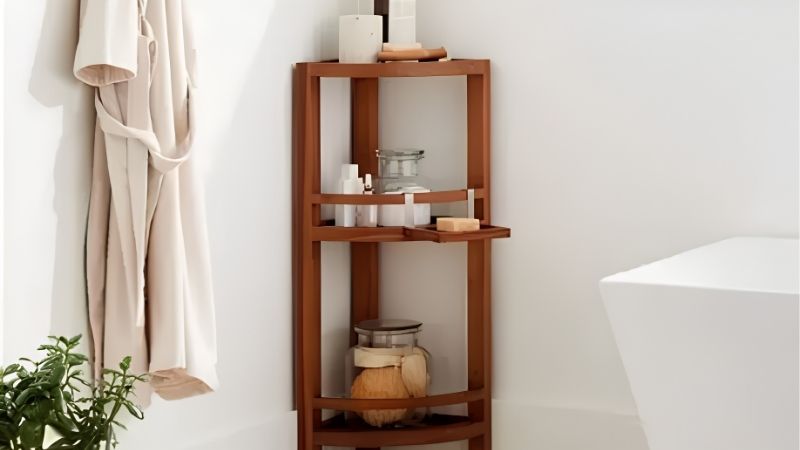
Choose Wall-Mount, Suction, Tension Or Freestanding First
Mount type is the first decision because it rules everything that follows. These picks span four methods: the IKEA BROGRUND is wall-mounted, the iDesign Everett uses push-lock suction, the Glacier Bay 2130NNHD is a floor-to-ceiling tension pole, and the iDesign York Lyra is freestanding, so each suits a different wall and tenancy.
Match the method to your situation before comparing anything else: renters often favor suction or freestanding units that leave no holes, while a permanent wall-mount suits a bathroom you own and can drill into. A tension pole needs a solid floor and ceiling to brace against rather than any fixing in the wall itself.
Getting the mount wrong is the common failure, since a suction caddy on the wrong surface slides off and a wall unit needs the right anchor behind the tile. Decide the method first, and the field of suitable products narrows quickly to the ones that will actually stay put in your particular bathroom.
Measure The Corner Before Comparing Shelf Count
The corner itself sets the size limit, so measure it before being tempted by extra tiers. The BROGRUND occupies a compact 7.5-by-7.5-inch corner footprint, while the freestanding York Lyra has a larger rectangular bounding footprint of about 11.5 by 7.5 inches, which claims noticeably more of the corner.
Those two footprints have different shapes, so the difference is a bounding-box comparison rather than an exact measure of corner area used. Measure the usable corner in your bathroom, including how far a unit projects past the fixtures, and confirm a door or shower screen can still swing clear of it once installed.
More shelves only help if the corner can take the footprint without crowding the space or blocking access. A tall, slim unit suits a tight corner better than a wide one with more tiers, so let the measured corner, not the shelf count on the listing, decide how large a unit you can sensibly fit.
Look For Drainage In The Shower Zone
Inside the shower, standing water is the enemy, so drainage is a real criterion rather than a nicety. The BROGRUND uses removable plastic inserts with drain holes, which let water run through rather than pooling under bottles and breeding grime in a corner that rarely dries fully between uses.
Match the feature to where the unit lives: a caddy in the direct spray needs to shed water and resist corrosion, while a shelf by the sink faces far less moisture. Open wire racks and perforated inserts drain well, whereas solid trays hold water unless they are tipped or drilled to let it escape.
The long-term payoff is less cleaning and slower corrosion, since water that lingers is what rusts cheap metal and grows mildew. Favor drainage in the wettest spot, and you spend less time scrubbing a slimy corner and more time with a caddy that still looks presentable a year into daily showers.
Match The Mount To Tile, Glass Or Drywall
The fixing has to suit the surface, which is where suction units in particular earn their caveats. The iDesign Everett is described for smooth, non-porous surfaces such as tile, glass, fiberglass and some metal, so it holds on a glazed wall but is not meant for porous grout lines or textured stone.
Wall-mounted units ask a different question: they need the correct anchor for tile, cement board or drywall behind the fixture, and a fixing rated for the wall rather than a generic screw. A tension pole instead relies on bracing between floor and ceiling, so it suits bathrooms where drilling into the wall is unwelcome.
Matching the mount to the surface is what keeps a unit up for years rather than days, so read the maker’s surface guidance carefully before buying. A suction caddy on rough grout or a wall unit on the wrong anchor is the fastest route to a shelf on the shower floor, whatever its other merits.
Top Picks
These four picks cover a compact wall-mount, a value suction basket, a floor-to-ceiling tension pole and a freestanding three-tier unit, with footprints and prices verified as of October 2026. Each is matched to a mount and a surface rather than ranked on size, since their footprints differ too much in shape to compare directly.
| Product | Best For | Key Spec | Watch Out For |
|---|---|---|---|
| IKEA BROGRUND | Compact Wall-Mounted | 7.5 x 7.5 in; drain holes; ~$24.99 | Needs a wall fixing |
| iDesign Everett | Smooth Non-Porous Surfaces | 11.1 x 4.9 x 6.54 in; ~$8.99 | Not for porous grout |
| Glacier Bay 2130NNHD | Floor-To-Ceiling Storage | Fits to 8 ft 1 in; 4 baskets; ~$40.98 | Only to stated ceiling height |
| iDesign York Lyra | Freestanding Three-Tier | 11.5 x 7.5 x 25.75 in; 3 tiers; ~$39.99 | Stock varies |
IKEA BROGRUND – Best Overall For Compact Wall-Mounted Storage
The IKEA BROGRUND is the compact all-rounder, a wall-mounted corner unit with a 7.5-by-7.5-inch footprint standing 22.75 inches tall across three levels, listed at about $24.99 at IKEA as of October 2026. Removable plastic inserts with drain holes let shower water run through rather than pooling under bottles.
That small footprint suits a tight corner inside or beside the shower, and the budget price makes it easy to add one or two without much outlay. The drain holes are the standout practical feature, keeping the corner from turning slimy and cutting down on the scrubbing a solid tray tends to demand.
The trade-off is that it needs a proper wall fixing behind the tile, so it suits a bathroom you can drill into rather than a rental where holes are unwelcome. Use an anchor rated for your wall type, since the unit is only as secure as the fixing behind it, and loaded shelves add real weight.
iDesign Everett – Best Value For Smooth Non-Porous Surfaces
The iDesign Everett is the value pick where the surface is smooth, a push-lock suction corner basket measuring 11.1 by 4.9 by 6.54 inches listed around $8.99 on sale as of October 2026. It leaves no holes, which makes it a natural choice for renters or anyone who would rather not drill into tile.
It is described for smooth, non-porous surfaces such as tile, glass, fiberglass and some metal, so it holds well on a glazed shower wall or a glass screen. For a single shower it is an inexpensive way to add a basket exactly where you need one, and it can be repositioned if the first spot proves awkward.
The clear limit is the surface: suction will not hold reliably on porous grout lines or textured stone, so it is not a fit for every wall. Clean and dry the surface before mounting, keep loads light, and check the seal periodically, since a suction unit that loosens unnoticed can drop its contents in the shower.
Glacier Bay 2130NNHD – Best For Floor-To-Ceiling Storage
The Glacier Bay 2130NNHD is the pick when you want height without drilling, a tension pole with four adjustable baskets that fits standard ceilings up to 8 feet 1 inch, listed around $40.98 at Home Depot as of October 2026. It braces between floor and ceiling rather than relying on any wall fixing.
That makes it a strong choice for a rental or a tiled wall you would rather not pierce, and four adjustable baskets give flexible storage up the full height of the corner. Setting the shelves at different heights lets you fit tall bottles below and smaller items above without wasting the vertical space.
The caveat is the ceiling limit: the pole is rated only to its stated maximum height, so it is not meant to be extended with a non-original pole to reach a taller ceiling. Tension the pole firmly on a solid floor and ceiling, and re-check it occasionally, since a pole that works loose loses its grip.
iDesign York Lyra – Best For Freestanding Three-Tier Storage
The iDesign York Lyra is the freestanding option, a three-tier steel wire unit measuring about 11.5 by 7.5 by 25.75 inches listed around $39.99 at Target as of October 2026, though stock varies. It needs no fixing at all, simply standing in the corner, which suits renters and anyone avoiding drilling entirely.
The open wire shelves drain naturally and the freestanding design can move for cleaning or relocate to another corner, which the fixed and suction units cannot. Three tiers give useful capacity by a sink or in a larger bathroom where floor space in the corner is available to give up to storage.
The limits are footprint and availability: its larger bounding footprint claims more of the corner than a compact wall unit, and stock comes and goes, so confirm it is available before planning around it. On a wet floor, keep it stable and loaded evenly, since a tall freestanding unit can tip if top-heavy.
Frequently Asked Questions
Shoppers comparing corner storage tend to ask the same practical questions, and most come back to mounting and moisture rather than looks. These answers keep the guidance tied to the four picks above and to the surfaces, ceilings and corners that decide whether a given unit will actually stay put.
Do Suction Corner Shelves Work On Grout?
Not reliably, since suction needs a smooth, non-porous surface to seal against. The iDesign Everett, for instance, is described for tile, glass, fiberglass and some metal rather than for porous grout lines, which let air past the seal and cause the unit to creep and eventually drop its contents.
The reason is simple physics: a suction cup holds by excluding air, and a porous or textured surface breaks that seal where the grout runs between tiles. Mounting across a grout line, over textured stone or on a rough surface is the common cause of a caddy that will not stay up for long.
If your wall is mostly grout or textured stone, a suction unit is the wrong tool, and a tension pole or freestanding unit is the safer path to take. Where you do have a glazed tile or glass surface, clean and dry it thoroughly first and place the cups on the smooth face rather than spanning a joint.
Is Stainless Steel Always Rustproof In A Shower?
Not always, since stainless resists corrosion but is not immune to it in a constantly wet, soapy environment. Lower grades and damaged coatings can spot or rust over time, especially where water pools and never fully dries, which is exactly the condition a shower corner creates day after day.
Drainage and airflow do more to prevent corrosion than the metal name alone, which is why perforated inserts and open wire racks last better than solid trays. Water left standing under bottles is what starts the staining, so a unit that sheds water will usually outlast one that holds it, grade for grade.
Rather than trust a rustproof claim outright, favor good drainage and rinse the unit occasionally to clear the soap residue that traps moisture. Dry it when you can, keep it out of the heaviest direct spray if possible, and even a modest unit will hold up far longer than one left to sit in standing water.
How Much Space Does A Corner Shower Shelf Need?
Enough for its footprint plus clearance for doors and fixtures, which is why measuring the corner comes first. These picks range from a compact 7.5-by-7.5-inch wall unit to a larger freestanding footprint near 11.5 by 7.5 inches, so the space demanded varies widely across just four products.
The figures are footprints rather than a single comparable area, because the shapes differ, so measure your own corner instead of relying on a square-inch comparison. Check how far each unit projects past the tile and whether a shower screen or door still swings clear once the shelf is in place and loaded.
In a tight corner, a slim wall-mounted or suction unit intrudes least, while a larger bathroom can carry a freestanding three-tier. Either way, measure the usable corner and the swing of nearby doors before buying, since a unit that fits the wall can still block access if it projects too far.
Are Tension Pole Caddies Safe For Standard Ceilings?
Yes, within the height the maker states, which is exactly why that figure matters. The Glacier Bay 2130NNHD is rated to fit ceilings up to 8 feet 1 inch, so it suits a standard bathroom but should not be forced to reach a taller ceiling by adding a non-original pole section to try to extend it.
A tension pole holds by bracing firmly between a solid floor and ceiling, so both surfaces need to be sound rather than a suspended panel that could flex. Tensioned correctly on a firm floor and ceiling, it is stable, but a loosely set pole or an unsuitable surface undermines the grip it depends on.
Set it up to the maker’s instructions, tension it firmly and re-check it from time to time, since a pole can work loose with knocks and daily use. Stay within the stated ceiling height and keep the baskets loaded sensibly, and a tension caddy is a secure, drill-free way to use the full corner height.
Final Thoughts
The best corner shelves for bathroom storage are the ones whose mount suits your wall and footprint fits your corner, chosen before shelf count: the compact IKEA BROGRUND for a wall you can drill, the suction iDesign Everett for a smooth surface, the Glacier Bay tension pole for drill-free height, or the freestanding York Lyra to avoid fixings.