Key takeaways
- In a bathroom measured in inches, every bin competes with the door swing, the sink and the walk to the shower. These very small bathroom storage ideas focus on one number — how much storage you gain per inch of…
In a bathroom measured in inches, every bin competes with the door swing, the sink and the walk to the shower. These very small bathroom storage ideas focus on one number — how much storage you gain per inch of floor depth — so you add space without blocking movement or plumbing access.
As an Amazon Associate we earn from qualifying purchases.
By KK Home Furnishings Editorial Team
Quick, Renter-Friendly Very Small Bathroom Storage Ideas
The fastest wins take almost no floor and leave no holes to patch. Each idea below trades depth for height, using the wall and the gap beside the toilet rather than the middle of the room. The table lists the rough size, cost tier and effort so you can match an idea to your space before buying anything.
| Idea | Space or Size Needed | Cost Tier | Effort and Time |
|---|---|---|---|
| Slim rolling cart in a side gap | ~7–8 in deep slot | Budget | Minutes, no tools |
| Over-the-toilet shelf unit | ~26 in wall above tank | Budget–mid | Under an hour |
| Back-of-door organizer | Flat door, ~2 in clearance | Budget | Minutes, no tools |
| Tension corner shower shelf | A corner, no studs | Budget | Minutes, no tools |
| Tall narrow anchored cabinet | ~12 in floor depth; anchor | Mid | An hour; tools + anchor |
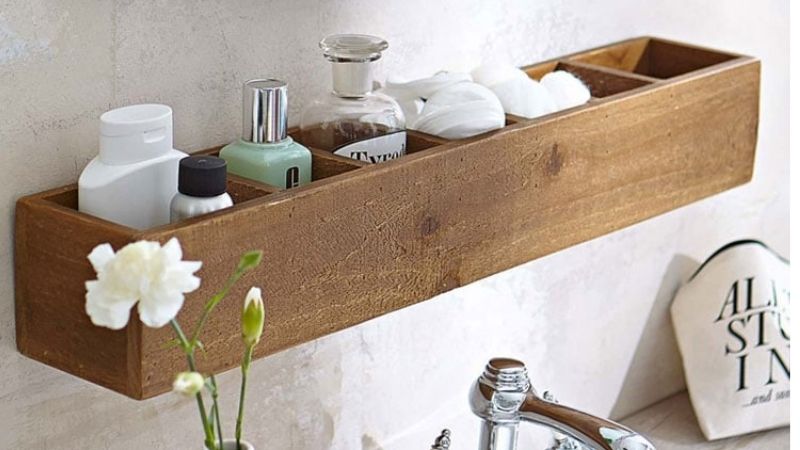
| Narrow vertical wall shelf | ~9 in deep; into studs | Budget–mid | Under an hour; drilling |
| Recessed in-wall niche | Between 16-in-OC studs | Mid–premium | Half day; cutting drywall |
| Floating shelves above door | High wall, ~6–8 in deep | Budget–mid | Under an hour; drilling |
Roll a Slim Cart Into the Gap Beside the Toilet
The narrow slot between a toilet and a wall or vanity is usually wasted, and a slim rolling cart reclaims it. IKEA VESKEN is just 7⅛ inches deep and about 21 inches wide, so it slides into a gap most shelving ignores while still holding toiletries on its three open tiers within easy reach.
It suits renters because it needs no tools and leaves no marks, and the wheels let you pull it out to reach the plumbing behind. The trade-off is stability: a tall, narrow cart on wheels can tip if the top tier is overloaded, so keep heavy bottles on the bottom and lighter items up top.
Build Up Over the Toilet
The wall above the tank is prime vertical space in a tiny bathroom. An over-the-toilet shelf such as IKEA FRÖSJÖN spans about 25⅝ inches wide and stands 61⅜ inches tall, bridging the toilet without touching it, so you gain three or four open shelves on a footprint you already own and pay for.
This works for towels, baskets and backup supplies, and it keeps the counter clear. Measure the tank-to-wall height and any window above it first, since a 61-inch unit can cross a low sill. Free-standing bridge frames still benefit from a wall strap so a bumped leg cannot walk the shelf forward over time.
Hang Storage on the Back of the Door
A door is a flat vertical surface doing one job, and an over-the-door organizer adds a second. Hooked racks need only a couple of inches of clearance and hold bottles, brushes and a hair dryer off every surface. No studs and no drilling, and the whole thing moves with you when you leave.
Keep the load light and balanced so the door still swings and latches, since a heavy rack can bow a hollow-core door over time. Felt or clear bumpers on the back stop the rack from marking the paint, and a slim profile keeps bottles from catching as the door opens into a room where every inch of swing counts.
Use Corners With a Tension Shelf
Shower and wall corners are dead space a tension-rod shelf turns usable. Floor-to-ceiling tension poles with corner baskets brace between surfaces with no hardware, keeping shampoo and soap off the tub edge. Because they rely on pressure, they fit odd layouts a fixed corner shelf cannot reach.
They suit renters and anyone avoiding holes in tile, but the grip depends on a firm ceiling and floor; a textured or flexing surface lets the pole slip over time, so retension it now and then. Keep weight modest and centered, and choose rust-resistant finishes for the damp corner of a shower.
Bigger-Impact Very Small Bathroom Storage Ideas
When a little installation is allowed, you can claim space the no-tools ideas cannot. These projects go taller or into the wall itself, and most add real capacity in just a few inches of floor depth. They ask for anchors or drilling, so they trade a weekend task for storage that stays firmly put.
Add a Tall, Narrow Floor Cabinet
A high, slim cabinet turns a sliver of floor into a full column of storage. IKEA NYSJÖN is only 11¾ inches wide yet 74¾ inches tall, so it tucks beside a vanity or in a corner and holds far more than its footprint suggests behind a door that hides clutter from view in a busy room.
A cabinet this tall and narrow must be anchored to the wall. Free-standing storage units 27 inches or taller fall under tip-over safety guidance [CPSC, 2023], and a top-heavy bathroom cabinet is easy to pull over, so use the included bracket into a stud. Keep heavy items on the bottom shelves to lower the center of gravity.
Go Vertical With a Narrow Wall Shelf
A wall-mounted shelf unit frees the floor entirely. IKEA VESKEN wall shelf measures about 14½ inches wide, 9⅛ inches deep and 39⅝ inches tall, giving four tiers on a shallow footprint that keeps the walkway clear in a room where usable floor space is the scarcest resource you have.
Mounting into studs or with proper anchors is the catch, so it is a drilling job, not a renter’s quick fix. Set the lowest shelf above splash height near a sink, and keep the depth in mind: at about 9 inches it holds bottles and folded cloths but not bulky baskets, which is the trade for staying slim.
Recess Storage Between the Studs
The cavity inside a wall is usually empty, and a recessed niche or in-wall cabinet borrows it for storage that projects almost nothing into the room. Framing is typically 16 inches on center, so a niche often fits neatly between studs and sits flush, ideal above a toilet or beside a shower.
This is the most involved idea here because it means cutting drywall, so confirm there is no plumbing or wiring in the bay before you open it. Done right it is the ultimate small-bathroom gain — storage with almost no floor cost — but it is a half-day project best suited to owners, not renters.
Float Shelves Above the Door Line
The band of wall above the door and around the room near the ceiling is almost always empty. Floating shelves there, about 6 to 8 inches deep, store backup towels, paper goods and rarely used items without touching the busy lower walls where you move and reach each morning, which is what makes the dead band so useful.
Keep this high zone for lightweight, seldom-grabbed items, since a step stool is needed to reach it safely. Anchor floating shelves into studs and respect the hardware’s rated load, because a high shelf that lets go drops its contents onto whatever sits below, and in a tiny room that is usually the sink or the tub.
Frequently Asked Questions
Two questions decide most tiny-bathroom projects: whether an idea actually fits the space you have, and what it costs in effort and marks when you rent. The answers below use the real depths and heights listed above so you can plan around the door swing, the tank clearance and the plumbing you cannot relocate.
How Do I Measure for Very Small Bathroom Storage Ideas?
Measure three things first: the floor depth you can lose, the wall height above fixtures, and the door swing arc. Most of these ideas need only 7 to 12 inches of depth, but the door’s path and the toilet tank clearance decide whether a unit actually fits where you picture it going.
Mark the door’s arc on the floor with tape before buying anything tall or deep, since a cabinet that blocks the swing is a return waiting to happen. Leave room to reach the shut-off valve behind the toilet, too; storage that buries the plumbing turns a small leak into a big, messy repair.
What Works if I Cannot Drill Into the Walls?
Plenty. The cart, the back-of-door organizer, the tension corner shelf and most over-the-toilet bridge units need no holes, so renters can add real storage and take it along at move-out. These lean budget tier; confirm the current price and the exact dimensions before buying for a specific gap.
If you want height without anchors, a free-standing bridge shelf over the toilet gives vertical space, but add a removable wall strap so it cannot tip. Avoid tall, top-heavy pieces that rely on anchoring you are not allowed to install, and keep the heaviest items low on anything that stands free.
How Do I Keep Bathroom Storage From Rusting?
Choose finishes made for damp rooms. Powder-coated or stainless steel, sealed wood and plastic resist the humidity a bathroom throws at them, while bare steel and untreated particleboard swell or spot within months near a shower that runs daily. Ventilation matters as much as the material you pick.
Run the exhaust fan or crack a window during and after showers to cut the moisture that corrodes hardware and warps shelves. Wipe standing water off metal baskets, and keep storage a few inches off the floor so condensation and the occasional overflow do not sit against the base and eat it.
Which Idea Adds the Most Storage in the Least Space?
Vertical wins almost every time. A tall narrow cabinet or an over-the-toilet unit turns a single square foot of floor into several feet of shelving, which is the whole point of these very small bathroom storage ideas: trade the depth you cannot spare for the wall height you are not already using up above.
If floor space is truly gone, go into or onto the wall itself with recessed niches or floating shelves above the door line. The best pick depends on whether you own or rent and how much installation you will take on, so match the effort column in the table above to your own situation before you commit.
Final Thoughts
The best very small bathroom storage ideas respect the door swing and the plumbing while turning unused height into shelves. Measure floor depth, wall height and the door’s arc before buying, anchor anything tall into a stud, and pick damp-rated finishes so what you add stays standing and dry.