
Key takeaways
- A good kids dresser is not just a box with more drawers. Footprint, how the drawers behave when a toddler pulls on them, and whether the piece can be anchored all have to be judged together, so this guide pairs…
A good kids dresser is not just a box with more drawers. Footprint, how the drawers behave when a toddler pulls on them, and whether the piece can be anchored all have to be judged together, so this guide pairs real dimensions with tip-over details across four current picks.
As an Amazon Associate we earn from qualifying purchases.
By KK Home Furnishings Editorial Team
How to Choose a Kids Dresser
A kids dresser earns its place by solving three problems at once: taking up little floor, resisting tip-over, and still holding a child’s clothes. The four picks here span 47.5 to 56 inches wide and 16.73 to 19.75 inches deep, so the smartest first move is measuring the wall and the clear space in front of it.
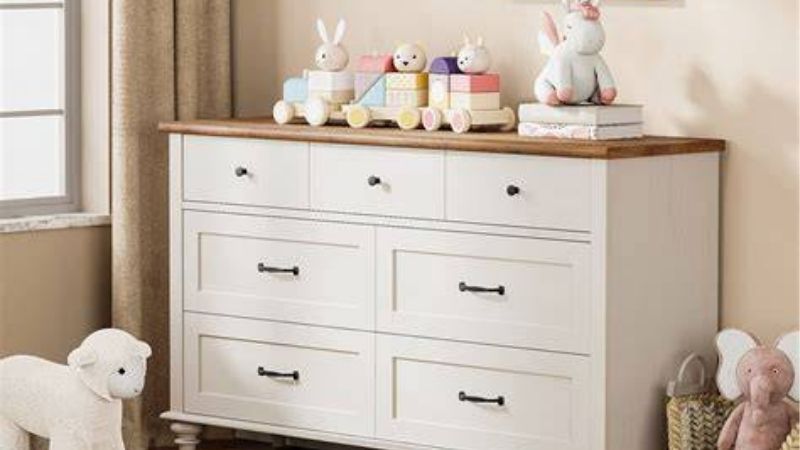
Start With Tip-Over Protection
Two mechanisms cut tip-over risk, and they do different jobs. An interlocking drawer system, found on the Delta Essex and Storkcraft Brookside, lets only one drawer open at a time so a child cannot turn open drawers into a climbing ladder. A wall restraint instead ties the cabinet back to a wall stud.
Match the approach to your household. IKEA’s STORKLINTA uses an Anchor & Unlock design where only one drawer opens until the unit is secured to the wall, which helps in homes where anchoring might get postponed. Whatever you choose, install the restraint before a single drawer is loaded with clothing.
A mandatory federal stability standard based on ASTM F2057-23 (16 CFR 1261) now covers many clothing storage units made on or after September 1, 2023 [CPSC, 2023]. Read an anchor as required, not optional, and avoid calling any dresser tip-proof, because real-world stability depends on correct wall installation.
Measure Width and Depth
Depth decides how far the unit intrudes into a small room, and these four are closer in width than in depth. Measured depths run 16.73 inches on the Brookside, 18.875 on the STORKLINTA, 19 on the West Elm Modernist and 19.75 on the Delta Essex, a three-inch spread that is easy to feel in a tight nursery.
Translate those numbers to your layout before buying. Where the piece sits beside a door or crib, the shallow 16.73-inch Brookside preserves walking room, while the 56-inch-wide Modernist needs a long clear wall. Map drawer pull-out clearance too, since an open drawer adds roughly its own depth again to the footprint.
Footprints follow from width and depth: the Brookside covers about 6.2 square feet and the Modernist about 7.4, so the widest pick takes close to a fifth more floor. Oversizing is the quiet long-term cost, because a dresser that blocks a walkway gets shoved, and that slowly loosens cam-lock joints over the years.
Compare Usable Drawer Space
Storage on a kids dresser is set by the drawer boxes, not the cabinet’s outside width. The Essex lists interior drawers near 20.75 by 13.5 by 4.75 inches, the Brookside about 23.19 by 13.5 by 3.98, and the Modernist’s six drawers roughly 25.5 by 15.6 by 6.1, so a wider shell does not always win capacity.
Think about what actually goes inside. Shallow 4-inch drawers suit folded onesies and leggings; the Modernist’s deeper 6-inch boxes handle bulkier sweaters and swaddles. STORKLINTA quotes about 8.4 cubic feet total, but remember only one drawer opens before anchoring, so plan daily access around that safety behavior.
Drawer hardware is a common long-term failure point in budget furniture. Wooden or center-mount glides can bind and rack if a child hangs on an open drawer, while metal side glides tend to stay smoother. Check whether replacement glides are sold separately before assuming a cheap unit is the better buy over several years.
Check Materials, Finish and Cleaning
Most of these units mix engineered panels with laminate or painted surfaces, and the finish affects cleaning more than daily durability. The Modernist uses child-safe water-based paint, while the Brookside carries a GREENGUARD Gold listing for lower chemical emissions, a separate quality from any tip-over rating.
For a nursery, a wipeable laminate or sealed paint handles spills and sticky fingers better than raw wood. If new-furniture smell concerns you, note that MDF and particleboard sold in the US must meet formaldehyde limits under TSCA Title VI (EPA), and airing the piece out for a few days before use is still sensible.
Finishes also set hand-me-down value. A durable laminate resists chipping at drawer edges, where toddlers do the most damage, whereas softer paint shows wear and is harder to touch up. Keep the manual and any spare cam-locks, since missing fasteners are the usual reason an otherwise sound dresser gets thrown out.
Top Picks
These four kids dressers each win a clear role rather than a single overall crown, because depth, width and drawer layout pull in different directions. All list at least two hard specs plus a stated safety approach; prices range across budget to premium tiers, so confirm the current price and stock before ordering.
| Product | Best For | Key Spec | Watch Out For |
|---|---|---|---|
| Delta Children Essex | Best Overall | ASTM claim + interlock; 47.5″ wide | deepest pick at 19.75″ |
| Storkcraft Brookside | Shallow rooms | 16.73″ deep; interlock + restraint | widest at 53.35″ |
| IKEA STORKLINTA | Low-profile wide storage | 29.5″ high; 8.4 cu ft | full drawer use needs anchoring |
| West Elm Modernist | Premium wide dresser top | 56″ wide; 6 roomy drawers | large footprint, premium tier |
Delta Children Essex — Best Overall
The Essex suits parents who want tip-over features and nursery sizing in one mid-tier package. It measures 47.5 inches wide by 19.75 deep by 33.75 high, pairs interlocking drawers with a wall restraint, and Delta states it is tested to current ASTM F2057 requirements, which is why it anchors this shortlist.
At under four feet wide it fits most nursery walls while still offering six drawers, and the interlock means a toddler cannot cascade several drawers open at once. Flat-pack assembly takes an evening for one person; budget extra time to find a stud and fit the anchor, which is the step that actually delivers the safety.
The trade-off is depth: at 19.75 inches it is the deepest pick here, so in a narrow room an open drawer eats noticeably into the walkway. As with any engineered-wood dresser, cam-lock joints can loosen if the piece is dragged, so lift rather than slide it and re-snug the fasteners after the first few weeks.
Storkcraft Brookside — Best for Shallow Rooms
The Brookside is the pick when floor depth is tight. At just 16.73 inches deep it is the shallowest here, yet it still runs 53.35 inches wide by 33.43 high with interlocking drawers and a tip restraint, and it carries a GREENGUARD Gold listing for lower emissions. It sits in the budget-to-mid tier.
That shallow body keeps the unit from crowding a doorway or crib, its main practical edge in a small nursery. The drawers are wide and usable at about 23.19 by 13.5 inches, good for folded basics. Being a retailer-listed model, double-check the finish and in-stock variant before buying rather than assuming every color matches.
The flip side of the shallow depth is width: at over 53 inches it needs a long clear wall, and its 3.98-inch drawers are shallow for bulky items. Remember the GREENGUARD listing speaks to chemical emissions, not stability, so you still must anchor it to the wall for the tip-over protection to actually count.
IKEA STORKLINTA — Best for Low-Profile Wide Storage
STORKLINTA fits rooms that want a long, low dresser doubling as a changing-table base. It stands only 29.5 inches high across 55.125 wide and 18.875 deep, offers about 8.4 cubic feet of storage, and uses IKEA’s Anchor & Unlock system where just one drawer opens until the unit is secured. Expect budget-to-mid pricing.
The low top is handy for a changing pad or lamp, and the wide body spreads storage without towering over a toddler. Because drawers stay largely locked until anchoring is done, the design nudges you into the safe setup rather than leaving it to willpower, which is a genuine practical advantage for busy households.
The catch is that full drawer use truly requires completing the wall anchoring first, so plan to mount it before the room goes into service. IKEA finishes and hardware are widely stocked, which helps with spare parts, but the particleboard core dislikes moisture, so wipe spills fast and avoid a damp wall behind it.
West Elm Modernist — Best Premium Wide Dresser
The Modernist is the splurge for a long-term, design-forward nursery that will grow into a kid’s room. It spans 56 inches wide by 19 deep by 33 high with six roomy drawers near 25.5 by 15.6 by 6.1 inches, includes anti-tip hardware, and uses child-safe water-based paint. It clearly sits in the premium tier.
Those deeper drawers swallow bulky blankets and sweaters that shallow nursery drawers struggle with, and the wide top gives real surface for a changing station. It is a heavier, more substantial build than the flat-pack options, so arrange delivery access and a second set of hands for positioning it against the wall.
The obvious drawback is cost and footprint: at 56 inches wide and about 7.4 square feet it is the largest and priciest here, so it only makes sense on a long wall. Premium paint looks great but can show scuffs at drawer edges, where toddlers wear finishes fastest, so keep touch-up paint for the inevitable dings.
Frequently Asked Questions
A few questions come up repeatedly once shoppers compare real units. The answers below lean on the measured specs of these four models rather than round rules of thumb, so you can check them against the exact piece you are considering before committing to a purchase or a particular wall.
How deep should a kids dresser be?
There is no single correct depth, but the practical range sits around 16 to 20 inches, and this shortlist runs 16.73 to 19.75. Shallower bodies like the 16.73-inch Brookside free up walking room, while deeper ones like the 19.75-inch Essex add bulkier drawer capacity for folded clothes.
The right number depends on your room, not the product name. Where the unit sits next to a crib or door, measure the wall-to-obstacle distance and subtract the depth plus roughly the same again for a pulled-out drawer, since that open-drawer clearance is the figure most people forget to allow for.
If the math is tight, a shallow model usually beats squeezing a deep one into a walkway, because a piece that blocks a path gets bumped and dragged. When depth and storage both matter, look instead at taller or wider layouts that add capacity without adding to how far the furniture sticks out.
Does a kids dresser still need wall anchoring?
Yes. Anchoring is the single most important safety step for any child’s dresser, regardless of the unit’s own interlock or weight. A mandatory federal stability standard (16 CFR 1261, based on ASTM F2057-23) now covers many clothing storage units made from September 1, 2023 onward [CPSC, 2023].
It works by stopping the whole cabinet from rotating forward when a child climbs or pulls on open drawers, a scenario loose furniture cannot survive on its own. Every pick here ships with or requires wall-securing hardware; STORKLINTA even limits drawer opening until that anchoring step is finished.
Use each model’s included kit and fix it into a stud or a rated drywall anchor, following the manual rather than guessing fastener ratings. If you rent and cannot drill freely, ask the landlord about approved anchors first, because skipping this removes the protection the standard was written to provide.
Is an interlocking drawer system the same as a wall anchor?
No, and treating them as interchangeable is a common mistake. An interlock limits how many drawers open at once, while a wall anchor physically ties the cabinet to the structure. The Essex and Brookside show both mechanisms living on one unit rather than one replacing the other.
They defend against different failure modes. The interlock keeps a child from building a staircase of open drawers; the anchor keeps the body from toppling if weight shifts forward anyway. A unit with an interlock but no anchor is still at risk, which is why safety standards emphasize securing to the wall.
In practice, use both where offered. If a model has only one, the anchor is the non-negotiable one, since it addresses the actual tip-over event. Verify which features your chosen unit includes on its own product page, because listings vary even within a single brand’s lineup from season to season.
How wide are six-drawer kids dressers?
Across this shortlist, six-drawer models run from 47.5 inches on the Delta Essex to 56 inches on the West Elm Modernist, with the Brookside at 53.35 and STORKLINTA at 55.125. So width can swing by more than eight inches for the very same drawer count.
Width matters because it dictates the wall you need and how the piece balances against a crib or bed. A narrower 47.5-inch body leaves room for a hamper or chair beside it, while a 56-inch unit wants a dedicated long wall and can crowd a compact nursery if it is squeezed in.
Before ordering, measure the available wall and leave a few inches on each side for cords, trim and breathing room. If the only clear wall is short, prioritize a narrower model; stretching a too-wide piece into a corner tends to block outlets and makes anchoring into a stud much harder.
Final Thoughts
The best kids dresser fits your room and your child’s clothes, not the loudest marketing. Measure the wall and walkway first, insist on wall anchoring whatever the interlock, and treat emissions or finish claims as separate from stability. On that basis the Essex leads, with the Brookside, STORKLINTA and Modernist each owning a clear niche.
