
Key takeaways
- A 3 door wardrobe is a tall, heavy piece, so the right one balances three things at once: the door layout and footprint, the storage inside, and a secure anchor to the wall. This roundup compares four verified wardrobes from…
A 3 door wardrobe is a tall, heavy piece, so the right one balances three things at once: the door layout and footprint, the storage inside, and a secure anchor to the wall. This roundup compares four verified wardrobes from about $200 to $970 and treats tip-over restraint as a requirement, not an afterthought, alongside size and build.
As an Amazon Associate we earn from qualifying purchases.
By KK Home Furnishings Editorial Team
How to Choose a 3 Door Wardrobe
A wardrobe this size earns its place on fit and safety before finish. Three doors can hide very different layouts and footprints, and a tall freestanding unit must be anchored to the wall, so before style or price, measure the space with door swing, compare the storage, choose the material deliberately, and confirm the anchoring.
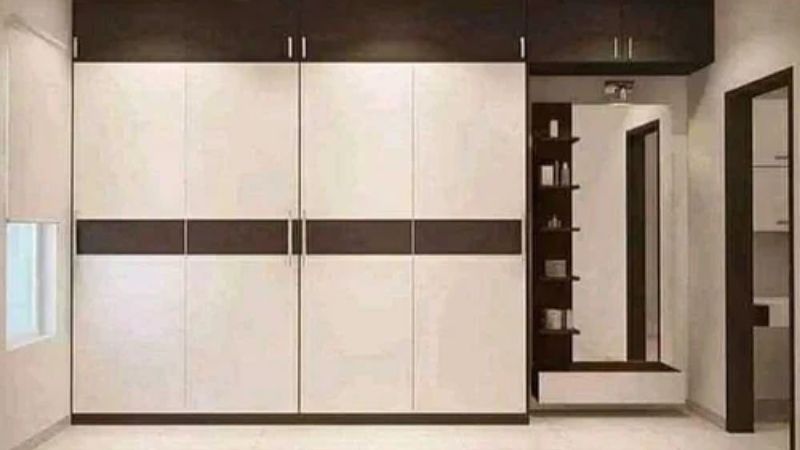
Measure Width, Depth and Door-Swing Space
Start with the overall size and the room it needs to open. These wardrobes run from the IKEA BRIMNES at 46 inches wide to the Charlton Home Kyle at 54.75, with depths from 18.9 to 22.25 inches, but the hinged doors also need clearance to swing, which the footprint alone does not show you anywhere on the spec sheet.
Measure the wall width, the depth from the wall, and the space in front for the doors to open fully. A unit that fits the footprint can still be unusable if a bed or dresser blocks a door, so account for the swing of each of the three doors. The depth matters too, since a shallower cabinet protrudes less into a tight bedroom.
Close widths can read as bigger differences than they are. The FUFU&GAGA, KLEPPSTAD and BRIMNES sit within about 2.6 percent of each other in width, so none is meaningfully wider, and the real distinctions are depth, layout and anchoring. Reserve the wider-or-narrower judgment for the Kyle, which is genuinely broader at nearly 55 inches.
Compare Hanging Space With Shelves
Three doors can front a rail, shelves, or a mix, so match the inside to your wardrobe. The IKEA KLEPPSTAD pairs a hanging rail, which its guidance suggests holds roughly 20 shirts, with a shelf, while the FUFU&GAGA leans on four shelves plus rods, and the Kyle offers two rods for more hanging capacity across its wider body.
Decide what you actually store. A rail suits shirts, dresses and coats that need hanging; shelves suit folded tees, knitwear and bags that crease less. If most of your clothes hang, prioritize a unit like the Kyle with two rods; if you fold, the shelf-heavy FUFU&GAGA layout uses the space better for that kind of wardrobe.
Think about how the layout wears over years. Adjustable shelves, like those in the BRIMNES, let you re-divide the space as your wardrobe changes, while fixed layouts lock you in. Overloading a single rail or shelf is where cheaper units sag first, so match the load you will put inside to the build rather than filling every inch.
Choose Engineered Wood or Solid Wood Deliberately
Material drives both price and how the wardrobe holds up. The IKEA units and the FUFU&GAGA use engineered wood such as particleboard, fiberboard or MDF, while the Charlton Home Kyle is built from solid Brazilian pine, which is why it costs around $969.99 against roughly $200 to $270 for the others as of October 2026 here.
Pick the material for the use, not just the look. Engineered wood keeps the price down and is fine for a stable bedroom, but it can loosen at fixings if moved or overloaded; solid wood costs more and tolerates heavier use and relocation. Engineered-wood furniture must meet the EPA’s formaldehyde limits under TSCA Title VI.
Weigh longevity against budget honestly. A solid-pine wardrobe like the Kyle is the long-term piece, while an engineered-wood unit is the value choice that asks for gentler handling, especially at the hinges and the base. Neither is a mistake; choosing one blindly is, so confirm the construction before the finish.
Treat Wall Anchoring as a Safety Requirement
A tall wardrobe can tip, so anchoring is a safety step, not an optional extra. The IKEA KLEPPSTAD and BRIMNES both come with instructions to secure the unit to the wall, the BRIMNES including a safety fitting, and the Kyle lists a tip-over restraint, so anchor every freestanding wardrobe to a wall stud regardless of its weight.
This matters most in homes with children, who can climb a wardrobe and bring it down. The CPSC’s mandatory rule for clothing storage units is codified at 16 CFR Part 1261 and applies to in-scope units made after September 1, 2023, reflecting the real tip-over risk. Use appropriate wall fasteners for your wall type during assembly.
Confirm the hardware before you rely on it. The anti-tip hardware for the FUFU&GAGA model here could not be verified on the sources checked, so treat its restraint as unconfirmed and plan to add a suitable anchor kit. That a federal rule exists does not mean every listing is verified compliant, so check each model rather than assuming it.
Top Picks
Each wardrobe below fills a clear role, with dimensions, storage and anchoring details drawn from the makers’ listings, current as of October 2026. Prices and stock move, so confirm before buying. The table pairs the standout feature with the main catch for each, and anchoring applies to all four regardless of their weight.
| Product | Best For | Key Spec | Watch Out For |
|---|---|---|---|
| IKEA BRIMNES | Best Overall | 46 in W; mirror + adjustable shelves | Must be secured to the wall |
| IKEA KLEPPSTAD | Best Simple Storage | 46.125 in W; rail + shelf | Deeper than the BRIMNES |
| Charlton Home Kyle | Best Solid-Wood Storage | solid pine; 54.75 in W; 2 rods | Widest and highest price |
| FUFU&GAGA KF210151-05 | Best Shallow Layout | 18.9 in D; 4 shelves | Anti-tip status not verified |
IKEA BRIMNES: Best Overall
The IKEA BRIMNES earns Best Overall for a flexible layout and included safety hardware. It measures 46 inches wide by 19.75 deep by 74.75 tall, offers a mirror door that can sit left, right or center plus adjustable shelves, comes with a safety fitting, and lists around $249.99 at IKEA as of October 2026 in the budget tier.
It suits a bedroom that wants a mirror and the freedom to re-divide the shelves as a wardrobe changes, and the 19.75-inch depth keeps it from protruding far into a room. The adjustable shelves adapt to folded or hanging needs. Measure the width plus door-swing space, and plan to anchor it to a wall stud during assembly first.
The non-negotiable catch is anchoring: IKEA directs owners to secure the BRIMNES to the wall, and that instruction is part of using it safely, not a formality. Being engineered wood, it also rewards gentler handling at the hinges and base than solid wood would, so avoid overloading the shelves beyond their intended folded-clothing use.
IKEA KLEPPSTAD: Best Simple Storage
The IKEA KLEPPSTAD is the pick for straightforward, low-cost storage. It measures 46.125 inches wide by 21.625 deep by 69.25 tall, pairs a hanging rail that holds roughly 20 shirts with a shelf, requires wall anchoring, and lists around $199.99 at IKEA as of October 2026, the lowest price in this group of four wardrobes.
It suits a first bedroom or a simple wardrobe where a rail and a shelf cover the need without extra features, and the rail capacity gives a realistic sense of what fits. The layout is easy to live with. Note it is deeper than the BRIMNES at 21.625 inches, so confirm that depth clears your walkway before you commit to it.
The catches are depth and anchoring. At 21.625 inches it protrudes further than the shallower units here, which a tight room will feel, and like all these wardrobes it must be secured to the wall with suitable fasteners. As engineered wood, keep the rail within its intended load so it does not sag or loosen over the years.
Charlton Home Kyle: Best Solid-Wood Storage
The Charlton Home Kyle is the pick for solid-wood construction and the most hanging space. It measures 54.75 inches wide by 22.25 deep by 74 tall, is built from solid Brazilian pine with two rods, lists a tip-over restraint, and sells for around $969.99 at Wayfair as of October 2026, the premium option here by a wide margin.
It suits a buyer investing in a long-lived wardrobe with room for a lot of hanging clothes, since the two rods and 54.75-inch width hold far more than a single-rail unit. Solid pine tolerates heavier use and relocation better than engineered wood. Measure the near-55-inch width and the door swing, as it is the broadest piece here.
The catches are size and price. At nearly 55 inches wide it needs a generous wall and costs several times the engineered-wood units, so it suits a larger room and budget. Even as solid wood with a listed restraint, it still must be anchored to the wall, because solid construction does not by itself prevent a tall piece from tipping.
FUFU&GAGA KF210151-05: Best Shallow Layout
The FUFU&GAGA KF210151-05 is the pick when depth is tight. It measures 47.2 inches wide by 18.9 deep by 70 tall, the shallowest here, with four shelves and rods behind soft-close hinges in an MDF-and-aluminum build, and lists around $271.48 at Home Depot as of October 2026 in the budget-to-mid range for a shelf-heavy wardrobe.
It suits a narrow bedroom where the 18.9-inch depth keeps the wardrobe from crowding the floor, and the four shelves favor folded clothes over hanging. The soft-close hinges are a nice touch at the price. Its width sits within about 2.6 percent of the two IKEA units, so treat it as similarly wide rather than notably broader than them.
The important catch is safety: the anti-tip hardware for this model could not be verified on the sources checked, so do not assume it ships with a restraint. Plan to add a suitable anchor kit and secure it to a wall stud, because a tall freestanding wardrobe without confirmed anti-tip hardware is exactly the risk anchoring prevents.
Frequently Asked Questions
Buyers comparing freestanding wardrobes ask the same core questions, mostly about size, hanging depth and safety. Each answer below leads with the direct reply, then adds the condition that changes it, so you can apply it to your room and wardrobe rather than a general assumption about what a three-door unit should be or hold.
How wide is a typical 3 door wardrobe?
Most sit in the mid-to-high 40-inch range, though wider models exist. Three of the picks here, the BRIMNES, KLEPPSTAD and FUFU&GAGA, cluster between 46 and 47.2 inches, within about 2.6 percent of each other, while the solid-pine Kyle stretches to 54.75 inches. So a typical three-door unit is roughly four feet wide, give or take.
Width depends on the layout behind the doors. Narrower doors can still front a usable wardrobe if the depth and height are generous, so read the full dimensions rather than width alone. If you need more hanging space, a wider body like the Kyle with two rods delivers it, at the cost of a larger wall and a higher price overall.
Measure the wall and the door swing before fixing on a width. A 46-inch unit and a 47-inch unit are effectively the same on the wall, so let depth, layout and anchoring decide between close sizes. Save the wider-versus-narrower comparison for genuinely different widths, where the extra capacity actually changes what the wardrobe can hold.
How deep does a wardrobe need to be for hanging clothes?
Enough for a hanger to sit square, which usually means a depth in the high teens to low twenties of inches. The picks here run from the FUFU&GAGA at 18.9 inches to the Kyle at 22.25, and all are built to take a rail or rods, so each clears the basic requirement for hanging everyday clothes front to back inside.
The exact depth you need depends on the garments. Bulky coats and suit jackets want the deeper end, near 22 inches, so the shoulders do not press against the doors, while shirts and dresses fit a shallower cabinet comfortably. If you mostly fold, a shallower shelf-heavy unit like the FUFU&GAGA uses a tight room’s depth more efficiently.
Balance depth against the floor it costs in a small bedroom. A deeper wardrobe hangs bulkier clothes but protrudes further into the room, so measure the walkway you can spare. Where depth is the constraint, a shallow unit with shelves for folded clothes often beats forcing a deep hanging cabinet into a space that cannot really take it.
Does a freestanding wardrobe need wall anchoring?
Yes. A tall, freestanding wardrobe should be anchored to the wall regardless of its weight or price, because it can tip if loaded unevenly or climbed on. The IKEA units here ship with instructions to secure them, the BRIMNES with a safety fitting, and the Kyle lists a tip-over restraint, reflecting how standard this step now is.
The risk is highest in homes with children. The CPSC’s mandatory rule for clothing storage units, 16 CFR Part 1261, applies to in-scope units made after September 1, 2023, and exists because tip-overs cause serious injuries. Anchor the unit to a wall stud using the included or appropriate fasteners for your wall type during assembly.
Do not assume the hardware is present or sufficient. One model here could not be verified as shipping with anti-tip hardware, so check each wardrobe and add a suitable anchor kit if needed. A restraint listed on a page still has to be installed correctly, so treat anchoring as a step you confirm and complete, not one you skip.
Is a solid-wood wardrobe automatically safer?
No. Solid wood is more durable, but it does not by itself prevent a tall wardrobe from tipping, which is a matter of anchoring, not material. The solid-pine Kyle still lists a tip-over restraint and should be secured to the wall, exactly like the engineered-wood units, because height and loading drive tip-over risk more than the wood.
Where solid wood does help is longevity and load. It holds fixings and rails better under heavy use and tolerates being moved, so it sags and loosens less than engineered wood over the years. That is a durability advantage, not a safety guarantee, so do not read a solid-wood label as permission to skip anchoring the piece at all.
Judge safety by the anchoring, not the material. Any tall wardrobe, solid or engineered, needs a wall fixing to a stud and even loading, with the heaviest items low. Treat the construction as a question of how long the piece lasts and how much it holds, and treat tip-over restraint as the separate step that keeps it safe.
Final Thoughts
Choosing a 3 door wardrobe comes down to fit, storage and safety: measure width, depth and door swing, match the layout to how you store clothes, pick engineered or solid wood, and anchor it. The flexible BRIMNES, simple KLEPPSTAD, solid-pine Kyle and shallow FUFU&GAGA each suit a specific room, and every one needs anchoring to a wall.
