Key takeaways
- A japanese joint bed uses interlocking wood joinery, so the real test is whether the maker actually publishes that joinery, not just a low, minimalist look. This guide compares four wooden platform beds on joinery method, slat support, and real…
A japanese joint bed uses interlocking wood joinery, so the real test is whether the maker actually publishes that joinery, not just a low, minimalist look. This guide compares four wooden platform beds on joinery method, slat support, and real dimensions so you get a true joint bed.
As an Amazon Associate we earn from qualifying purchases.
By KK Home Furnishings Editorial Team
How to Choose a Japanese Joint Bed
A true joint bed is defined by its joinery and support, so these criteria stay concrete: verifying it uses actual interlocking joinery the maker publishes, checking slat spacing and mattress support, deciding between a recessed mattress opening and a flush platform, and measuring the overall footprint, not just the mattress size.
Verify It Uses Actual Interlocking Joinery
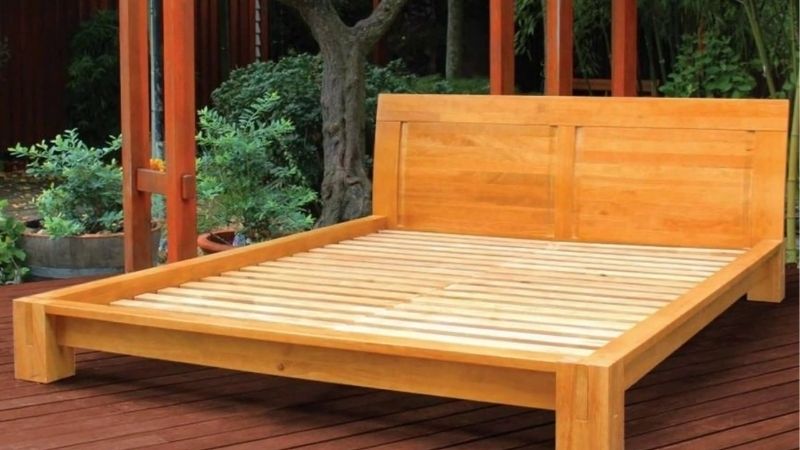
A Japanese joint bed should use interlocking wood joinery the maker names, not just a minimalist silhouette alone. The Tatami Room Wakayama lists interlocking Japanese joinery and the Thuma Essential interior Japanese joinery with hand screws, so confirm the maker publishes the joinery, since a low wooden platform alone is not a joinery bed.
Distinguish Japanese-style minimalist design from actual Japanese joinery, since the two often get conflated in listings online. A clean, low frame may still use standard hardware, so read the construction, because the appeal of a joint bed is the interlocking joinery and tool-light assembly, which only exist when the maker actually builds them in.
Published joinery also signals assembly and longevity, since interlocking joints use fewer fasteners that can loosen over time. The Thuma uses joinery plus hand screws for a near-toolless build, so check the method, because a frame relying on joinery rather than many bolts tends to stay tight, whereas a hardware-heavy platform can loosen and creak.
Check Slat Spacing and Mattress Support
Slat spacing decides how evenly the bed supports a mattress, so check the gap the maker lists before buying. The Wakayama lists slat spacing under 2 inches and the Tatami Platform Bed 18 pairs of slats at 2-inch spacing, so confirm the spacing, since closely set slats support foam and hybrid mattresses without the center dip wide gaps allow.
Match the spacing to your mattress, since foam and hybrid beds need closer slats than an innerspring tolerates underneath. A spacing around 2 inches, as these list, suits most modern mattresses, so check your mattress warranty, because many makers require closely spaced slats or a solid base, and a joint bed with tight slats usually meets that.
Support also depends on the frame and any center rail, since a wide bed needs backing along its full span. Closely spaced slats on a solid frame resist sagging, so confirm the construction, because a beautiful joinery frame still needs adequate slat support to keep a mattress flat, and the slat detail is where cheaper platforms cut corners.
Recessed Mattress Opening vs Flush Platform
Platform beds either recess the mattress into an opening or sit it flush on top, which changes the look and height. The Tatami Platform Bed lists a 60-by-80 opening within a 66-by-86 overall frame, so the mattress drops into a recess, while a flush platform sets the mattress on top, giving a different profile and a different edge detail.
Choose a recessed opening for a lower sleeping surface and a framed edge, or a flush platform for a taller, simpler top. A recess lowers the mattress into the frame, so decide the look and height you want, because a recessed bed sits lower and frames the mattress, while a flush one sits higher and shows the mattress edge all the way around.
The opening size must match your mattress, since a recess is cut to a specific size and will not flex to fit. Confirm the opening fits your mattress exactly, because a mattress too large will not drop into a recessed opening and one too small leaves a gap, so match the listed opening to your mattress size rather than the frame’s outer dimensions.
Measure Overall Footprint, Not Mattress Size Alone
A platform bed’s footprint is larger than the mattress, so measure the overall frame, not just the mattress size. The Tatami Platform Bed lists a 66-by-86 overall footprint around a 60-by-80 opening, so the frame extends beyond the mattress, which means the bed takes more floor space than the nominal mattress dimensions would suggest.
Measure the room and the overall frame together, since a low platform with a wide surround needs clearance on each side. A frame several inches larger than the mattress all around needs that space, so map the room, because a bed sized by the mattress alone can end up tight against walls or furniture once the full frame is in place.
Nominal size refers to the mattress, not the frame, so two joint beds for the same mattress can have different footprints. Compare the overall dimensions, since one maker’s surround is wider than another’s, and confirm the footprint against your room, because the frame’s outer size, not the mattress size, is what has to fit the space.
Top Picks
These four are wooden platform beds compared on joinery method, slat support, and footprint rather than looks alone; three are currently available and one is a discontinued reference, so confirm the live price and the published joinery before choosing, since a minimalist look alone does not make a true joint bed.
| Product | Best For | Key Spec | Watch Out For |
|---|---|---|---|
| Tatami Room Wakayama | Best overall | Interlocking Japanese joinery; slats under 2 in; 60x80x10 overall | Confirm current finish/size |
| Tatami Room Tatami Platform Bed | Best value | 18 slat pairs at 2 in; 60×80 opening; 66x86x9 overall | Recessed opening footprint |
| Thuma Essential Bed | Premium minimalist design | Interior Japanese joinery + hand screws | Frame-only config selected |
| Silk and Snow Wooden Bed Frame | Discontinued reference | Japanese joinery; 1,100 lb; 3 in slats | Not available to buy now |
Best Overall – Tatami Room Wakayama
The Tatami Room Wakayama suits buyers who want documented interlocking joinery with strong mattress support. It lists interlocking Japanese joinery, slat spacing under 2 inches, and a 60-by-80-by-10-inch overall size in Queen, so it pairs real joinery with closely spaced slats, which makes it the all-round pick for a true joint bed here.
The published interlocking joinery and sub-2-inch slat spacing are the draw, giving authentic joinery and even support for foam or hybrid mattresses. It reads as the pick when you want a verified joint bed, so it suits a bedroom where the joinery and the support both matter, provided you confirm the current finish and size when you order.
The catch is that finishes and sizes can vary, so confirm the exact configuration and current availability before buying one. Measure the overall footprint against your room, since the frame extends beyond the mattress, and check your mattress warranty, because the sub-2-inch slat spacing suits most modern mattresses but confirm it meets yours.
Best Value – Tatami Room Tatami Platform Bed
The Tatami Room Tatami Platform Bed fits buyers who want a recessed joinery platform at the lowest price in this group. It lists 18 pairs of slats at 2-inch spacing, a 60-by-80 mattress opening, and a 66-by-86-by-9-inch overall footprint, so it recesses the mattress into the frame at a value price among these joint beds.
The recessed opening and 2-inch slat spacing are the draw, framing the mattress low while supporting it evenly across 18 slat pairs. At the value end it reads as the budget pick, so it suits a buyer who wants the recessed look and solid support, provided the 66-by-86 overall footprint fits the room around the smaller 60-by-80 opening.
The catch is footprint, since the 66-by-86 overall frame is noticeably larger than the 60-by-80 mattress opening within it. Measure the room against the overall size, since the surround adds width on each side, and confirm the opening matches your mattress exactly, because a recessed bed needs the mattress to drop cleanly into the opening.
Best Premium Minimalist Design – Thuma Essential Bed
The Thuma Essential Bed suits buyers who want a premium minimalist frame with interior joinery and near-toolless assembly. It lists interior Japanese joinery with hand screws in the selected frame-only Queen configuration, so it pairs a clean, minimal look with real joinery and a simple build at the premium end of this group.
The interior joinery plus hand screws are the draw, giving a near-toolless assembly and a tight, minimal frame that stays quiet in use. It reads as the premium pick when design and easy assembly lead, so it suits a modern bedroom, provided you note the selected configuration is frame-only, so a headboard is a separate consideration if you want one.
The catch is price and configuration, since the premium cost and the frame-only setup mean a headboard adds more if you want it. Confirm the configuration before buying, since frame-only differs from a headboard version, and check the slat support for your mattress, because the minimalist design still needs adequate support for a foam or hybrid bed.
Discontinued Reference – Silk and Snow Wooden Bed Frame
The Silk and Snow Wooden Bed Frame is included as a reference rather than a current buy, since it is discontinued now. It listed Japanese joinery, an 1,100-pound capacity, and 3-inch slat spacing, so it shows what a high-capacity joinery frame offered, but it fails the current-availability test and is not a buy-now option today.
Its 1,100-pound capacity and published joinery made it a strong benchmark, which is why it is useful as a reference point here. Use it to gauge the others, so you can see where current beds land on capacity and slat spacing, because its 3-inch spacing was wider than the sub-2-inch Wakayama, a difference worth noting for modern mattresses.
The catch is simple: it is discontinued, so it cannot be bought now, and the available picks above are the practical choices. Treat its specs as a yardstick rather than a purchase, since availability matters, and for a buy-now joint bed the Wakayama, Tatami Platform Bed, or Thuma are the current options to compare against this reference.
Frequently Asked Questions
These answers cover what buyers ask most about joint beds, from how to tell real joinery from a minimalist look to whether a Japanese joint bed needs a box spring and how its low platform and overall footprint affect a real bedroom’s layout and the mattress you can pair with it at home.
What makes a bed a Japanese joint bed?
A Japanese joint bed uses interlocking wood joinery the maker publishes, not merely a low, minimalist silhouette on its own. The Wakayama lists interlocking Japanese joinery and the Thuma interior joinery with hand screws, so the defining feature is the joinery itself, since a clean wooden platform without published joinery is just a minimalist bed.
Distinguish Japanese-style design from actual joinery, since a minimalist look is often marketed as a joint bed without the joinery. Read the construction, because the appeal is the interlocking joints and tool-light assembly, which only exist when the maker builds them in rather than relying on standard bolts hidden under a low frame design.
Published joinery also predicts assembly and longevity, since interlocking joints use fewer fasteners that loosen over time. A frame built on joinery tends to stay tight and quiet, so favor one that names its method, because the joinery is both the aesthetic and the structural point, and a hardware-heavy platform does not deliver the same.
Does a Japanese joint bed need a box spring?
Usually not, since a platform bed with closely spaced slats supports a mattress directly without a box spring underneath. The Wakayama’s sub-2-inch spacing and the Tatami Platform Bed’s 2-inch spacing support foam and hybrid mattresses, so a box spring is generally unnecessary, which is part of the appeal of a low joinery platform bed.
Check your mattress warranty, since some makers require closely spaced slats or a solid base to keep coverage valid. These beds’ tight slat spacing usually meets that, so confirm the requirement, because a platform with slats around 2 inches apart typically satisfies a modern mattress warranty without adding a box spring or a separate foundation.
If a mattress calls for a solid surface, a bunkie board over the slats bridges the gaps without a box spring at all. That keeps the bed low while meeting the requirement, so add one only if needed, because the point of a joint platform is a low, clean profile that a tall box spring would undo by raising the mattress height considerably.
How low does a Japanese joint platform bed sit?
These platforms sit low by design, with the Wakayama listing a 10-inch overall height and the Tatami Platform Bed a 9-inch overall frame. That low profile is part of the Japanese-style appeal, so expect a low sleeping surface, since a joint platform keeps the mattress closer to the floor than a tall framed bed with a box spring beneath it.
A low bed suits a minimalist room but can be harder to get into for some users, so consider who will use it daily. The low clearance also limits under-bed storage, so weigh that, because the clean, grounded look of a low platform trades the under-bed space and the easy sit-to-stand height of a taller framed bed with a foundation.
Add your mattress height to the platform to find the real sleeping-surface height before buying the bed. A thick mattress raises a low platform toward a normal height, so account for it, since the finished height is the platform plus the mattress, which matters for both the look and how easily a user gets in and out of bed each day.
How much floor space does a joint bed take?
More than the mattress, since a platform frame extends beyond the mattress on each side of the bed. The Tatami Platform Bed lists a 66-by-86 overall footprint around a 60-by-80 opening, so the frame is larger than the mattress, which means the bed occupies more floor than the nominal mattress size alone would suggest in a room.
Measure the overall frame against the room, not just the mattress, since the surround adds width and length to the bed. Allow clearance on the sides you walk past, because a low platform with a wide surround can sit tight against walls or furniture, so map the overall footprint, as nominal mattress size does not account for the frame’s extra width.
Compare overall footprints between beds, since two frames for the same mattress can differ in outer size noticeably. One maker’s surround is wider than another’s, so check the dimensions, because the frame’s outer footprint, not the mattress size, is what has to fit your room, and a wide surround can change which wall the bed works against.
Final Thoughts
Choosing a japanese joint bed well means verifying the maker publishes real interlocking joinery, checking slat support, and measuring the footprint. The Tatami Room Wakayama leads overall, the Tatami Platform Bed is the value pick, and the Thuma Essential is the premium minimalist option, so confirm the joinery before a look alone decides.