
Key takeaways
- Many beds borrow the Japandi look without the joinery that defines it, so the thing to check is how the frame is actually built. A real wood bed frame japanese joinery design documents tool-free, interlocking construction, so you are buying…
Many beds borrow the Japandi look without the joinery that defines it, so the thing to check is how the frame is actually built. A real wood bed frame japanese joinery design documents tool-free, interlocking construction, so you are buying a method that holds together without screws rather than a style pasted onto an ordinary frame.
As an Amazon Associate we earn from qualifying purchases.
By KK Home Furnishings Editorial Team
How to Choose a Wood Bed Frame With Japanese Joinery
Construction, not styling, is what sets these frames apart, so the criteria below start with documented joinery and work outward. From there they cover the wood type and how it moves, the underbed clearance and total height, and the weight figures that only some makers actually publish, which matters more than it first appears.
Documented Joinery, Not Just a Style
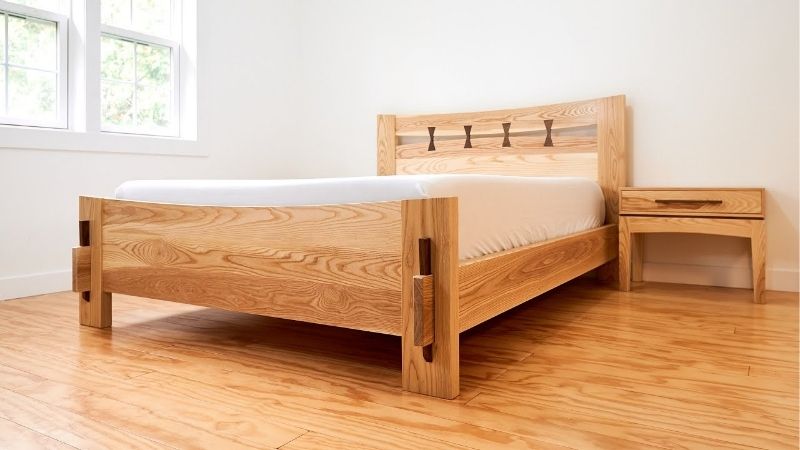
The defining feature is interlocking, tool-free construction, so look for a maker that documents it rather than one that only calls a frame Japanese. The Nectar Bamboo states interlocking joinery with no screws or nails, and the VanAcc uses mortise-and-tenon joints, so confirm the listing describes the method, not just the look.
Match the joinery claim to what you can verify. A frame that says no screws, tools, or metal parts, like the Casa Home Living design, is describing construction you can check in the assembly instructions, while a vaguely Japandi-styled frame with cam locks is just a look. Read how it goes together before trusting the joinery label.
True interlocking construction assembles without hardware, which many owners value for a cleaner build and easier disassembly when moving. Confirm the frame genuinely relies on the joints rather than hidden fasteners, since a frame that mixes a few interlocking joints with standard bolts is not the same thing.
Wood Type and How It Moves
Material shapes both feel and longevity. The Latitude Run frame uses solid rubberwood, while the Nectar uses bamboo, each with its own character, so judge the frame by the actual species rather than a generic wood finish. Solid wood and bamboo both differ from engineered panels, which weaken at joints after repeated moves.
Remember that solid wood moves with humidity, expanding and contracting with the seasons, which is normal rather than a defect. A tool-free frame is designed to accommodate some of that movement, but a very dry or very damp room can still shift the fit over time, so keep the bed away from radiators and damp walls where you can.
A no-screw joint is not a promise of silence. No-screw does not mean the frame never squeaks, since wood movement and shifting joints can produce sound over time; a snug reassembly and occasional checking of the joints usually quiets it. Treat squeak-free as something you maintain, not a permanent property of interlocking joinery.
Underbed Clearance and Height
Clearance decides storage and the overall feel of the bed. These frames list roughly 8.3 inches on the Nectar and VanAcc and about 10.2 inches on the Latitude Run, so check the figure against the bins or drawers you plan to slide underneath, since a few inches change what actually fits in the space below.
Total bed height is the frame plus your mattress, and many Japanese-style frames sit low by design. The Nectar lists an overall height around 12.3 inches before the mattress, so add your mattress thickness and confirm you can get in and out comfortably, especially if you prefer a higher bed or share it with someone with mobility needs.
A low platform also changes how a mattress breathes and is supported. Confirm the slat spacing suits your mattress, since a foam or hybrid bed needs evenly spaced support within the maker’s limit, and a low, slatted Japanese-style frame usually needs no box spring, which is part of its clean, minimal appeal in the first place.
Capacity and What Is Actually Published
Weight figures are the weak spot here, since only some makers publish them. The Casa Home Living frame lists a figure up to 1,500 pounds and the VanAcc up to 1,000 pounds, both manufacturer claims, while the Nectar does not publish a model-specific limit, so do not borrow an unofficial number to fill the gap for it.
Because capacity is published for only some of these frames, it is not a fair basis for ranking them against each other. Treat a stated figure as the maker’s claim without independent load testing, and judge the frames mainly on documented joinery and build rather than on a weight number that half the field never provides.
If capacity matters for your household, favor a frame that publishes it and states a center support where relevant. Count the real load, your mattress plus sleepers plus bedding, against any stated figure, and treat a frame with no published limit as one to ask the seller about rather than one to assume is strong enough for heavier use.
Top Picks
Each pick below leads with its documented joinery and a verified dimension, the real markers of a wood bed frame japanese joinery design, plus the trade-off worth knowing. Weight capacity is published for only some of these, so it is noted where given rather than used to rank the frames against one another here.
| Product | Best For | Key Spec | Watch Out For |
|---|---|---|---|
| Nectar Bamboo | Best overall | Interlocking, no screws/nails; 8.3 in clearance | No published model-specific weight limit |
| Casa Home Living | Best for stated support | No screws/tools/metal; up to 1,500 lb claim | 1,500 lb is a maker claim, not tested |
| Latitude Run | Best value | Solid rubberwood, no-tool; 10.2 in underbed | Figures are manufacturer-stated |
| VanAcc | Best for underbed storage | Mortise-and-tenon; up to 1,000 lb; 8.3 in | Capacity is manufacturer-stated |
Nectar Bamboo: Best Overall
The Nectar Bamboo frame takes the top slot for documented construction, stating interlocking joinery with no screws or nails, measuring about 63.9 by 84.3 by 12.3 inches with roughly 8.3 inches of underbed clearance. It suits buyers who want verified tool-free build from a known brand. It sits in the premium tier, so confirm the current price.
Its advantage is genuine interlocking construction and a clean, low profile, with enough clearance for low storage bins. The bamboo build and no-hardware assembly make it straightforward to put together and take apart for a move, so confirm the slat spacing suits your mattress and that the low height works for getting in and out comfortably.
The honest caveat is capacity: Nectar does not publish a model-specific weight limit, so do not borrow an unofficial figure to reassure yourself. Judge it on the documented joinery instead, remember a no-screw frame can still squeak as wood moves with humidity, and ask the seller about load if heavier use is a concern for your household.
Casa Home Living: Best for Stated Support
The Casa Home Living frame is the pick when a published capacity matters, stating no screws, tools, or metal parts and a figure up to 1,500 pounds. It suits buyers who want a tool-free build with a stated load number. It sits in the mid-to-premium tier, so verify today’s price before ordering it.
Its advantage is the combination of all-wood, hardware-free construction and a high stated capacity, which few in this category publish. The no-metal build is part of the appeal for a pure joinery design, so confirm the assembly genuinely relies on interlocking joints and that the slat support suits your mattress type before buying.
The honest caveat is that 1,500 pounds is a manufacturer claim without independent load testing, so treat it as the maker’s figure rather than a verified rating. Count your real load against it with margin, remember wood moves and joints can loosen over time, and reassemble snugly after any move to keep the frame quiet and solid.
Latitude Run: Best Value
The Latitude Run frame is the value pick, built from solid rubberwood with no-tool assembly and about 10.2 inches of underbed clearance, the most generous storage height here. It suits buyers who want a solid-wood joinery look for less. It sits in the budget-to-mid tier, so confirm the live price before choosing it.
Its strength is solid rubberwood and the tallest underbed clearance in the group, which fits larger storage bins beneath the bed. The no-tool assembly keeps setup simple, so confirm the slat spacing matches your mattress and that the clearance suits the containers you plan to use, since that extra inch or two is the frame’s practical edge.
The caveat is that its figures are manufacturer-stated without independent testing, so treat the specs as the maker’s numbers to verify. As with any wood frame, expect some movement with humidity and the occasional squeak, which a snug reassembly usually resolves, and confirm it relies on genuine joinery rather than hidden hardware.
VanAcc: Best for Underbed Storage
The VanAcc frame rounds out the picks with documented mortise-and-tenon, tool-free joinery, a stated capacity up to 1,000 pounds, and about 8.3 inches of underbed clearance. It suits buyers who want classic interlocking joints with a published load figure. It sits in the mid tier, so confirm the current price before ordering.
Its advantage is the mortise-and-tenon construction, a traditional interlocking method, paired with a stated capacity and usable storage height. Confirm the assembly relies on those joints, check the slat spacing against your mattress, and plan the 8.3-inch clearance around the bins you intend to use, since that figure sets what fits beneath the bed.
The honest caveat is that the 1,000-pound figure is manufacturer-stated, not independently researched, so count your real load against it with margin. Expect wood to move with the seasons and joints to need the occasional check, since a tool-free frame holds together by fit rather than fasteners, and a snug reassembly after a move keeps it from squeaking.
Frequently Asked Questions
Buyers drawn to the look ask the same questions about construction, capacity, and upkeep. Each answer below opens with the short version, then the detail that changes it, so you can judge a wood bed frame japanese joinery design by how it is actually built rather than by a style label attached to an ordinary frame.
Is Japanese joinery just a decorative style?
Not when it is real. Genuine Japanese joinery is a construction method, interlocking joints that hold a frame together without screws or nails, as the Nectar and VanAcc frames document. Many beds borrow the minimalist Japandi look without the joinery, so the distinction is whether the maker describes actual tool-free construction or only an aesthetic.
Check the assembly details rather than the marketing. A frame that states no screws, tools, or metal parts, or specifies mortise-and-tenon joints, is describing the method, while one that shows cam locks and bolts is styled, not joined. Read how it goes together before trusting the label, since the method is the whole point here.
The method also brings practical benefits: a hardware-free frame is often cleaner-looking and easier to disassemble for a move. If those matter to you, favor the documented joinery; if you only want the look, a styled frame may suit you, but do not pay a joinery premium for a bed that merely resembles one.
Will a no-screw frame squeak or loosen?
It can, over time. No-screw construction does not mean the frame never squeaks, since wood moves with humidity and interlocking joints can shift, producing sound. This is normal for solid-wood and bamboo frames rather than a defect, and a snug reassembly usually quiets it, so treat squeak-free as something you maintain, not a guarantee.
Movement is the underlying cause. Solid wood expands and contracts with the seasons, so joints that were tight in summer can loosen slightly in a dry winter. Keeping the bed away from radiators and damp walls reduces the swing, and checking the joints occasionally lets you re-seat any that have worked loose before they start to creak.
If silence matters most, favor a frame with well-fitted joints and plan to reassemble it carefully after any move, since a rushed rebuild is a common cause of squeaks. A little felt or wax at a persistent contact point can help, but the real fix is a snug, correct fit, which is within the design’s intent.
How much weight can a Japanese joinery bed hold?
It depends on the frame, and only some publish a figure. The Casa Home Living design states up to 1,500 pounds and the VanAcc up to 1,000, both manufacturer claims, while the Nectar publishes no model-specific limit. Do not borrow an unofficial number for a frame that does not state one, since that invents a rating the maker never gave.
Treat any published figure as a manufacturer claim without independent load testing, and count your real load against it: your mattress, the sleepers, and bedding together, with margin. A stated capacity tells you the maker’s intent, not a tested guarantee, so leave headroom rather than loading a frame to the number on the listing.
If capacity is a priority, choose a frame that publishes it and mentions a center support where relevant, and ask the seller about load for one that does not. Because capacity is published for only part of this category, judge the frames mainly on documented joinery and build, using any weight figure as a secondary, maker-stated detail.
Does it need a box spring or foundation?
Usually not a box spring. These low, slatted platform frames are designed to support a mattress directly on the slats, so a traditional spring box is generally unnecessary and can even sit awkwardly on a low frame. What matters is that the slat spacing suits your mattress and meets its warranty requirement.
The deciding factor is slat spacing. A foam or hybrid mattress typically needs slats within a maker-set gap, often around three inches, with a center support on larger sizes, so check your mattress warranty and the frame’s slat layout together. Wide slats may call for a bunkie board rather than a box spring to close the gap.
If you prefer a higher bed, that is a reason to choose a frame with more clearance or add a low-profile foundation rather than a box spring, keeping the clean platform look. Confirm the total height with your mattress on, since these frames sit low by design, which many buyers want but some find too close to the floor.
Final Thoughts
The right wood bed frame japanese joinery design is the one whose tool-free construction is documented and suits your mattress and storage, not one that only wears the Japandi look. Before ordering, read how the frame goes together and whether it publishes a weight figure, since real joinery is a method you can verify.
