Our Top Picks
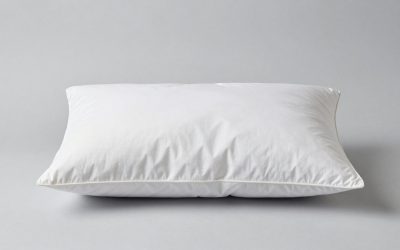
 Best OverallBLISSBURY Stomach Sleeper Pillow2.6"H (Queen)26 x 16 x 0.1 inches1.7 poundsCheck on Amazon
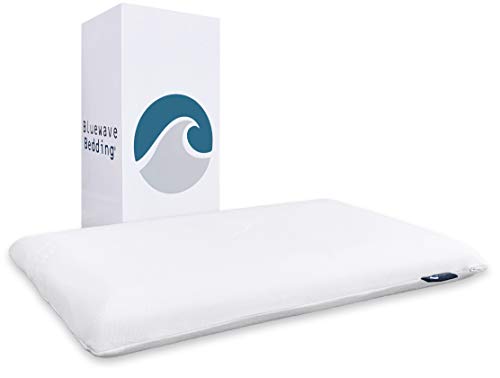 Best Gel Memory Foam Slim PillowBluewave Bedding Ultra Slim Gel Memory Foam Pillow2.75"H (Standard)2.69 poundsCheck on Amazon
The best pillow for belly sleepers is a thin one, and the BLISSBURY Stomach Sleeper Pillow at 2.6 inches is the clearest all-round pick: low enough to keep your head close to level, firm enough not to collapse. The BLISSBURY Cooling version at 3.3 inches is the runner-up for people with broader shoulders or a softer mattress who need a little more height. If you are not sure how thin is thin enough, the MINUPWELL 2.5-inch flat pillow is an inexpensive way to find out.
Stomach sleeping puts your head in a turned position for hours, so every extra inch of loft pushes your neck further back. That is why belly sleepers are told to go flat. This guide covers six flat and low-loft pillows that stay under about 3.5 inches, explains how to match height to your body and mattress, and answers the questions that come up around side-and-belly sleeping, pregnancy belly pillows and bean-style pillows. It is a comfort guide, not medical advice. If you wake with ongoing neck or back pain, ask a doctor or physical therapist.
BLISSBURY Stomach Sleeper Pillow, Thin Flat Memory Foam Pillow, 2.6 Inch | CertiPUR-US foam, ventilated gel infusion, moisture-wicking cover
Chosen because it specifies Thin Flat Memory Foam Pillow and 2.6 Inch.
View on Amazon
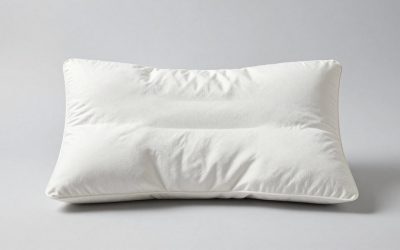
5X Pain Relief Cervical Neck Pillow for Neck Support, Ergonomic Cooling Side Sleeper Pillow for Sleeping, Odorless Contour Memory Foam Pillows, Orthopedic Bed Pillow for Side Back Stomach Sleeper
Chosen because it specifies Ergonomic Cooling Side Sleeper Pillow for Sleeping and Odorless Contour Memory Foam Pillows.
View on AmazonBluewave Bedding Ultra Slim Gel Memory Foam Pillow for Stomach and Back Sleepers - Thin, Flat Design for Cervical Neck Alignment and Deeper Sleep (2.75-Inches Height, Standard Size)
Chosen because it specifies Thin and Standard Size).
View on Amazon
ROYALAY Pillow for Stomach Sleepers, Memory Foam Belly Sleeper Pillow for Neck Pain Relief, Stomach Sleeping Pillows with Machine Washable Cover
Chosen because it specifies Memory Foam Belly Sleeper Pillow for Neck Pain Relief and Stomach Sleeping Pillows with Machine Washable Cover.
View on AmazonTop Picks at a Glance
- Best Overall: BLISSBURY Stomach Sleeper Pillow, 2.6 inch
- Best for Broader Shoulders: BLISSBURY Cooling Stomach Sleeper Pillow, 3.3 inch
- Best Value: MINUPWELL Ultra Flat Pillow, 2.5 inch
- Best Budget: ROYALAY Memory Foam Belly Sleeper Pillow
- Best Gel Memory Foam Slim Pillow: Bluewave Bedding Ultra Slim Gel Memory Foam Pillow
- Best Cooling Thin Pick: SofGlowly Thin Flat Pillow, 2.25 inch
Comparison Table
| Product | Best for | Key specs | Watch for | Price tier |
|---|---|---|---|---|
| BLISSBURY Stomach Sleeper, 2.6 in | Most belly sleepers | 26 x 16 x 2.6 in; gel-infused memory foam; CertiPUR-US; washable cover | Foam is not machine washable | Mid-range |
| BLISSBURY Cooling, 3.3 in | Broader shoulders, softer mattress | 3.3 in low loft memory foam; CertiPUR-US; OEKO-TEX cover per listing | Tallest in this list | Premium |
| MINUPWELL Ultra Flat, 2.5 in | Finding out how flat you can go | 2.5 in height; 7D support fill per listing | Fiber fill compresses over time | Budget |
| ROYALAY Belly Sleeper Pillow | Lowest-cost memory foam | Memory foam; made for stomach sleepers | Dimensions not listed in the title | Budget |
| Bluewave Ultra Slim Gel Memory Foam | Stomach and back sleepers | Thin flat gel memory foam | Height not listed in the title | Mid-range |
| SofGlowly Thin Flat Pillow | Warm sleepers who want very flat | 2.25 in cooling memory foam, low profile | May be too low for side use | Mid-range |
1. BLISSBURY Stomach Sleeper Pillow, 2.6 Inch: Best Overall for Most Belly Sleepers
- Queen size, 26 x 16 x 2.6 inches, about 1.7 pounds per retailer listings
- Gel-infused, low-loft memory foam; CertiPUR-US certified foam
- Cover blend listed as 65 percent polyester, 35 percent rayon; cover is machine washable in cold water, the foam is not
- Comes with a carry bag; other thickness options listed at 2.3 and 3.3 inches
Best for: belly sleepers of average build on a medium or medium-firm mattress.
Skip if: you also sleep on your side most nights. 2.6 inches is too low for a side sleeper with normal shoulder width.
The 2.6-inch height is the central fact here. For a stomach sleeper, the goal is for the face to point down or slightly turned without the head tilting back. Anything that lifts the forehead above the level of the chest begins to extend the neck. At 2.6 inches, the pillow raises your head enough to clear the mattress surface and let you breathe, but not enough to force an arch.
Gel-infused memory foam gives you a moderately firm surface that does not collapse under the weight of the head. Unlike fiber fill, foam keeps the same thickness through the night, so the 2.6 inches you buy is the 2.6 inches you sleep on. The 26-inch length is generous enough that you can shift your head side to side without falling off.
Care is straightforward: wash the cover in cold water, air dry the foam and avoid bleach and softeners, which is the guidance the maker gives. Because the foam cannot go in the washer, a pillow protector under the cover is a good idea for people who sleep warm.
Pros
- Clear, verified thickness
- Foam holds its loft
- Cover is washable
- Three thickness options in the line
Cons
- Foam not machine washable
- Too thin for side sleeping
- Mid-range cost for a small pillow
2. BLISSBURY Cooling Stomach Sleeper Pillow, 3.3 Inch: Best for Broader Shoulders or a Softer Mattress
- 3.3 inch low-loft memory foam per listing
- CertiPUR-US foam and an OEKO-TEX Standard 100 cover per listing
- Cooling design aimed at warm sleepers
- Exact weight and fill density: not listed
Best for: belly sleepers who sink into a soft mattress or have a deeper chest and need slightly more height.
Skip if: you are small-framed or sleep on a firm mattress. 3.3 inches will probably be too tall.
The extra seven tenths of an inch matters more than it sounds. On a soft mattress, your chest and hips sink in while your head, on a pillow, stays higher, so the neck bends back. Raising the pillow wouldn’t help, but if you have a firmer chest and shoulder structure, a slightly taller pillow can stop your face from pressing into the mattress and improve breathing comfort.
A practical way to tell if you need 3.3 inches or 2.6: lie face down on your mattress without a pillow, have someone take a side photo. If your forehead is tilted down and your nose is nearly touching the mattress, you need more height. If your face looks neutral, go lower.
The cooling feature is helpful if you sleep hot. Memory foam can feel warm in a position where your face is close to the surface.
Pros
- Gives slightly more height
- Cooling build
- Same maker line as the best overall pick
Cons
- Tallest in the list
- Premium cost
- Some specs not listed
3. MINUPWELL Ultra Flat Pillow: Best Value for Very Flat Sleepers
- 2.5 inch height per listing
- 7D high support fill per listing (a polyester fiber)
- Sold as a single and in a two-pack, standard size options
- Cover and washability: not listed in the title
Best for: belly sleepers who want to find out how low they can go without spending much.
Skip if: you prefer the deep, steady push-back of foam. Fiber fill will feel lighter.
At 2.5 inches this is the thinnest of the fiber options, and it is useful as an experiment. If you are unsure whether you want a 2.5-inch pillow, a low-cost fiber pillow answers that question for the cost of one dinner.
Fiber fill compresses over time, so expect the height to drop slightly after a few months and consider fluffing it often. It breathes better than foam, which some belly sleepers prefer.
Check the product page for how the pillow is packed. A vacuum-packed pillow needs a day to recover its full thickness.
Pros
- Very flat
- Lower cost
- Breathable fill
Cons
- Compresses over time
- Fewer verified details
- Feels less supportive than foam
4. ROYALAY Memory Foam Belly Sleeper Pillow: Best Budget Memory Foam
- Memory foam stomach sleeper pillow per listing title
- Marketed for neck pain relief for stomach sleepers
- Height, length and cover: not listed in the title
- Check the product page for dimensions before buying
Best for: buyers who want foam, not fiber, at the lowest cost.
Skip if: you need verified certifications or a specific height. Confirm those on the page first.
Memory foam at this level is an easy way to try a belly-sleeper design. The risk is a pillow that is thicker or softer than described, so read the dimensions closely. If a flat pillow lists a thickness above 4 inches, it isn’t really flat.
New foam can have an odor that fades after a day or two of airing. Keep the receipt and packaging until you have slept on it for a week.
This is a good second pillow to keep in a guest room, since belly sleepers are often a minority in any household.
Pros
- Lowest cost for foam
- Light
- Designed for stomach sleeping
Cons
- Specs sparse
- Unknown durability
- Fit varies by body
5. Bluewave Bedding Ultra Slim Gel Memory Foam Pillow: Best Slim Gel Foam for Stomach and Back Sleepers
- Ultra slim, flat gel memory foam per listing
- Marketed for stomach and back sleepers
- Described as thin for cervical alignment
- Exact thickness and cover: not listed in the title
Best for: people who switch between stomach and back sleeping and want a single flat pillow.
Skip if: you need more than about 3 inches for back sleeping. Back sleepers may find it too low.
Combination stomach and back sleepers are the group most often disappointed by thin pillows, because the loft that works face down leaves the head tilted back when you roll over. A slim pillow works best if you spend most of the night face down and use a second pillow or rolled towel under the neck when you lie on your back.
Gel in the foam is meant to move heat, but its effect is modest. Do not expect a cold surface all night.
Verify the thickness on the product page. It is not in the listing title.
Pros
- Flat design
- Gel foam
- Two-position use
Cons
- Height not in the title
- Back sleeping may need extra support
- Mid-range cost
6. SofGlowly Thin Flat Pillow: Best Cooling Thin Pick
- 2.25 inch ultra slim cooling memory foam per listing
- Designed for stomach and back sleepers
- Low profile
- Cover and washability: not listed in the title
Best for: belly sleepers with small frames or firm mattresses who want the flattest foam.
Skip if: you are broad-shouldered or sleep on a soft bed. It may be too low.
At 2.25 inches this is the thinnest foam pillow here. For a small-framed sleeper on a firm mattress, that can be the ideal height, because it keeps the head close to level.
If you are unsure, start with a thinner pillow and add a folded towel under it to raise it in small steps. This is cheaper and easier than buying several pillows.
Cooling foam and a thin shape reduce heat build-up, which matters in warmer months.
Pros
- Very flat
- Cooling build
- Low risk of overloft
Cons
- May be too low for many
- Specs thin in the title
- Foam may have an odor at first
Also Consider
Gooeb Flat Ultra Thin Bed Pillows, Set of 2
A two-pack of thin down-alternative pillows for stomach and back sleepers; useful if two people share the need or you want a spare.
Acteb Ultra Thin Flat Soft Bed Pillows, Set of 2
Another thin standard-size pair at a low cost, 20 x 26 inches per listing.
Casper Essential Pillow
A down-alternative standard pillow in a medium-soft feel, listed to support side, back and stomach sleepers if you want a more traditional pillow.
Serta Down Illusion Pillows
A two-pack of soft cotton-cover down-alternative pillows. Soft enough for some stomach sleepers; check the loft.
How to Pick the Right Height
This simple table maps your body and mattress to a starting height. Treat it as a starting point and adjust by half an inch.
| Body and bed | Starting height | Why |
|---|---|---|
| Small frame, firm mattress | 2 to 2.5 in | Little gap between head and mattress |
| Average frame, medium mattress | 2.5 to 3 in | Keeps the head close to level |
| Broad chest, soft mattress | 3 to 3.5 in | Body sinks, head needs support to avoid dropping |
| Sleeps on side half the night | 4 in or more for side, flat for belly | Use a second pillow when you roll over |
How We Chose
This guide is research-based. We did not personally use these products. We compared listing details, maker pages and independent sleep guidance. We picked pillows that are plainly sold for stomach or flat sleeping and stay at or under about 3.5 inches. We favored listings that state a height. Where a spec is not stated we wrote “not listed”. We limited each brand to two picks and avoided exact prices because they change often. Our tiers are relative: budget, mid-range or premium.
Buying Guide
Choose Height Before Anything Else
Most belly sleepers do best with a pillow between 2 and 3.5 inches. Anything taller than about 4 inches pushes the head back and strains the neck. If you cannot decide between two heights, buy the lower one: you can add a folded towel but you cannot remove loft.
Foam, Fiber or Down Alternative
Foam holds its thickness all night and tends to be firmer. Fiber and down alternative are lighter and cooler but compress and need fluffing. If you hate the feeling of your face sinking, go foam. If you run warm, consider fiber or a ventilated foam.
Size and Shape
A queen size of about 26 inches wide lets you shift your head. A narrower pillow can leave your forehead resting on the mattress edge. Some belly pillows are cut or shaped to cradle the face; read those details carefully, since a shaped pillow only works if you sleep in the same position all night.
Materials and Care
Look for removable washable covers. CertiPUR-US and OEKO-TEX labels refer to foam and fabric content standards, not to health benefits. Air a new foam pillow for a day or two. Wash covers in cold water and dry foam flat.
Mattress and Body Position
A soft mattress lets your hips sink and arches the back in stomach sleeping, which is more of a problem than the pillow. Some belly sleepers place a thin pillow under the hips to keep the spine neutral. If you wake with back pain, review your mattress as well as your pillow.
Side and Belly Sleepers, Pregnancy and Bean Pillows
If you switch between side and belly positions, one pillow rarely does both. A common approach is to use a flat pillow for belly sleeping and add a second, taller pillow when you roll to your side, or to choose an adjustable-fill pillow where you can remove stuffing. Pillows marketed as “side and belly sleeper” pillows usually sit around a medium loft, which can feel high for true stomach sleeping.
Searches for a pregnancy pillow for belly sleepers and for a belly bean pillow describe a different product: a belly-support cushion or a shaped wedge designed to hold a growing belly up, not a head pillow. They do not replace a flat head pillow. If you are pregnant, ask your midwife or doctor about safe sleeping positions, since lying face down gets harder as pregnancy advances.
Frequently Asked Questions
What is the best pillow for belly sleepers?
A thin pillow of about 2 to 3 inches is best for most stomach sleepers. The BLISSBURY 2.6-inch model is the most balanced pick in this guide.
Is it better to sleep without a pillow on your stomach?
Many belly sleepers do fine with no pillow or a very thin one because it keeps the head level. If your neck feels tilted, try a thin pillow.
How thick should a stomach sleeper pillow be?
Between 2 and 3.5 inches for most people, depending on shoulder width and mattress softness.
Can a side and belly sleeper use one pillow?
It is hard. Pick a flat pillow for belly time and add a second pillow when you roll to your side, or choose an adjustable-fill pillow.
Do memory foam pillows work for stomach sleepers?
Yes, as long as the foam is thin and has some give. Thick memory foam is too tall for belly sleeping.
Is a pregnancy pillow for belly sleepers a good idea?
Belly-support pillows exist, but the right choice depends on your stage of pregnancy. Ask your midwife or doctor.
How do I know if my pillow is too tall?
If your chin points up or your neck feels arched when you lie face down, it is too tall. Try a lower pillow or remove stuffing.
A Simple Fitting Routine for the First Two Weeks
Picking a pillow is easier when you treat the first two weeks as a fitting period. On night one, sleep on the pillow as bought and note two things on waking: where your neck feels tight, if anywhere, and whether your face felt pressed into the surface. Write it down; memory of a night’s sleep fades quickly by midday.
If your neck felt arched or the top of your shoulders felt tight, the pillow is probably too tall. Take out some of the loft: remove a layer of fiber, switch to a thinner model, or fold the pillow in half and sleep on one side. If your face felt crushed or your breathing felt restricted, it is too low or too firm in the middle. Add a folded hand towel underneath and move up in half-inch steps. Hold each change for three nights before changing again, because your muscles need time to adapt.
Also check your posture beyond the pillow. A mattress that is too soft lets the hips sink and tips the spine into an arch. Some belly sleepers place a thin, flat pillow under the lower belly or hips to keep the spine closer to neutral. That is a small adjustment that costs nothing to try. If your head turns hard to one side, practice alternating the side you face on different nights so one side of the neck does not carry all the load.
Finally, give your body a fair chance to adapt but do not push through sharp pain. Mild stiffness that fades in a few days is common; pain that grows, or tingling in the arms or hands, is a reason to stop and ask a professional. Belly sleeping is not harmful for everybody, yet it is the position most associated with neck rotation, so people with existing neck problems may be advised to try other positions.
If you share a bed, remember that a flat pillow can look unusual beside a partner’s standard pillows. Choose a pillowcase size that fits the thin pillow snugly, since a loose standard case bunches up and adds unplanned height. Travel is another small point: a thin foam pillow compresses easily into a bag and works well on trips, where hotel pillows tend to be tall and soft and are the usual cause of a stiff neck for stomach sleepers.
What Wears Out First
Foam pillows typically lose firmness at the center first, where the head rests. If you can see a permanent dip or the foam no longer springs back within a few seconds, the pillow has reached the end of its useful life, usually one to three years. Fiber pillows go flat sooner: expect to fluff them often and replace them within a year or so. Covers wear at the zipper and seams, which is why a removable, washable cover that you can replace is a plus. Keep your pillow out of direct sun and avoid tumble drying foam.
Which One Should You Buy?
Buy the BLISSBURY 2.6-inch pillow if you want one reliable choice. Move up to the 3.3-inch cooling model if you are broader or sleep on a soft mattress. If you only want to try the idea, the MINUPWELL 2.5-inch or the ROYALAY foam pillow costs little, and the SofGlowly is the flattest cooling option for small frames. Measure first, change one thing at a time and keep the return window in mind.
Sources
- BLISSBURY manufacturer product page
- Sleep Foundation pillow and sleeping position guidance
- Cleveland Clinic sleep position overview
- American Academy of Sleep Medicine consumer resources
Last updated: October 2026