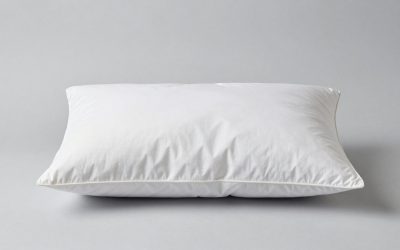
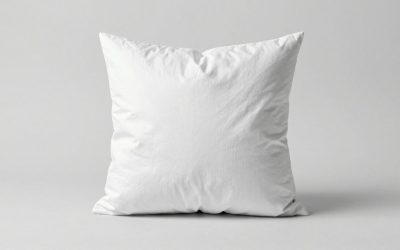
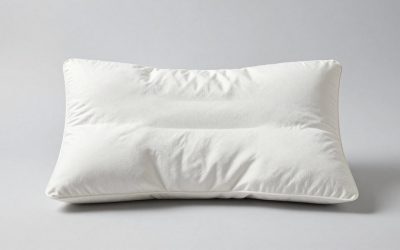
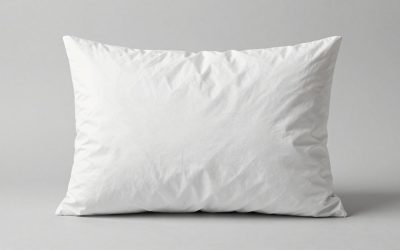
Our Top Picks
Dust mite proof mattress and pillow covers do work at what they are designed to do, which is to put a tightly woven barrier between you and the mite allergen in your bedding, and they are designed to keep allergen on the mattress surface from reaching your airways; however, the Cochrane review of mite-control measures for asthma found no clinical benefit, and a later meta-analysis found no significant benefit from partial bedroom measures such as covers alone, so allergy organizations present them as one part of a combined approach with hot washing, humidity control and regular cleaning. If you have a confirmed dust mite allergy or asthma symptoms, an allergist can tell you how much to expect from covers in your situation.
Dust Mite Covers at a Glance
| Question | Short answer |
|---|---|
| What are they? | Zippered covers with a tight weave or barrier fabric that enclose mattress, box spring or pillow |
| How do they work? | Pores are too small for mites and their allergen-bearing particles to pass through |
| Do they reduce allergen? | That is their design purpose, but a lower allergen reading on a mattress does not always translate into less exposure while breathing |
| Do they improve symptoms? | Evidence is mixed; the Cochrane review (2008) found no clear benefit for asthma, and later reanalysis suggests combined measures work better than covers alone |
| Recommended by | Allergy organizations as part of a multi-step approach |
| Washing | Follow the label; some covers tolerate hot water, others do not |
| Humidity target | Often given as below 50 percent (Mayo Clinic) or 30 to 50 percent (EPA); sources vary slightly |
What Dust Mites Are and Why They Matter
Dust mites are microscopic creatures that live in bedding, upholstered furniture and carpet, feeding mainly on shed human skin flakes. They thrive in warm, humid conditions. It is not the mites themselves but proteins in their droppings and body fragments that trigger allergy and asthma symptoms in sensitive people. Typical signs include sneezing, a runny or stuffy nose, itchy eyes, coughing and, in people with asthma, wheezing or chest tightness that may be worse at night or in the morning. Because mattresses and pillows are used for hours daily, they are a primary exposure point.

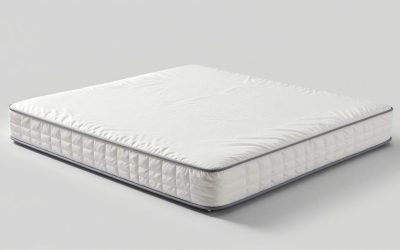
Utopia Bedding Waterproof Mattress Protector Queen Size, Zippered Mattress Encasement Bed Bug and Dust Mite Proof, Absorbent Six-Sided Mattress Cover
Chosen because it specifies Zippered Mattress Encasement Bed Bug and Dust Mite Proof and Absorbent Six-Sided Mattress Cover.
View on Amazon
Utopia Bedding Full Size Mattress Protector Zippered, 100% Waterproof | Bed Bug & Dust Mite Proof Mattress Encasement, Absorbent 6 Sided Mattress Cover fits upto 13" deep Pockets, Machine Washable
Chosen because it specifies 100% Waterproof and Bed Bug & Dust Mite Proof Mattress Encasement.
View on Amazon
Guardmax Queen Mattress Protector Zippered, Bed Bug Mattress Cover | Waterproof, Dust Mite Proof, 6-Sided, Soft Jersey Knit, OEKO-TEX Certified, Machine Washable, Queen - 60 x 80, up to 13" Deep
Chosen because it specifies Bed Bug Mattress Cover and Waterproof.
View on Amazon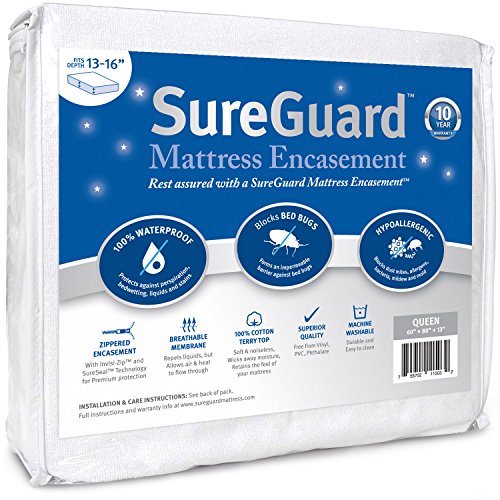
Queen (13-16 in. Deep) SureGuard Mattress Encasement - 100% Waterproof, Bed Bug Proof, Hypoallergenic - Premium Zippered Six-Sided Cover
Chosen because it specifies 100% Waterproof and Bed Bug Proof.
View on AmazonHow Allergen-Proof Covers Work
Allergen-proof covers rely on fabric with a very small pore size so mites cannot burrow through and the allergen-laden particles cannot escape into the air. Descriptions of the ideal pore size vary across sources. Mite allergen is carried mostly on droppings and fragments that are roughly 10 to 40 microns across, so barrier fabrics are commonly described as having pores under 10 microns, and many sellers cite 6 microns or smaller as a safety margin. These figures are industry conventions rather than a single official standard, so it makes sense to look for covers that state their pore size or testing and fully enclose the item with a zipper. A cover with an open end or a loose zipper lets allergen escape.
Fabric types include woven microfiber, laminated fabrics with a thin film, and coated materials. Tightly woven fabrics are generally more breathable and quieter than plastic-like ones, which can feel warm. A comfortable cover is one you will actually keep on the bed.
What the Evidence Says
The Cochrane systematic review of dust mite control measures for asthma (2008) pooled dozens of trials, including many on mattress covers, and found no clear improvement in symptoms, peak flow or medication use; its authors cautioned that many trials were of poor quality, and the publisher now notes that the review predates current reporting standards. A 2024 meta-analysis reached a similar view for partial measures, finding no significant clinical benefit from two or fewer interventions such as encasings with or without hot washing, while a combined approach of three or more bedroom measures looked more promising. That analysis also noted that allergen on a mattress is an imperfect stand-in for what a person actually breathes in. Researchers also note that the trials differ in design, populations and cover types, so results can be hard to compare. The practical reading is cautious: covers are a reasonable, low-risk step, particularly for people who are known to be sensitised to dust mites, but they are not a guaranteed fix, and they work best alongside other measures.
Step-by-Step: Setting Up and Maintaining a Cover System
| Step | Action | Reason |
|---|---|---|
| 1 | Vacuum the mattress and pillows before covering | Removes surface allergen before sealing |
| 2 | Choose covers sized for your mattress depth, and for pillows | A good fit prevents gaps and seam strain |
| 3 | Encase the mattress, box spring and pillows | Allergy guidance recommends encasing all three |
| 4 | Zip fully, checking the zipper end and seams | An open end or tear lets allergen escape |
| 5 | Add a washable protector and sheets over the cover | Keeps the cover clean and protects the barrier |
| 6 | Wash sheets, pillowcases and blankets weekly in hot water, about 130°F (54°C), if the fabric allows | Allergy organizations advise this to remove mites and allergen |
| 7 | Wipe or launder covers per their labels | Dust still settles on the outside |
| 8 | Inspect for tears and replace worn covers | A damaged barrier does little |
Washing and Care Routine
Allergy organizations advise washing bedding such as sheets, pillowcases and blankets weekly in hot water, around 130°F (54°C); the American Lung Association gives a slightly lower figure of at least 120°F. Hot water at these temperatures can scald and many household machines and water heaters run cooler, so follow the water heater and bedding labels. For bedding that cannot be washed hot, Mayo Clinic suggests a dryer cycle of at least 15 minutes above 130°F, then a normal wash to remove the allergen. This is for bedding that can tolerate such heat. Mattress covers, pillow covers and protectors have their own labels. Some allergen-proof covers are made to withstand hot washing, but covers with a waterproof film may be damaged by heat. When there is no hot-wash allowance, a gentle cycle with cool to warm water and low-heat or air drying is common guidance. Avoid bleach and fabric softener on barrier fabrics, since they can degrade or clog them. Where a cover cannot be washed, many labels suggest wiping with a damp cloth and vacuuming lightly. Pillows themselves should be washed or replaced following their care instructions.
Humidity Control and Other Measures
| Measure | What guidance suggests | Notes |
|---|---|---|
| Encase mattress, box spring and pillows | Recommended by allergy organizations | Gives a physical barrier |
| Hot wash bedding weekly | About 130°F | Check labels first; protect hands from scalding when handling hot water |
| Keep humidity moderate | Below 50 percent (Mayo Clinic) or roughly 30 to 50 percent (EPA), with room temperature around 68 to 72°F per Mayo Clinic | A hygrometer shows the level; a dehumidifier or air conditioning can help |
| Vacuum with a small-particle or HEPA filter | Weekly on carpets | Reduces allergen settled in floor coverings |
| Reduce clutter and fabric surfaces | Hard floors and fewer upholstered items are easier to keep clean | Wipe surfaces with a damp cloth rather than dry dusting |
| Keep pets out of the bedroom | Suggested to cut other allergen exposure | Personal choice |
| Air bedding and mattresses | Allow moisture to evaporate | Do not make the bed damp |
Some guidance says freezing items that cannot be washed for about a day can kill mites, but killing mites does not remove the allergen they leave behind, so washing or vacuuming still matters.
Choosing Covers: What to Look For
- Full zippered enclosure that closes completely.
- Stated pore size or independent testing, rather than a vague label.
- Breathable fabric for comfort; plastic-like covers can feel warm and noisy.
- Correct depth for your mattress, including any pillow-top.
- Care label allowing the washing you plan to do.
- Sturdy seams and zipper, since wear is the usual failure point.
- Fragrance-free materials, helpful for sensitive airways.
Troubleshooting Table
| Problem | Likely cause | Fix |
|---|---|---|
| Symptoms persist at night | Other sources such as carpet, pets, pollen, or non-allergic triggers | Add measures; see an allergist for testing |
| Cover feels hot or noisy | Film-style fabric | Layer a soft protector; consider a breathable woven option |
| Zipper snags or breaks | Over-stuffed fit or wear | Use correct size; replace damaged covers |
| Musty smell | Humidity or damp bedding | Lower humidity, dry fully, ventilate |
| Cover looks dingy | Dust and skin oils on the outside | Wash or wipe per label |
When to See an Allergist
Consider speaking with a doctor or allergist if symptoms are persistent or worsen at night, if you have wheezing, shortness of breath or chest tightness, if over-the-counter measures are not enough, or if you are unsure whether dust mites are the trigger. Testing can confirm which allergens affect you. Anyone with asthma should follow their prescribed plan and seek urgent care for breathing difficulty. This article does not give medication guidance.
Pillows Deserve Special Attention
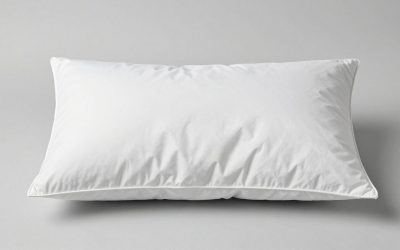
Pillows sit directly beneath the face, so any allergen they hold is inhaled at close range for hours. A pillow cover with a zipper that encloses the whole pillow, placed under the regular pillowcase, creates a barrier in the same way a mattress cover does. Allergy guidance also notes that pillows themselves wear out: lumpy, flattened or heavily stained pillows are worth replacing, and washable pillows should follow their care label. A pillow cover is washed more often than a mattress cover because it contacts skin, hair and saliva directly. Comforters and duvets collect allergen too, and either washing them regularly in hot water where the label allows or covering them is commonly advised.
Soft toys can also hold mites. Where a child has a dust mite allergy, limiting the number kept on the bed and washing them according to their labels are common suggestions. Keeping bedroom air moving, opening windows when outdoor conditions allow and avoiding damp laundry drying in the room can also help keep humidity down.
Frequently Asked Questions
Do dust mite covers really work?
They are built to block mite allergen, but pooled research, including the Cochrane review, has not shown a clear symptom benefit when covers are used alone. They are best used with hot washing, humidity control and regular vacuuming.
Which items should be covered?
Allergy guidance recommends encasing the mattress, box spring and pillows in dust-mite-proof covers, since these hold the most allergen and are in close contact with your face and airways.
How often should I wash dust mite covers?
Follow the care label. Bedding over the covers can be washed weekly in hot water if the fabric allows. Covers themselves are typically laundered less often, or wiped down, depending on their construction.
What humidity helps reduce dust mites?
Sources vary slightly: Mayo Clinic advises no higher than 50 percent relative humidity, and EPA indoor air guidance gives 30 to 50 percent, with room temperature around 68 to 72°F. A hygrometer can track the level, and a dehumidifier may help in damp climates.
Are covers worth it if I do not have an allergy?
They are not necessary for everyone. Without symptoms, regular washing and a clean sleeping environment may be enough. A protector also helps with spills and general cleanliness.
Can I use bleach or fabric softener on these covers?
Care guidance generally advises against both on barrier fabrics, since they can damage or clog the weave. Check the label and never mix cleaning products.