
Key takeaways
- One feature wall creates architectural character without reworking the entire room.
- Muted panel paint can connect existing timber floors with contemporary seating.
- A low console leaves wall space clear for a properly rated mounting system.
A welcoming television room needs more than a rustic cabinet. The best farmhouse tv room ideas coordinate screen placement, seating, light, storage, and natural texture so the space feels comfortable even when the TV is off. Start with a layout suited to daily life, then use restrained farmhouse finishes to connect the furniture and architecture.
As an Amazon Associate we earn from qualifying purchases.
By KK Home Furnishings Editorial Team
Practical Farmhouse TV Room Ideas for Everyday Living
The most successful layouts begin with the way a household uses the room, not a list of rustic accessories. A painted feature wall emphasizes the screen, a conversation arrangement makes it less dominant, and an open-plan rug creates a room within a room. Compare the six room-level approaches below before choosing any specific media cabinet.
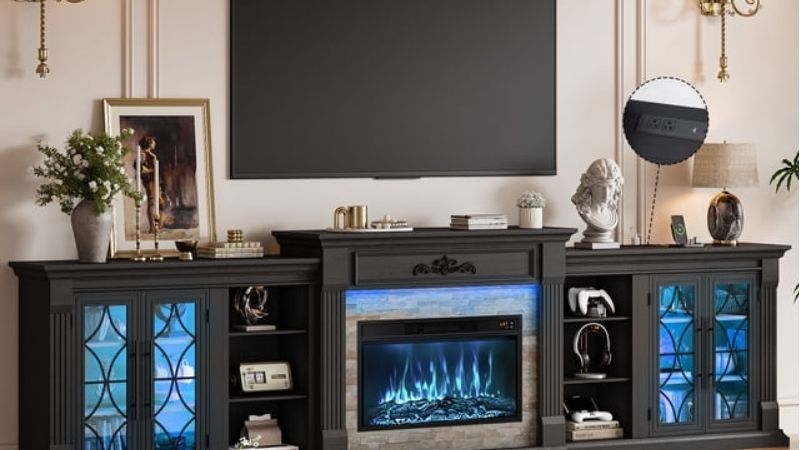
| Idea | Space or Size Needed | Cost Tier | Effort and Time |
|---|---|---|---|
| Painted shiplap feature wall | Straight TV wall; low media console | Moderate | Painting and panel installation |
| Conversation-first seating | Room for angled chairs and a main sofa | Low to moderate | Furniture repositioning; sightline test |
| Open-plan rug-defined zone | Unbroken floor area and clear walkway | Moderate | Rug sizing and seating layout |
| Symmetrical built-in storage | Dedicated wall and verified structural support | Premium | Measured custom cabinetry |
| Small den with layered light | Window shade access and lamp locations | Low to moderate | Lighting and curtain changes |
| Warm oak and black palette | Existing modern furniture and neutral walls | Low to moderate | Samples, textiles, and accessories |
A Painted Shiplap TV Wall With a Low, Quiet Console
Best For: Families with a straightforward television wall who want subtle architectural texture without changing the full room layout.
A single painted shiplap wall can give a plain family room the character of a farmhouse without covering every surface in boards. Use restrained horizontal lines behind the screen and keep the rest of the walls quieter. A low, purpose-built media unit grounds the composition, leaving the surrounding room available for casual seating and an area rug.
White is not the only farmhouse choice. Sherwin-Williams describes soft neutrals and muted blues or greens as options for this style; try paint samples beside the actual screen at different times of day. Before any television is attached to the wall, determine the correct structural mount location independently of the decorative paneling.
Run cables through an approved route that remains serviceable and does not interfere with the mounting hardware. Keep lamps out of the screen reflection and avoid small picture frames arranged directly around the display. Painted grooves will collect dust, and repainting textured panels usually takes longer than touching up a flat wall.
Pros:
- One feature wall creates architectural character without reworking the entire room.
- Muted panel paint can connect existing timber floors with contemporary seating.
- A low console leaves wall space clear for a properly rated mounting system.
Cons:
- Grooved paneling needs more careful surface preparation and cleaning than flat drywall.
- Shiplap cannot replace structural backing for a television wall bracket.
Who Should Skip It: Choose the off-axis seating layout instead if your available TV wall faces strong afternoon window glare.
A Conversation-First Farmhouse Room With an Off-Axis TV
Best For: Households that host guests often and want the television accessible without making it the only focal point.
Turn the sitting area toward conversation first, then place the television where viewers can turn naturally rather than stare at it from every seat. A neutral sofa, two movable chairs, and a central coffee table make the room feel like a living space between movie nights. This approach works particularly well when windows or a beautiful original doorway deserve attention.
Use an existing solid wall for the TV and test sightlines from the seats used most often before choosing a mount. A swivel bracket may help in an awkward room, but only when the exact bracket, wall structure, and TV are compatible. A woven rug and simple wood table establish farmhouse texture without relying on distressed signage.
Check that a swung-out screen will not obstruct door movement or a circulation route. Keep cables managed for every permitted viewing position; a pivoting screen creates more cable movement than a fixed one. Comfortable conversation seating can mean that side-chair viewers have less direct TV access, an intentional trade-off for this plan.
Pros:
- Guests can face one another instead of sitting in a cinema-style row.
- Movable accent chairs let the room adapt to gatherings and daily television use.
- The television does not compete with windows or original architectural features.
Cons:
- Side seats can have a less direct viewing angle during longer programs.
- A swiveling mount introduces cable and wall-clearance considerations for each position.
Who Should Skip It: Choose the centered shiplap wall if everyone watches long events together from a fixed sectional.
An Open-Plan Farmhouse TV Zone Defined by a Rug
Best For: Open kitchen and living areas where families need a television zone without introducing permanent room dividers.
In an open-plan farmhouse home, place the main seating group on a substantial rug and keep the TV on one defined wall. The rug establishes a visual boundary while the sofa back separates relaxing from dining or cooking. This gives the television a useful role without putting another tall furniture wall between shared spaces.
Outline the proposed furniture positions with painter’s tape before purchasing the rug or sofa. Check the route between the kitchen, patio door, and seating, as well as where reflected daylight falls on the screen. A wide, low entertainment unit can connect visually to a farmhouse table while leaving walkways and sightlines open.
Select washable or cleanable textiles for the traffic level rather than choosing light natural fibers purely for the photograph. A lamp next to the sofa can define the seating zone after sunset. Sound from the television will still travel through an open plan, so this layout suits households comfortable with shared noise rather than a sealed movie room.
Pros:
- The seating zone reads as a room without building another partition.
- Furniture remains easier to rearrange as household routines change.
- Repeating wood tones can visually connect the living and dining areas.
Cons:
- Open-plan acoustics can send television sound into adjacent cooking or dining spaces.
- A large rug and sofa placement need enough uninterrupted floor area.
Who Should Skip It: Choose the small den arrangement if quieter viewing matters more than an open connection to the kitchen.
Built-In, Lighting, and Modern Farmhouse TV Room Ideas
Once the television position and seating work, storage, lighting, and finishes shape the farmhouse character. Built-ins handle household clutter, a small den benefits from soft light control, and a restrained oak-and-black palette suits contemporary spaces. These ideas are alternatives for different rooms, not a checklist of features every home needs.
A Symmetrical Built-In Media Wall With Closed Lower Storage
Best For: Shared family rooms with books, games, and media gear that require more storage than one standalone console.
Balanced shelves around the television can make the media wall feel like part of a farmhouse home rather than a temporary electronics station. Put frequently handled games, remotes, and accessories behind lower doors while using upper shelves for a small collection of books and ceramics. The repeated cabinet rhythm is more useful than decorative barn-door hardware alone.
Plan the actual screen size, equipment dimensions, and outlet positions before commissioning cabinetry. Dedicated TV support and the structure of the wall must meet the mounting system’s instructions. Bookshelves are not automatically television supports, and heat-producing devices need the clearances specified in their own manuals rather than an arbitrary decorative gap.
Paint the cabinetry a tone related to existing trim so the wall reads as architecture. Allow removable access for power and equipment maintenance, and use adjustable shelves to accommodate changing components. The larger investment buys storage, but fixed joinery is less flexible if the TV or room layout changes several years later.
Pros:
- Closed lower cabinets can hide clutter that open shelves would expose.
- Adjustable shelving accommodates books and changing nonpowered accessories.
- Matching the trim can make permanent storage feel architecturally integrated.
Cons:
- Custom joinery involves site measuring, installation, and a higher commitment.
- Fixed openings can limit later screen or equipment upgrades.
Who Should Skip It: Choose the open-plan rug layout if you rent or expect to relocate the television frequently.
A Cozy Farmhouse TV Den With Layered Low-Glare Lighting
Best For: Smaller rooms used for evening movies where comfortable light control matters more than architectural renovation.
A small den benefits more from sensible lighting than from adding heavy rustic furniture. Keep the television on a clean wall, use a compact sofa or two comfortable chairs, and provide a pair of gentle light sources away from the screen. Linen-look shades and a muted throw make the room inviting without making the display the visual center all day.
Begin by watching the dark screen in daylight to spot windows and fixtures reflected across the viewing area. Choose curtains or shades for actual light control and test where an adjustable lamp casts light. Warm paint is a decorating decision, not a measured guarantee of screen performance; viewing conditions and TV coatings differ by model.
Place a floor lamp where nobody can trip over its cord and use a TV-rated cabinet with space for electronics. A small side table keeps snacks and remotes within reach without covering the media unit with accessories. Heavy curtains may reduce glare but can make a tiny room feel darker during the day, so choose fabric weight for the windows you have.
Pros:
- Layered lamps support evening use without a harsh ceiling light.
- A compact seating plan leaves more usable floor space in a small den.
- Curtains and shades can be adjusted without rebuilding the television wall.
Cons:
- Blackout fabrics can make a north-facing or shaded room feel dim.
- Poorly located lamps may create new reflections on the television screen.
Who Should Skip It: Choose the built-in media wall if equipment clutter and book storage are the room’s main problems.
A Modern Farmhouse TV Room With Oak and Soft Black Accents
Best For: Homes with simple contemporary furniture that need warmth without adding distressed wood or themed farmhouse ornaments.
Modern farmhouse can be achieved through a few consistent material choices: natural-looking oak, warm off-white walls, woven upholstery, and touches of matte black. Let the television sit against a quiet painted surface, then repeat the wood tone in a coffee table or visible beam. This makes the entire room feel coordinated rather than assembling a collection of rustic objects.
Compare physical paint samples and flooring swatches before choosing a color scheme. Sherwin-Williams describes farmhouse rooms as mixtures of wood, textured fabrics, and softly colored finishes, not a requirement for bright white. Use matte black sparingly for a lamp, small handles, or chair legs; repeated high-contrast outlines can make a calm room busy.
Plan the media stand around the TV’s actual feet, weight, and the manufacturer’s instructions before choosing its finish. Add an easy-clean rug and upholstered seating that fits daily use. A polished material mix can stay adaptable over time, but too many competing oak stains or cold gray surfaces may undermine the warm, relaxed goal.
Pros:
- Existing modern sofas can work with farmhouse texture instead of being replaced.
- Warm neutrals make screen-off hours feel less technology dominated.
- A restrained material palette is easy to repeat across adjoining rooms.
Cons:
- Different wood stains may clash when samples are not compared in person.
- Strong black outlines can overwhelm a small or naturally dim space.
Who Should Skip It: Choose painted shiplap if a plain room needs stronger architectural texture rather than only a palette refresh.
Frequently Asked Questions
Farmhouse style should not override viewing comfort, structural support, or everyday maintenance. These questions focus on the decisions that attractive room photos cannot answer for you: how to measure the layout, whether paneling affects mounting, how to work in a rental, and where to spend first.
How should I measure a farmhouse TV room before rearranging furniture?
Measure the available wall, the sofa footprint, door swing, and the walking route before buying a cabinet or rug. Record the actual TV width and foot placement, not just its advertised diagonal size. A comfortable layout makes it possible to watch from the main seats without blocking the path to other rooms.
Mark the proposed furniture locations on the floor and sit in the real viewing positions before moving heavy pieces. Check where daylight reflects from windows at your usual watching time. A drawing may look symmetrical but still put a coffee table in a walkway or leave the TV exposed to persistent glare.
Can a television be mounted on farmhouse shiplap?
Shiplap is a wall finish, not proof that it can hold a television. Use a TV mount suitable for the exact TV and wall structure, and follow the mount and television instructions. Decorative boards must not be assumed to provide the secure structure required for mounting hardware.
Plan the support and electrical routing before installing decorative boards so the mounting points remain identifiable and accessible. If wall construction or wiring is uncertain, use an appropriately qualified installer. Never treat old reclaimed boards, battens, or decorative trim as a substitute for a rated support system.
What farmhouse TV room updates can renters make?
A renter can usually change the room’s atmosphere with a rug, movable accent chairs, lamps, curtains where permitted, and a freestanding TV-rated console. These elements help define a farmhouse sitting area without commissioning built-in cabinetry or permanent wood paneling.
Check the lease before drilling or changing window treatments, and do not skip furniture and TV tip-over precautions. The U.S. Consumer Product Safety Commission recommends securing televisions and vulnerable furniture according to instructions. Ask the landlord about suitable fixings and use approved solutions for the property.
Where should a farmhouse TV room makeover budget go first?
Put the first spending decision toward whichever issue makes the room hardest to use: an awkward seating arrangement, lack of storage, or glare. Repositioning chairs and testing paint can be less disruptive than rebuilding the entire TV wall. Keep lighting and practical cable access ahead of purely decorative signs.
Built-in joinery and major electrical work usually demand more planning than rugs and portable lamps, but actual prices depend on location, labor, and materials. Compare real quotations before committing and keep a contingency for wall repair or cable work. No specific dollar amount is a reliable rule for every farmhouse room.
Final Thoughts
The most useful farmhouse tv room ideas begin with the room’s daily habits. Choose a painted feature wall for quiet texture, conversation seating for guests, or an area-rug zone for open plans. Use built-ins when storage is essential, softer lighting in a den, and warm oak with restrained black accents for a modern feel. Confirm TV support, cable access, and furniture anchoring before decorating.
