Key takeaways
- Solid wood (oak, walnut, pine): Strongest for spans and the most forgiving to drill. Pine dents but costs less; oak and walnut look richer.
- Veneered plywood: Stable, holds screws well, and resists sag better than MDF.
- MDF or particleboard with laminate: Cheapest and smoothest for painted finishes, but sags under books on long spans and swells if water hits a raw edge from plant watering.
- Metal and glass: Light visual weight for small rooms. Glass shelves are usually rated low, 10 to 25 lb, and show dust.
The wall shelving ideas that work best in a living room are the ones planned around the wall’s job: shelves framing the TV, a long low ledge behind the sofa, a corner stack, shelves around a window, or a full wall system with cabinets at the bottom. Choose the layout first, then pick the shelving system that can carry what you plan to put on it, because books, plants and decor have very different weight needs.
Five Living Room Layouts and When Each Works
1. Framing the TV
Two vertical columns of shelves on either side of the TV, with a low media console between, is the most popular living room wall layout. It balances the black rectangle of the screen and puts speakers, books and decor at viewing height. Leave at least 6 to 8 inches between the TV edge and each shelf column so the screen does not look crowded, and keep the TV center around 40 to 44 inches from the floor for seated viewing.

VASAGLE Wall Shelves, Floating Shelves, Set of 3, 15.8 x 7.9 x 1.5 Inches
Included for 'Wall Shelving Ideas for the Living Room: 5 Layouts and the Systems Behind Them' because the listing specifies Floating Shelves and Set of 3, details this guide uses to compare options.
View on Amazon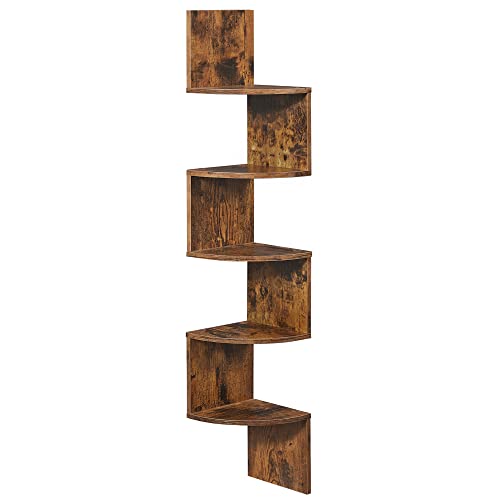
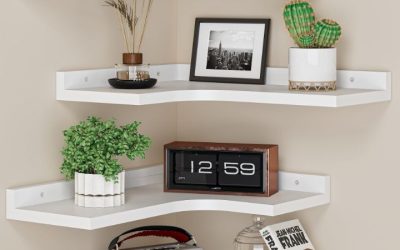
VASAGLE Corner Shelf Wall Mount, 5-Tier Floating Corner Bookshelf
Included for 'Wall Shelving Ideas for the Living Room: 5 Layouts and the Systems Behind Them' because the listing specifies 5-Tier Floating Corner Bookshelf, details this guide uses to compare options.
View on Amazon
VASAGLE Floating Corner Shelves, Set of 2, 6 x 6 x 0.5 Inches
Included for 'Wall Shelving Ideas for the Living Room: 5 Layouts and the Systems Behind Them' because the listing specifies Set of 2 and 6 x 6 x 0.5 Inches, details this guide uses to compare options.
View on Amazon
VASAGLE Corner Shelf Wall Mount Set of 2, Small Corner Floating Shelves
Included for 'Wall Shelving Ideas for the Living Room: 5 Layouts and the Systems Behind Them' because the listing specifies Small Corner Floating Shelves, details this guide uses to compare options.
View on Amazon2. Behind or above the sofa
One or two long shelves or a picture ledge set 10 to 12 inches above the sofa back. This is display space, not storage: frames, a few books, small plants. Keep the depth shallow, 4 to 6 inches, so nobody bumps their head when standing up.
3. Corner stack
Staggered or L-shaped shelves turn a dead corner into display space without taking floor area. Good for a reading chair corner with a floor lamp.
4. Around a window
Shelves on both sides and a bridge above the window frame create a built-in look and can house books without blocking light. Leave 2 to 3 inches between shelves and the window trim so curtains still work.
5. Full storage wall
Closed cabinets at 18 to 30 inches tall along the bottom with open shelving above. This is the living room wall storage idea that hides clutter like games, cables and remotes while keeping display space above. It is the most expensive and the heaviest, but it replaces a bookcase and a TV stand at once.
Shelving Systems Compared
| System | Typical load per shelf | Max depth | Install difficulty | Usual price range | Best layout |
|---|---|---|---|---|---|
| Floating shelf with hidden bracket | 15–50 lb (into studs) | 8–10 in | Moderate; must hit studs | $25–$120 per shelf | Behind sofa, corner |
| Visible bracket shelf | 30–75 lb | 12 in | Easy | $20–$80 per shelf | Around a window, books |
| Rail and standard (twin-slot) system | 40–100 lb across two standards | 12–16 in | Easy once top rail is level | $100–$400 per wall section | TV wall, full wall |
| Picture ledge | 10–20 lb | 3–5 in | Easy | $20–$60 | Above sofa |
| Wall-mounted cabinet with shelves | 40–80 lb cabinet total | 12–16 in | Moderate; needs rail or studs | $150–$600 per unit | Full storage wall |
| Wall-anchored modular units (e.g. IKEA Billy or Kallax) | About 30 lb per shelf | 11–15 in | Easy; anchor to wall | $70–$250 per unit | Full wall on a budget |
Loads above assume standard wood-stud walls at 16-inch centers. In plaster or masonry, rating depends heavily on fixings, and in metal-stud apartment walls, toggle bolts are a must.
Spacing, Height and Proportion
| Measurement | Rule of thumb |
|---|---|
| Vertical gap between shelves for books | 11–13 in for paperbacks and most hardcovers; 14–15 in for art books |
| Vertical gap for decor | 12–16 in; vary gaps slightly to avoid a grid look |
| Lowest shelf above a console | 12–18 in above the console top |
| Highest usable shelf | About 72–78 in for daily items; higher for display only |
| Shelf width for books without sag | Under 32 in for 3/4 in particleboard; up to 36–42 in for solid wood |
| Total shelving width vs wall | Two-thirds to three-quarters of the wall width looks intentional |
Particleboard and MDF sag over time when loaded with books across long spans. If you want long shelves, pick solid wood, add a center bracket, or use a front edge lip that stiffens the board.
Material Choices for Living Room Shelves
- Solid wood (oak, walnut, pine): Strongest for spans and the most forgiving to drill. Pine dents but costs less; oak and walnut look richer.
- Veneered plywood: Stable, holds screws well, and resists sag better than MDF.
- MDF or particleboard with laminate: Cheapest and smoothest for painted finishes, but sags under books on long spans and swells if water hits a raw edge from plant watering.
- Metal and glass: Light visual weight for small rooms. Glass shelves are usually rated low, 10 to 25 lb, and show dust.
Which Idea Fits Your Situation
| Situation | Better choice |
|---|---|
| Renter, no big holes allowed | Leaning ladder shelf or anchored freestanding bookcase |
| Large book collection | Rail and standard system or a full storage wall |
| Small living room under 12 x 12 ft | Shallow floating shelves and a picture ledge to keep floor space |
| Kids or pets climbing | Cabinets at the bottom, open shelves only above 36 in, anchor everything |
| Plants | Bracket shelves near a window with a waterproof finish or trays |
| Minimal look | One long floating shelf at TV height, nothing else |
Styling Without Clutter
- Fill shelves about two-thirds full. Empty space is what makes them look styled rather than stored.
- Group objects in odd numbers and mix heights: a stack of books, one vertical object, one round object.
- Use matching boxes or baskets on lower shelves to hide cables, chargers and remotes.
- Run any lighting on a separate dimmable circuit or use battery puck lights; shelves in a living room look best lit from above or within.
Installation Notes
Use a stud finder and mark studs before planning spacing, because 16-inch stud centers rarely line up with the layout you sketch. For rail systems, the top rail is the only part that must be perfectly level; everything hangs from it. Check for wiring behind TV walls, especially where outlets and cable plates sit, and keep drilling out of the vertical line directly above and below them.