
Key takeaways
- Existing hearth can remain untouched when the wall has adequate usable span.
- A stand rated for the actual TV supports a straightforward furniture swap.
- Low storage leaves artwork and mantel details visually distinct from the screen.
Placing a TV beside the fireplace can keep viewing comfortable without turning the mantel into a screen mount. These tv beside fireplace ideas cover six ways to style the shared wall, from a low console to concealed built-ins. Choose a composition, then confirm that the specific fireplace and television manuals allow their proposed positions.
As an Amazon Associate we earn from qualifying purchases.
By KK Home Furnishings Editorial Team
Simple TV Beside Fireplace Ideas for Existing Walls
You can make a side-by-side arrangement work without rebuilding the fireplace surround. The first three approaches use a low media console, a balanced art grouping, or an existing side recess. Each keeps the television separate from the firebox while solving a different constraint: cost, visual weight, or an awkward alcove.
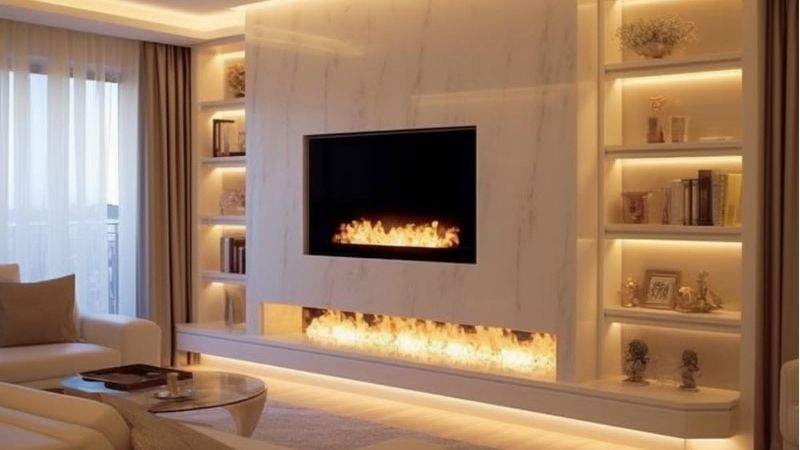
| Idea | Space or Size Needed | Cost Tier | Effort and Time |
|---|---|---|---|
| Low TV console | Existing wall beside a traditional hearth | Low to moderate | Furniture width, TV anchoring |
| Framed TV with opposing art | Centered fireplace and two free side zones | Low to moderate | Visual scale, wall fixings |
| TV in side alcove | Recess beside a projecting chimney breast | Moderate | Niche depth, hidden services |
| Matched built-in bays | Full-height wall with room for two cabinets | Premium | Custom openings and approvals |
| Contrasting material panels | Wide contemporary fireplace/TV wall | Moderate to premium | Finish and airflow constraints |
| Sliding-door TV cabinet | Generous side bay with room for door travel | Premium | Track hardware and TV cooling |
A Low Media Console Alongside a Traditional Fireplace
Best For: Apartments and existing living rooms where a hearth occupies one side of the main wall and renovation is not planned.
A separate low TV console is the simplest way to make an older hearth and a modern screen coexist. Keep the console visually lighter than the fireplace surround, and place it in the available wall span rather than squeezing it against the firebox. This choice does not require matching a stone mantel with an equally bulky piece of furniture.
Choose a purpose-built media stand for the actual television dimensions, weight, and leg spacing. Test the view from the seats you use most and account for any nearby door swing or walk-through path. A narrow, low-profile cabinet may suit a small room, but a taller stack of storage can draw the eye away from the fireplace and lift the screen too high.
Repeat one restrained detail, such as black hardware or the mantel’s wood tone, so the two pieces feel related without pretending they are a matched set. Make sure the entire console and television remain outside the fireplace maker’s specified clearance zones. For freestanding furniture, secure the TV and cabinet in accordance with the product directions and CPSC tip-over guidance.
Pros:
- Existing hearth can remain untouched when the wall has adequate usable span.
- A stand rated for the actual TV supports a straightforward furniture swap.
- Low storage leaves artwork and mantel details visually distinct from the screen.
Cons:
- A short wall may not fit both the fireplace surround and a TV-sized cabinet.
- Freestanding furniture occupies floor space and needs effective anti-tip protection.
Who Should Skip It: A fitted alcove is more practical when the hearth leaves insufficient wall width for a rated floor console.
A Framed Television Balanced by Art on the Other Side
Best For: Homeowners with a centered fireplace who want the screen beside it without commissioning a full run of cabinetry.
Visual balance does not require two identical black rectangles. A frame-style TV to one side of the hearth can pair with a similarly scaled artwork grouping on the other, allowing the fireplace to stay central. This is mainly an exercise in proportion and sightlines; the TV should sit where people watch it, not where an abstract symmetry rule dictates.
Try paper templates of the TV outline and the proposed artwork before making holes. Align the visual centers of the two side zones or repeat their upper frame lines, then examine the wall from both the sofa and doorway. If the fireplace mantel is unusually tall, let the artwork reach higher while keeping the TV comfortable to view; matching top edges is optional.
Choose matte frames and subdued imagery to prevent the art wall from competing with flames and moving video. A frame-look television remains an electronic device, so its manufacturer’s mounting, ventilation, and environmental restrictions still apply. Avoid placing prints, wood frames, or decorative ledges inside the fireplace’s required clearances simply to complete a tidy composition.
Pros:
- Visual weight can be balanced without purchasing matching media cabinets.
- Artwork can be changed seasonally without moving the television mount.
- A picture-like screen looks less conspicuous when it is powered off.
Cons:
- Poorly scaled artwork can make the two sides appear accidentally uneven.
- Decorative frames still cannot override appliance heat and mounting restrictions.
Who Should Skip It: Use the low media console approach when drilling for separate art and TV mounts is not permitted.
A TV Nestled Into a Recess Beside the Chimney Breast
Best For: Older homes with a genuine side recess that can accommodate a TV independently of the fireplace enclosure.
An existing alcove beside a projecting chimney breast can give the screen its own architectural address. Paint the recess a softer shade than the fireplace wall and place a slim cabinet beneath the television. The surrounding return walls frame the display, so you do not need additional molding, open shelves, or an oversized unit to make the composition feel intentional.
Measure the finished niche after accounting for trim and the mounting bracket, not only the nominal TV screen size. Check how the screen will connect to outlets and how devices can be reached once installed. A deep recess may look tidy from the sofa, yet it becomes frustrating when HDMI ports, ventilation, or a future larger screen are difficult to access.
Treat the alcove as adjacent to a working heating appliance, not as automatically protected by masonry. Its surfaces, conduits, and any timber shelving still need to satisfy the fireplace installation requirements. Have a qualified installer evaluate unfamiliar chimney construction and route new electrical work correctly rather than cutting holes through structural or heat-sensitive material.
Pros:
- Existing wall geometry naturally separates viewing and hearth zones.
- A recessed cabinet can keep cables and media accessories out of sight.
- The chimney projection becomes an architectural feature rather than a layout obstacle.
Cons:
- Restricted niche depth can block access to connections or future upgrades.
- Retrofitting masonry and services can be costly or impractical.
Who Should Skip It: Choose framed artwork and a side console if the recess is too narrow or has uncertain chimney services.
Built-In Side-by-Side Fireplace and Television Walls
When you can alter cabinetry or finishes, treat the television bay and the fireplace as two deliberate zones rather than forcing them into a single vertical stack. Matched millwork, contrasting panels, and a closing TV cabinet offer distinct solutions. Fireplace vent paths and required clearances still determine what may be installed near the unit.
Matched Built-In Bays With the Television on One Side
Best For: Major remodels where a central fireplace and two side cabinets can share a custom millwork composition.
Symmetrical built-ins can make a side-mounted TV feel planned rather than squeezed into the only free corner. Place the screen within one bay and reserve the opposite bay for books or closed storage. Similar cabinet widths and door finishes tie the wall together even when one upper opening contains a television and the other contains shelves.
The essential work is in the design drawings. Give the TV bay the real bracket depth, screen clearance, viewing height, and space for wiring and service. Have the cabinetmaker coordinate with the fireplace installer over permitted finish materials, vent locations, and service panels. Heat & Glo shows side-by-side configurations, but its design examples do not approve the same distances for other fireplace models.
Keep low drawers available for remotes, and avoid placing a soundbar where the hearth’s airflow could affect it. A repeated trim line is more convincing than forced perfect symmetry if the screen dimensions differ from the display shelves. Millwork is expensive to change after installation, so make sure the arrangement also serves how you watch television every day.
Pros:
- Two coordinated cabinet bays give an irregular media wall a clear structure.
- Closed lower storage reduces visible equipment beside the hearth.
- Custom openings can be planned around the specific TV and service connections.
Cons:
- Professional fabrication and fireplace coordination increase project cost.
- Future screen upgrades may no longer fit a precisely sized opening.
Who Should Skip It: A freestanding console is better when the home is rented or future television sizes are uncertain.
Two Contrasting Vertical Panels for a Modern Fireplace Wall
Best For: Contemporary rooms where a linear fireplace and wall-mounted TV need separate, neighboring focal zones.
Two vertical material fields let a flat-screen TV and a sleek fireplace read as a designed pair without stacking them. For example, use a calm painted TV panel next to a textured stone-look fireplace field. A small reveal or trim transition between finishes signals that they are separate features, while one consistent floor and ceiling line keeps the wall coherent.
Decide where the firebox actually vents before selecting panel materials or positioning an adjacent display. Decorative slabs and slat panels have different heat tolerances, and even a manufacturer-approved fireplace surround does not automatically make a nearby television suitable. Follow the exact appliance manual, TV model guidance, electrical rules, and any required local approval for the installation.
Keep the television zone plain so the fireplace texture carries the visual interest. A concealed equipment cabinet on the non-heated side prevents the panel wall from sprouting an awkward tangle of devices. A wide, cool-looking panel in a showroom can hide complicated framing and cooling details, so ask for a sectional installation drawing before accepting a design.
Pros:
- Separate finish fields let each focal point remain distinct.
- A restrained TV background reduces glare-like visual clutter.
- A drawn section can coordinate equipment and fireplace service zones early.
Cons:
- Finish selections may be ruled out by the particular fireplace installation manual.
- Complex panel work can make later wall repairs conspicuous.
Who Should Skip It: Use matched built-ins instead if the room needs substantial closed storage rather than a feature-wall treatment.
A Sliding-Door TV Cabinet Beside the Hearth
Best For: Formal multipurpose rooms where the fireplace should dominate whenever the television is turned off.
A cabinet with sliding or pocketing doors lets the fireplace stay the principal focal point on evenings without TV. Locate the media cabinet in a side bay, not above the firebox, and choose door fronts that coordinate with the hearth surround. The biggest visual advantage is reversibility: when the screen is hidden, the wall feels less like a dedicated media center.
Design the cabinet around the television’s ventilation and connection requirements, including the screen’s depth when mounted and the route of the sliding hardware. Do not assume it is acceptable to run the TV with doors closed. Manufacturers differ in their cooling and operating restrictions; provide the ventilation and open-door use that the actual TV and equipment require.
Specify a track and opening that do not block the adjacent fireplace’s service access or air pathways. Finger pulls, door stops, and cable organization matter more here than decorative trim. The system is a premium custom choice with moving parts to maintain; a frame-look TV is a less complicated option if hiding the screen is only an occasional preference.
Pros:
- The hearth remains the main feature when media equipment is concealed.
- Sliding leaves can avoid a wide hinged-door swing into seating routes.
- A tailored side bay can conceal remotes and non-heat-sensitive accessories.
Cons:
- Sliding hardware and ventilation requirements complicate cabinet design.
- The TV may need to operate only with doors fully open.
Who Should Skip It: Choose a framed television next to artwork when simplicity and easy access matter more than concealment.
Frequently Asked Questions
The best-looking layouts are not automatically safe for every gas, wood-burning, or electric fireplace. Room photos do not reveal a particular unit’s heat-management kit, service access, stud positions, or TV operating limits. These questions address decisions that should be settled before ordering cabinetry or drilling walls.
Can a television go right next to a gas or electric fireplace?
Potentially, but there is no universal safe side gap. Check the exact fireplace manual for side, mantel, combustible-material and vent clearances, plus the television maker’s operating environment restrictions. The fireplace fuel type alone does not determine a safe distance.
Some manufacturers offer dedicated heat-management solutions for specified fireplace models. Those accessories can change what the approved installation permits, but a successful arrangement for one model cannot be copied to another by eye. Have the fireplace dealer or installer confirm the proposed location before cabinets are fabricated.
Should a TV beside a fireplace line up with the mantel?
Not necessarily. The comfortable screen position for your actual seating may be lower than the mantel shelf. Prioritize how the screen looks from the main sofa and its correct mounting support, then balance the wall with shelves, frames, or cabinet door lines rather than raising the TV to match stonework.
A line connecting the cabinet tops or art frames can make unlike objects look coherent without forcing their centers to the same height. Tape outlines to the wall at full scale to compare compositions before drilling; it is far easier to adjust a paper rectangle than to relocate anchors.
How should cords and media devices be handled beside a fireplace?
Plan power, signal cables, and device ventilation as three separate needs. Use the TV and equipment manufacturers’ approved connection arrangements, keep cables away from the fireplace’s prescribed hot and service areas, and let a qualified professional handle new in-wall electrical work.
A concealed compartment still needs reachable ports, a path for replacing cables, and sufficient cooling when equipment is running. Do not trap a standard power cord inside the wall or hide fireplace service openings just to create an uninterrupted finished surface.
What if I rent and cannot build cabinets or move the fireplace?
A properly rated low media stand placed on an available wall span is generally more reversible than new built-ins or stone panels. Check lease rules before adding wall mounts, and avoid designs that depend on altering the fireplace or blocking required airflow and access.
Even temporary room layouts require tip-over precautions. CPSC guidance recommends TV-suitable furniture and properly secured televisions and cabinets. If approved anchoring is not possible, discuss a safe alternative with the landlord rather than treating renter status as permission to skip installation safeguards.
Final Thoughts
Among these tv beside fireplace ideas, choose the low console if you need a reversible update, or the paired built-in bays if you are renovating a full wall. Before committing to either, mock up the screen at seated eye height and mark the fireplace model’s required keep-clear areas on the actual wall. If those areas cut into the planned TV zone, change the design instead of assuming a decorative mantel or thicker paneling will fix the heat exposure.









