
Key takeaways
- A 70-inch television is roughly 61 inches wide, so a console around 65 to 75 inches can look balanced. The practical answer behind 70 inch tv what size stand is to match your TV foot spacing, base depth and weight…
A 70-inch television is roughly 61 inches wide, so a console around 65 to 75 inches can look balanced. The practical answer behind 70 inch tv what size stand is to match your TV foot spacing, base depth and weight against the cabinet’s usable top and rated television load. A wide console can be unsuitable if its approved weight limit is too low.
As an Amazon Associate we earn from qualifying purchases.
By KK Home Furnishings Editorial Team
70-Inch TV Stand Size: Width, Depth and Load
Start with the television’s exact model rather than its advertised screen class. A 70-inch label describes a diagonal, not the physical span of the cabinet or the feet beneath the set. This quick reference contrasts an actual TV specification with practical checks; the suggested console sizes are design starting points, not a safety standard.
| What to Check | Verified Example or Guide | Why It Matters | Decision Before Buying |
|---|---|---|---|
| Overall TV width | LG 70UQ7070ZUD: 61.5 inches | Determines side clearance and visual proportions | A roughly 65- to 75-inch console is a design option, not a universal requirement |
| Footprint width | LG 70UQ7070ZUD: 49 inches | Feet must sit fully on the usable top | Do not infer foot spacing from the screen diagonal |
| Footprint depth | LG 70UQ7070ZUD: 14.2 inches | Feet must not project over the front or rear edge | Verify usable top depth and cable access |
| TV weight with feet | LG 70UQ7070ZUD: 63.5 pounds | Cabinet capacity must cover the actual supported load | Check maker-stated maximum TV load for the exact cabinet |
| Cabinet width example | IKEA BESTÅ unit: 70 7/8 inches | A typical long console can visually frame this screen | Width alone does not prove it is rated for this TV |
| Cabinet load example | One 70 7/8-inch BESTÅ model: 55-pound maximum | A cabinet may be wide enough but too weak | Reject a pairing where the TV exceeds the cabinet rating |
The TV dimensions above come from LG’s published 2022 70UQ7070ZUD specification sheet. The 55-pound example is IKEA’s 70 7/8-inch-wide, 25 1/4-inch-high BESTÅ TV unit in its October 2024 US guide. These are model-specific figures, not claims about all LG televisions or all BESTÅ furniture [LG Electronics USA, 2022; IKEA US, 2024].
A 70-Inch Diagonal Is Not a 70-Inch-Wide Television
Most flat-screen TVs are described by their diagonal display class. Their measured outer width is smaller than that number, even after you account for a bezel. A listed 70-inch class therefore should not send you shopping for a cabinet exactly 70 inches long. Overall width is the number that tells you how the screen will line up with the cabinet edges.
LG lists its 70UQ7070ZUD at 61.5 inches wide, with or without the supplied feet [LG Electronics USA, 2022]. This gives a concrete reference for a 70-inch-class set, but the bezel and housing of another model can differ. Use your own manufacturer’s dimension drawing when deciding whether a wide console will overwhelm a short wall or a narrow one will still look appropriate.
The Distance Between TV Feet Can Decide Whether a Stand Fits
Two televisions with similar screen widths can have very different base layouts. Wide-set feet put weight near opposite sides of the cabinet, while a center pedestal concentrates it in one smaller area. With the LG example, the base spans 49 inches and reaches 14.2 inches front to back. Both measurements matter even if the cabinet looks much wider from the sofa [LG Electronics USA, 2022].
A top panel must provide full support for every foot or pedestal without the support hanging past a front or side edge. A decorative top trim, overhanging lip or cable opening can reduce the usable area. Check the stand’s actual flat, load-bearing top surface, not just the outside width printed in a product listing. Never rely on a television foot balanced over an edge.
A Wide Console Still Needs an Adequate TV Weight Rating
The most important hidden specification is the cabinet’s published maximum television load. In one clear example, IKEA lists a 70 7/8-inch BESTÅ TV unit, 25 1/4 inches high, with a 55-pound maximum. The LG 70UQ7070ZUD weighs 63.5 pounds with its feet. That pairing would exceed the stated TV unit maximum even though the furniture is wider than the screen [IKEA US, 2024; LG Electronics USA, 2022].
Weight ratings also depend on the configuration. A lower BESTÅ TV unit in IKEA’s US guide has a different published maximum, and a wall-hung option has additional wall-specific limits. Never transfer a figure between versions because they share the BESTÅ name. Account for the television with its actual base and all other intended top loads, then follow the furniture instructions and anchoring requirements.
Adjust the Stand Size for Your Situation
A useful size recommendation changes when the cabinet must hold a television, sit beneath a separately wall-mounted screen, support a center pedestal or fit inside a smaller room. These six situations show how to choose without repeating a generic rule about matching two diagonals. Each recommendation assumes that the television and cabinet manuals permit the arrangement.
When You Want a Balanced Freestanding TV Console
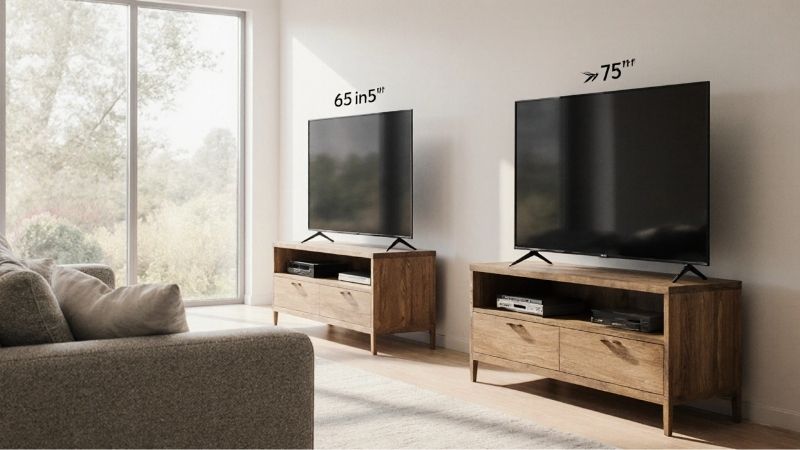
For a typical 70-inch screen resting directly on furniture, begin by considering consoles roughly 65 to 75 inches wide. This is an editorial proportion guide for a screen about 61 inches across, not a manufacturer-mandated range. A cabinet in that neighborhood often leaves some top surface visible at either side, while still looking like a deliberate base beneath the television.
A console that extends farther beyond the screen can make room for decor or a compact speaker, but those objects also add clutter and may create distractions. A wider unit takes up more wall area and may complicate furniture placement near a doorway. Choose the room’s usable wall length first, then check the feet, total supported weight, and depth against the exact product documentation.
Do not read proportional fit as tip-over protection. The US Consumer Product Safety Commission advises placing televisions on sturdy, low furniture and anchoring televisions and furniture to help prevent tip-overs [CPSC, 2023]. A long console is not automatically stable when its drawers are open, a child pulls on it, or a TV base is installed against the manufacturer’s directions.
When Your Room Only Fits a 60- to 65-Inch Cabinet
A narrower cabinet can sometimes support a 70-inch television, provided its manufacturer permits that screen arrangement and its entire foot or pedestal footprint fits within the usable surface. Screen overhang by itself is not the same as feet overhanging the furniture. It may look more top-heavy, however, especially beside tall shelves or when the screen extends nearly to a door frame.
The correct answer is not simply to upgrade to a wider console if there is no safe space for it. Compare the TV’s actual base width and depth with the cabinet top, confirm the top-panel weight rating and leave room for cables and ventilation. For a wide-foot television, a 60-inch cabinet might be physically large enough, but only the actual measurements and manufacturer’s instructions settle that question.
If nothing rated fits the available footprint, consider independently wall-mounting the television above appropriately sized storage, where permitted by the TV and wall-mount manufacturers. That does not make the cabinet a mounting bracket, and any remaining floor-standing cabinet still needs the maker’s specified anchoring and placement. Do not replace a rated stand with a narrow dresser or ordinary shelf.
When the TV Has Two Widely Spaced Feet
Choose by the outside-to-outside span of the feet, plus their front-to-back depth, rather than by the television’s overall body width. Some manufacturers show a measurement labeled stand width, while others describe the base footprint in a drawing. A number labeled TV width usually describes the panel, not where its weight touches furniture. The distinction matters most when the feet sit close to the cabinet edges.
An official model sheet can provide a usable starting example. LG publishes a 49-inch stand width for its 70UQ7070ZUD, alongside the much larger 61.5-inch body width [LG Electronics USA, 2022]. A wide base need not demand a cabinet longer than the whole screen, but every foot must remain properly supported and the top must be rated for the television’s complete weight.
Confirm the feet are installed in the manufacturer’s required locations and orientation. Do not move them inward, reverse them or substitute aftermarket feet unless the television maker approves that setup. If the listed foot width would place either support over a cabinet seam, raised trim or unsupported top extension, select a different furniture layout rather than hoping the top will distribute the load.
When Your Television Uses a Center Pedestal
A center pedestal may fit on furniture that is narrower than the television body, because its contact area occupies the middle of the top panel. That makes the pedestal footprint an important measurement for small rooms. It does not lower the total television weight or guarantee stability. The furniture still has to support that concentrated load and be appropriate for a TV of the model’s size.
Inspect both the width and depth of the base, including any rear extension for a swivel mechanism. A pedestal can appear compact from the front while extending farther backward than expected. The cabinet depth must keep the entire support on the approved surface, and the installation must allow the screen to move without striking a wall, shelving side panel or nearby object.
If the TV swivels, consult its manual for the permitted movement and clearance rather than assuming every angle is safe on a narrow cabinet. Place remotes, speakers and accessories where they cannot obstruct the base or encourage a child to climb. The cabinet’s load limit and anchoring requirements remain decisive even when the television footprint is small.
When the Television Is Wall-Mounted Above the Console
When the screen is supported by a separate, correctly installed wall bracket, the console no longer carries the TV’s weight. This gives you more freedom to choose cabinet width by available storage and room proportions. A 60-inch console can look reasonable below a roughly 61-inch screen; a longer console may help create a broader focal point if wall space allows.
The television’s mount must be matched to its exact VESA pattern, weight and approved wall substrate. A floating media cabinet is a separate piece of furniture, not a substitute for a TV wall bracket. The load path for the screen and the furniture should remain clear; a wall-hung media unit needs its own supported installation and may have a different permitted load from its floor-standing configuration.
Reserve accessible outlets and cable routes before settling the console position. Cable openings can interfere with a soundbar or shelf, while a mounted screen may cover the location of a planned power outlet. A cabinet that is wider than the television does not fix poor viewing position or blocked service access. Those issues should be decided independently from the decorative proportions.
When You Need Space for a Soundbar, Game Console or Drawers
Choose internal storage around your equipment, not just the screen size. A 70-inch television can look balanced above a shallow console that turns out to be unusable for a receiver with deep connectors. Measure equipment at its widest functional points, including plugs and accessible front controls. Closed doors may conceal cables, but they can also limit ventilation and remote-control access.
Soundbars may sit directly in front of the television and affect the infrared receiver, or may be separately mounted beneath the screen. Check the soundbar’s own footprint and the TV maker’s permitted clearance, especially if the set has low feet. If the soundbar is heavy, it counts toward the cabinet’s supported top load along with the television and other items.
Drawers and hinged fronts need open travel space. They should not run into a coffee table or force users to move a television to reach connections. A broad console with poor compartment design may be less functional than a narrower one with usable cable openings. Decide how components will be accessed during normal use and cleaning before treating extra cabinet width as a benefit.
Frequently Asked Questions
These questions cover edge cases that the width and base discussion cannot resolve by appearance alone. They address product descriptions, television replacements and the difference between a cabinet’s exterior measurement and its actual supporting surface. The answer still depends on the exact model numbers in the home.
Can a TV Stand Be Wider Than a 70-Inch Television?
Yes. A TV stand may be wider than the television, and a longer console can provide room for speakers or additional storage. Width does not create a safety problem by itself when the furniture is properly designed, supported and secured. The TV should still sit within the usable supported portion of the top, and any installed accessories must stay inside the cabinet’s weight allowance.
Be cautious when a very long console is assembled from several modules. The seam between two frames may not be suitable for a concentrated TV pedestal unless the manufacturer provides an approved combined configuration. A product image of several pieces aligned together does not establish their loading capacity or the correct anti-tip attachment points.
Does a 70-Inch TV Require a Specially Labeled 70-Inch Stand?
No. The packaging or listing does not need to say “for 70-inch TVs” if the furniture maker expressly allows the television’s width, support layout and weight. Some listings use an approximate TV size range as a convenient shopping filter. That label is not a replacement for technical dimensions and a published weight capacity for the actual assembled cabinet.
Read the manual for any maximum television size and supported loading conditions before treating a visually suitable console as compatible. If a retailer supplies only a vague statement such as “holds most large TVs,” request exact product documentation. Avoid relying on a customer photograph of another television because the weight and base could be completely different.
Will a Newer 70-Inch TV Fit My Existing TV Cabinet?
Possibly, but a matching screen class is not enough. The replacement might have feet farther apart, a deeper pedestal, a different overall weight or a changed connector arrangement. Compare the new model’s published dimensions with the old cabinet’s usable top width, depth and maker-stated maximum TV weight before transferring the setup.
Inspect the furniture for damage as well. Bowed panels, loose joints, missing braces, water damage or a cabinet without its approved legs can invalidate assumptions based on a listing photo. If you no longer have the furniture’s identification and instructions, do not guess its load capacity from its appearance; ask the manufacturer or choose documented TV furniture.
Do I Need Extra Space Behind a TV on a Console?
Yes, enough space for the set’s actual cable connections, ventilation and any maker-specified wall clearance. There is no single gap appropriate to every television, since some connect at the side while others use rear-facing ports. A deep enough stand top is helpful, but you also have to check the path to outlets and whether cables will be pinched when the screen is moved.
If a television has a center pedestal or adjustable feet, keep the intended support position on the cabinet and follow the maker’s installation guide. Do not shift the TV forward to create cable access if that would leave its base hanging over the edge. A correctly sized console should support the TV fully while leaving a serviceable, unobstructed layout behind it.
Final Thoughts
For 70 inch tv what size stand, a roughly 65- to 75-inch-wide console is a useful visual starting point, not a universal rule. Confirm the particular TV’s foot placement, cabinet depth and load limits first. A wider piece is the wrong choice if its top cannot safely support the television, while a narrower rated unit may work well.
