Our Top Picks
 AEOCKY 5500 Sq.Ft Energy Star Most Efficient 202580 Pints - 5500 Sq.Ft14.45 x 8.66 x 24.09 inchesCheck on Amazon
The best dehumidifier brands depend on the size of the job, and on paper the hOmeLabs 50-pint, Wi-Fi unit is the most capable single listing in this group, with Waykar and AEOCKY close behind in the 80-pint class and TABYIK, NineSky, BEDRED and ToLife covering the budget end for a single room. The honest complication is that a brand name, taken alone, tells you much less than it appears to. Three of the eight listings here share an almost identical spec line under three different names.
So this article is organized around brands, but it keeps asking what each name does and does not prove. Everything below comes from listing titles, published specifications and buyer comments. We do not describe brand histories, and we do not state warranty terms, because neither is in the listing data; where it matters, we tell you to check the listing or the manufacturer.
What a brand name can and cannot tell you

Dehumidifiers for Home, 1000 Sq Ft Dehumidifier with 95oz Tank Auto Shutoff | Quiet for Bedroom, Bathroom and Basement with Sleep Mode 7-Color LED Light, Grey
One of the moisture-control product options compared in this guide.
View on Amazon
BEDRED Dehumidifier, 95Oz Dehumidifier for Home 1000 Sq.Ft | Quiet, Auto Shutoff, Sleep Mode, 7 Color Ambient Light for Bedroom, Bathroom, Basement (Black)
One of the moisture-control product options compared in this guide.
View on Amazon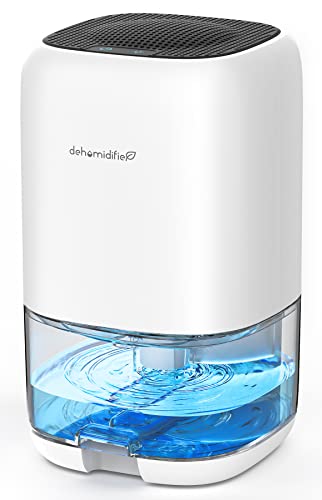
TABYIK 35 OZ Dehumidifier for Bedroom RV, Quiet with Auto Shut Off, White | 280 Sq.Ft Small Dehumidifiers for Home Bathroom Closet, 7 Color Light, 28dB Ultra Quiet, 35OZ Water Tank
One of the moisture-control product options compared in this guide.
View on Amazon
ToLife Dehumidifier, 1000 Sq Ft 95 oz Tank with Sleep Mode, Auto Shutoff | Portable for Home, Bedroom, Bathroom and Basement with 7-Color LED Light, Grey
One of the moisture-control product options compared in this guide.
View on Amazon
hOmeLabs Dehumidifier 7,000 Sq Ft 50 Pint (MAX 120 Pint at 95°F, 90% RH) | WIFI + Upgraded Advanced Humidity & Moisture Control, Quiet, Efficient, Auto Shut-off, Ideal for Home, Basement, Office
One of the moisture-control product options compared in this guide.
View on AmazonAEOCKY 5500 Sq.Ft Energy Star Most Efficient 2025 Dehumidifier Max 80Pint/D | Dehumidifier with Drain Hose for Basement, Home, Bedroom, Bathroom, Intelligent Humidistat
One of the moisture-control product options compared in this guide.
View on Amazon
Waykar 80 Pints 2025 Energy Star Dehumidifier for Home up to 5,000 Sq. Ft, Ideal for Basement, Bathroom and Large Room with Drain Hose, Portable, Auto Defrost and Self-Drying
One of the moisture-control product options compared in this guide.
View on Amazon
Eva-Dry Wireless Mini Dehumidifier, White (E-333)
One of the moisture-control product options compared in this guide.
View on AmazonStart with what a name usually does tell you. It identifies who to contact when the tank cracks or the humidity sensor drifts. It tells you whether the seller is the brand itself or a reseller, which affects returns. And over time, it gives you a pattern: if a name appears on a dozen listings with consistent manuals and clear support addresses, that consistency is worth something.
What it does not tell you is just as important. A name does not tell you what technology is inside, because one brand may sell a compressor unit, a small thermoelectric tank unit and a passive absorber. It does not tell you the true capacity, because pint ratings are quoted at different conditions by different sellers. It does not guarantee a warranty length or whether that warranty covers the compressor. And it does not reveal who manufactured the machine; several budget listings show matching feature lists, which is a common pattern when a factory sells similar designs to multiple brands.
That is why, throughout this guide, you will see two pieces of advice repeated: pick the size class first, then choose a brand inside it using evidence you can verify yourself.
Eight brands at a glance
| Brand | Key spec (from the title) | Price tier | Best for |
|---|---|---|---|
| NineSky | 1000 sq ft, 95 oz tank, sleep mode | Budget | Single room, bargain buyers |
| BEDRED | 1000 sq ft, 95 oz tank, black finish | Budget | Single room, design-minded |
| ToLife | 1000 sq ft, 95 oz tank, portable | Budget | Moving between rooms |
| TABYIK | 280 sq ft, 35 oz tank, 28 dB claim | Budget | Closets, RVs, tiny rooms |
| hOmeLabs | 50 pint, 7,000 sq ft, Wi-Fi, max 120 pint at 95 F | Premium | Whole-floor, basements, offices |
| AEOCKY | 80 pint max, 5,500 sq ft, Energy Star, drain hose | Premium | Large damp spaces |
| Waykar | 80 pints, Energy Star, up to 5,000 sq ft, self-drying | Premium | Basements, large rooms |
| Eva-Dry | Wireless mini (E-333), no capacity in title | Budget | Tiny enclosed spaces |
Price tier is relative within this list; Budget is the cheapest band and Premium is the top band. Check the live listing for pricing.
Three names, one spec line
Put the NineSky, BEDRED and ToLife titles next to each other and you will find the same recipe: 1000 square feet, a 95-ounce tank, auto shut-off, sleep mode, a seven-color LED and the same list of rooms (bedroom, bathroom, basement). The leading words differ, and BEDRED adds a color choice. Beyond that, the on-paper product is the same.
This does not prove the machines are identical. It does mean that choosing between them on brand reputation alone is a coin flip, and that the useful tie-breakers are practical ones: seller and return window, cord length, whether a manual is available as a download, how the listing describes warranty and how buyers describe noise. If you spot a listing where the product photos match another brand, treat that as a prompt to read the return policy before you buy.
A budget buyer can use this to advantage. When three listings are near-equivalents, the cheapest one with the easiest return policy is a rational choice, because the downside of picking wrong is a refund rather than a ruined purchase.
Brands selling the 95-ounce tank format
The 95-ounce tank equals roughly 5.9 pints, or 2.8 liters. It suits a bedroom, a bathroom or a closet-sized space where you can empty the tank daily. None of these titles state a pint-per-day figure.
NineSky: a generic title with a clear spec line
NineSky’s listing opens with the broad phrase Dehumidifiers for Home, then offers 1000 square feet, a 95-ounce tank, auto shut-off, quiet operation, sleep mode and a seven-color LED, for bedroom, bathroom and basement. The lack of a distinctive product name means you must lean on the images and the manual to know what you are getting.
What the name tells you: the seller put a brand on the product, so there is something to contact. What it does not tell you: how long the company has sold dehumidifiers, whether it services them or how the warranty works. Do not infer any of those from a title. The practical test is to open the listing and look for a downloadable manual, a customer-service email and a stated warranty period, then confirm those on the brand’s own site.
In use, a 5.9-pint tank in a humid bedroom will often fill within one or two nights, so plan on a morning routine of emptying it. If you would rather not, look at the larger hose-drain brands further down.
The quiet claim is the one to question. Without a decibel figure on the title, it is a marketing word, and buyer comments about fan noise are the better source of truth.
A useful habit when comparing near-identical listings is to open all three in adjacent tabs and list what differs: cord length, the seller of record, the accessories included and whether a manual PDF is posted. Whichever listing gives the most of those details has done more of the work for you, and that diligence is itself a weak signal about how the seller treats customers afterward.
Pros
- Large tank for the price tier
- Auto shut-off and sleep mode listed
- 1000 square foot claim covers most bedrooms and baths
Cons
- Generic title gives little product identity
- No pint-per-day rating or decibel figure
- Warranty and support details are not in the title
Who it is for: a buyer who wants the cheapest sensible bedroom unit and will confirm the return window before buying.
BEDRED: the finish is the visible difference
BEDRED’s listing matches the NineSky spec line almost word for word, adding a color in parentheses. In a market where capacity figures are mirrored across brands, a color option may be the one honest differentiator, and for a bedroom or living room where the unit stays visible, a black box looks tidier than a grey one.
The name itself, which reads like a bedroom brand, should not be taken as evidence that the unit is quieter or better suited to sleep than the others. The title does use the words quiet and sleep mode, as the others do. Whether those hold up in a quiet room at 2 a.m. is a question for buyer comments and not for the brand label.
It also sits at the same price tier as the others in this group, so the premium for the design is small. That makes it a reasonable default if you like the look. As with all of these, confirm the warranty on the manufacturer’s page.
A practical point: dark glossy plastic shows dust and fingerprints more than white or grey. A weekly wipe is the price of the style.
If you are using the unit in a bedroom, place it at least 3 feet from the bed, with the exhaust pointing away from the sleeper and the cord out of walking paths. Without a pint rating, give it a trial week and read the tank each morning to learn how hard it works in your room.
On value, a small premium for a finish is easier to justify when the unit lives in view all year. If it will sit in a closet most of the time, color is irrelevant and a plain budget listing does the same job. The bigger point for a brands article is that BEDRED shows how one visible attribute can become the whole brand story when the underlying specs are shared.
Pros
- Black finish suits visible placement
- Same 95 oz tank and 1000 square foot claim as peers
- Budget tier
Cons
- Spec line is not unique to this brand
- Glossy surface shows dust
- No decibel or pint rating in the title
Who it is for: shoppers who treat the three tank brands as equals and let looks break the tie.
ToLife: a brand-led title and a portable body
ToLife leads its title with the brand and then the word Dehumidifier, as BEDRED does and NineSky does not. It lists 1000 square feet, a 95-ounce tank, sleep mode, auto shut-off and portability for home, bedroom, bathroom and basement, plus a seven-color LED and a grey finish.
A title that leads with a brand is not evidence of a better product, but it can make future support easier. If you type the name into a search engine, you will probably find the brand’s own page or its manual more quickly than you would for a generic title. That is a small, real advantage, and it is worth checking before you buy.
The word portable suggests a handle or light body; confirm the weight on the listing. A tank unit this size is something you will carry to a sink every day or two, so a shape that is easy to grip matters more than any ambient light.
For buyers who like to compare, the ToLife is a useful baseline. If it is the cheapest of the three tank brands, there is little reason to pay more for another name unless you want a particular color. If a different brand offers a clearer warranty statement or a faster refund process, that can justify a small difference.
One more check for a portable unit is the carry path. Picture lifting a full tank, roughly 6 pounds of water before counting the tank itself, up a flight of stairs; a tank handle and a spill-resistant lid matter. Look through the listing photos and buyer images to see how the tank slides out and whether the float switch looks easy to reach for cleaning.
Pros
- Brand-led title makes it easier to find support pages
- Described as portable, with a 95 oz tank
- Budget tier
Cons
- Same on-paper specs as two competing brands
- No pint rating, wattage or decibel number in the title
- Tank needs emptying often in humid weather
Who it is for: buyers who want the simplest small-room dehumidifier and a brand name they can look up.
A brand built around the small-room format
TABYIK: the smallest tank and the only decibel number
TABYIK stands out for being the only budget brand in the group that puts a decibel figure in its title: 28 dB, ultra quiet. It also lists a 35-ounce tank (about 2.2 pints), 280 square feet, auto shut-off, a seven-color light and use in a bedroom, RV, bathroom or closet.
The decibel figure is a manufacturer claim, but it is a specific one, which makes it more checkable than the word quiet. If you read buyer comments for mention of noise, you can compare them to the claim. A 28 dB rating is lower than a typical refrigerator hum, which is the reason to treat it with some caution: confirm what fan setting the figure refers to.
What the brand name tells you is little, but the format tells you a lot. A 35-ounce tank cannot move the large amounts of water that a hose-drain compressor can, and the title offers no pint rating, so this is a spot dryer for a closet, a boat cabin or a bedroom with a single damp corner. If your problem is a whole basement, no small-tank brand will fix it.
It is an easy purchase because the cost of being wrong is low, and the small body is simple to store in the off-season.
One thing the brand cannot tell you is how the unit behaves when the tank fills while you sleep. Auto shut-off is listed, which is the right feature, but read buyer comments for mentions of the float sticking or the light staying on. If the unit goes into an RV, check the plug type against your outlet and keep it level while it runs, since a tilted tank may trip the sensor early.
Pros
- Specific 28 dB figure that buyers can compare against
- Smallest footprint of the group
- Budget tier
Cons
- 35 oz tank fills fast in humid rooms
- 280 square foot claim is for small enclosed spaces only
- No pint-per-day rating stated
Who it is for: anyone who wants a quiet little unit for a closet, RV or small bedroom.
Brands in the large pint-rated class
These three spell out capacity in pints, which allows a fairer comparison, but note that each quotes its figure a little differently.
hOmeLabs: the most detailed rating in the group
The hOmeLabs title is the most informative in the roundup: 7,000 square feet, 50 pints, and a maximum of 120 pints at 95 degrees and 90 percent relative humidity. It adds Wi-Fi, an upgraded humidity and moisture control feature, quiet operation, efficiency, auto shut-off and a use list that includes home, basement and office.
The two pint figures teach a lesson. The 50-pint figure and the 120-pint maximum describe the same machine at different conditions, a ratio of about 2.4. That does not convert to other brands, but it shows why a headline of 80 pints a day on another listing cannot be compared directly with 50 pints here without knowing the test conditions. Ask each seller for the test condition before assuming one is bigger.
Wi-Fi is the other differentiator. App control lets you read humidity and schedule runs from your phone, which suits a basement you do not visit daily. The cost of Wi-Fi is another thing that can fail, and some buyers prefer to avoid connected appliances altogether. The title does not describe the app, so check the listing and the manufacturer for how it works and whether it needs an account.
The price tier is the highest in the group, so confirm the warranty and the support channel on the manufacturer’s page before buying.
A final point is size class versus need. A 50-pint, 7,000 square foot unit in a 400 square foot room will reach its target quickly and then idle, which wastes the premium. The listing makes more sense in a large finished basement, a workshop or an office floor where air volumes are big. If your damp area is smaller than about 1,500 square feet, a cheaper brand one class down may serve you equally well.
Pros
- Pint rating stated at two conditions, 50 and 120 maximum
- Wi-Fi control and a 7,000 square foot claim
- Auto shut-off listed
Cons
- Highest price tier in the group
- App and account details not in the title
- Likely too large for a single bedroom
Who it is for: someone drying a large basement or office who wants remote control and a transparent pint rating.
AEOCKY: Energy Star and an 80-pint maximum
AEOCKY’s title lists 5,500 square feet, Energy Star, an 80-pint maximum per day, a drain hose and an intelligent humidistat, for use in a basement, home, bedroom or bathroom. It is a clean example of what a large-capacity listing says when it says everything the title can fit.
The phrase Most Efficient is a marketing superlative until you can verify it. Energy Star has an official product database, and the right step is to look up the model there and see whether it appears. If it does, the efficiency claim has a source. If it does not, the title is overstating. We have not done this lookup, so treat the claim as unverified.
The brand name alone tells you nothing about how long the compressor lasts, which is the main thing an 80-pint buyer cares about. That is where warranty language becomes decisive. Compressor coverage can be separate from the rest of the machine, and a listing that says only one year on the product may mean something different from one that names the compressor. Confirm on the manufacturer’s site.
Because the humidistat is described as intelligent, check the manual for the adjustment range and whether it allows a target above 50 percent.
A drain hose is only useful if you have somewhere lower for the water to go. In a basement that means a floor drain or laundry tub; if you have neither, check the listing for a tank or pump option, because a hose with nowhere to drain is just a long cord. Confirm the hose length too, since a hose that stops short of the drain turns the feature into an annoyance.
Pros
- Energy Star mention that can be verified in the official database
- 80 pint maximum with a drain hose
- Large-space coverage claim of 5,500 square feet
Cons
- Premium tier and likely oversized for small rooms
- Warranty and noise are not in the title
- Maximum rating conditions not stated
Who it is for: large basements and whole-floor dampness where a hose drain is available.
Waykar: self-drying and defrost in the title
Waykar’s listing gives 80 pints, Energy Star, up to 5,000 square feet, a drain hose, portability, auto defrost and self-drying. Auto defrost matters for basements below about 65 degrees, where coils can frost over, and self-drying is a feature intended to reduce mold in the machine after it shuts off. Both are valuable, though the title does not say how they work.
Compared with the AEOCKY, the coverage claim is a little smaller (5,000 versus 5,500 square feet) and the features list is a little different. On paper they are near neighbors. This is the most useful pair to compare, because the brand names do not matter nearly as much as the maintenance features, support channel and the return window.
The word portable on an 80-pint unit should be read with care; it likely means it has wheels or a handle, not that it is light. Check the weight before assuming you can carry it up stairs.
The Waykar name may appear on other models, but we have not compared them here, and one listing does not say anything about another. Judge each by its own page. For this one, the combination of Energy Star, defrost and self-drying makes it a rounded choice for a cool basement.
Self-drying is easy to overlook, but it speaks to a maintenance pattern: after the compressor stops, a fan runs to dry the coil, which is meant to cut musty smells inside the machine. Whether it adds a few minutes of noise and a little electricity after each cycle is not in the title, so read the manual. Either way, empty and wipe the tank and filter monthly in damp seasons.
Pros
- Auto defrost and self-drying in the title
- Energy Star and an 80 pint rating
- Drain hose and portability noted
Cons
- Premium tier
- Weight and noise not in the title
- Maximum rating conditions not stated
Who it is for: a cool, damp basement or large room that needs automatic frost protection.
A brand outside the electric category
Eva-Dry: a different kind of product altogether
The Eva-Dry E-333 is titled a Wireless Mini Dehumidifier in white. There is no coverage, tank size or pint rating in the title, and that omission is the point. This listing sits outside the world of pints per day and is aimed at tiny enclosed spaces such as a cabinet, a gym bag, a closet shelf or a small safe.
The word wireless suggests the unit does not plug into a wall, but the title does not say how it removes moisture, whether it needs recharging or replacement media, or how long it lasts. Open the listing and read before assuming. In general, small passive or rechargeable units like this one handle a few cubic feet of air, not a room.
So what does the brand tell you? Very little beyond the product itself; the title says nothing about the company, and this is a category in which price is the main attraction. It is a sensible add-on beside a large electric unit, for example in a closet that the main machine cannot reach, and a poor substitute for it.
The reason to include it in a brands comparison is a practical one: the cheapest option is not always the right one, and the most expensive is not always the right one either. Match the product type to the volume of air.
If you buy one, treat it as a consumable: check the listing for whether it recharges or its media must be replaced, and put a reminder on the calendar to inspect it. A small absorber that has quietly stopped working gives false confidence in a closet that is still growing mildew. Keep it upright and read the safety notes in the manual about the internal material.
Pros
- Lowest price tier in the group
- Wireless design needs no tank emptying or hose
- Suitable for cabinets and tiny enclosed spaces
Cons
- No capacity or coverage in the title
- Not a replacement for a room dehumidifier
- Operating method and life span must be checked on the listing
Who it is for: someone protecting a closet, cabinet or bag, not a room.
Choose the technology before the brand
A compressor machine cools air across a coil so that water condenses and drips into a tank or hose. It is the common choice for basements and larger rooms because it removes the most water per kilowatt-hour in warm, humid air. A desiccant machine uses a moisture-absorbing material, often a wheel, that is dried with heat, and it tends to cope better in cold spaces though it generally uses more power for the water it removes. Small thermoelectric tank units use a cooled plate, move far less water and run quietly, and passive absorbers use granules or crystals and have no power draw at all.
Many titles omit the technology, so never assume it from the brand or the tank size. If a listing mentions a compressor, a drain hose and a large pint rating, you are in the compressor category. If it mentions a small tank and a quiet fan with no pint rating, it is likely a small unit. If it is non-electric or wireless, it is a passive product.
Shoppers sometimes ask whether an air conditioner can replace a dehumidifier. Air conditioners do pull moisture from the air as they cool, and our guide to an air conditioner with a dehumidifier function explains where that works and where it does not. If you want one machine to do both jobs, see our look at a portable air conditioner dehumidifier, and for the single-box approach read the AC dehumidifier combo comparison. In every case, the cooling mode and the drying mode are separate capacities, so look for a dedicated pint figure.
A ten-minute brand scorecard
Use this scorecard on any dehumidifier listing, from any brand. Give each row 0 (not found), 1 (partly) or 2 (clear). A total of 12 or more suggests a seller who has documented the product; below 8 suggests proceeding with caution or choosing another.
| Check | Where to look | Red flag |
|---|---|---|
| Pint-per-day rating with test conditions | Title, bullet points, manual | Only a square footage figure |
| Downloadable manual | Listing documents, brand site | No manual, or one in poor English |
| Warranty length and what it covers | Brand site, listing details | Vague phrases like worry-free |
| Support contact that answers | Send a short email before buying | No address, or no reply in 3 days |
| Energy Star verification | Official product database | Claim appears in title but not in the database |
| Seller identity | Sold-by line | Unknown third party with no returns |
| Parts availability | Brand site: tank, filter, hose | No spare parts listed |
| Unique photos | Reverse image search | Same photos under several brands |
The scorecard puts the work on documents rather than reputation, which is why it works for a brand you have never heard of. A quick email asking about the compressor warranty takes two minutes and tells you more about a brand than an advert.
How we picked these
The Editorial team compared published specifications, manufacturer documentation and buyer reviews for the eight listings. Nobody on the team used or measured these units, so no figure is an observed result. Specs come from the listing titles. Anything else, such as wattage, warranty, weight or noise, is marked as unknown, and you are directed to the listing or manufacturer.
We grouped the picks by brand because that was the question, then within each group compared size class, drainage, Energy Star mentions and whether the title gives a pint rating. We deliberately avoided brand histories, rankings of customer service and any claim that one company is more reliable than another, because we found nothing in the sources that would let us support such a claim.
Three listings carried near-identical specs, and we say so plainly. Price tiers are relative to this list. Ratings and review counts are not shown because they change constantly and do not belong in a static article.
Mistakes when choosing by brand
- Assuming a known name means better quality. A recognized name can still sell a bad model, and an unfamiliar one can sell a good one.
- Comparing pint ratings across sellers. The 120-pint maximum at 95 F on one listing and the 80-pint maximum on another are not on the same footing.
- Skipping the warranty page. The warranty is where brands differ most, and it is rarely in the title.
- Ignoring size class. The best name in the 35-ounce class is irrelevant for a 1,500 square foot basement.
- Treating an air conditioner as a dehumidifier. Cooling-mode moisture removal is a side effect, not a rated capacity.
- Believing superlatives. Most Efficient and Ultra Quiet are only meaningful if you can verify them.
Verdict
If you must pick one brand for a large damp space, hOmeLabs has the most transparent pint rating and the only Wi-Fi control, while Waykar and AEOCKY offer 80-pint, Energy Star-listed alternatives, with Waykar adding auto defrost and self-drying. For a single room, any of NineSky, BEDRED or ToLife will do the same job on paper, so choose by return policy and finish. TABYIK is the quiet small-space pick, and Eva-Dry is the add-on for cabinets. Run the scorecard before you spend, and remember to confirm every warranty on the manufacturer’s own page.
Frequently asked questions
Which dehumidifier brand is the best?
No single brand wins every category, because the same company name often covers very different machines. On paper, hOmeLabs has the broadest large-room listing here with a 50 pint rating, Wi-Fi and a 7,000 square foot claim, while Waykar and AEOCKY list 80 pint Energy Star units. For one small room, TABYIK and the 95 oz tank brands cost far less. Choose a size class first, then compare brands inside it.
Does a famous brand mean a better dehumidifier?
Not automatically. A brand name tells you who to contact and sometimes how long parts stay available, but it does not guarantee a quality compressor, quiet fan or long life. Several budget listings carry nearly identical specs under different names, which suggests the name is not the main difference. Check the manual, warranty language and recent buyer comments rather than relying on name recognition.
What is the difference between compressor and desiccant dehumidifiers?
A compressor unit cools air so water condenses, which works well in warm, humid rooms and removes the most water per kilowatt-hour. A desiccant unit uses a moisture-absorbing material, which can work in cooler spaces but usually removes less. Small thermoelectric tank units and passive absorbers are different again. Titles often leave the technology unstated, so check the listing before comparing two machines.
How do I check a dehumidifier warranty?
Open the full listing, look for a warranty line in the details or manual, and then confirm on the manufacturer’s own website or by emailing support. Ask how long it lasts, whether it covers the compressor separately, who pays shipping and whether a third-party seller can honor it. We do not state warranty terms for any brand here because titles do not give them.
Is it safe to buy a lesser-known dehumidifier brand?
It can be, if you do a short check. Look for an Energy Star listing in the official database where claimed, a manual in English, an answerable support contact and a clear return window. Be cautious when a listing lacks a pint-per-day rating or when the same photos appear under several brand names. A low price and a short track record call for a stronger return policy.