Our Top Picks
Shoppers who want the most warmth for the least weight should choose a down blanket with a high fill power and a baffle-box or similar construction, while those who want a lighter, easier-care option can look at down-alternative blankets. Brooklinen, Parachute, Cuddledown and Pacific Coast are among the well-known makers of down bedding. This guide explains fill power, fill weight, down versus feather, certifications and how to match a blanket to your climate and bed.
Down Blankets at a Glance
| Type / example maker | Best for | Key stated traits | Limits |
|---|---|---|---|
| Lightweight down blanket (Parachute, Brooklinen, Cuddledown) | Layering year round, warm sleepers | Makers list fill power, cotton shell, baffle construction | Not enough warmth alone in cold rooms |
| Medium or all-season down blanket | Most buyers | Makers describe balanced warmth and loft | Needs a duvet cover and careful washing |
| Heavy winter down blanket | Cold bedrooms, cold sleepers | Higher fill weight, thick loft | Too warm for many sleepers in mild climates |
| Down-alternative blanket (Buffy Cloud, Pacific Coast alternatives) | Allergy-conscious buyers, easy washing, no animal products | Makers list polyester or eucalyptus-based fill | Usually less loft per weight than down |
| Down throw | Couch, travel, reading | Compact, light | Not bed-sized |
Fill Power, Fill Weight and Warmth
Fill power measures how much space an ounce of down occupies, in cubic inches. Higher fill power means larger, loftier clusters that trap more air, so a blanket can be warmer at lower weight. Makers often list fill power in a range such as 600, 700 or 800. Fill weight is the actual amount of down inside, and it matters just as much: a blanket with high fill power but low fill weight is a light layer, while the same fill power with more weight is a winter blanket. Compare both figures when the maker lists them. A warm sleeper in a mild room might choose a lighter fill, while a cold sleeper in a drafty room may need more.
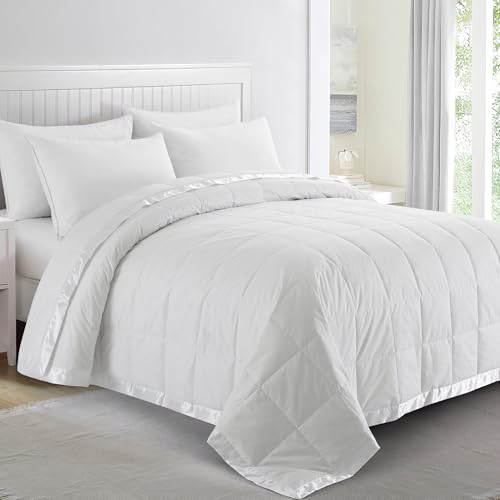
puredown® Blankets Queen Size - Soft Lightweight Down Blanket for Bed, Cozy Warm Luxury Bed Blanket with Satin Trim, White (90"X90")
Chosen because it specifies Soft Lightweight Down Blanket for Bed and Cozy Warm Luxury Bed Blanket with Satin Trim.
View on Amazon
Madison Park Down Alternative Queen Blanket for Bed, Satin Trim, White | Lightweight Windom Blanket Full Size Premium 3M Scotchgard Moisture Wicking Treatment, OEKO TEX, Soft Bed Cover, All Season
Chosen because it specifies Satin Trim and White.
View on Amazon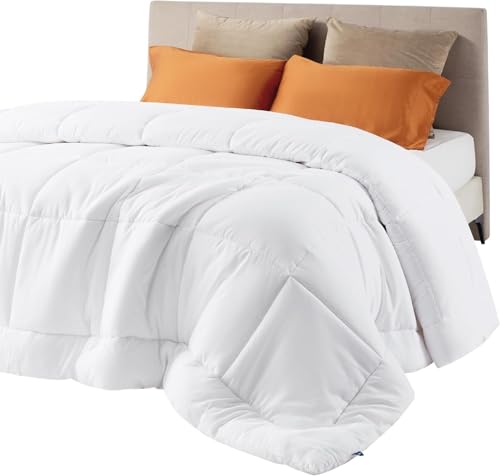
Bedsure Comforter Duvet Insert, Quilted Bedding Blanket, OEKO-TEX | People & Editor-Tested Comforter, Down Alternative Fill, 8 Corner Tabs, Machine Washable, White, Queen, 88 x 88 Inches
Chosen because it specifies Quilted Bedding Blanket and OEKO-TEX.
View on AmazonDown vs Feather vs Down-Alternative
True down comes from the soft undercoating of ducks or geese, while feathers have quills and add weight and a different feel. Makers describe labels such as down or down-and-feather blends, and the proportion of down affects loft and price. Down alternatives use synthetic or plant-derived fibers. They suit people who avoid animal products, want easier machine washing, or have concerns about allergens, although people with allergies should speak with an allergist because the shell, dust and detergents also matter. Alternatives are heavier for the same warmth and may feel less airy.
Construction: Baffle Box, Channel and Sewn-Through
Baffle-box construction uses fabric walls between the top and bottom layers so the down can loft and stay evenly distributed, with no cold spots. Sewn-through designs stitch the top and bottom together, which is lighter and cheaper but leaves cold lines at the seams. Channel designs run bands of fill and can allow shifting unless baffled. Many reviewers who cover bedding prefer baffle-box for even warmth.
Shell Fabric and Thread Count
The shell must be tightly woven to keep down from poking through. Makers commonly list cotton shells in percale or sateen weights, with a down-proof tight weave. A high thread count is not a guarantee of quality, but a tighter weave generally reduces leakage. Percale shells feel cooler and crisper, while sateen feels smoother and slightly warmer.
Certifications and Ethical Sourcing
- Responsible Down Standard (RDS): A certification that addresses animal welfare in down sourcing.
- Global Traceable Down Standard: Another animal welfare and traceability program.
- OEKO-TEX Standard 100: Indicates tested textiles when the maker states it.
- Downpass or IDFB: Industry testing of down quality.
Makers that hold these should say so on their product pages. If sourcing matters to you, check the maker’s own claims rather than assuming.
Sizing and Fit
Down blankets come in twin, full or queen, and king sizes. Many are used as a duvet insert, with a cover that protects the blanket and keeps it clean. Look at the maker’s dimensions: a blanket meant to be a layer under a quilt can be slightly smaller than a duvet. Loops or corner ties on a down blanket let you tie it to the cover to prevent bunching. If you share the bed, a king-size blanket reduces tug-of-war, and some couples prefer two twin blankets.
Care and Cleaning
Use a duvet cover and wash the cover regularly to cut the need to wash the blanket. When the blanket needs cleaning, follow the maker’s instructions. Many down blankets can be machine washed in a large-capacity front-loader on a gentle cycle with a down-specific detergent, then dried on low heat with clean tennis balls or dryer balls to restore loft. Make sure the blanket is completely dry, because damp down can develop odor or mildew. Some makers advise professional cleaning. Air out the blanket occasionally in a dry spot, and store it in a breathable bag, not a sealed plastic one.
Budget Tiers and Trade-offs
| Tier | What to expect | Trade-off |
|---|---|---|
| Budget | Feather-and-down blends or down alternatives, simpler construction | Heavier, less loft, may leak |
| Mid-range | Down fill, cotton shell, baffle-box, some certifications | Best balance of warmth and cost for most |
| Premium | High fill power, fine shell, certified sourcing | Lightest and warmest, highest upfront spend |
Pick X If…
| Pick this | If you |
|---|---|
| Lightweight down | Sleep warm or want a layer for all seasons |
| Medium or all-season down | Want one blanket for most of the year |
| Heavy winter down | Sleep cold or keep the bedroom cool |
| Down alternative | Avoid animal products or want simple washing |
| Certified responsible down | Care about sourcing and animal welfare |
Alternatives Worth Considering
- Wool or cotton quilt: Breathable and durable without animal down.
- Merino wool blanket: Good temperature regulation for varied climates.
- Layered cotton blankets: Easy to adjust during the night.
Buying Checklist
Confirm the fill type, fill power and fill weight, the shell fabric and weave, the construction style and the care label. Note the dimensions and whether the blanket has corner loops for a duvet cover. Look for sourcing certifications if they matter to you. Read the return policy and warranty, since down quality is hard to judge from a photo. Reviewers who cover bedding point out that two blankets with the same fill power can feel very different if their fill weights differ, so comparing the numbers side by side prevents surprises.
Matching Warmth to Your Climate
In mild climates, a lightweight blanket is usually enough, and many people add a throw for colder nights. In cold regions, a heavier fill or a layered setup of down blanket plus quilt gives flexibility. If you and a partner disagree about temperature, two separate blankets in different weights solve the problem more cleanly than compromising on one. Keep humidity in mind as well: damp bedrooms make down feel clammy, so ventilate the room and air the blanket on dry days.
Common Mistakes to Avoid
Many shoppers focus only on fill power and ignore fill weight, which is what really sets warmth. Others skip the duvet cover, so the blanket needs frequent washing and wears faster. Washing in a small machine can leave clumps and damp spots, and drying on high heat can scorch the shell. Some buyers choose a heavy blanket for a mild climate and then sleep hot. Finally, assuming a down alternative will feel the same as down leads to disappointment, since the weight and loft differ. Read the maker’s description closely and match the blanket to your room temperature.
Frequently Asked Questions
What fill power should I look for?
Fill power in the 600 to 700 range is common for good-quality blankets, and 800 or more is used in premium, lightweight options. Fill weight also matters for warmth, so compare both.
Is a down blanket the same as a duvet?
The terms overlap. A duvet is usually a thicker insert that goes in a cover, while a down blanket may be lighter and used as a layer, though makers use both words loosely.
Can I machine wash a down blanket?
Many can be washed in a large front-loading machine on gentle, but follow the care tag. Dry fully on low heat with dryer balls to restore loft and avoid dampness.
Are down blankets good for allergies?
Some people react to dust or other triggers in bedding rather than to the down itself. If you have allergies, talk to an allergist, and look at hypoallergenic shell fabrics and cleaning schedules.
How long do down blankets last?
With a cover and proper care, good down bedding can last many years. Loss of loft, clumping or persistent odor suggests it is time for cleaning or replacement.
Why does my down blanket have a smell?
New down can have a mild natural scent that fades with airing. A persistent damp or musty smell may mean moisture, so dry it fully or have it professionally cleaned.
More from Amazon
Programs that pair well with the guide above. Offers and eligibility are set by Amazon and may change.
Collect the home and kitchen items you want in one registry that guests can shop from.
Create a wedding registrySet up recurring deliveries of everyday items on eligible products. Terms and savings are set by Amazon.
Explore Subscribe & SaveFree shipping on eligible items, Prime Video and more. Eligible new members can start with a free trial.
Start a Prime free trialAudiobooks and podcasts to listen to on the go. Eligible new members can start with a free trial.
Try Audible freeAs an Amazon Associate we earn from qualifying purchases.