
Key takeaways
- Choosing ankle weights best suited to a home routine begins with two separate questions: how much each cuff weighs and whether it fits securely. A...
What's inside
Choosing ankle weights best suited to a home routine begins with two separate questions: how much each cuff weighs and whether it fits securely. A package can advertise a combined weight that sounds like the load of one cuff. Read the selected variant carefully before comparing products, then confirm that the intended activity actually calls for wearable resistance.
This guide provides practical selection and use considerations. It does not report hands-on product testing.
Translate the package into individual cuffs
Write down the number of cuffs supplied and the weight of each one. If the listing offers several options, check that the selected button, basket description and product details agree. A photograph showing several sizes does not mean that every size arrives in the package. This simple record prevents a misleading comparison between a pair total and an individual weight.
For an adjustable set, identify the minimum and maximum weight per cuff and the size of each removable insert. Check whether the inserts are supplied and how they are secured. Adjustable sizing and adjustable resistance are different features: a strap may fit several ankle sizes even when the weight itself cannot be changed.
Compare fixed and removable-weight designs
A fixed-weight cuff has fewer loose pieces to organize. It may suit a routine that calls for one known load, provided its fit and construction are appropriate. Its limitation is straightforward: changing the resistance means using another cuff. Do not buy a heavier fixed option just because its price is close to that of a lighter version.
A removable-weight design offers another way to change the load, but adds pockets, closures and inserts to inspect. Find the correct loading arrangement in the instructions. Do not improvise with unrelated objects in the pockets. If several people share the set, establish how they will identify the current configuration before putting the cuffs on.
Check the fit as a separate decision
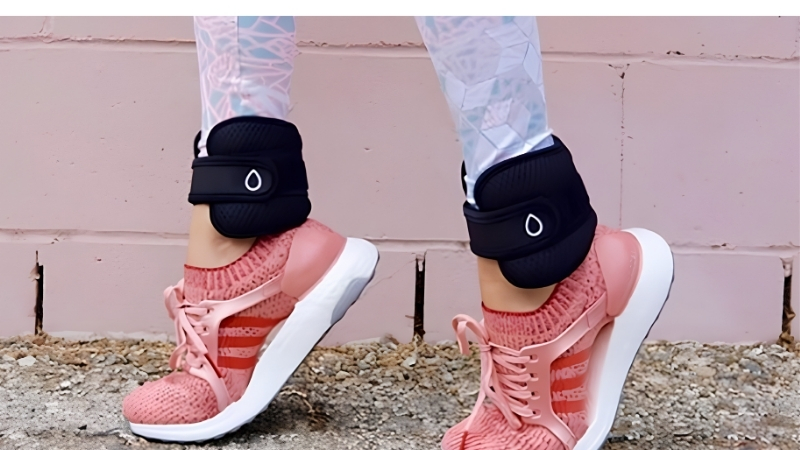
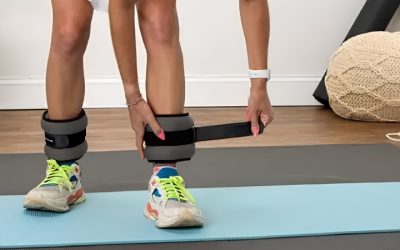
Use the manufacturer’s measurement method and fit range. Consider the part of the cuff that contacts the skin, the strap path and whether the closure remains accessible once worn. Product photographs often show a cuff lying flat, which does not reveal how it will sit around your ankle. Look for clear sizing information rather than assuming a one-size label settles the question.
A secure fit should follow the product instructions without excessive tightening. Stop if the cuff causes pain, numbness or persistent rubbing. Padding, a soft-looking cover or a fashionable shape is not proof of comfort during your particular movement. Where possible, understand the return conditions before buying equipment whose fit you cannot assess beforehand.
Match the purchase to a defined activity
Do not treat every exercise mentioned in a retail title as a recommendation for your own routine. Walking, running and a controlled floor exercise place different demands on the wearer. If you are following a program, check whether ankle weights are specified and what guidance it gives on load and use. For rehabilitation or a medical condition, use advice from the clinician directing that activity.
This comparison does not prescribe a weight or suggest wearing cuffs throughout the day. The practical purchase question is narrower: does the set provide the load, fit and adjustment that an appropriate routine requires? A product that cannot answer those questions is not improved by a long list of advertised uses.
Plan the small maintenance tasks
Read the cleaning instructions before choosing between materials. Some products allow only surface cleaning; others may have separate care requirements for a cover and its contents. Do not assume that a fabric cuff can be immersed or machine washed. Let it dry as directed and keep removable pieces together in a container that closes securely.
Inspect straps, seams, pockets and closures before use. If a closure no longer holds or filling escapes, stop using the cuff and follow the maker’s replacement guidance. Store the pair away from a walkway and out of reach of children. Keeping the product label or a short configuration note with the set also makes later adjustments less confusing.
Before ordering, confirm four items in the basket: the pair quantity, individual cuff weight, adjustment method and fit range. Those details make a useful comparison possible without relying on an unsupported best-pick ranking.
Product listings to compare
As an Amazon Associate we earn from qualifying purchases at no extra cost to you. Product prices and availability are accurate as of the date shown and are subject to change. Compare the selected variant and its current description with the requirements above.
As an Amazon Associate we earn from qualifying purchases at no extra cost to you. Product prices and availability are accurate as of the date shown and are subject to change.


Additional product links
- Start 30-Day Prime Free Trial →
- See Today’s Amazon Deals
- ▸ Try Amazon Prime — free 30-day trial
- ▸ Start an Audible Premium Plus free trial
- ▸ Read free with Kindle Unlimited
Related reading
- Ankle weights best
- Chris Parker
- Best Workout Equipment for Losing Weight: 5 Easy Setups
- Best Workout Equipment to Lose Weight: 6 Low-Impact Picks
- Best Weight Loss Workout Equipment: 6 Quiet Picks Tested
- Best Rated Ankle Weights: 6 Sets Compared by Load Range
- Best Vibration Plates for Weight Loss: What They Really Do
- Best home pull-up bar
- Best at home pull up bar
- Best in house pull up bar
- Best rated ab roller
- Best Kettlebell Ab Exercises: 6 Adjustable and Fixed Picks
- Best Budget Adjustable Dumbbell: 6 Picks and Trade-Offs
- Best Adjustable Bench for Home Gym: 5 Picks Ranked by Use
- Best Dumbbell Set Adjustable Picks: Stand, Range and Cost
Write Your Review
No reviews yet. Be the first to share your experience!