
Key takeaways
- The best in house pull up bar is one whose installation requirements match an actual location in your home. Decide where its load will be supported...
What's inside
The best in house pull up bar is one whose installation requirements match an actual location in your home. Decide where its load will be supported before comparing grip arrangements. A doorway product, a permanently mounted bar and a freestanding tower solve different installation problems; an attractive photograph does not establish that any of them will suit your room.
This guide provides practical selection and use considerations. It does not report hands-on product testing.
Make an installation record before a shortlist
Write down the proposed location, its measurements and what you know about the supporting construction. For a doorway, include the opening width and the trim dimensions requested by the product instructions. Check the door’s swing and whether the bar would prevent normal access. For a mounted product, identify the specified mounting surface and required hardware rather than assuming a visible wall can carry it.
Use the manufacturer’s full installation instructions for the exact model. Retail images may omit brackets, pads or dimensions that decide compatibility. If the construction is uncertain, have a suitable professional assess it before purchasing a mounted design. Do not substitute generic fixings or rely on decorative trim simply because it appears substantial.
Distinguish the doorway mechanisms
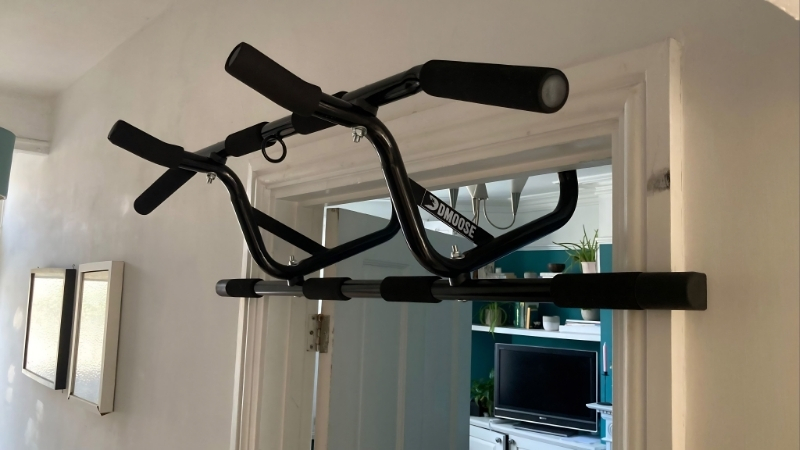
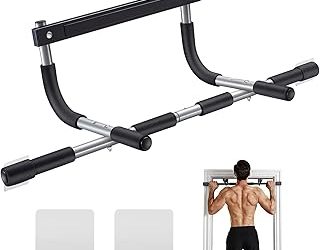
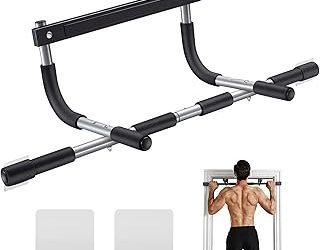
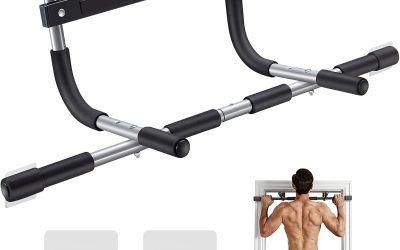
A bar that hooks over a frame has different contact points from one that extends across an opening. Compare those mechanisms directly in the manuals. Check which frame profiles are permitted, whether supplementary hardware is required and what inspection is needed each time the bar is installed. The phrase no-drill should not be interpreted as universally compatible or damage-free.
Consider who will fit and remove the equipment. A removable bar is useful only if the person handling it can follow the setup procedure consistently. There should also be a place for it when the doorway is needed. Leaving it propped against a passage wall may create another household problem rather than resolving the first.
Evaluate a permanent mounting proposal
For a wall or joist-mounted bar, work through the complete installation rather than the bar alone. Include any professional assessment, permitted fixings, access for tools and permission to alter the property. Check whether the grip projects into a route used by other people. A permanent position can be convenient, but it commits that part of the room to the equipment.
Keep the manufacturer’s load and use restrictions with the installation record. Do not compare a number printed on one retailer’s listing with a number from another as though both describe the same installed system. User weight, installation conditions and permitted movements must be checked together. This guide does not certify the capacity of an existing wall or doorway.
Give a tower its full working area
A freestanding tower avoids attachment to a doorway, but it introduces a base, uprights and an assembly task. Measure the entire footprint and the area needed to approach, grip and leave it. Check the specified floor requirements, height adjustment and overhead space. A tower should not share its working area with a chair that someone might move during exercise.
Look at how the equipment will enter the room as well as where it will stand. Review package dimensions, assembly instructions and whether later relocation requires dismantling. If it must be moved for routine cleaning, establish an approved method instead of assuming it can be dragged across the flooring.
Check the grip only after the location works
Once a design has a suitable installation plan, compare reachable grip positions and usable width. Multiple handles are not automatically an advantage if the ones you need are awkward to reach. Follow the model’s permitted-use guidance; do not assume that swinging, inversion or attaching additional equipment is allowed because the bar supports ordinary pull-ups.
Before checkout, collect the manual, selected variant, included hardware and return conditions in one place. Reject an option when an essential installation question remains unanswered. The useful comparison is between complete, workable arrangements, not between unsupported claims about which bar is strongest. After installation, follow the specified inspections and stop using equipment that moves, loosens or shows damage.
Product listings to compare
As an Amazon Associate we earn from qualifying purchases at no extra cost to you. Product prices and availability are accurate as of the date shown and are subject to change. Compare the selected variant and its current description with the requirements above.
As an Amazon Associate we earn from qualifying purchases at no extra cost to you. Product prices and availability are accurate as of the date shown and are subject to change.


Additional product links
- Start 30-Day Prime Free Trial →
- See Today’s Amazon Deals
- ▸ Try Amazon Prime — free 30-day trial
- ▸ Start an Audible Premium Plus free trial
- ▸ Read free with Kindle Unlimited
Related reading
- Best in house pull up bar
- Chris Parker
- Best Affordable Yoga Mat: 6 Picks Ranked by Cost Per Year
- Best Rated Ab Roller: 6 Wheels Compared for Home Workouts
- Best At Home Pull Up Bar: 6 Picks for Renters and Owners
- Best Home Pull-Up Bar: 7 Top Picks for Doorways & Walls
- Best Abs Workout at Home Without Equipment: Kit Optional
- Ankle weights best
- Best Home Exercise Bike: 6 Picks for Small Flats and Noise
- Best Home Exercise Bike Recumbent: 6 Picks for Small Rooms
- Best Pull Up Bar: Top Picks Reviewed (2026)
- Best Pull Up Bar for Doorway Frames: Measure Before You Buy
- Best Door Pull Up Bar Picks Rated on Fit and Frame Safety


Write Your Review
No reviews yet. Be the first to share your experience!