Key takeaways
- Place lights toward the front underside of the cabinet, not deep against the wall, so the countertop receives useful illumination.
- Keep fixtures clear of steam, splashing water, and the hottest area above a cooktop.
- Use the included magnetic mounts or removable adhesive only on clean, suitable surfaces.
- For several lights, align them consistently from cabinet to cabinet; visual order matters in a compact room.
What's inside
Good under-cabinet lighting does more than brighten a countertop. In a small kitchen, it can make a narrow work surface feel more usable, reduce shadows around appliances, and add a layer of evening light without taking up valuable storage space. The right fixture also keeps cords, switches, and visual clutter under control.
This guide explains how to choose under-cabinet lighting for your layout, including brightness, color temperature, power, controls, installation, and spacing. It also compares practical options for renters, busy kitchens, display shelving, and anyone who wants a cleaner-looking setup without a major remodel.
As an Amazon Associate we earn from qualifying purchases.


Our Recommended Picks
For a compact kitchen or rental, the MCGOR 10-inch rechargeable lights are a flexible starting point. Their magnetic mounting, motion sensing, and adjustable brightness make them useful beneath cabinets, inside pantries, or along a dark hallway. The Gritin 10.2-inch rechargeable lights add three color temperatures, which is helpful when one light must serve both food preparation and softer evening illumination.
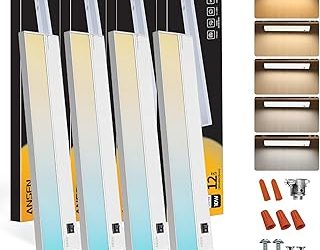
If you need continuous illumination across a long counter, look at a strip-light system instead. The WOBANE Under Cabinet LED Lighting Kit includes multiple 20-inch strips, a remote, dimming, and warm-white light for a more unified appearance. A plug-in or hardwired six-piece 12-inch LED kit is another strong choice when you want higher output and more even coverage across several cabinet sections.
For households that prefer wireless flexibility, the 10-inch three-pack rechargeable motion-sensor lights offer several color temperatures, dimming, and a power display. The RUIKORING 8.5-inch six-pack suits smaller compartments or a kitchen with many separate cabinet bays, where several short fixtures can be positioned more precisely than a single long bar.
Choose the Right Lighting Format
Start with the shape of your cabinets and the task you want to support. Individual rechargeable bars work well when outlets are scarce, the backsplash is already finished, or you want lights that can move between rooms. Magnetic fixtures are particularly convenient in small spaces because they can be removed for charging and repositioned without new hardware.
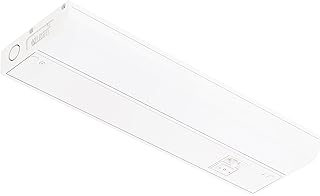
Strip or bar kits are better for a permanent, polished installation. They create a continuous line of light and reduce the bright spots and dark gaps that can occur with widely spaced puck lights. Measure each cabinet run separately; a corner, range hood, or sink may interrupt the ideal arrangement. For open shelving, short wireless lights can provide focused illumination without making the shelves look over-equipped.
Match Brightness to the Task
Brightness is usually listed in lumens. For accent lighting or a softly lit shelf, modest output is sufficient. For chopping, reading recipes, or cleaning a countertop, look for a brighter fixture or a kit with several bars. Multiple low-profile lights often distribute light more comfortably than one extremely bright source.
Dimming is worth prioritizing. A bright setting helps with food preparation, while a lower setting prevents glare during early mornings or late evenings. If you are installing lights over a glossy counter, backsplash, or polished appliance, adjustable brightness is especially useful because reflected light can feel harsher than expected.
Pick a Comfortable Color Temperature
Color temperature affects how a kitchen feels and how accurately surfaces appear. Warm white, commonly around 2700K to 3000K, creates a relaxed atmosphere and works well with wood cabinets or warm finishes. Neutral white, roughly 3500K to 4000K, is often a practical compromise for cooking because it looks clearer without feeling stark.
Fixtures with three color settings are useful when your kitchen serves several purposes. You can choose a cooler setting for detailed tasks and a warmer setting for nighttime lighting. If you are adding lights to an existing room, compare the new fixture with your ceiling lights and nearby lamps so the overall color does not look mismatched.
Decide Between Rechargeable and Plug-In Power
Rechargeable lights simplify installation and are ideal for renters, temporary layouts, and areas without a convenient outlet. Check charging frequency, battery indicators, and whether motion sensing can be disabled. A sensor is convenient inside a pantry or along a walkway, but it may be distracting beneath a counter where people move constantly.
Plug-in kits generally provide steadier power and are better for lights that will run for long periods. They do require cable planning: route wires toward the rear of the cabinet, use low-profile clips, and keep cords away from heat, water, and moving cabinet doors. Hardwired installation can look exceptionally tidy, but it should be handled by a qualified professional and planned around local electrical requirements.
Plan Installation for a Small Space
- Place lights toward the front underside of the cabinet, not deep against the wall, so the countertop receives useful illumination.
- Keep fixtures clear of steam, splashing water, and the hottest area above a cooktop.
- Use the included magnetic mounts or removable adhesive only on clean, suitable surfaces.
- For several lights, align them consistently from cabinet to cabinet; visual order matters in a compact room.
Tips
- Measure the visible underside of each cabinet before buying; listed fixture length may not equal usable illuminated length.
- Choose dimming when the light will remain installed year-round, even if you initially expect to use only the brightest setting.
- Charge removable lights before installation and test sensor range with cabinet doors open and closed.
- Use warm or neutral light near food-preparation areas, and avoid mixing too many different color temperatures in one sightline.
Frequently Asked Questions
Are rechargeable under-cabinet lights bright enough for cooking?
Many are adequate for everyday prep, especially when several bars are spaced across the counter. For intensive cooking or a long worktop, a plug-in multi-bar kit usually offers more consistent coverage and less concern about battery level.
Are motion sensors useful in a kitchen?
They can be convenient for nighttime trips to the kitchen, pantries, and under-shelf storage. For primary task lighting, a manual switch or remote may be preferable because motion sensors can activate unexpectedly or switch off while you are working in one position.
What color temperature is best under kitchen cabinets?
Neutral white is a versatile choice for food preparation, while warm white feels more inviting and suits traditional interiors. If you are unsure, a fixture with selectable color temperatures gives you room to adjust after installation.
Can under-cabinet lights be installed without drilling?
Yes. Magnetic fixtures and suitable removable adhesive can avoid drilling, particularly on smooth cabinet undersides. Clean the surface first, allow adhesive to set as directed, and do not rely on adhesive alone where heat, moisture, or a heavy fixture could cause it to fail.
Conclusion
The best under-cabinet lighting is the system that fits your cabinet dimensions, daily tasks, and tolerance for wiring. Rechargeable magnetic bars offer the easiest small-space upgrade, while multi-strip kits provide the most even permanent coverage. Prioritize dimming, comfortable color temperature, sensible placement, and dependable controls, then choose the format that keeps your counters brighter without making the room feel busier.