Key takeaways
- Lumen output over fixture size: A 20-inch fandelier pushing 3,200 lumens will out-light a 52-inch fan with a dim panel. For a bedroom under 150 square feet, 2,000 lumens is comfortable; a living room or open studio wants 3,000 or more.
- Mounting depth: Flush-mount and bladeless designs hug the ceiling, which keeps the fixture out of your sightline and off your forehead in tight rooms. Downrod models need at least seven feet of clearance below the blades to feel right.
- Adjustable color temperature: Look for 3CCT switching or a full 3000K-6500K range. Cool daylight for cleaning and cooking, warm amber at night. One fixture covering both moods means one less lamp on your dresser.
- DC motor for quiet running: DC motors draw less power, offer more speed steps, and stay near-silent. In a studio where your bed, desk, and sofa share one room, that hum is not background noise. It is constant.
- Reversible airflow: Winter mode pulls air upward and redistributes trapped heat, which is genuinely useful in small rooms where warm air pools at the ceiling and never reaches you.
What's inside
In a compact apartment, a ceiling fan is rarely just a fan. It is usually the only light source in the room, the thing that decides whether your 400-square-foot studio reads as cozy or as a cave. That double duty is where most buyers get burned: they pick a fixture based on blade span, install it, and discover the LED panel throws maybe 1,200 lumens across a space that needed twice that. Then come the floor lamps, the clip lights, the extension cords snaking along the baseboard, and suddenly the square footage you were trying to protect is gone.
Brightness in ceiling fans is measured in lumens, not watts, and the range across popular models is wider than you would expect. This guide focuses on fixtures that genuinely light a room, with attention to the flush-mount and low-profile designs that matter when you are working with eight-foot ceilings, sloped nooks, or a bedroom where the fan sits close enough to the bed that noise and glare both count. Below are six models worth your attention, followed by the specs I would check before clicking buy.
As an Amazon Associate we earn from qualifying purchases.


How to Choose a Ceiling Fan With Brightest Light (2026)
- Lumen output over fixture size: A 20-inch fandelier pushing 3,200 lumens will out-light a 52-inch fan with a dim panel. For a bedroom under 150 square feet, 2,000 lumens is comfortable; a living room or open studio wants 3,000 or more.
- Mounting depth: Flush-mount and bladeless designs hug the ceiling, which keeps the fixture out of your sightline and off your forehead in tight rooms. Downrod models need at least seven feet of clearance below the blades to feel right.
- Adjustable color temperature: Look for 3CCT switching or a full 3000K-6500K range. Cool daylight for cleaning and cooking, warm amber at night. One fixture covering both moods means one less lamp on your dresser.
- DC motor for quiet running: DC motors draw less power, offer more speed steps, and stay near-silent. In a studio where your bed, desk, and sofa share one room, that hum is not background noise. It is constant.
- Reversible airflow: Winter mode pulls air upward and redistributes trapped heat, which is genuinely useful in small rooms where warm air pools at the ceiling and never reaches you.
The Best Ceiling Fan With Brightest Light (2026)s Reviewed
PACOVY 20″ Flush Fandelier
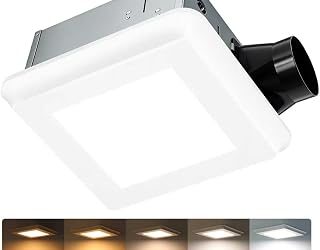
At 3,200 lumens from a 20-inch footprint, this is the brightest-per-inch option here, and the flush profile makes it the obvious pick for low ceilings. App and remote control plus six fan speeds give you fine adjustment without reaching for a wall switch.
VOLISUN 27.6″ Bladeless Fandelier, Black
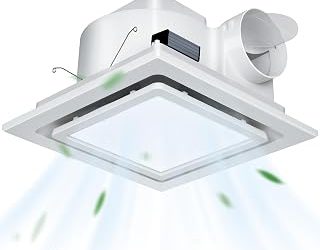
The bladeless housing hides the fan mechanism entirely, so it reads as a modern light fixture rather than a fan, which helps in rooms where the ceiling is a visual focal point. Full 3000K-6500K tuning and a flush mount make it a strong bedroom choice.
VOLISUN 27.6″ Flush Mount Fandelier, White
Mechanically identical to the black version, but the white finish disappears against most ceilings and reflects more of its own light back into the room. That is a real, if subtle, brightness advantage in a small space.
52″ Modern Ceiling Fan with 3CCT and DC Motor
A conventional 52-inch fan with reversible DC motor and three color temperatures, rated for indoor and covered outdoor use. Best suited to larger living rooms or a balcony where you have the clearance to let the blades breathe.
Passky 52″ Black Sleek Ceiling Fan
The memory function and timer make this one easy to live with day to day, and the sleek black blades hold up well in a room with darker furniture. App control is a nice touch at this size and price.
Frequently Asked Questions
How many lumens do I need for a small bedroom?
Roughly 10 to 20 lumens per square foot for general lighting. A 120-square-foot bedroom lands around 1,200 to 2,400 lumens, so most models here will handle it comfortably.
Can I install a flush-mount fan on a sloped ceiling?
Some can, with an adapter, but check the maximum slope angle in the manual first. Bladeless fandeliers often tolerate slopes better than bladed designs because the housing has no clearance issue.
Are bladeless fans as effective at moving air?
They move less air than a 52-inch bladed fan, but in rooms under about 200 square feet the difference is barely noticeable, and you gain a much slimmer profile.
Do I need an electrician?
If you have an existing fan-rated ceiling box, most of these are DIY-friendly. If you are replacing a light fixture, verify the box is rated to support a fan’s weight and motion before you start.
Final Thoughts
For tight ceilings and maximum brightness, the PACOVY 20″ flush fandelier is hard to beat at 3,200 lumens. If you want something that reads as a design object, the VOLISUN 27.6″ bladeless fandelier in white or black delivers the same tunable light in a cleaner shell. For larger open rooms with clearance to spare, the Passky 52″ gives you real airflow alongside dimmable, color-adjustable light.