Key takeaways
- Measure your ceiling first: Under 8 feet, go flush mount or low profile — a downrod model will crowd the room visually and put blades uncomfortably close to head height. Above 9 feet, a downrod actually improves air circulation.
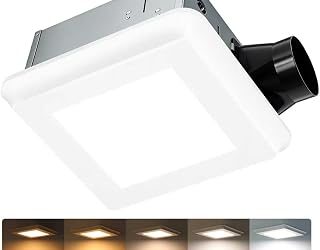
- Look for adjustable color temperature: A 3CCT fixture (typically warm 3000K, neutral 4000K, cool 5000K) lets one light serve a multi-use room. Cool white for focused work, warm for evenings — no second lamp needed.
- Prioritize a DC motor in small rooms: DC motors run quieter and draw noticeably less power than traditional AC motors, and they usually offer six speeds instead of three. In a studio where the fan is eight feet from your pillow, that low-speed whisper setting matters.
- Check the dimming range, not just the wattage: A bright fixture that only dims to 50% is still glaring at bedtime. Full-range dimming is what makes a single overhead fixture workable as your only light source.
- Decide how you want to control it: Remote-only is clean but easy to misplace in a small space. App control adds scheduling and works from bed; pull chains are simple and never need batteries. Wall-switch compatibility is worth confirming before you buy.
What's inside
In a compact apartment or a bedroom that doubles as an office, the ceiling is the only surface you can’t fill with furniture — which makes it valuable real estate. A fan that also delivers real, room-filling light frees up the floor space a lamp would eat, and it removes the tangle of cords that makes a small room read as cluttered. The trouble is that plenty of fans advertise “bright” and then deliver a dim glow that leaves the corners in shadow, or they hang so low that a 7.5-foot ceiling suddenly feels claustrophobic.
This guide focuses on 52-inch ceiling fans that push serious airflow and put out genuinely usable light, with attention to the details that matter when square footage is tight: flush-mount profiles for low ceilings, adjustable color temperature so one fixture can handle both morning work and evening wind-down, dimming range, and how quietly the motor runs when the room you’re cooling is also the room you’re sleeping in.
As an Amazon Associate we earn from qualifying purchases.


How to Choose a Ceiling Fan With Bright Light (2026)
- Measure your ceiling first: Under 8 feet, go flush mount or low profile — a downrod model will crowd the room visually and put blades uncomfortably close to head height. Above 9 feet, a downrod actually improves air circulation.
- Look for adjustable color temperature: A 3CCT fixture (typically warm 3000K, neutral 4000K, cool 5000K) lets one light serve a multi-use room. Cool white for focused work, warm for evenings — no second lamp needed.
- Prioritize a DC motor in small rooms: DC motors run quieter and draw noticeably less power than traditional AC motors, and they usually offer six speeds instead of three. In a studio where the fan is eight feet from your pillow, that low-speed whisper setting matters.
- Check the dimming range, not just the wattage: A bright fixture that only dims to 50% is still glaring at bedtime. Full-range dimming is what makes a single overhead fixture workable as your only light source.
- Decide how you want to control it: Remote-only is clean but easy to misplace in a small space. App control adds scheduling and works from bed; pull chains are simple and never need batteries. Wall-switch compatibility is worth confirming before you buy.
The Best Ceiling Fan With Bright Light (2026)s Reviewed
52″ Modern Ceiling Fan with 3CCT Light and Remote
A well-rounded pick that hits the essentials without overcomplicating things: reversible DC motor, three color temperatures, and enough output to light a mid-sized living area on its own. The indoor/outdoor rating makes it a sensible choice for a covered balcony, which is often the only extra square footage a small apartment has.
Passky 52″ Black Sleek Ceiling Fan
The matte black finish reads as intentional rather than builder-grade, which helps in a room where the fan is a focal point by default. Memory function is the underrated feature here — it returns to your last brightness and color setting instead of blasting you at full cool white every time you flip the switch.
Sofucor 52″ Wood Low Profile Flush Mount
This is the one I’d point toward for ceilings under eight feet. The flush mount keeps clearance overhead while the wood-finish blades soften what can otherwise feel like an industrial fixture, and six speeds give you finer control than the usual three-setting fans.
Hunter Swanson 52″ in Fresh White
Hunter has decades of motor engineering behind it, and the Swanson reflects that in build quality and longevity. It’s pull-chain rather than remote, so it suits anyone who wants a reliable, low-tech fixture — just note it needs standard mount clearance, so measure before committing.
OJX 52″ Ceiling Fan with App and Remote Control
Dual remote and app control makes this a strong option for bedrooms, where reaching for a phone beats hunting for a remote in the dark. The dimmable 3CCT light and quiet DC motor cover the fundamentals well, with scheduling as a genuine convenience rather than a gimmick.
Frequently Asked Questions
Is a 52-inch fan too large for a small room?
Not usually. A 52-inch fan suits rooms up to roughly 400 square feet, which covers most bedrooms and living areas. The constraint in small spaces is ceiling height, not floor area — choose a flush mount if you’re under eight feet.
How bright is bright enough for a single overhead fixture?
For a bedroom or home office, aim for a fixture producing at least 1,500 to 2,000 lumens if it’s your primary light. The 20W LED panels common in these models generally land in that range.
Can these fans be installed on a sloped ceiling?
Most downrod models handle mild slopes with the included canopy, but flush-mount fans typically require a level surface. Check the maximum slope angle in the manual before ordering.
Do reversible motors actually help in winter?
Yes. Running the fan in reverse on low pulls warm air down from the ceiling instead of creating a draft, which makes a noticeable difference in rooms with high ceilings or poor heat distribution.
Final Thoughts
For most small-space setups, the Sofucor 52″ wood flush mount is the safest bet — it solves the ceiling-height problem without looking like a compromise. If you have the clearance and want app scheduling from bed, the OJX 52″ is the more capable pick, while the Passky 52″ in black offers the cleanest look for a room where the fan doubles as decor.