
Key takeaways
- The defined edge contains rough wood grain without overwhelming nearby painted surfaces.
- A smaller cladding field can use fewer planks than a full-wall treatment.
- A replaceable border lets the wall design evolve without moving the television.
A reclaimed-wood backdrop can make a television feel at home without turning the entire room into a farmhouse set. These barnwood tv wall ideas compare six distinct wall treatments, from a compact framed panel to a full-width feature, with attention to finish, wiring access, and safe mounting.
As an Amazon Associate we earn from qualifying purchases.
By KK Home Furnishings Editorial Team
Subtle Barnwood TV Wall Ideas for Smaller Spaces
Choose the treatment according to how much wall you can dedicate to wood, not according to a trend photo. A framed backdrop, wide horizontal installation, or narrow vertical band can each create focus with a different amount of material. All three assume the screen is supported by a separately approved TV mount or suitable console.
| Idea | Space or Size Needed | Cost Tier | Effort and Time |
|---|---|---|---|
| Framed barnwood panel | A defined area around the TV | Moderate | Layout, borders, and precise cuts |
| Full-width horizontal planks | One uninterrupted media wall | Moderate to premium | More wall preparation and planks |
| Vertical center feature | A central, relatively narrow wall bay | Moderate | Straight vertical seams and edge cuts |
| Half-height wainscoting | Lower wall beneath the screen | Budget to moderate | Trim and scuff-resistant finish |
| Mixed-tone patchwork | Room for controlled tonal variety | Moderate | Sorting and finish verification |
| Herringbone inset | A rectangular, accurately measured field | Premium | Angled cuts and careful installation |
A Framed Barnwood Panel Behind the Television
Best For: Apartments and smaller living rooms that need texture around the screen without covering an entire wall.
A bounded rectangle of barnwood establishes a focal point while leaving the surrounding painted wall quiet. Center the television in the field, then finish the panel with a slim, plain border rather than a chunky frame. The visual boundary is especially helpful when the screen sits between a doorway and a window.
Mock up the field with painter’s tape before ordering boards. Give the screen a visible border on all sides, using the exact outside dimensions of your TV rather than its advertised diagonal. Mixed board lengths add character; a disciplined border keeps irregular grain from looking like random scraps.
A decorative panel is not the structural backing for a television. SANUS installation guidance calls for an approved supporting wall and mount, not drywall or finish cladding alone. Mark the framing and bracket position before paneling; leave access for a future mount adjustment and cable service.
Pros:
- The defined edge contains rough wood grain without overwhelming nearby painted surfaces.
- A smaller cladding field can use fewer planks than a full-wall treatment.
- A replaceable border lets the wall design evolve without moving the television.
Cons:
- Trim and panel cuts must stay square for the framed shape to look deliberate.
- Service access can become awkward if the frame encloses every cable outlet.
Who Should Skip It: Skip a tightly framed panel if it would block the television bracket, required ventilation, or accessible electrical connections.
A Full-Width Horizontal Reclaimed-Wood TV Wall
Best For: Long uninterrupted walls where the television needs a broad visual anchor rather than more surrounding furniture.
Horizontal barnwood planks across the full media wall can visually connect the screen with a low cabinet beneath it. Vary board lengths but keep the overall direction consistent. A broad, restrained installation tends to read as architecture, not a collection of small decorative objects competing with the picture.
Sort planks by color before fastening them. Blend weathered brown, gray, and pale pieces across the full width instead of placing every dark board directly behind the black display. An all-dark center can make the screen seem to disappear when switched off; that may be desirable, but test it with paper samples first.
Real reclaimed wood changes with indoor humidity. Stikwood instructs installers to acclimate its own wood planks and prepare a clean, dry, smooth wall; the waiting period and permitted substrates belong to that product, not all reclaimed lumber. Follow the exact system’s installation sheet and keep service panels reachable.
Pros:
- A continuous field unifies the television, storage, and nearby wall details.
- Horizontal grain lends a calm visual direction across a wide room.
- Tone mixing allows natural character without needing a matching board set.
Cons:
- More covered wall area means more material, cuts, and preparation.
- Rough grooves and uneven grain can collect more dust near the electronics.
Who Should Skip It: Skip full-wall coverage where doors, damp patches, or multiple outlets make maintenance and access unusually difficult.
A Vertical Barnwood Feature in a Narrow TV Bay
Best For: Rooms with limited wall width or low-looking ceilings that benefit from a compact vertical accent.
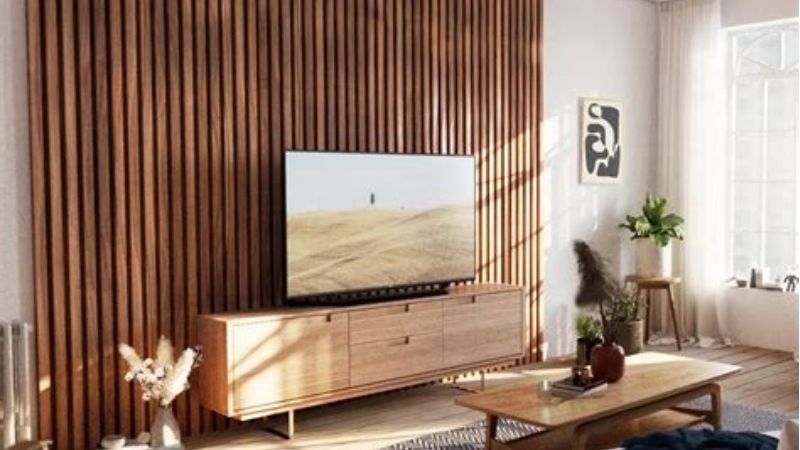
A vertical band of barnwood gives a media wall a different rhythm than conventional horizontal shiplap. Use it only across the central section where the television hangs, with plain painted space on either side. A narrow band can read as a built-in architectural feature without buying oversized cabinetry.
Choose boards of fairly consistent face width so their vertical seams look intentional. Avoid placing a vivid knot or a hard color change at the television’s viewing center; the display already has enough visual contrast. Lay out the finished edges with tape and check the wall from your usual seated position.
Vertical boards need an installation method approved by the plank manufacturer and wall conditions. Adhesive-backed decorative boards do not replace a load-rated TV mount. Before cutting for power or data, identify where approved electrical boxes and mounting fasteners must remain accessible after the cladding is installed.
Pros:
- A narrow feature adds texture without visually filling the whole wall.
- Vertical seams create a noticeably different aesthetic from common horizontal planks.
- Plain side walls leave room for furniture and daylight to balance the display.
Cons:
- Uneven edge cuts become obvious beside the adjacent flat painted wall.
- Long vertical boards can emphasize an off-center or tilted TV placement.
Who Should Skip It: Skip this treatment when the usable vertical area is interrupted by vents or electrical devices you cannot relocate safely.
Bolder Reclaimed-Wood Patterns for a Feature Wall
The next designs change the visual weight of the media wall more dramatically. Half-height paneling keeps the top light; patchwork celebrates mismatched boards; and herringbone demands an accurate layout. Each choice has practical consequences for cutting, cleaning, service access, and finish safety.
Half-Height Barnwood Wainscoting Below a Wall-Mounted TV
Best For: Bright family rooms that want a light TV backdrop with barnwood texture concentrated at furniture height.
Instead of cladding the entire television backdrop, stop the barnwood below the display and paint the upper wall a warm neutral. This creates a lighter composition for rooms with low natural light. The boundary can align with the top of a media cabinet or run behind it, depending on where outlets are located.
Treat the upper edge as a deliberate line, finished with simple trim only where appropriate. A white or warm-gray wall above can reflect ambient daylight, while the reclaimed lower area adds grain. Avoid adding a tall shelf directly below the screen simply to conceal the transition; it may interrupt sightlines.
The lower panel will face more furniture contact, toys, and vacuum activity than a high wall feature. Select a finish that can be wiped clean and avoid splinter-prone boards in reach of children. If a floor TV console is used, CPSC’s Anchor It! guidance still calls for suitable furniture and anti-tip measures.
Pros:
- The pale upper wall keeps the room brighter than a full dark-wood covering.
- Fewer visible reclaimed boards make finish changes less expensive and disruptive.
- The wood zone aligns naturally with a low cabinet or storage bench.
Cons:
- The horizontal transition can look arbitrary if it cuts through the TV silhouette.
- Lower planks receive more scuffs and may require more frequent cleaning.
Who Should Skip It: Skip rough unfinished boards at floor level when their edges would be within easy reach of children.
A Mixed-Tone Barnwood Patchwork Around the TV
Best For: Eclectic rooms that can support noticeable variation in reclaimed grain and color without extra decor.
A patchwork accent uses light, medium, and weathered boards in an intentionally varied arrangement. Keep the television near the visual center while spreading strong tones across the whole field. The goal is a lively wall texture, not a geometric pattern that pulls the eye away from the screen during movies.
Ask for a sample set if buying salvaged or reclaimed planks online. Photos may compress subtle undertones, and original stock can vary from box to box. Arrange every board on the floor before installation, separate repeating knots, and use a consistent seam rhythm so the design looks collected rather than chaotic.
Older painted salvaged wood deserves extra care: its age and coating history may be unknown, and you should not assume the paint is lead-free. EPA’s lead-safe renovation guidance addresses disturbance of painted surfaces in older housing; it is not a blanket certification for every salvage board. Seek qualified assessment before sanding suspect coatings.
Pros:
- Mixed tones make use of irregular reclaimed board appearance rather than hiding it.
- Natural variation can complement neutral sofas and simple black hardware.
- Rearranging samples before installation helps control the overall contrast.
Cons:
- Too many dramatic knots or colors can compete with on-screen content.
- Unverified old finishes may complicate cutting, sanding, and indoor use.
Who Should Skip It: Skip unknown coated salvage unless its finish history can be evaluated and appropriate safe handling is arranged.
A Herringbone Barnwood Inset With Plain Surrounding Walls
Best For: A feature wall with a clearly defined central inset and a budget for more precise cutting and layout.
A herringbone inset gives reclaimed wood a more tailored appearance while keeping the rest of the room restrained. Limit the pattern to a rectangle surrounding the TV, rather than repeating it on adjacent walls. A quiet border helps the angled grain serve as texture instead of becoming the primary subject.
Dry-fit the angled cuts and decide where the pattern will meet the television edges before attaching planks. Short boards often produce more visible joints, so layout precision matters more than in a straight run. Timberchic publishes how-to guidance for herringbone installation, but its instructions apply to its own wall-plank system.
Do not let decorative trim hide the wall-mounted bracket’s service releases or cover junction boxes. More cuts also mean more dust and waste; prepare a suitable cutting area and use the protections required for the selected material. For unknown salvaged paint or unusual wall construction, a professional is preferable to improvisation.
Pros:
- Angled grain makes a smaller feature feel intentionally custom.
- A simple border keeps the detailed pattern distinct from surrounding walls.
- An inset allows a feature treatment without altering every room surface.
Cons:
- Precision cuts increase installation time and potential material waste.
- Frequent angled joints are harder to repair invisibly if one board fails.
Who Should Skip It: Skip herringbone if you need easy panel replacement or cannot prepare accurate cuts and a level backing surface.
Frequently Asked Questions
Reclaimed or reclaimed-look planks are finish materials first. The questions below address what changes when that finish sits behind a mounted television or beside powered equipment, including renter concerns and older painted wood. Always defer to the specific mounting and product instructions when they differ.
Can you mount a television directly onto barnwood wall planks?
Not merely because the planks look sturdy. Thin reclaimed-wood cladding is decorative, not a verified structural support. A TV bracket must be secured to the exact wall type and mounting points approved by its manufacturer; for example, some SANUS mounts specifically exclude drywall-only installation.
Plan the bracket, cable route, and wall support before the wood goes on. A qualified installer can confirm backing in unusual walls. Keep mounting hardware and service releases accessible, and check the TV’s weight and mounting pattern rather than relying on the panel’s thickness.
Is peel-and-stick reclaimed wood removable for renters?
Do not assume peel-and-stick means damage-free removal. These products are designed to bond securely to compatible prepared surfaces, and adhesive can damage paint or leave residue when removed. Manufacturer guidance also differs by paint, surface preparation, moisture, and how long the planks have been installed.
Ask the landlord before covering a wall, request a sample, and test it in a permitted inconspicuous area. If returning the room to its original condition is essential, consider a freestanding decorative panel only when it can be safely supported and secured without creating tip-over risks.
Can reclaimed barnwood be used around an electric fireplace?
An attractive wood texture is not evidence that the location is approved for combustible materials. Follow the exact fireplace or insert manual for required clearances, airflow direction, and permitted finishes. Those requirements differ by appliance, enclosure, and installation method.
If the fireplace manual or listing does not permit the planned wood surround, choose a different wall finish or consult a qualified installer. Do not treat common inspiration photos as a code or safety reference. The TV mount and television have separate installation and temperature requirements.
How do you keep a barnwood TV wall from looking too busy?
Begin with one dominant idea: straight horizontal planks, a vertical band, or a small framed inset. Keep large furniture shapes plain and place highly contrasting boards away from the screen’s center. A modest range of tones usually gives enough texture without needing another patterned rug or crowded gallery wall.
Make a temporary color layout with sample boards and judge it from your normal viewing seat while the TV is both on and off. If the wood draws attention away from subtitles or bright scenes, reduce the contrast, shrink the covered area, or keep the adjacent walls painted.
Final Thoughts
Good barnwood tv wall ideas start with the room and the television, not the boards. Choose a framed panel for a gentle accent, horizontal or vertical planks for clear architectural direction, and patchwork or herringbone only when the room can support more detail. Confirm safe TV mounting, wall condition, and finish suitability before installation.









