
Key takeaways
- The real question with a bed in a box king size mattress is not price but logistics: will the compressed carton clear your doorways and stairs. The finished King is huge, yet it ships in a box, so the carton…
The real question with a bed in a box king size mattress is not price but logistics: will the compressed carton clear your doorways and stairs. The finished King is huge, yet it ships in a box, so the carton footprint and weight are what you plan around.
How to Choose a King Bed-in-a-Box
A King ships compressed, so the figures that matter are the carton size, the shipping weight, and whether those numbers are published at all. Two beds here give exact cartons and two do not, so plan your route around the verified ones and measure carefully before trusting a bed whose carton is unlisted.
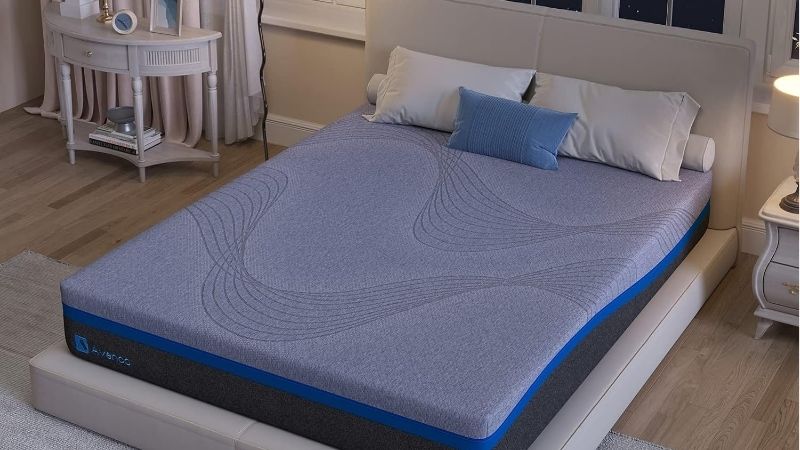
Carton Footprint
The carton footprint is the spec that decides whether the box reaches the bedroom. Zinus lists the Original Green Tea 10-inch King carton at 16.54 by 16.54 by 43.71 inches, and Tuft & Needle lists the Original Legacy King carton at 18.81 by 18.81 by 44.63 inches, both manufacturer-stated for the King.
Compare those box dimensions against your tightest turn, not just the front door, because a long carton can clear a doorway yet jam on a stair landing. The Zinus carton is the narrower of the two at about 16.5 inches square, which gives it an edge in tight hallways and switchback staircases.
Carton size is published for some beds and not others, and that gap is the real divider here. Leesa and Casper both sell a King but do not publish a King carton dimension we can cite, so you cannot plan the squeeze in advance the way you can with the Zinus or the Tuft & Needle box you have measured.
Shipping Weight
Shipping weight tells you whether this is a one-person or two-person carry. Zinus lists the King gross weight around 75 pounds, which is manageable for two people up a flight of stairs but awkward for one, so plan help before the box arrives rather than wrestling it alone on delivery day.
Weight matters most when stairs or long carries are involved, because a 75-pound box that is fine on flat ground becomes a two-person job on a narrow staircase. A King carton is also long, so even a moderate weight is harder to control than the number alone suggests when you are turning a corner.
Published shipping weight is not available for every model, so where it is missing, assume a King-class box is heavy and arrange a second person. Treat an unlisted weight as a planning gap rather than a light box, since a compressed King is dense regardless of which brand pressed it into the carton.
Doorway and Stair Handling
Doorway and stair handling is where the carton numbers pay off. A standard interior door is about 32 inches wide, so a carton around 16 to 19 inches square clears the opening easily; the harder constraints are stair width, landing turns, and low ceilings over a staircase that a long King carton cannot clear.
Walk your delivery route before the bed arrives and note the tightest point, because that single turn decides whether the box fits, not the widest hallway. With the Zinus and Tuft & Needle cartons you can measure against a known box; with the unlisted ones you are measuring against an estimate.
If the route is tight, the narrower published carton is the safer bet, and a bed whose carton is unknown is a gamble on a difficult staircase. When you cannot confirm the box size, plan a fallback such as unboxing in a lower room and carrying the expanded bed up, which is harder but possible.
Expansion Time
Once the box is in the room, expansion time sets when you can sleep on it. Compressed foam beds typically need a stretch of hours to rise toward full height after unrolling, and most makers advise giving a new bed-in-a-box time before you judge the feel or put sheets on it tightly for the first time.
Plan the unboxing for a day you do not need the bed that night, especially if you are switching a primary mattress, because a bed still expanding feels firmer and shorter than its finished height. A spare sleeping spot for the first night takes the pressure off the clock while the foam recovers.
Expansion also releases a faint new-foam smell that airs out over a day or two in a ventilated room. Follow each maker’s own guidance on timing and airing rather than a generic rule, since recovery windows differ by foam type and by how long the bed in a box king size mattress sat compressed.
Verified King Bed-in-a-Box Options
The two picks with published cartons come first because you can actually plan the route around them, followed by two strong King beds whose cartons are not published and therefore need measuring on faith. Confirm each carton and the current price at the retailer before you place the order.
| Product | Best For | Key Spec | Watch Out For |
|---|---|---|---|
| Zinus Original Green Tea 10″ King | Best for tight doorways | Carton 16.54×16.54×43.71 in; ~75 lb | Still a two-person carry upstairs |
| Tuft & Needle Original Legacy King | Best roomy-carton option | Carton 18.81×18.81×44.63 in | Wider box than the Zinus |
| Leesa Studio King | Verify carton first | Finished ~75.5×79.5×10 in; carton not published | No published box size to plan around |
| Casper Original Foam King | Verify carton first | King listing active; carton not published | No published box size to plan around |
Zinus Original Green Tea 10-inch
The Zinus is the easiest bed in a box king size mattress to plan a route for, shipping in a carton Zinus lists at 16.54 by 16.54 by 43.71 inches and around 75 pounds gross. That narrow, roughly 16.5-inch-square box is the friendliest here for tight hallways and switchback stairs with a sharp turn.
It finishes at a confirmed 76 by 80 by 10 inches, a true US King, so standard sheets and protectors fit once it expands. The compact carton is the standout practical advantage, letting two people carry it up most staircases without the awkward width a larger box forces you to fight around corners.
Even at about 75 pounds it is still a two-person carry upstairs, and the foam needs time to expand and air out after unboxing. Plan help for delivery day and a few hours of expansion before you sleep on it, and check the current price at the retailer before ordering the King for your room.
Tuft & Needle Original Legacy
The Tuft & Needle Original Legacy is the roomy-carton pick, shipping in a King box the brand lists at 18.81 by 18.81 by 44.63 inches. It finishes at 79.5 by 76 by 10 inches for the King, so confirm which dimension is the width against your frame before you set it up on the day it is delivered to you.
The published carton means you can measure your route with confidence, which is the key advantage over the unlisted beds below. For a standard doorway the roughly 19-inch-square box still clears easily, and knowing the exact figure removes the guesswork on the one tight turn that usually decides delivery.
The trade-off is simply size: at about 19 inches square the box is wider than the Zinus, so a very tight staircase favors the Zinus instead. Arrange two people for the carry, allow expansion time after unboxing, and check the current price at the retailer before committing to the King.
Leesa Studio King – Verify Carton First
The Leesa Studio is a capable King foam bed finishing at roughly 75.5 by 79.5 by 10 inches, but Leesa does not publish a King carton dimension we can cite, so it sits in the verify-first group. You can buy it confidently as a bed, just not plan the doorway squeeze from a published number.
Because the carton is unlisted, treat the delivery route as an unknown and assume a King-class box that needs two people. If your hallways and stairs are generous, that uncertainty matters little; if the route is tight, the lack of a published carton is a real drawback compared with the Zinus or Tuft & Needle.
Before you rely on it fitting, contact the seller for the exact King carton size, or plan to unbox in an accessible room and carry the expanded bed. Confirm the finished width against your frame, allow expansion time, and check the current price at the retailer before you order the King.
Casper Original Foam King – Verify Carton First
The Casper Original Foam offers an active King listing, but like the Leesa it does not publish a King carton dimension we can cite, so it also belongs in the verify-first group rather than the plan-the-route group. It is a legitimate bed in a box; the logistics data is simply not available up front.
With no published carton, assume a heavy King-class box and arrange help, and do not count on a tight staircase until you have a real measurement. For a home with wide doors and stairs this is a minor caveat, but for an awkward route it is the difference between planning the carry and simply hoping it fits.
Ask the seller for the King carton dimensions and weight before you buy if your route is tight, or plan to expand the bed in a more accessible lower room first. Confirm the finished King size, allow time for the foam to rise fully, and check the current price at the retailer before you order it.
Delivery and Unboxing Planning
A King bed-in-a-box succeeds or fails at the front door and the stairs, so plan the delivery like a move. Measuring doorways, mapping the stair turns, prepping the room, and knowing the unboxing steps all matter more than the mattress feel on the day the heavy carton actually arrives.
Measuring Doorways
Start with the narrowest doorway on the route, since a standard interior door runs about 32 inches and a King carton of 16 to 19 inches square clears it with room to spare. The real risk is not the door width but tight turns right after a doorway where the long King carton has no room to swing around.
Measure the diagonal clearance at any point where you must pivot the box, because a 44-inch-long carton needs swing room a tape pressed flat to the wall will not reveal. For the Zinus and Tuft & Needle you can check these turns against published box lengths before the delivery is ever scheduled.
Where the carton is unpublished, measure your route first and then confirm the box size with the seller, rather than assuming it fits. Doorways are rarely the problem; it is the stairwell turn or a low soffit above the stairs that stops a long King carton, so check those points specifically.
Stairs
Stairs are the usual choke point, so map width, turns, and headroom before delivery. A straight run is forgiving, but a landing that forces a 90-degree pivot needs enough diagonal clearance for a carton over 43 inches long, which is where the Zinus box earns its narrower profile on a switchback stair.
Carry weight safely with two people, one above and one below, and keep the long carton angled rather than flat against the treads. A roughly 75-pound box like the Zinus is manageable this way, while an unlisted-weight box should be treated as heavy until you know otherwise, so arrange help in advance.
If the stairwell is genuinely too tight for the box, the fallback is to open and expand the bed in a lower room, then carry the lighter, flexible mattress up by hand. It is more work, but an expanded foam bed bends around a corner in a way a rigid carton of the same size simply cannot around a tight landing.
Room Setup
Prepare the room before the box arrives so you are not maneuvering a heavy carton around clutter. Have the frame assembled and positioned, because a King needs about 76 inches of interior width, and clear a straight path from the door to the bed base to keep the carry short and controlled.
Lay the unopened carton flat near the foot of the bed, since most beds-in-a-box are designed to be unrolled directly onto the foundation. Positioning it there first means you cut the packaging and let the foam expand in place, rather than hauling a heavy, newly freed mattress across the room.
Keep a box cutter, gloves, and the instructions on hand, and check the manufacturer’s foundation requirement before setup. Using the wrong base can affect both feel and warranty, so confirm the support your bed in a box king size mattress needs before you commit it to the frame and risk the warranty on the wrong base.
Unboxing
Unboxing is straightforward but worth doing in order: position the rolled bed on the frame, remove the outer wrap, then carefully slit the inner plastic so the foam releases and begins to rise. Cut slowly to avoid nicking the fabric, which a rushed blade can do as the compressed foam pushes out.
Give the bed the maker’s stated time to reach full height before dressing it, because a partially expanded King feels firmer and sleeps shorter than it will after it recovers. Ventilate the room to clear the new-foam smell, and resist tucking sheets tightly until the mattress has finished expanding.
Keep the law tag and your order details in case of a warranty claim, and note the trial window start date. Following the unboxing steps and expansion timing protects both the feel and the coverage, so the bed you planned so carefully to get upstairs performs the way the maker intends.
Final Thoughts
The best bed in a box king size mattress for your home is the one whose carton you can actually fit through your doors and up your stairs. The Zinus and Tuft & Needle publish King cartons you can plan around, while the Leesa and Casper need a measurement from the seller first; map your route, arrange two people, and check each current price first.
