Key takeaways
- Room size: A 42-inch fan generally suits smaller rooms, while 52-inch models work well in many bedrooms and living rooms; larger 60-inch fans are better for broad, open areas.
- Ceiling height: Choose a low-profile or flush-mount design for standard or low ceilings, and confirm that the included mounting hardware works with your ceiling type.
- Motor performance: DC motors typically offer quiet operation, multiple speeds, reversible airflow, and efficient everyday use—useful features in sleeping or work areas.
- Control style: Remote controls simplify operation from a sofa or bed, while pull chains offer dependable simplicity and avoid adding another device to a small room.
- Placement and finish: Select a blade color that supports the room rather than competing with it. For covered patios, verify that the fan is rated for the intended indoor or outdoor location.
What's inside
Choosing a ceiling fan without a light sounds straightforward until you compare blade spans, mounting requirements, motor noise, controls, and the amount of visual space each fixture occupies. In a compact room, the wrong fan can feel oversized, hang too low, or create unnecessary clutter where a separate lamp already does the lighting job.
This guide focuses on practical organization-minded choices: fans that keep the ceiling visually clean, suit bedrooms and living areas, and make the most of limited square footage. We also note when a low-profile model or a fan with an integrated light—such as the DREO or TCL options—may be the more efficient fit.
As an Amazon Associate we earn from qualifying purchases.




How to Choose a Ceiling Fan No Light (2026)
- Room size: A 42-inch fan generally suits smaller rooms, while 52-inch models work well in many bedrooms and living rooms; larger 60-inch fans are better for broad, open areas.
- Ceiling height: Choose a low-profile or flush-mount design for standard or low ceilings, and confirm that the included mounting hardware works with your ceiling type.
- Motor performance: DC motors typically offer quiet operation, multiple speeds, reversible airflow, and efficient everyday use—useful features in sleeping or work areas.
- Control style: Remote controls simplify operation from a sofa or bed, while pull chains offer dependable simplicity and avoid adding another device to a small room.
- Placement and finish: Select a blade color that supports the room rather than competing with it. For covered patios, verify that the fan is rated for the intended indoor or outdoor location.
The Best Ceiling Fan No Light (2026)s Reviewed
Sofucor 52-Inch Wood Ceiling Fan
The Sofucor 52-inch wood fan is a strong all-around choice for bedrooms, living rooms, and covered patios. Its three-blade design keeps the silhouette streamlined, while the quiet reversible DC motor, six speeds, and remote control provide useful flexibility without adding a light fixture to the ceiling.
60-Inch Walnut Ceiling Fan Without Light
This 60-inch walnut model is suited to larger rooms where a smaller fan might need to work harder to move air. The broad blade span creates a substantial visual presence, so it is best reserved for open living areas, porches, or rooms with enough ceiling and floor space to balance its scale.
Hunter Builder Elite 52-Inch
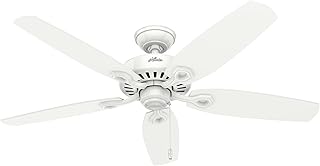
The Hunter Builder Elite is a practical, traditional option with a snow-white finish, five blades, standard mounting, and pull-chain controls. It is particularly easy to place in a bedroom, kitchen, or compact living room when you prefer familiar operation over smart features or a remote.
DREO 42-Inch Low-Profile Fan with Light
Although it includes a light, the DREO 42-inch model deserves consideration when ceiling real estate is especially limited and a separate light fixture would create visual crowding. Its low-profile form, quiet DC motor, reversible operation, dimmable light, color-temperature options, and remote control combine two overhead functions in one compact unit.
TCL 52-Inch White Low-Profile Fan with Light
The TCL 52-inch fan is a useful alternative for rooms that need both airflow and illumination but still benefit from a clean, flush-mounted profile. Its five blades, quiet six-speed reversible DC motor, remote, and dimmable LED light make it a sensible multipurpose choice for bedrooms, living rooms, and garages.
Frequently Asked Questions
Why choose a ceiling fan without a light?
A no-light fan is useful when the room already has recessed lighting, a floor lamp, or a ceiling fixture that you want to keep. It also creates a simpler overhead look, which can help a small room feel less visually busy.
What size ceiling fan is best for a bedroom?
A 52-inch fan is a versatile starting point for many average-sized bedrooms, but room dimensions matter more than a fixed rule. Smaller rooms may feel better with a 42-inch model, while large or open bedrooms can benefit from a 60-inch fan.
Can a ceiling fan be installed on a sloped ceiling?
Some fans can be installed on sloped ceilings with the correct angled mounting kit, but the included hardware varies. Check the product instructions before purchase and confirm that the blades will have adequate clearance from the ceiling and walls.
Are fans with lights a good choice for small spaces?
They can be. A model such as the DREO Smart RGBIC 52-inch fan combines airflow, dimmable lighting, color tuning, app control, and Alexa compatibility, which may eliminate the need for separate overhead fixtures. Choose this route when multifunctionality matters more than having a strictly light-free design.
Final Thoughts
For a focused no-light setup, the Sofucor 52-inch is the most adaptable pick, the 60-inch walnut fan is better for expansive rooms, and the Hunter Builder Elite suits shoppers who value straightforward traditional controls. If combining lighting and airflow saves valuable ceiling space, consider the low-profile DREO or TCL instead.