Key takeaways
- Small bathroom: Favor a single-outlet system or a valve with a handheld option. Extra sprays can crowd the layout and consume more water without improving everyday usability.
- Family bathroom: Prioritize stable thermostatic control, a usable temperature limit, and simple controls. Check that the controller can be reached before stepping under the spray.
- Renovation with open walls: A concealed multi-outlet system is easier to plan before tile goes up. Confirm valve capacity and service access while the framing and plumbing are visible.
- Existing finished bathroom: Compare exposed-valve options and the cost of opening the wall. A retrofit-friendly system can be a better choice than a feature-rich model that requires extensive demolition.
- Water-conscious household: Compare outlet flow rates and use the pause function if available. A shorter warm-up and less time adjusting temperature may help, but the system’s label alone does not establish savings.
The best digital shower systems depend on your bathroom and plumbing
For the best digital shower systems, choose a thermostatic controller with a clearly stated temperature accuracy, a valve sized for your plumbing, and an installation plan that matches your wall access: a simple single-outlet setup suits a compact bathroom, while a multi-outlet system is better for a larger shower only if its valve can supply those fixtures together. Digital controls make temperature easier to set and repeat; they do not increase water pressure or guarantee lower water use.
Start with the three decisions that determine fit
1. How precise does the temperature control need to be?
Look for a thermostatic system that maintains a selected temperature as hot- and cold-water conditions change. Check the manufacturer’s stated control range and accuracy rather than assuming every digital display is equally precise. A display may show the target temperature while the actual water varies, especially if the home has fluctuating supply pressure or an undersized hot-water supply.

RUMOSE Matte Black Shower Panel Tower System, 5-Mode Shower Faucet Set
Included for 'Best Digital Shower Systems for Modern Bathrooms' because the listing specifies 5-Mode Shower Faucet Set, details this guide uses to compare options.
View on Amazon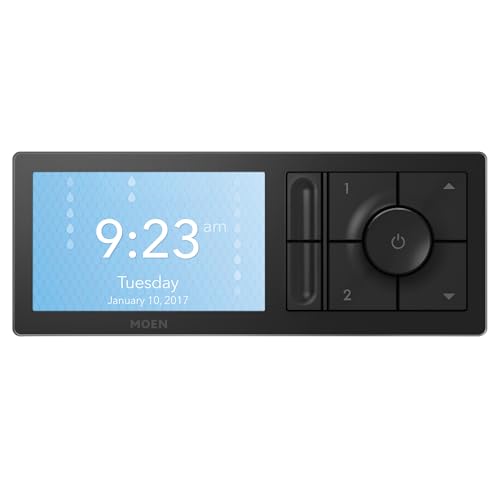
Moen Matte Black Smart Shower 2-Outlet Digital Water System Controller for Thermostatic Shower Valve, TS3302BL
Included for 'Best Digital Shower Systems for Modern Bathrooms' because the listing specifies TS3302BL, details this guide uses to compare options.
View on Amazon
WHSHOWER Full Body LED Rainfall Shower System Digital Display Shower Faucet Set with 14x20 Inch Top Shower,8 Inch Side Shower,6 Pcs Body Jets and Handheld Sprayer (Matte Black)
Included for 'Best Digital Shower Systems for Modern Bathrooms' because the listing specifies 8 Inch Side Shower and 6 Pcs Body Jets and Handheld Sprayer (Matte Black), details this guide uses to compare options.
View on Amazon
Thermostatic Shower System, Upgraded 6 Functions Piano Key Design Shower Set, 40x10cm Shower Faucet Sets Complete and Handheld, LED Digital Display, Bathtub Faucet, 59A Copper (Gun Gray)
Included for 'Best Digital Shower Systems for Modern Bathrooms' because the listing specifies Upgraded 6 Functions Piano Key Design Shower Set and 40x10cm Shower Faucet Sets Complete and Handheld, details this guide uses to compare options.
View on AmazonFor households with children or anyone sensitive to temperature changes, prioritize a maximum-temperature limit, a clear pause or off control, and a controller that is easy to operate without reaching into the spray. Confirm whether the limit is set at the valve, through the interface, or both. A digital interface alone is not a scald-protection feature.
2. Can your plumbing and wall accommodate the system?
Most digital showers use a concealed valve, a controller, and one or more outlets. The valve needs access for installation and future service, often through a nearby service panel or from the opposite side of the wall. Before buying, identify the valve location, pipe material and diameter, hot-water capacity, and the route for any required low-voltage cable. Some systems use batteries or a separate power supply; requirements vary by model.
Retrofitting a concealed valve into a finished tiled wall can mean opening and repairing the wall. If that is not practical, look for a compatible exposed-valve design or plan the installation during a bathroom renovation. Have a qualified plumber confirm the valve’s flow capacity and local code requirements, particularly if you want to operate a showerhead and body sprays at the same time.
3. Does the system save water in your actual use?
Water efficiency depends on the showerhead and flow rate, how long the shower runs, and whether the system lets you pause water while keeping the temperature setting. A digital control does not automatically use less water than a conventional mixer. Compare the listed flow rates of each included outlet and check whether the system supports a reduced-flow setting without compromising the spray you want.
Compare options by bathroom size and installation situation
| Bathroom situation | Practical configuration | What to check before purchase |
|---|---|---|
| Compact shower, about 36 × 36 in | One thermostatic valve, one showerhead, one simple controller | Keep the controller reachable from the entrance; verify the valve fits the available wall cavity. |
| Typical shower, about 36 × 48 in | One valve with a showerhead and optional handheld outlet | Confirm whether outlets can run together or only one at a time, and check total valve flow. |
| Large shower, about 48 × 60 in or larger | Higher-capacity valve with two or more outlets, if the plumbing supports it | Check simultaneous flow demand, hot-water recovery, and whether separate controls are needed. |
| Finished wall or limited access | Exposed valve or a system designed around an accessible service location | Confirm cable routing, power method, and service access before choosing a concealed model. |
These dimensions describe the shower footprint, not a required minimum for every product. A larger shower does not necessarily need more outlets: adding sprays increases water demand and installation complexity, while a well-positioned handheld can improve reach without requiring a second fixed showerhead.
What to compare in a digital shower system
| Feature | Why it matters | Useful buying check |
|---|---|---|
| Temperature regulation | Determines how consistently the shower holds its setting. | Find the specified operating range and accuracy, plus any temperature limit or lockout. |
| Valve flow capacity | Limits how much water can reach the outlets at once. | Compare the valve’s rated flow with the combined demand of the selected outlets. |
| Outlet switching | Some systems switch between outlets; others allow simultaneous operation. | Verify the exact operating modes rather than inferring them from the number of buttons. |
| Power and controller | Affects placement, wiring, and operation during a power interruption. | Check whether the system uses mains power, batteries, or another specified arrangement. |
| Water-saving controls | Can reduce running time or flow, depending on the design. | Look for a pause function and published outlet flow rates; do not assume “digital” means efficient. |
| Service access | Makes repairs easier and can prevent damage to finished tile. | Ask where the valve and any power components must be accessed after installation. |
Choose by household and project constraints
- Small bathroom: Favor a single-outlet system or a valve with a handheld option. Extra sprays can crowd the layout and consume more water without improving everyday usability.
- Family bathroom: Prioritize stable thermostatic control, a usable temperature limit, and simple controls. Check that the controller can be reached before stepping under the spray.
- Renovation with open walls: A concealed multi-outlet system is easier to plan before tile goes up. Confirm valve capacity and service access while the framing and plumbing are visible.
- Existing finished bathroom: Compare exposed-valve options and the cost of opening the wall. A retrofit-friendly system can be a better choice than a feature-rich model that requires extensive demolition.
- Water-conscious household: Compare outlet flow rates and use the pause function if available. A shorter warm-up and less time adjusting temperature may help, but the system’s label alone does not establish savings.
Brand and price considerations
Established plumbing manufacturers including Grohe, Hansgrohe, Kohler, and Moen offer digital or electronically controlled shower products, though features and availability vary by model and region. Compare complete system requirements, not just the controller shown in a product photo: a package may or may not include the valve, outlets, power components, and trim needed for a finished installation.
As a broad market guide, basic digital controls and compatible components may fall around $300–$600, while more complete or multi-outlet systems commonly cost $600–$2,000 or more, before installation. Wall repair, electrical work, new outlets, and plumbing changes can add substantially to the project total. Get a quote based on the actual valve location and wall construction.
Installation checklist before you order
- Measure the shower footprint and mark comfortable reach to the controller and handheld rail.
- Confirm the home’s hot-water supply, pipe size, and available water pressure with a plumber.
- Check the valve’s flow rating against the combined flow of outlets you intend to use simultaneously.
- Find out how the system is powered and whether the controller needs a cable or battery replacement access.
- Plan a service panel or another approved route to reach concealed components later.
- Verify included parts, compatibility with the chosen showerhead, and local plumbing and electrical requirements.
Bottom line
The best digital shower system is the one whose thermostatic performance, valve capacity, and installation demands fit your home. For a compact or retrofit bathroom, a reliable single-outlet setup is often the sensible choice. For a larger shower, select a multi-outlet model only after confirming simultaneous flow, hot-water capacity, and service access. Treat efficiency as a question of flow rate and shower habits—not a promise implied by digital controls.