Key takeaways
- Silicone (XS 10-11mm): Most hygienic, easiest to clean, holds seal during movement. Best for everyday use.
- Memory Foam (XS/S): Compresses to 6-7mm then expands to fill the canal. Better passive isolation and less pressure, but absorbs sweat and needs replacement every 2-3 months.
- Hybrid double-flange: Rare, but useful if your canal is both narrow and deep.
The best earbuds for small ear canals prioritize a compact housing under 27mm long, a light weight under 5.5g per bud, and extra-small silicone tips around 10-11mm in diameter, with top options including Apple AirPods Pro (2nd Gen), Sony WF-1000XM5, Samsung Galaxy Buds FE, and Jabra Elite 4.
Why Most Earbuds Don’t Fit Small Ears
Discomfort in small ear canals is rarely about the ear tip alone. Three measurements determine whether a bud will stay secure without pressure: nozzle diameter, housing footprint, and weight. A standard earbud housing is 28-31mm long and 19-22mm wide, which presses against the concha and tragus in smaller ears. That pressure causes the ache after 30-45 minutes, even if the tip itself seals well. For small canals, the concha bowl height is often less than 24mm, so any housing taller than that will lever out when you smile, chew, or walk.
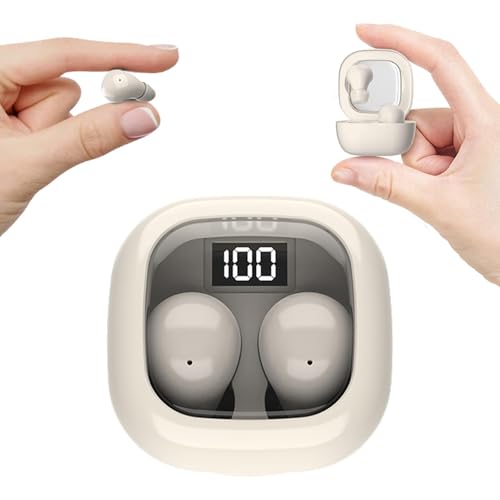
CNBRO Invisible Mini Sleep Earbuds Ear Buds for Side Sleepers Sleeping, Small Ears Canals Women Wireless Bluetooth Low Profile Smallest Disgused Tiny Micro Discreet Hidden Earbuds Headphones for Work
Included for 'Best Earbuds for Small Ear Canals: Comfort & Fit' as a relevant option in this category; details come from the product listing.
View on Amazon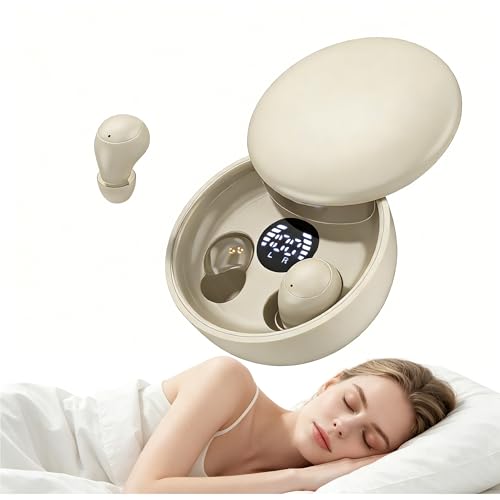
goazzzl Sleep Earbuds, Invisible Mini Wireless Earbuds for Small Ear Canals, Ergonomic Bluetooth Earbuds with Premium Sound and One-Step Auto Pairing(Beige)
Included for 'Best Earbuds for Small Ear Canals: Comfort & Fit' because the listing specifies Invisible Mini Wireless Earbuds for Small Ear Canals, details this guide uses to compare options.
View on AmazonSmall canals also have a narrower opening, typically 6-8mm compared to the average 8-10mm. A large round tip has to compress too much to enter, creating outward pressure and a muffled sound. The right fit fills the canal without stretching it.
The 3 Fit Criteria That Matter More Than Brand
1. Tip Size and Material
Look for brands that include XS or SS tips in the box. You need a tip diameter of 10-12mm, not the standard 13-14mm. Without an XS option, you will likely need to buy third-party memory foam tips, which adds cost and changes sound.
- Silicone (XS 10-11mm): Most hygienic, easiest to clean, holds seal during movement. Best for everyday use.
- Memory Foam (XS/S): Compresses to 6-7mm then expands to fill the canal. Better passive isolation and less pressure, but absorbs sweat and needs replacement every 2-3 months.
- Hybrid double-flange: Rare, but useful if your canal is both narrow and deep.
2. Housing Shape and Dimensions
Weight and shape decide long-term comfort more than tip size. A bud over 6.0g pulls down on a small canal, while a bulky housing pushes on cartilage.
- Low-profile oval (best for small ears): Sits flush in the concha, no stem pressure. Example shape: Samsung Galaxy Buds FE, Sony LinkBuds S.
- Stem-style with short nozzle: Stem counterbalances weight outside the ear, reducing canal pressure. Example: Apple AirPods Pro 2. Works well if your concha is shallow.
- Bulky round housing (worst for small ears): Large circular drivers that fill the entire bowl. Often causes hot spots on the antihelix.
3. Nozzle Length and Angle
A short nozzle (4-5mm) with a 30-45 degree angle follows the natural ear canal bend and requires less insertion depth. Long straight nozzles (6mm+) need to go deeper to seal, which causes pressure and a feeling of fullness in small canals.
Measured Comparison: Small-Ear Friendly Earbuds
Dimensions below are manufacturer listed specs for 2026-available models. All include XS or equivalent small tips unless noted.
| Model | Weight Per Bud | Housing Dimensions (L x W x H) | Smallest Tip Included | Nozzle Type |
|---|---|---|---|---|
| Apple AirPods Pro (2nd Gen) | 5.3g | 30.9 x 21.8 x 24.0mm (with stem) | XS – 11.1mm | Short, angled |
| Sony WF-1000XM5 | 5.9g | 25.4 x 19.4 x 18.0mm | SS – 10.5mm (foam-polyurethane blend) | Short, wide |
| Samsung Galaxy Buds FE | 5.6g | 27.0 x 19.5 x 19.1mm | S – 12.0mm (smallest is larger than XS) | Short, oval |
| Sony LinkBuds S | 4.8g | 26.1 x 19.7 x 19.2mm | SS – 10.8mm | Very short, angled |
| Jabra Elite 4 | 5.0g | 27.2 x 19.1 x 18.6mm | XS – 11.0mm (silicone) | Short, straight |
| Bose QuietComfort Ultra Earbuds | 6.2g | 30.5 x 21.5 x 26.1mm | S – 12.3mm | Medium, with stability band |
For reference, a housing length under 27mm and weight under 5.5g is the sweet spot for most small ears. The Sony LinkBuds S and Jabra Elite 4 hit both marks, while AirPods Pro 2 compensates for its longer length with a stem that moves weight outside the canal.
Tip Material Trade-Offs for Small Canals
| Material | Pressure in Small Canal | Seal & Sound Isolation | Durability & Maintenance | Best For |
|---|---|---|---|---|
| Thin Silicone (XS) | Low to moderate | Good, if size is exact | 6-12 months, washable | Daily use, workouts, humid climates |
| Memory Foam | Very low – expands to fill, no stretch | Excellent – 4-6 dB more isolation than silicone | 2-4 months, cannot wash, absorbs moisture | Very narrow or sensitive canals, noisy commutes |
| Foam + Silicone Hybrid (e.g., Sony polyurethane) | Low | Very good | 4-6 months | Compromise between comfort and longevity |
| Triple-flange Silicone | High – deep insertion | Maximum isolation | 6-12 months | Not recommended for small canals |
Best Picks by Situation
Best Overall Comfort for Very Small Canals: Sony LinkBuds S and Jabra Elite 4
At 4.8g and 5.0g respectively, these are the lightest mainstream buds with true XS tips. Their housings are under 27.2mm long and sit almost entirely inside the concha without touching the outer ridge. Usually priced in the $80–$150 range, they are the safest choice if previous earbuds have fallen out or caused pressure within an hour.
Best for iPhone Users Who Need XS Tips: Apple AirPods Pro (2nd Gen)
If you have an iPhone, the inclusion of an 11.1mm XS tip and customizable fit test makes sizing easier. The stem design shifts weight away from the canal, which helps when your canal opening is small but your outer ear is average-sized. Typically found in the $180–$250 range. Avoid the standard AirPods (3rd Gen) or AirPods 4 without silicone tips – they use a one-size hard housing that rarely seals in small canals.
Best Noise Canceling Without Pressure: Sony WF-1000XM5
The SS 10.5mm foam-polyurethane tip is the smallest stock tip among flagship ANC buds and compresses more than pure silicone. The housing is also 10% smaller than the previous WF-1000XM4, reducing concha pressure. At 5.9g it is slightly heavier, so it suits listeners who prioritize quiet over all-day wear. Usually $250–$300.
Best Budget Low-Profile Option: Samsung Galaxy Buds FE
Lighter and smaller than the Galaxy Buds 2 Pro, with a wingtip-free oval shape that avoids helix pressure. The limitation is the smallest tip is 12.0mm, which may still be large for canals under 7mm. If your canals measure small but not extra-small, it offers strong value, usually $70–$110. Consider adding aftermarket XS foam tips if needed.
Decision Matrix: Match Your Ear and Use Case
| Your Situation | Priority | Look For | Avoid |
|---|---|---|---|
| Canal feels tight with any standard tip | Smallest tip diameter | SS 10.5-11.0mm foam or hybrid | Any model where S is the smallest size (12mm+) |
| Bids ache on outer ear within 30 minutes | Low weight + small housing | Under 5.5g, under 27mm length, oval shape | Bulky round buds over 6.0g |
| Earbuds fall out when walking or chewing | Angled nozzle + secure tip | 30-45 degree angled nozzle, XS foam | Straight long nozzle, shallow hard plastic buds |
| Sensitive skin or sinus pressure issues | Low insertion depth | Short nozzle (4-5mm), memory foam | Deep-insertion triple-flange |
| Need all-day wear for work/calls | Weight distribution | Stem-style or 4.8-5.3g oval | 6.2g+ with stability fins that press concha |
How to Check Fit Before You Commit
Small-canal fit cannot be judged by a quick in-store try-on. Use this 3-step check at home within the return window:
- Seal test: With ANC off, play music at low volume. Cup your hands over your ears. If volume and bass barely change, you have a good seal. If it gets much louder, try the next smaller tip.
- Pressure test: Wear the buds for 60 minutes without music. Any sharp point, throbbing, or itch means the housing is too large, not the tip. Try a lighter, more compact model.
- Movement test: Do 20 exaggerated jaw opens and head turns. A correctly sized XS tip will stay sealed; a too-large tip will break seal or slowly back out.
Clean tips weekly with a dry cotton swab and mild soapy water for silicone. Replace foam tips when they no longer rebound slowly after compression or when isolation drops. For hygiene and fit consistency, do not share tips between users.
FAQ
Do smaller ear canals need extra-small tips or just different earbuds?
Both. An XS tip solves seal and canal pressure, but if the housing is over 28mm or over 6g, the outer ear will still ache. Start with models that offer both a sub-11mm tip and a compact, light housing.
Are foam tips better than silicone for small ear canals?
Foam is more forgiving because it compresses to 6-7mm for insertion then expands to fill irregular narrow canals without stretching them. Silicone requires a more precise size match but lasts longer and is better for exercise. Many small-eared users keep silicone for workouts and foam for commuting or office work.
Will using the smallest tip reduce sound quality?
No, if the seal is complete. Bass loss and thin sound come from a poor seal where air leaks, which is more likely with a tip that is too large and cannot seat deeply. A properly sealed XS tip often improves bass and ANC performance by 3-5 dB.