Key takeaways
- Small apartment or occasional DIY: Choose thin goatskin or medium cowhide with an adjustable wrist. It stores easily and provides enough protection for assembling furniture and moving boxes.
- Kids, pets, and frequent cleaning: Select a washable, lightly lined glove or a treated leather glove with a secure cuff. Avoid loose cuffs that can catch on handles or tools.
- Renters moving furniture: Pick a flexible cowhide or goatskin glove with reinforced palms and good fingertip control. This is more useful than a heavy glove designed for chainsaws or masonry.
- Back or joint discomfort: Prioritize grip and dexterity so you do not have to squeeze tools excessively. Look for pre-curved fingers, padded palms, and a secure wrist closure.
- Cold, wet yard work: Choose waterproof or membrane-backed leather with insulation and a cuff extending at least 3 inches beyond the wrist. Confirm that the palm remains flexible enough to hold tools.
Best Leather Gloves: How to Choose the Right Pair for the Job
The best leather gloves are the ones whose hide, lining, fit, seams, and weather protection match the work you actually do—not simply the thickest or most expensive pair.
A soft deerskin glove may be ideal for handling furniture or driving, while a cowhide palm glove is usually better for hauling lumber, gardening, and other abrasive work. For freezing weather, insulation and cuff length matter more than supple leather. Use the comparisons below to narrow your choice by situation.

Wells Lamont Men's Work Gloves, Cowhide Leather, Reinforced Palm, Large
Included for 'Best Leather Gloves' because the listing specifies Cowhide Leather and Reinforced Palm, details this guide uses to compare options.
View on Amazon
WZQH Leather Work Gloves for Men or Women.Gardening,Welding,Coffee-grey L
Included for 'Best Leather Gloves' because the listing specifies Welding and Coffee-grey L, details this guide uses to compare options.
View on Amazon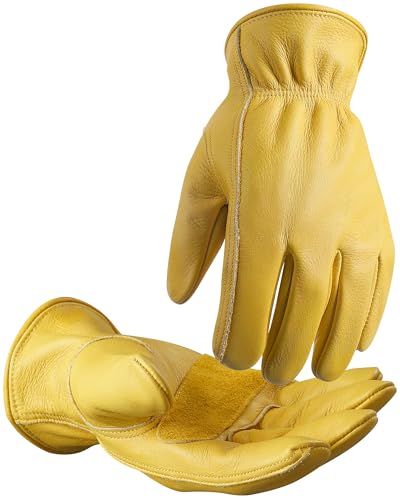
DULFINE Cowhide Leather Gardening Work Gloves for Men 1 Pair Golden L
Included for 'Best Leather Gloves' as a relevant option in this category; details come from the product listing.
View on Amazon
Hndaew Black Leather Gloves for Men Women Dexter Morgon Costume Black Gloves Costume Dexter Gloves Leather Gloves Nightwing
Included for 'Best Leather Gloves' as a relevant option in this category; details come from the product listing.
View on AmazonQuick Picks by Intended Use
| Use | Best glove type | Useful specifications | Main compromise |
|---|---|---|---|
| Furniture moving and general handling | Medium-weight cowhide or goatskin | 0.7–1.0 mm leather, reinforced palm, short or shirred wrist | Less dexterity than thin driving gloves |
| Yard work and gardening | Split cowhide or grain cowhide | 1.0–1.3 mm leather, extended cuff, double palm | Stiffer fingers and slower fine movements |
| Construction and rough handling | Heavy cowhide with reinforced seams | 1.2–1.5 mm leather, welted or double-stitched seams | More heat and reduced touch sensitivity |
| Cold-weather outdoor work | Insulated cowhide or goatskin | Fleece or wool lining, 1.0–1.3 mm leather, 3–5 inch cuff | Bulk makes gripping small objects harder |
| Driving and light workshop tasks | Thin goatskin, deerskin, or sheepskin | 0.5–0.8 mm leather, close fit, perforated or unlined back | Wears through faster during abrasive work |
Leather Types Compared
Goatskin: Best balance of dexterity and durability
Goatskin is supple, naturally flexible, and reasonably resistant to abrasion. Its fine grain makes it a strong choice when you need to pick up screws, operate hand tools, or carry objects without losing finger control. It often remains flexible after repeated use, although thin goatskin is not the best option for sharp edges or heavy scraping.
Cowhide: Best for demanding work
Cowhide is the common all-purpose work-glove leather because it offers good abrasion resistance at a moderate price. Grain cowhide has a smoother, tougher surface; split cowhide is generally more textured and economical, with a slightly rougher feel. Choose cowhide for landscaping, moving boxes and furniture, firewood, and construction tasks where protection matters more than delicate touch.
Deerskin: Best for softness and comfort
Deerskin is exceptionally soft and flexible, making it comfortable for driving, light maintenance, and repeated handling. It can feel almost broken-in from the start. The trade-off is lower resistance to severe abrasion and a tendency to stretch. It is a poor substitute for a reinforced work glove when handling rough lumber or masonry.
Sheepskin: Best for warmth and light use
Sheepskin is soft and warm, particularly when used with a fleece or shearling-style lining. It suits commuting, casual cold-weather wear, and light outdoor tasks. It generally does not hold up as well as cowhide against sharp tools, wet dirt, or repeated friction.
Grain, Split, and Synthetic-Leather Details
Full-grain or top-grain leather retains the outer surface of the hide, so it normally offers better durability and water resistance than heavily sanded leather. Split leather comes from the lower layers and is often less expensive. It can provide excellent grip but may absorb water more readily and feel less smooth.
“Water-resistant” does not mean waterproof. A treated leather glove may resist brief rain or damp grass, but soaking can stiffen the hide, shrink the fit, and weaken some linings. For prolonged wet work, look for a waterproof membrane or a purpose-built waterproof glove with leather reinforcement. Membranes improve moisture protection but can make the glove warmer and less breathable.
Lining: Warmth Versus Control
| Lining | Approximate warmth | Dexterity | Best use |
|---|---|---|---|
| Unlined | Low | Highest | Indoor handling, driving, light workshop work |
| Cotton or jersey | Low to moderate | High | General work in cool conditions |
| Fleece | Moderate to high | Moderate | Cold-weather chores and commuting |
| Wool or wool blend | High | Moderate to low | Cold, dry outdoor use |
| Insulated synthetic fill | High to very high | Low to moderate | Freezing temperatures and stationary work |
Thick insulation can reduce your effective hand size inside the glove. If you need to use a screwdriver, buckle, or phone, choose a less bulky lining and a close-fitting leather shell. If you will spend long periods outside without much movement, prioritize insulation and a longer cuff instead.
Dexterity, Seams, and Construction
Finger shape is as important as leather thickness. A keystone thumb—where the thumb is set into a separate piece—usually allows better movement than a straight thumb sewn into the palm. Gunn-cut fingers, made with separate leather pieces between the fingers, can improve comfort during gripping. Curved or pre-shaped fingers reduce bunching when holding tools.
Check the stitching at the thumb crotch, index finger, palm, and cuff. These areas flex repeatedly and usually wear before the back of the hand. Double stitching adds durability, while welted seams place a raised strip of leather over a vulnerable seam. A rubberized or leather-reinforced palm can extend service life during lifting, but it can also reduce touch sensitivity.
For furniture moving, avoid a glove that is so bulky you cannot feel an edge or maintain a secure grip. A 0.7–1.0 mm leather palm with reinforced thumb and fingertips is often a better compromise than a very thick glove. For rough yard work, 1.0–1.3 mm leather and a longer cuff offer more practical protection.
How to Get the Right Size
Measure around the widest part of your dominant hand, excluding the thumb, then compare that measurement with the manufacturer’s chart. Also measure from the wrist crease to the tip of your middle finger if a chart provides both dimensions.
| Hand circumference | Typical glove size | Fit guidance |
|---|---|---|
| 6.5–7.0 inches | Small | Choose a close fit for unlined gloves |
| 7.0–7.75 inches | Medium | Allow extra room for a thin lining |
| 7.75–8.5 inches | Large | Check finger length as well as palm width |
| 8.5–9.25 inches | Extra large | Look for extended finger patterns if needed |
These ranges are general; sizing varies by maker. The fingertips should reach near the end of each finger without pressing against the leather. A glove that is too tight restricts circulation and can split at the seams. One that is too loose creates folds that reduce grip and cause blisters. For insulated gloves, size up only when the manufacturer recommends it—excessive internal space can make hands feel colder.
Best Choice for Common Situations
- Small apartment or occasional DIY: Choose thin goatskin or medium cowhide with an adjustable wrist. It stores easily and provides enough protection for assembling furniture and moving boxes.
- Kids, pets, and frequent cleaning: Select a washable, lightly lined glove or a treated leather glove with a secure cuff. Avoid loose cuffs that can catch on handles or tools.
- Renters moving furniture: Pick a flexible cowhide or goatskin glove with reinforced palms and good fingertip control. This is more useful than a heavy glove designed for chainsaws or masonry.
- Back or joint discomfort: Prioritize grip and dexterity so you do not have to squeeze tools excessively. Look for pre-curved fingers, padded palms, and a secure wrist closure.
- Cold, wet yard work: Choose waterproof or membrane-backed leather with insulation and a cuff extending at least 3 inches beyond the wrist. Confirm that the palm remains flexible enough to hold tools.
Care and Durability Realities
Let damp leather dry naturally away from radiators and direct heat. Once dry, brush off dirt and apply a conditioner suitable for the specific leather; too much oil can soften structure, darken the hide, and reduce grip. Do not machine-wash leather unless the care label explicitly permits it.
Expect the thumb crotch, fingertips, palm, and inner cuff to show wear first. A well-chosen work glove may last a season or longer with occasional use, while daily abrasive work can wear through even thick leather in weeks or months. Buy for the most demanding task you perform regularly, but avoid overbuilt gloves that make every lighter task harder.
Final Buying Checklist
- Match the leather type to abrasion, moisture, and flexibility requirements.
- Choose unlined or lightly lined gloves for precision; insulated gloves for prolonged cold.
- Inspect thumb construction, palm reinforcement, and stitching at high-flex areas.
- Measure both hand circumference and finger length before ordering.
- Use longer cuffs for brush, wet grass, snow, and dusty work.
- Remember that water resistance improves protection but does not make ordinary leather permanently waterproof.