Key takeaways
- Pests. Flour beetles and pantry moths can chew through paper bags and squeeze through gaps under a loose lid. A gasketed lid stops them getting in, and just as important, stops an infestation in one bag from spreading to the rest of the pantry.
- Moisture and odors. Flour absorbs humidity and smells. In a humid kitchen it can clump and pick up odors from onions, spices or coffee within weeks.
- Rancidity. Whole grain flours contain the germ and its oils, which oxidize. No container stops this at room temperature; only cold storage slows it dramatically.
The best flour storage container is an airtight one with a silicone gasket, an opening at least 4 in (10 cm) wide so a measuring cup fits, and enough volume for a whole bag plus headroom: about 5 quarts for a 5 lb bag of all-purpose flour. Beyond that, the right choice depends on the flour type and where you keep it, because whole wheat and nut flours spoil far faster than white flour, and pantry moths care more about the seal than about the material.
What Actually Ruins Flour
Flour fails in three ways, and a container only fixes two of them well.
- Pests. Flour beetles and pantry moths can chew through paper bags and squeeze through gaps under a loose lid. A gasketed lid stops them getting in, and just as important, stops an infestation in one bag from spreading to the rest of the pantry.
- Moisture and odors. Flour absorbs humidity and smells. In a humid kitchen it can clump and pick up odors from onions, spices or coffee within weeks.
- Rancidity. Whole grain flours contain the germ and its oils, which oxidize. No container stops this at room temperature; only cold storage slows it dramatically.
How Long Each Flour Lasts, by Storage Spot
| Flour type | Pantry (airtight, cool) | Refrigerator | Freezer |
|---|---|---|---|
| All-purpose, bread, cake (white) | 6–12 months | About 1 year | 1–2 years |
| Self-rising | 4–6 months (leavening weakens) | 6–9 months | About 1 year |
| Whole wheat, rye, spelt | 1–3 months | About 6 months | About 12 months |
| Almond, other nut flours | 2–3 months | 6 months | About 12 months |
| Cornmeal (whole grain) | 2–3 months | 6 months | About 12 months |
These are typical quality windows, not safety cutoffs. Rancid flour smells sharp, bitter or like old paint; if it does, discard it. White flour is the only type that suits a big countertop canister for months at a time.
Sizing: How Much Container a Bag Needs
All-purpose flour runs roughly 3.5–4 cups per pound depending on how settled it is, so a bag fills more volume than people expect.
| Bag size | Approximate volume | Container to buy |
|---|---|---|
| 2 lb (0.9 kg) | 7–8 cups | 2.5–3 quart (2.4–2.8 L) |
| 5 lb (2.3 kg) | 17–19 cups | 4.5–5.5 quart (4.3–5.2 L) |
| 10 lb (4.5 kg) | 35–38 cups | 9–10 quart, or two 5 quart containers |
| 25 lb (11.3 kg) | 85–95 cups | 22–26 quart bin, or bin plus a daily-use canister |
Leave 1–2 in of headroom so you can scoop and level without spilling. If you buy 25 lb at a time, a sensible setup is a large lidded bin on a low pantry shelf or under a cart, and a 5 quart canister on the counter that you refill weekly.
Seal Types Compared
| Seal type | Pest resistance | One-hand opening | Watch out for |
|---|---|---|---|
| Push-button pop lid with gasket | High | Yes | Gasket must be removed to clean; flour dust can jam the mechanism |
| Four-side latching lid with gasket | Very high | No | Latch hinges are the first part to crack on cheap versions |
| Bail-and-wire glass jar with rubber ring | Very high | No | Heavy when full; ring degrades after a few years |
| Screw-top lid | High | No | Wide mouths over 5 in are awkward to thread |
| Friction-fit lid (no gasket) | Low to moderate | Yes | Fine for fast-use flour only; moths can get in |
| Wooden or ceramic canister with cork or loose lid | Low | Yes | Decorative; pair with a bag inside or use for small amounts |
Materials: Plastic, Glass, Stainless or Ceramic
- BPA-free plastic (Tritan, polypropylene, polycarbonate food-service): lightest, shatterproof and easiest to find in square shapes that use shelf space efficiently. Clear sides let you see levels. Can scratch and hold odor if used for spices later.
- Glass: no odor transfer, looks good on a counter, but a 5 quart glass jar weighs 4–6 lb empty and around 10 lb full. Not ideal on high shelves.
- Stainless steel: blocks light, very durable, but you can’t see the level. Usually round, which wastes corners.
- Ceramic: attractive and heavy; lids often sit loose, so seal quality varies widely.
Real Options Worth Knowing
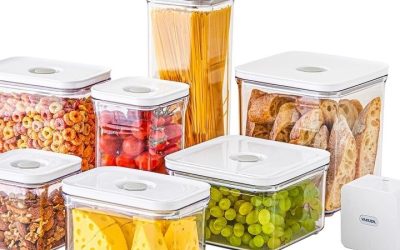
A few widely sold containers fit the specs above well. The OXO Good Grips POP line includes a Big Square Tall size (about 4.4 quarts) that the brand sizes to hold a 5 lb bag of flour; the push-button lid works one-handed, which bakers appreciate. Progressive ProKeeper flour containers are tall rectangles with a built-in leveling edge and come with a measuring cup sized for the opening. Cambro square polycarbonate and polypropylene containers, common in restaurant kitchens, come in 4, 6, 8, 12 and 22 quart sizes with snap-on lids; they are a strong pick for 10 and 25 lb bags. Glass bail-top jars from several makers are a solid option for smaller amounts or counters. Expect $15–$30 for a single 4–6 quart canister and $20–$45 for a 12–22 quart bulk container with lid.
Which Container for Which Kitchen
| Situation | Best choice |
|---|---|
| Weekly baker, white flour, counter storage | 5 quart push-button or latching canister, square for shelf efficiency |
| Whole wheat or nut flour, slow use | 1–2 quart airtight container kept in the fridge or freezer |
| Buys 25 lb bags | 22 quart food-safe bin with lid, plus a 5 quart daily canister |
| Past pantry moth problem | Gasketed latching lid; freeze new flour before storing |
| Humid climate, no AC | Gasketed container, or fridge storage for anything kept over 2 months |
| Limited reach or arthritis | Lightweight plastic, wide 5 in opening, one-touch lid |
Habits That Make Any Container Work Better
- Freeze new bags first. Putting a fresh bag in the freezer for 3–4 days at 0°F (-18°C) kills any insect eggs already present. Let it come to room temperature in the sealed bag before opening so condensation doesn’t form on the flour.
- Don’t top up old flour with new. Use up the container, wipe it out, then refill. Old flour at the bottom becomes the stale or infested layer.
- Label it. A strip of tape with flour type and fill date matters most for whole grain flours.
- Clean gaskets every few refills. Flour paste inside a gasket groove can mold if any moisture gets in. Wash, then dry completely before reassembling.
- Keep it away from the stove and dishwasher vent. Heat and steam shorten every storage window in the table above.