Key takeaways
- Measure your access route, not just the room: Compression-packed mattresses navigate spiral stairs and 28-inch doorways that a boxed-flat mattress never will. Unbox in the room where it lives.
- Match height to your storage plan: A 12-inch profile on a 13-inch platform keeps bins accessible underneath; a 14-inch mattress on a tall frame can bury that space and make daily transfers a strain on your back.
- Prioritize zoned support over blanket firmness: “Firm” alone can flatten your lumbar curve. Look for reinforced mid-third zones that lift the hips while letting shoulders sink.
- Check edge support if the bed doubles as seating: Small-space beds get used as couches. Perimeter coils or dense foam rails keep the edge from sagging and twisting your pelvis.
- Confirm foundation compatibility: Most of these work directly on slatted platforms, storage frames, and daybeds — skip the box spring and reclaim six inches of vertical room.
What's inside
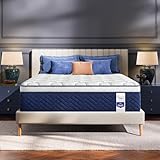
The PUBPLON 12-Inch Medium Firm Hybrid is the best mattress for back pain overall, with the RRESTA 14-Inch Hotel Collection Hybrid as a close runner-up. Both deliver zoned lumbar reinforcement without demanding the floor space or box spring that traditional beds require.
Here’s the problem nobody warns you about: in a studio, a converted loft, or a 10×10 bedroom, your mattress is also your sofa, your desk chair, and sometimes your guest room. It gets sat on sideways, slept on diagonally, and shoved against a wall — all positions that let a soft, unsupported mattress collapse under your lumbar curve. Add a narrow stairwell and no box spring, and your options shrink fast. This guide covers six compression-shipped mattresses that fit through tight doorways, sit directly on platform frames with under-bed storage, and still hold your spine in neutral alignment all night.
As an Amazon Associate we earn from qualifying purchases at no extra cost to you. Product prices and availability are accurate as of the date shown and are subject to change.




Quick Comparison
| Product | Best For | Standout Feature | Rating |
|---|---|---|---|
| PUBPLON 12″ Medium Firm Hybrid | Overall back pain relief | Extra lumbar & shoulder support zones | See card above |
| Queen Mattress 12″ Cooling | Tight budgets, guest beds | Cooling build in a slim 12″ profile | See card above |
| RRESTA 14″ Hotel Collection Hybrid | Premium spinal alignment | 7-zone support, CertiPUR-US foams | See card above |
| EGOHOME 14″ Memory Foam | Shared beds and thin walls | All-foam motion and noise absorption | See card above |
| BedStory Firm 13″ Hybrid | Heavier sleepers, edge use | Zoned lumbar coils, made in USA | See card above |
How to Choose a Mattress For Back Pain
- Measure your access route, not just the room: Compression-packed mattresses navigate spiral stairs and 28-inch doorways that a boxed-flat mattress never will. Unbox in the room where it lives.
- Match height to your storage plan: A 12-inch profile on a 13-inch platform keeps bins accessible underneath; a 14-inch mattress on a tall frame can bury that space and make daily transfers a strain on your back.
- Prioritize zoned support over blanket firmness: “Firm” alone can flatten your lumbar curve. Look for reinforced mid-third zones that lift the hips while letting shoulders sink.
- Check edge support if the bed doubles as seating: Small-space beds get used as couches. Perimeter coils or dense foam rails keep the edge from sagging and twisting your pelvis.
- Confirm foundation compatibility: Most of these work directly on slatted platforms, storage frames, and daybeds — skip the box spring and reclaim six inches of vertical room.
The Best Mattress For Back Pains Reviewed
Best Overall: PUBPLON 12-Inch Medium Firm Hybrid
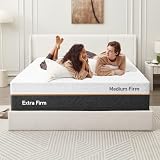
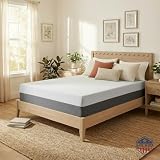
The dedicated lumbar and shoulder zones make this the smartest pick for anyone whose bed pulls double duty, because the support holds up whether you’re stretched out or propped against the headboard reading. At 12 inches it’s the sweet spot for storage platforms and bunk-height frames, and it’s fiberglass-free with a 365-night trial.
Best Budget: Queen 12-Inch Cooling Mattress in a Box
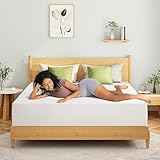
Best for first apartments, guest nooks, and anyone furnishing a small space on a tight budget who still wants cooling comfort. The slim profile and boxed delivery make it painless to get up a narrow staircase without hired help.
Best Premium: RRESTA 14-Inch Hotel Collection Hybrid
Choose this if chronic back and hip pain is your priority and you can spare the extra two inches of height. The 7-zone system targets spinal alignment with hotel-grade plushness on top, backed by CertiPUR-US certification and a 365-night trial.
Best for Shared Rooms and Thin Walls: EGOHOME 14-Inch Memory Foam
All-foam construction means no coil noise and near-total motion isolation — ideal for couples in open-plan studios or anyone sleeping a wall away from a roommate. The medium-firm feel cradles pressure points while still supporting the lower back.
Best for Heavier Sleepers: BedStory Firm 13-Inch Hybrid
The firmer zoned-coil build resists the deep hip sink that triggers morning back pain in heavier bodies, and it keeps its shape at the edges where small-space beds take the most abuse. Made in the USA with a 10-year warranty.
Frequently Asked Questions
Do I need a box spring for these mattresses?
No. All of these work on slatted platforms, storage frames, and solid bases. Skipping the box spring lowers the bed, opens up wall space visually, and makes under-bed bins easier to reach.
Is firmer always better for back pain?
No — medium-firm suits most back pain sufferers. Too firm and your hips can’t settle, which flattens the lumbar curve. Zoned support matters more than raw firmness.
How long until it fully expands in a small room?
Most reach full loft in 24 to 72 hours. Unbox it on the frame in its final position; expanding foam is far harder to maneuver than a compressed roll.
Can a mattress topper fix my back pain instead?
A topper adjusts surface feel but can’t replace failed core support. If your current mattress sags in the middle, replace it rather than layering over the dip.
Final Thoughts
For most small-space sleepers with back pain, the PUBPLON 12-Inch Hybrid hits the best balance of zoned lumbar support and a storage-friendly profile. Step up to the RRESTA 14-Inch Hotel Collection if alignment is your top concern, or choose the EGOHOME 14-Inch Memory Foam when quiet, motion-free sleep in a shared room matters most.