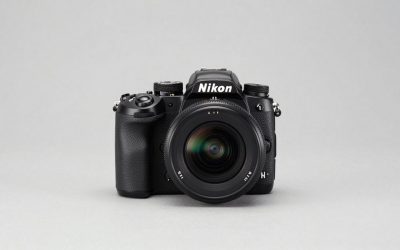
Our Top Picks
 Canon EOS R100 Mirrorless Camera RF-S18-45mm F4.5-6.3 is2.7 x 4.6 x 3.4 inches0 poundsCheck on Amazon
 Canon EOS RP Mirrorless Camera RF24-105mm Lens F4-7.1105mm2.8 x 5.2 x 3.3 inches1 poundsCheck on Amazon
The best mirrorless cameras for travel photography come down to four kits: the Sony a7C II (about 514 g with battery) for most travelers who want full-frame image quality in a small body; the Fujifilm X-T5 for the highest resolution per gram; the OM System OM-1 Mark II for rain, dust and salt; and the Canon EOS R8 for the cheapest route into full frame. Everything below is organized around the five things that actually decide whether a camera works on a trip — weight, lens options, battery life, weather resistance and image quality — with the numbers that a product page leaves out.
Quick Picks by Situation
Start here if you already know what your trip looks like. “Packed weight” means body plus one standard zoom, battery, card and a small strap — the number that matters at the airport scale.
Canon EOS R100 Mirrorless Camera RF-S18-45mm F4.5-6.3 is STM Lens Kit
Picked as a relevant option in this category.
View on Amazon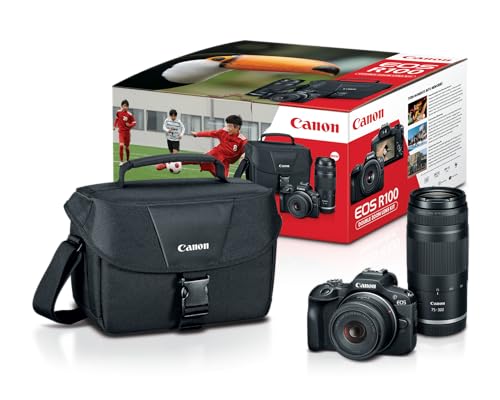
Canon EOS RP Mirrorless Camera RF24-105mm Lens F4-7.1 is STM Lens Kit
Picked as a relevant option in this category.
View on Amazon| Your situation | Body + lens | Packed weight | Why this one |
|---|---|---|---|
| Carry-on only, 7 kg airline limit, two-week trip | Sony a7C II + Sigma 28–70 mm f/2.8 DG DN Contemporary | ≈ 985 g | Full-frame sensor, 24 MP, leaves room for a second lens and a laptop |
| Monsoon, rainforest, coastal salt spray | OM System OM-1 Mark II + 12–45 mm f/4 PRO | ≈ 855 g | IP53-rated sealing on both body and lens; the only mainstream kit with a published IP number |
| Street and documentary, want to look like a tourist | Fujifilm X100VI | ≈ 521 g | Fixed 23 mm f/2 (35 mm equivalent), leaf shutter, silent, no bag needed |
| Landscape, large prints, no weight ceiling | Nikon Z8 + Nikkor Z 24–120 mm f/4 S | ≈ 1,540 g | 45.7 MP, 8K, and a 5× zoom that covers 90% of a landscape trip |
| Budget-first, first full-frame camera | Canon EOS R8 + RF 24–50 mm f/4.5–6.3 | ≈ 670 g | 461 g body; cheapest full-frame entry, but plan on three batteries |
| Safari or wildlife plus travel | Canon EOS R7 + RF 100–400 mm f/5.6–8 | ≈ 1,240 g | 1.6× crop turns the 400 mm into a 640 mm equivalent at 612 g body weight |
| Video-first, vlogs and hybrid shooting | Panasonic Lumix S5 II + Lumix S 20–60 mm | ≈ 1,090 g | Phase-detect autofocus, 6K open gate, internal fan, no recording limit |
| Small hands, one-handed shooting, kids in the frame | Sony a6700 + E 18–135 mm f/3.5–5.6 | ≈ 985 g | 493 g body with the best subject-recognition autofocus in APS-C |
Weight Is the Spec That Decides Your Trip
Every camera on this list can produce a good travel photograph. What separates them is what you’re willing to carry on day nine. A useful rule: a kit you hang off one shoulder all day should stay under about 1.2 kg, because a 1.5 kg strap load over eight hours produces the same neck and shoulder complaints as a badly fitted backpack. If your kit crosses 1.8 kg, budget for a proper sling or a small backpack with a sternum strap, and expect to leave the camera behind on some days.
Body weight alone is misleading. A 461 g Canon EOS R8 with a 700 g RF 24–105 mm f/4L is heavier than a 723 g Sony a7R V with a 470 g third-party zoom. Lens choice moves the total more than the body does. The other hidden weight is batteries: full-frame bodies with electronic viewfinders burn through cells faster than the CIPA number suggests in cold weather, and three spare batteries for a small body can add 150–250 g.
Packed volume matters as much as grams. A body with a 24–70 mm f/2.8 occupies roughly a 15 × 15 × 18 cm cube once you allow for a padded divider; a body with a 28–70 mm f/2.8 compact zoom drops to about 13 × 13 × 15 cm. That difference decides whether you can fit the camera into a 20 L daypack alongside a water bottle and a rain jacket.
Lens Options: What Each Mount Costs You in Grams
Mount choice locks you into a lens catalogue for years, so it’s the most consequential decision in this article. Sony E-mount has the widest third-party range, which means you can often buy a 450–500 g f/2.8 standard zoom instead of a 700–850 g first-party one. Nikon Z has excellent first-party zooms but a thinner third-party catalogue. Canon RF is the most restricted for third-party autofocus glass, which pushes you toward lighter but slower f/4–f/7.1 zooms or heavier f/2.8 L glass. Fujifilm X and Micro Four Thirds both have compact, well-optimized travel zooms.
| Standard travel zoom | Mount | Weight | Filter thread | Note |
|---|---|---|---|---|
| Sigma 28–70 mm f/2.8 DG DN Contemporary | Sony E, L-mount | 470 g | 67 mm | Constant f/2.8 at two-thirds the weight of most first-party equivalents |
| Tamron 28–200 mm f/2.8–5.6 Di III RXD | Sony E | 575 g | 67 mm | One-lens travel kit; soft at 200 mm wide open |
| Sony FE 20–70 mm f/4 G | Sony E | 488 g | 72 mm | Constant aperture, internal zoom, weather sealed |
| Nikkor Z 24–120 mm f/4 S | Nikon Z | 630 g | 77 mm | The most useful single zoom on this list; 77 mm filters cost more |
| Nikkor Z 24–70 mm f/4 S | Nikon Z | 500 g | 72 mm | Collapsing barrel keeps it short in the bag |
| Canon RF 24–50 mm f/4.5–6.3 IS STM | Canon RF | 210 g | 58 mm | Lightest full-frame standard zoom; slow at the long end |
| Fujinon XF 16–50 mm f/2.8–4.8 | Fujifilm X | 240 g | 58 mm | Pairs with the X-T5 for a sub-800 g kit |
| Sigma 18–50 mm f/2.8 DC DN Contemporary | Sony E, Fujifilm X, L-mount | 290 g | 55 mm | Constant f/2.8 in APS-C; the best value travel zoom available |
| OM System 12–45 mm f/4 PRO | Micro Four Thirds | 254 g | 58 mm | IP53 sealed to match the OM-1 Mark II |
| Lumix S 20–60 mm f/3.5–5.6 | L-mount | 350 g | 67 mm | Cheap, light, and covers a genuinely wide 20 mm |
Two practical notes. First, filter thread diameter is a hidden cost: a 77 mm circular polarizer can run two to three times the price of a 58 mm one, and if you carry two lenses with different threads you either buy two filters or carry step-up rings that add bulk and cause vignetting on wide zooms. Second, image stabilization changes your packing list — a body with 7–8 stops of in-body stabilization lets you leave the tripod at home for blue-hour city shooting, while a body without IBIS (the Canon EOS R8 and R50, for example) effectively adds 1.0–1.4 kg of tripod to your bag if you shoot after sunset.
Battery Life: CIPA Numbers, Real Numbers and Power Bank Math
CIPA ratings are measured with conservative settings and are a fair comparison between bodies, but they overstate real travel life by roughly 20–30% if you use the EVF heavily, shoot in cold weather, or leave the camera on between shots. Use the CIPA figure as an upper bound and plan on 70% of it.
| Body | Battery | CIPA rating (LCD) | Battery energy | Spare battery weight |
|---|---|---|---|---|
| Sony a7C II / a7 IV / a6700 | NP-FZ100 | ≈ 560–580 shots | ≈ 16.4 Wh | ≈ 83 g |
| Sony a7R V | NP-FZ100 | ≈ 440 shots | ≈ 16.4 Wh | ≈ 83 g |
| Canon EOS R8 / R50 | LP-E17 | ≈ 290–370 shots | ≈ 7.5 Wh | ≈ 45 g |
| Canon EOS R6 Mark II / R7 | LP-E6NH | ≈ 580–660 shots | ≈ 15.6 Wh | ≈ 80 g |
| Nikon Zf / Z6III / Z8 | EN-EL15c | ≈ 330–380 shots | ≈ 16 Wh | ≈ 80 g |
| Fujifilm X-T5 / X-S20 | NP-W235 | ≈ 580–800 shots | ≈ 16 Wh | ≈ 78 g |
| Fujifilm X100VI | NP-W126S | ≈ 450 shots | ≈ 8.7 Wh | ≈ 47 g |
| Panasonic Lumix S5 II / S9 | DMW-BLK22 | ≈ 370–470 shots | ≈ 16 Wh | ≈ 85 g |
| OM System OM-1 Mark II | BLX-1 | ≈ 500 shots | ≈ 16.4 Wh | ≈ 80 g |
| OM System OM-5 | BLS-50 | ≈ 310 shots | ≈ 8.7 Wh | ≈ 47 g |
| Leica Q3 | BP-SCL6 | ≈ 350 shots | ≈ 15.6 Wh | ≈ 90 g |
The Canon EOS R8 is the outlier and the reason it appears in the budget row of the table above with a caveat. At roughly 7.5 Wh per battery, three spares (135 g total) get you to about the same shooting time as two NP-FZ100 batteries on a Sony. That’s not a dealbreaker, but it is a real cost: three Canon LP-E17 cells typically run $150–$250 for the set, which eats into the price advantage.
Power bank math is worth doing before you fly. Most airlines cap carry-on lithium batteries at 100 Wh, with 100–160 Wh allowed only with airline approval and usually limited to two units. A 20,000 mAh power bank rated at 3.7 V nominal is 74 Wh — under the limit, and enough to recharge a 16 Wh camera battery roughly four times at realistic charging losses. Check that your body supports USB-C Power Delivery charging and, more importantly, operation while plugged in; several bodies charge but refuse to shoot from USB power, which matters if you’re doing long timelapses or tethered video. Sony, Panasonic, Fujifilm, Nikon and OM System bodies in the current generation generally support PD charging; some require a charger rated at 18 W or higher to charge at full speed.
Weather Resistance: IP Ratings Versus “Dust and Moisture Resistant”
Almost every camera above $1,000 is described as “dust and moisture resistant.” That phrase has no standard meaning. Only a handful of systems publish an actual ingress protection rating, and the most useful one for travelers is IP53, which OM System applies to the OM-1 Mark II, the OM-5 and matching PRO lenses. IP53 means protected against dust ingress and against water spray at up to 60 degrees from vertical. It is not a claim that the camera survives immersion, and it does not cover a lens that isn’t sealed to the same standard.
For everything else, the practical rules are:
- Sealing is only as good as the weakest link. A sealed body with an unsealed lens is an unsealed camera. Zooms that extend when zooming (most 24–105 mm and 18–135 mm designs) pump air and dust into the barrel; internal-zoom designs resist this better but are usually larger and heavier.
- Rubber gaskets degrade. After roughly three to five years of regular use, port covers and card-door gaskets compress and stop sealing. That’s usually the first thing to fail on a well-used body, well before the shutter.
- Condensation is the bigger risk in humid climates. Moving from air-conditioned interiors to tropical air fogs the sensor and viewfinder regardless of sealing. Let the camera acclimatize in a sealed bag for 20–30 minutes.
- Salt water is a separate problem. Even IP53 gear needs a wipe-down with a damp, fresh-water cloth at the end of the day. Salt crystallizes in zoom rings and control dials and causes corrosion that no warranty covers.
Image Quality: Sensor Size, Megapixels and What You Actually Print
Sensor size determines low-light performance and depth-of-field control; megapixels determine how much you can crop and how large you can print. Both matter less than people assume. At 300 ppi — the standard for a sharp print viewed at arm’s length — the print sizes work out as follows.
| Sensor | Dimensions | Megapixels | Max print at 300 ppi | Typical compressed RAW file |
|---|---|---|---|---|
| Micro Four Thirds | 17.3 × 13 mm | 20 MP | ≈ 17 × 13 in | ≈ 18–22 MB |
| APS-C (Sony, Nikon, Fujifilm) | ≈ 23.5 × 15.6 mm | 26 MP | ≈ 20 × 13 in | ≈ 25–30 MB |
| APS-C (Fujifilm X-T5, X100VI) | ≈ 23.5 × 15.6 mm | 40 MP | ≈ 25 × 17 in | ≈ 40–50 MB |
| APS-C (Canon R7) | 22.3 × 14.9 mm | 32.5 MP | ≈ 22 × 15 in | ≈ 35–40 MB |
| Full frame (Sony a7C II, Canon R8/R6 II, Nikon Zf/Z6III, Lumix S5 II) | 36 × 24 mm | 24–25 MP | ≈ 20 × 13 in | ≈ 25–35 MB |
| Full frame (Sony a7 IV, Nikon Z8) | 36 × 24 mm | 33–45.7 MP | ≈ 24 × 16 to 28 × 19 in | ≈ 45–60 MB |
| Full frame (Sony a7R V, Leica Q3) | 36 × 24 mm | 60–61 MP | ≈ 31 × 21 in | ≈ 60–80 MB |
The practical consequences for a trip: a 24 MP full-frame file gives you roughly 1.5× of crop latitude before you drop below 10 MP, which is still enough for a 4K screen or a 10 × 8 in print. A 40–61 MP file gives you 2–2.5× crop latitude, which is how bird and wildlife shooters get away with shorter, lighter lenses. And a 128 GB card holds roughly 4,000 24 MP RAW files or roughly 2,000 60 MP files — the difference between one card and two on a three-week trip.
Where sensor size genuinely shows up is high-ISO work. A modern full-frame 24 MP sensor produces usable files at ISO 6400 and often 12800; a Micro Four Thirds sensor of the same generation is typically comfortable to ISO 3200. If your travel involves a lot of interiors, night markets or dusk street shooting, that’s a one-to-two-stop advantage worth more than any feature on a spec sheet.
Body Construction: The Material Trade-Off
What a camera is made of determines its weight, how it handles a knock, and whether it can be repaired. The trade-offs are consistent across brands.
| Construction | Typical use | Weight effect | Impact behaviour | Long-term reality |
|---|---|---|---|---|
| Magnesium alloy chassis with composite covers | Mid-range and pro bodies (Sony a7 IV, Nikon Z6III, Fujifilm X-T5, Canon R6 II) | +80–200 g versus plastic | Dents rather than shatters; spreads impact across the frame | Best repairability; threaded mounts and tripod sockets hold up to years of use |
| Polycarbonate / glass-fibre composite | Entry and compact bodies (Canon R50, Sony a7C II covers, Lumix S9) | Lightest option | Flexes and absorbs small drops; cracks under sharp, hard impact | Mount screws can pull out of plastic after repeated heavy-lens use — the most common structural failure |
| Machined aluminium top and base plates | Retro-styled bodies (Nikon Zf, Fujifilm X100VI) | Neutral; adds rigidity without much mass | Scratches visibly; resists deformation well | Dials wear at the detents before the plates wear out |
| Magnesium alloy with full gasketing and IP rating | OM System OM-1 Mark II, OM-5 | +60–120 g versus unsealed equivalents | Same as magnesium alloy | Seals need periodic replacement; the gaskets, not the metal, define the lifespan |
What wears out first on a travel camera, in rough order of frequency: rubber grips and thumb rests (2–4 years of daily handling), the battery door latch, the card slot springs, zoom ring seals on extending lenses, the lens mount screws on plastic-bodied cameras carrying heavy glass, and finally the shutter — which on most modern bodies is rated for 200,000–500,000 actuations, far beyond what a traveler will use. A $30 silicone skin or a well-padded insert does more for longevity than an extended warranty.
The Cameras
Sony a7C II — Best Overall for Most Travelers
The a7C II is a 24.2 MP full-frame body in a 514 g package, roughly the size of an APS-C camera. It uses the same NP-FZ100 battery as Sony’s larger bodies, so you get around 560 CIPA-rated shots from a single 16.4 Wh cell — enough for two or three days of normal travel shooting. The autofocus system includes Sony’s dedicated AI processing unit for subject recognition, which means reliable eye detection on people, animals and birds without fiddling with modes.
What it gives up for the size: a single SD card slot (UHS-II), a 2.36 million-dot viewfinder rather than the 3.7–9.4 million-dot units in Sony’s larger bodies, and a control layout with fewer custom buttons. The EVF is the weakest part of the camera for anyone who wears glasses or shoots in bright sun, and the small grip means a 24–70 mm f/2.8 feels front-heavy.
Pair it with the Sigma 28–70 mm f/2.8 DG DN Contemporary (470 g, 67 mm filters) and you have a 985 g full-frame kit that fits in a small sling. Add the Sony FE 20–70 mm f/4 G instead if you shoot more landscape than low light and want a sealed, internal-zoom lens. Expect roughly $1,800–$2,100 for the body.
Sony a7 IV — The Do-Everything Full-Frame
The a7 IV is the camera most people should compare everything else to. 33 MP, 658 g with battery, dual card slots (one CFexpress Type A, one SD UHS-II), a 3.69 million-dot viewfinder, and around 580 CIPA shots. The extra resolution over the a7C II gives you more crop latitude, and the dual slots mean you can shoot to two cards simultaneously — a genuine insurance policy on a trip you can’t repeat.
The trade-off is 144 g and a noticeably larger body. It’s a camera you carry in a bag, not in a jacket pocket. Autofocus is excellent for stills and video, the body is dust and moisture resistant, and the 5-axis stabilization is good for maybe 2–3 stops of handheld improvement — enough for dusk but not for night.
The lens catalogue is the real argument for this mount. Between Sony, Sigma, Tamron and Samyang you can build a two-lens travel kit under 1,100 g: the Sigma 28–70 mm f/2.8 for most of the trip and a compact 24 mm or 35 mm f/1.8 prime for evenings. Body price typically runs $1,900–$2,400.
Sony a7R V — Highest Resolution Worth Carrying
At 61 MP and 723 g, the a7R V is the top of the practical resolution range for travel. The 9.44 million-dot viewfinder is the best in this roundup, the autofocus includes AI subject recognition, and the 8-stop stabilization rating is optimistic but still good enough to handhold a 1/8 s shot with care. Files are large: expect 60–80 MB compressed RAW, so a 128 GB card holds roughly 2,000 images.
The honest case against it is that 61 MP is a lot to manage on the road. Editing a thousand files from a two-week trip on a laptop takes real time, and the storage math gets uncomfortable. The case for it is cropping: at 61 MP you can crop to a 1.5× APS-C field of view and still have 27 MP, which effectively turns a single 35 mm prime into a 35 mm and a 52 mm lens. For travelers who prefer two small primes over one big zoom, that’s a genuine weight saving.
Battery life drops to roughly 440 CIPA shots because of the larger files and higher-resolution EVF. Budget three batteries for a long trip. Body pricing generally sits in the $3,000–$3,600 range.
Sony a6700 — Best APS-C Autofocus
The a6700 packs a 26 MP APS-C sensor into a 493 g body that uses the same NP-FZ100 battery as Sony’s full-frame cameras, giving around 570 CIPA shots — exceptional for the class. The autofocus system is the same generation as the a7R V, with subject recognition for people, animals, birds, insects, cars and trains.
Its weaknesses are physical rather than electronic. There’s a single SD UHS-II slot, the 3.69 million-dot viewfinder is decent but the body has limited weather sealing compared to Sony’s full-frame line, and the small grip struggles with longer lenses. The rolling shutter in electronic mode is noticeable, though the mechanical shutter is fine for most work.
The reason to choose it is lens economics. The Sigma 18–50 mm f/2.8 DC DN at 290 g gives you a constant-aperture standard zoom for around $550–$650, and the Sony E 18–135 mm f/3.5–5.6 covers a huge range in a 325 g package. A complete two-lens APS-C travel kit with the a6700 weighs under 1.3 kg and costs less than a full-frame body alone. Expect $1,300–$1,500 for the body.
Canon EOS R8 — Cheapest Full-Frame Entry
The EOS R8 is 461 g with battery — the lightest full-frame camera here — and it uses the same 24.2 MP sensor and autofocus system as the much more expensive R6 Mark II. Image quality is essentially identical. What you give up is everything else: no in-body stabilization, no full mechanical shutter (electronic first curtain only, with a 1/4000 s ceiling), a single SD UHS-II slot, a smaller 2.36 million-dot viewfinder, and modest weather sealing.
The battery is the real limitation. The LP-E17 is roughly 7.5 Wh, and Canon rates the R8 at about 290 shots with the LCD and considerably fewer through the viewfinder. Three spares weigh 135 g and cost $150–$250, which narrows the price gap with better-equipped bodies. If you shoot video, note that the R8 has no recording time limit but will warm up and throttle in direct sun.
Where it shines is as a second body or a first full-frame camera paired with the 210 g RF 24–50 mm f/4.5–6.3 IS STM for a 670 g kit that genuinely fits in a jacket pocket. The RF 50 mm f/1.8 STM at 160 g is the obvious second lens. Body pricing typically runs $1,300–$1,600.
Canon EOS R6 Mark II — The All-Rounder
The R6 Mark II is what the R8 becomes when you add back everything that was cut. 670 g with battery, in-body stabilization rated to 8 stops, dual SD UHS-II slots, a 3.69 million-dot viewfinder, a full mechanical shutter, and around 580 CIPA shots on the 15.6 Wh LP-E6NH. Autofocus tracking is among the best available for people and animals, and 40 fps electronic burst is available if you need it.
For travel, the case is reliability rather than lightness. Two card slots, a battery that lasts, full sealing, and a grip that balances a 24–105 mm f/4L. The cost is weight: with the RF 24–105 mm f/4L IS USM (700 g) you’re at 1,370 g, which is a backpack camera, not a shoulder camera.
A better travel pairing is the R6 Mark II with the RF 24–50 mm f/4.5–6.3 for daytime and the RF 16 mm f/2.8 STM (165 g) for interiors — a 1,065 g two-lens kit with full-frame low-light capability. Expect roughly $2,000–$2,500 for the body.
Canon EOS R50 — Lightest Serious Option
At 375 g with battery, the R50 is the lightest interchangeable-lens camera in this roundup and the one most likely to actually leave the hotel room with you. It has a 24.2 MP APS-C sensor, Canon’s subject-detection autofocus, a 2.36 million-dot viewfinder, and 4K30 video oversampled from the full sensor width.
The compromises are real. There’s no in-body stabilization, the body is not weather sealed, the LP-E17 battery is rated around 370 shots with the LCD and far less through the EVF, and the single SD slot is UHS-I, which limits buffer clearing. The grip is small enough that a 100–400 mm lens feels unbalanced.
Used well, though, it’s an excellent travel camera. Paired with the RF-S 18–150 mm f/3.5–6.3 IS STM (approximately 310 g) you get a 24–240 mm equivalent range in a 685 g kit — the single most versatile lightweight package in the Canon system. Add the RF 50 mm f/1.8 STM for low light and you’re still under 900 g. Body pricing typically falls in the $600–$800 range.
Canon EOS R7 — APS-C Reach and Speed
The R7 is the wildlife-and-travel crossover. 32.5 MP on a 1.6× crop sensor means a 100–400 mm lens behaves like a 160–640 mm, and the 612 g body has in-body stabilization rated to 8 stops, dual SD UHS-II slots, full weather sealing, and the 15.6 Wh LP-E6NH battery rated around 660 shots with the LCD.
The crop factor is the whole argument. There is no full-frame combination that reaches 640 mm equivalent at this weight and price. For safari, whale watching, or bird photography on a trip where you also want general travel shots, the R7 plus a 100–400 mm and an 18–150 mm covers everything in about 1.55 kg total.
The trade-off is high-ISO performance and depth-of-field control. At ISO 6400 the R7 files need noise reduction that a full-frame 24 MP sensor wouldn’t; and at 32.5 MP on a small sensor, diffraction starts to soften images past f/8, which limits how far you can stop down for landscape depth of field. Body pricing generally sits around $1,300–$1,600.
Nikon Zf — Retro Controls, Modern Sensor
The Zf is 710 g with battery and card, which makes it the heaviest “compact” camera here, but it pairs a 24.5 MP full-frame sensor with physical dials for shutter speed, ISO and exposure compensation. For travelers who find menu-driven cameras slow, the dials are a genuine advantage — you can see your settings without waking the camera.
Under the retro shell the Zf is modern: 8 stops of in-body stabilization, excellent subject-detection autofocus, a 3.69 million-dot viewfinder, and around 380 CIPA shots from the 16 Wh EN-EL15c. Sealing is good enough for light rain. The oddity is the card arrangement — one SD slot and one microSD slot, which is awkward if you want matched cards for backup.
Nikon’s Z-mount travel lens range is smaller than Sony’s but well chosen. The Nikkor Z 24–70 mm f/4 S at 500 g collapses