Our Top Picks
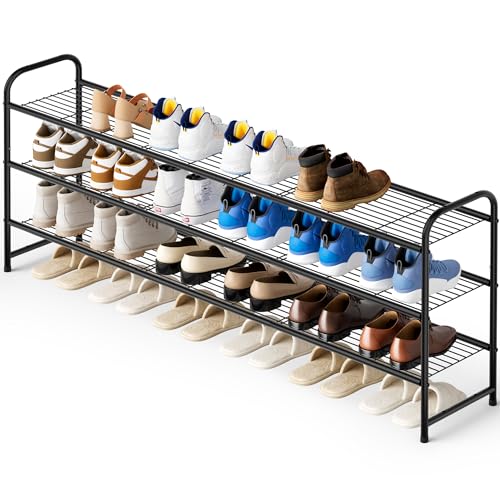 KEETDY 3-Tier Long Shoe Rack for Closet Metal11.4x43x24.411.4 x 43 x 24.4 inches1 PoundsCheck on Amazon
The best shoe rack organizer for most homes is a 3-tier metal tiered rack for entryways, a cubby or cube organizer for closets, and an over-the-door organizer for small apartments or rentals, because each solves a different constraint of space, shoe type, and access.
3 Main Types of Shoe Rack Organizers Compared
Choosing a shoe rack organizer comes down to how many pairs you need to store, what kinds of shoes you wear, and where you have space to put it. Tiered, cubby, and over-the-door designs hold a similar number of pairs on paper, but they use space very differently.

VTRIN 10 Tier Shoe Rack Tall Large Capacity Wide Shoe Organizer with Two Hooks Sturdy Metal Shoe Shelf for Entryway, Closet, Bedroom
Chosen because it specifies Closet and Bedroom.
View on AmazonKEETDY 3-Tier Long Shoe Rack for Closet Metal Shoe Organizer for Entryway, Wide Stackable Shoe Storage Shelf with Sturdy Wire Grid for Closet Floor, Bedroom, Black
Chosen because it specifies Bedroom and Black.
View on Amazon
SONGMICS Shoe Rack, 3-Tier Shoe Organizer, Metal Storage Shelf
Chosen because it specifies 3-Tier Shoe Organizer and Metal Storage Shelf.
View on Amazon
ROMGUAR CRAFT 3 Tier Bamboo Shoe Rack for Closet Free Standing Wood Shoe Shelf Storage Organizer for Entryway Small Space Stackable 27"x11"x20" (Natural)
Picked as a relevant option in this category.
View on Amazon| Type | Typical Dimensions (W x D x H) | Pairs Held | Best For | Clearance Needed | Weight Limit |
|---|---|---|---|---|---|
| 2-Tier Tiered Rack | 26-30″ x 12-14″ x 16-18″ | 6-9 pairs | Low-profile entryways, under window | 14″ depth + 24″ walkway | 25-35 lbs total |
| 3-Tier Tiered Rack | 28-39″ x 11-13″ x 20-28″ | 9-15 pairs | Family entryways, closets | 14″ depth + 30″ for bending | 35-50 lbs total |
| 4-Tier / 10-Tier Tower | 20-28″ x 11-12″ x 45-68″ | 12-20 pairs | Narrow closets, shoe collections | 12″ depth + 36″ door swing | 40-60 lbs total |
| Cubby / Cube Organizer (6-12 cubes) | 36-47″ x 12-15″ x 36-48″ | 6-12 pairs (1 pair per cubby) | Closets, mudrooms, boots & heels | 16″ depth + 36″ for bins | 15-20 lbs per cubby |
| Over-the-Door (24-36 pockets/tiers) | 18-21″ x 6-8″ x 60-68″ | 12-18 pairs | Renters, small apartments, kids’ shoes | 8″ depth + door clearance 2″ | 20-30 lbs total |
Pair counts are often inflated. A rack rated for 12 pairs of flats may only hold 6 pairs of men’s size 11 sneakers or 3 to 4 pairs of winter boots. If you wear mostly bulky footwear, divide the advertised capacity by 30 to 40 percent.
1. Tiered Shoe Racks
Tiered shoe rack organizers use 2 to 4 angled or flat metal or bamboo shelves stacked vertically. They are the fastest to access because shoes sit open and visible.
- Pairs held: A 26-inch wide 2-tier holds 6 pairs of women’s flats or 4 pairs of men’s sneakers. A 39-inch wide 3-tier holds 9 to 12 pairs of sneakers or 15 pairs of flats.
- Shoe types supported: Best for sneakers, flats, loafers, and low sandals. Heels over 3 inches and boots taller than 6 inches will not fit between tiers with a standard 7 to 8-inch vertical clearance. Look for adjustable or extra-tall tiers with 10 to 12-inch spacing for boots.
- Assembly ease: Easiest category. Most models from brands like SONGMICS, Seville Classics, and Simple Houseware use snap-lock poles and require no tools, with assembly in 10 to 20 minutes. Bamboo models like IKEA GREJIG need 4 to 8 screws.
- Limitations: Open storage collects dust and offers no support for delicate shoes. Lightweight metal racks can tip if heavily loaded on top only.
2. Cubby and Cube Organizers
Cubby organizers divide shoes into individual compartments, usually 12 x 12 x 12 inches or 14 x 14 x 12 inches per cube. They are often made from engineered wood, solid wood, or fabric cubes inside a wood frame.
- Pairs held: One pair per cubby is realistic for adult shoes. A 6-cube unit holds 6 pairs, a 10 to 12-cube holds 10 to 12 pairs. Toddler and kids’ shoes can fit 2 pairs per cube.
- Shoe types supported: The most versatile for mixed collections. Cubbies accommodate heels, ankle boots, and high-tops without crushing them, and keep pairs separated so suede and leather don’t scuff. Tall boots over 14 inches still need to be laid sideways or stored on top.
- Assembly ease: Most involved. Engineered wood units from ClosetMaid or SONGMICS ship flat in a 30 to 45 lb box and take 45 to 90 minutes with an included hex key and Phillips screwdriver. Expect 20 to 40 cam locks and dowels. Fabric cube inserts require no assembly.
- Limitations: Largest footprint and heaviest to move. Needs a level floor and wall anchoring if over 30 inches tall, especially in homes with kids or pets.
3. Over-the-Door Shoe Organizers
Over-the-door organizers hang from hooks over a standard interior door (1-3/8 to 1-3/4 inch thick) and use either fabric pockets or metal wire tiers.
- Pairs held: Fabric pocket models with 24 to 36 pockets hold 12 to 18 pairs with one shoe per pocket. Wire tier models with 12 to 18 hooks hold 6 to 9 pairs.
- Shoe types supported: Ideal for flats, sandals, canvas sneakers, and kids’ shoes. Pockets stretch to about 5 inches wide, so wide-width or men’s size 12+ shoes fit tightly. Heavy boots and wet winter shoes will sag fabric pockets.
- Assembly ease: No assembly. Hang hooks over the door in under 5 minutes. Check door clearance first: you need at least 1/8 inch gap at the top and the door must still latch. Hollow-core doors may rattle and cannot hold more than 20 to 25 lbs without damaging hinges.
- Limitations: Blocks full use of the door, adds 6 to 8 inches of depth behind the door, and requires the door to stay closed to be useful. Not suitable for entry doors.
How to Choose for Your Space: Room Size and Clearance
A shoe rack organizer should not block walkways or closet doors. Use these real measurements before you buy:
- Entryway: Leave at least 36 inches of clear walkway for the main entry path. In a typical 4 x 6 ft entryway, a 30-inch wide tiered rack along one wall leaves 18 inches on each side if centered, which is too tight. Place a 26 to 28-inch rack against the longest wall instead. You need 30 inches of open space in front of the rack to bend and put shoes on.
- Closet: In a standard 6 x 2 ft reach-in closet, a 36-inch wide cubby leaves 12 inches for hanging clothes beside it. In a 10 x 12 ft walk-in closet, you can fit a 47-inch wide cubby or two 3-tier racks without blocking the 24-inch minimum aisle for sliding hangers.
- Behind doors: Over-the-door organizers need the door to open 90 degrees. Measure from the hinge to the nearest wall: if you have less than 22 inches, the organizer will hit the wall and prevent the door from opening fully.
- Heights: Standard closet rod height is 66 inches. A 4-tier tower at 60 to 68 inches will fit under it but leave no top clearance. For under-bench or under-window placement, keep total height under 18 inches.
Decision Matrix: Which Shoe Rack Organizer Fits Your Situation
| Your Situation | Best Choice | Why It Works | What to Avoid |
|---|---|---|---|
| Small apartment (500-750 sq ft), 1-2 people | Over-the-door or 2-tier tiered rack | Uses vertical door space, no floor space lost | Large cubby blocks limited floor area |
| Family entryway with 4+ people, mixed shoes | 3-tier wide tiered rack (39″ wide) + boot tray | Holds 9-12 pairs with fast grab-and-go access | Fabric pockets sag under heavy daily use |
| Renter who cannot drill or anchor furniture | Freestanding tiered metal or bamboo rack | No wall damage, moves easily | Tall engineered wood cubbies that require anchoring |
| Kids and pets at home | Low 2-tier metal rack or closed cubby with bins | Low center of gravity, bins hide chewable shoes | Tall narrow towers that tip easily |
| Back pain or limited bending | Over-the-door or 4-tier tower | Shoes at waist to eye level, less bending | Low 2-tier requiring deep bending |
| Large collection: heels, boots, sneakers | Cubby organizer (10-12 cubes) with adjustable shelves | Protects shape of heels and boots, separates pairs | Fixed 7-inch tier spacing that crushes boots |
Material and Construction Trade-Offs
The material affects weight, durability, and how well the organizer handles moisture from wet shoes.
| Material | Weight & Stability | Moisture Resistance | Durability | Price Range |
|---|---|---|---|---|
| Solid bamboo / solid wood | Heavy (15-30 lbs empty), very stable | Good if sealed, can warp if soaked | 5-10 years, can be refinished | usually $50–$150 |
| Engineered wood (MDF/particleboard) | Heavy (25-45 lbs), stable but swells with water | Poor – edges swell if wet shoes sit directly | 3-5 years, veneer chips first | usually $40–$120 |
| Metal (steel tube + wire) | Light (6-12 lbs), can wobble if not leveled | Excellent – powder-coated resists rust | 5-8 years, welds and feet wear first | usually $20–$60 |
| Fabric (non-woven + plastic pockets) | Very light (2-4 lbs), hangs | Fair – pockets trap moisture, need airing | 1-3 years, hooks and seams tear first | usually $15–$35 |
| Plastic (polypropylene) | Light (5-8 lbs), stable when interlocked | Excellent – waterproof, easy to wipe | 3-6 years, connectors crack first | usually $25–$55 |
For entryways where wet or snowy shoes are common, choose powder-coated metal, plastic, or sealed bamboo. Place a 30 x 18 inch boot tray underneath any engineered wood cubby to protect it. Fabric organizers are best reserved for clean, dry shoes inside closets.
Assembly, Moving, and What Wears First
Assembly and long-term durability differ more than listings suggest:
- Box weight and doorway fit: Metal tiered racks ship in a 7 to 12 lb box that fits through any doorway. Engineered wood cubbies ship in one to two boxes at 30 to 45 lbs each and require a 29-inch minimum doorway to carry flat. Measure hallways and stairwells if you live above the first floor.
- Tools and time: Tiered metal racks need no tools and no more than 15 minutes. Cubbies need a screwdriver and included Allen wrench, plus 60 to 90 minutes and floor space to lay out panels. Over-the-door needs no tools.
- What wears first: On tiered racks, the non-slip feet and plastic connectors loosen within 12 to 18 months of daily use – tighten screws every 6 months. On cubbies, the laminate at the front edge chips and the back panel bows if overloaded beyond 15 lbs per cube. On fabric over-the-door organizers, the top hooks bend and pocket stitching tears at the bottom row where heavy shoes pull.
- Moving and rentals: Metal tiered racks disassemble into poles and can be rebuilt 5+ times. Engineered wood cubbies weaken after 2 to 3 moves as cam locks strip the particleboard. If you move frequently, choose metal or solid wood.
Picks by Situation
Best for Entryways: 3-Tier Wide Metal Rack
For a family entryway, a 39-inch wide, 3-tier metal shoe rack organizer holds 9 to 12 pairs of daily shoes without blocking the path. Models from Seville Classics and SONGMICS with 27-inch height and 11-inch depth sit flush against the wall and leave room for a bench above. Choose one with adjustable tiers so you can set the bottom tier to 10 inches for winter boots. They are usually $30–$60 and support 35 to 50 lbs total.
Best for Closets: 10-Cube or 12-Cube Organizer
In closets, a 47 x 12 x 48 inch wooden cubby maximizes vertical space while keeping pairs separated and visible. ClosetMaid and similar cube storage systems allow you to add fabric bins to half the cubes for socks and accessories. Each 14 x 12 inch cubby fits one pair of men’s sneakers or heels flat, and two pairs of flats stacked. They are usually $60–$130 and handle 15 to 20 lbs per cube when anchored to the wall stud.
Best for Renters and Small Spaces: Over-the-Door Organizer
When floor space is under 5 sq ft or you cannot anchor furniture, an over-the-door organizer from Whitmor or Simple Houseware adds 12 to 18 pairs without drilling. Choose wire tier versions for better airflow and easier access to sneakers, or clear pocket versions to see shoes at a glance. They are usually $15–$35 and weigh under 4 lbs, making them easy to take when you move.
Best Budget and Low-Maintenance: 2-Tier Bamboo or Plastic Rack
A simple 2-tier bamboo rack like IKEA GREJIG or a stackable plastic rack holds 6 to 8 pairs at the doorway for daily rotation. At 26 x 10 x 17 inches it slides under a console table or window sill and needs only wiping to clean. These are usually $20–$45, support 25 to 35 lbs, and work well as a secondary organizer inside a larger closet system.
FAQ
How many shoe rack organizers do I need for a family of four?
Most families of four actively rotate 12 to 16 pairs. Plan for one 3-tier wide rack at the entry for 8 to 10 daily pairs and one cubby or over-the-door organizer in the main closet for seasonal and dress shoes.
Can a shoe rack organizer hold boots?
Only if vertical clearance is at least 12 to 15 inches. Standard tiered racks with 7 to 8-inch spacing will crush boot shafts. Use a cubby with tall cubes, a dedicated boot rack with 14-inch uprights, or store tall boots on the top shelf or floor beside the organizer.
Do I need to anchor my shoe organizer to the wall?
Any cubby or tower taller than 30 inches should be anchored to a wall stud with the included bracket, especially with children or pets. Tiered racks under 28 inches and over-the-door organizers do not require anchoring.