Key takeaways
- A black console table can be black-stained pine, black ash, black-finished acacia or a black resin composite, and the shared color tells you nothing about how each one wears. This roundup compares four verified black consoles by what is black,…
A black console table can be black-stained pine, black ash, black-finished acacia or a black resin composite, and the shared color tells you nothing about how each one wears. This roundup compares four verified black consoles by what is black, then by size, material and form, so the finish you choose suits the room and its upkeep.
As an Amazon Associate we earn from qualifying purchases.
By KK Home Furnishings Editorial Team
How to Choose a Black Console Table
Black is an eligibility gate, not a quality signal, so once the finish is confirmed the real work begins. These four reach black in four different ways, which changes the care, the weight and the price, so separate the finish types, compare width and depth for your wall, pick a form, and match the upkeep to the material.
Separate Black Paint, Wood Stain and Black Composite
Black arrives here through very different constructions. The IKEA HAVSTA is solid pine with a black stain, the Article Faydra uses solid and veneered ash in a Black Ash finish, the West Elm Calla is solid acacia offered in Black, and the CB2 Crescent is a black resin and fiberstone composite with a raffia texture.
Read the construction behind the color before comparing. A stained solid wood shows grain through the finish and can be touched up, a veneered piece has a thin layer over a core, and a cast composite has no grain at all but a uniform molded surface. Each reads differently in a room even at the same nominal color.
Durability follows the material, not the shade. Black hides dust less well than it hides scuffs, and a stained wood marks differently than a resin composite chips, so do not treat the four as equally hard-wearing because they share a color. Ask what the piece is made from, then judge how it will age in your hallway.
Compare Width and Depth for the Intended Wall
Size decides where a console can live. These run from the CB2 Crescent at 36 inches wide to the West Elm Calla at 48, with the HAVSTA at 39.375 and the Faydra at 41, while depths span 12 to 15 inches, so the widest is a foot longer than the narrowest and needs a correspondingly longer stretch of free wall.
Measure the wall and the walkway separately. Width has to fit between obstacles like doors and radiators, while depth determines how far the console projects into the room or hallway, so check both against the space. The Calla’s 15-inch depth takes more floor than the 12-inch Faydra and Crescent, which matters in a tight entry.
Treat close widths as effectively equal. The Faydra at 41 inches and the HAVSTA at 39.375 differ by about four percent, and the HAVSTA and Crescent by about nine, so none of those three is meaningfully wider than the next. Save the size comparison for the 48-inch Calla, which genuinely needs more wall than the rest.
Choose Open Shelf, Minimal Waterfall or Pedestal Form
Form changes what a console does beyond holding a lamp. The HAVSTA includes a lower shelf for baskets or shoes, the Faydra and Calla are cleaner surfaces on designed bases, and the Crescent is a sculptural composite piece, so the decision is partly about whether you need storage underneath or a single clean surface.
Match the form to the location. An entryway benefits from a shelf for shoes and bags, while a console behind a sofa or in a formal hall often looks better with an open, uncluttered base. Decide whether the piece is working storage or a display surface, because that sets the form more than the finish or the price does.
Consider cleaning around the form too. An open shelf collects dust and visible clutter, a solid base hides the floor behind it, and a sculptural shape can have crevices that need attention, especially in a dark finish where dust shows. Think about how often you will clean it when weighing a shelf against a clean-lined base.
Match Material Care to the Finish
Each black finish asks for different care. Solid pine with a stain, like the HAVSTA’s, can be wiped and touched up but dents more easily than hardwood; the Calla’s solid kiln-dried acacia with a water-based finish is harder-wearing; veneer edges on the Faydra can chip; and the Crescent’s composite behaves like cast stone.
Match the care to the traffic. A busy family entryway suits a hardwood or composite that shrugs off knocks, while a lower-traffic hallway can carry a softer pine or a veneered piece comfortably. Dark finishes also show dust and fingerprints more than pale ones, so plan on regular dusting whichever material you choose here.
Check load limits where they are published, since they vary. The HAVSTA lists 44 pounds on the tabletop and 22 on the shelf, which is ample for a lamp and mail but not for heavy decor, while the others publish no equivalent figure. Keep within any stated number and treat unstated capacity conservatively rather than guessing.
Top Picks
Each console below fills a clear role, with the verified black finish, dimensions and material drawn from the makers’ listings, current as of October 2026. Prices move and two have conditions, so confirm before buying. The table pairs the standout detail with the main catch for each before the notes below.
| Product | Best For | Key Spec | Watch Out For |
|---|---|---|---|
| Article Faydra | Best Overall | Black Ash; 41 × 12 in; Contract Grade | Mixed solid, veneer and MDF build |
| IKEA HAVSTA | Best Solid-Pine Storage | solid pine; shelf; 44 lb top | Only 24.75 in tall |
| CB2 Crescent | Best Sculptural Black | black resin/fiberstone; 36 in wide | Final sale; shifting clearance price |
| West Elm Calla | Best Solid-Acacia Premium | solid acacia; 48 in wide | Black is made to order |
Article Faydra: Best Overall
The Article Faydra is the overall pick for a balanced black console. It measures 41 inches wide by 12 deep by 30 tall in a Black Ash finish, built from solid and veneered ash with MDF and steel to a Contract Grade spec, and lists around $349 at Article as of October 2026 in the mid tier for a console of this width.
It suits an entry or living-room wall that wants a generous 41-inch surface without a deep footprint, and the 30-inch height also works behind a standard sofa. The Contract Grade spec points to commercial-level durability. Measure the 12-inch depth against your walkway, which keeps it practical in a hallway as well as a room.
The catch is construction: it mixes solid and veneered ash with MDF and steel rather than being solid wood throughout, so veneer edges can chip under hard use and set expectations accordingly. Being a dark finish, it also shows dust readily. Choose the Faydra when a wide, shallow black console with a designed look fits the space.
IKEA HAVSTA: Best Solid-Pine Storage
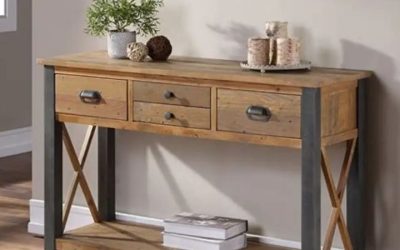
The IKEA HAVSTA is the pick for solid wood and real storage at the lowest price. It measures 39.375 inches wide by 13.75 deep by 24.75 tall in solid pine with a black stain, lists 44 pounds on the tabletop and 22 on the shelf, and sells for around $219.99 at IKEA as of October 2026, reduced from a higher regular price.
It suits a spot that needs a lower shelf for baskets, shoes or trays beneath a near-40-inch surface, and the solid-pine build holds fixings better than engineered board. The black stain lets the grain show through. Confirm the 44-pound top limit covers your lamp and decor, as it is the only published figure in this group.
The catches are height and depth. At 24.75 inches it sits low for an entryway, where you would be stooping to drop keys, and at 13.75 inches it is the deepest here, taking the most walkway. Pine also dents more easily than hardwood. Choose it for a low placement or behind a low sofa rather than a standard entry wall.
CB2 Crescent: Best Sculptural Black
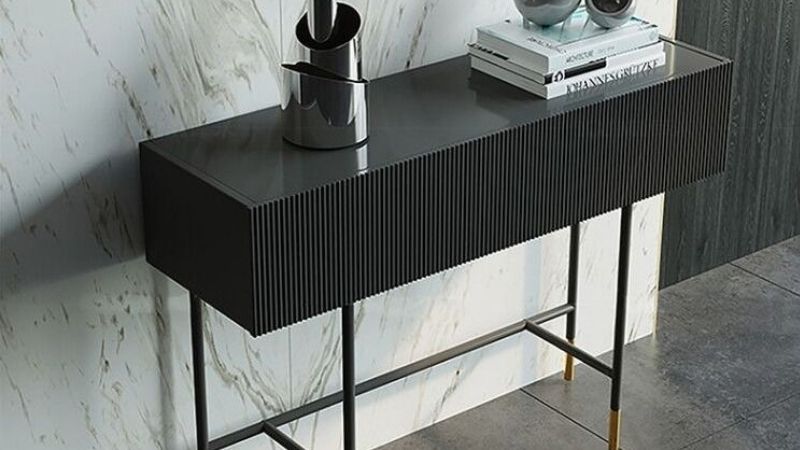
The CB2 Crescent is the pick when the console should be a design statement. It measures 36 inches wide by 12 deep by 31 tall in a black resin and fiberstone composite with a raffia texture, and lists around $399.97 at CB2 as of October 2026 on a clearance, final-sale snapshot that has moved down across recent listings.
It suits a room where the piece is meant to be noticed, since the molded composite and textured surface give a sculptural presence that wood consoles do not, while the 12-inch depth keeps it hallway-friendly. Measure the 36-inch width against the wall, the narrowest here, and treat the surface as decorative rather than heavy-duty.
Two cautions apply. The price has shifted across snapshots and is marked final sale, so confirm the current figure and the return terms before buying, and a cast composite chips rather than dents, with no grain to disguise a mark. Choose the Crescent when the sculptural black form is the reason for the purchase.
West Elm Calla: Best Solid-Acacia Premium
The West Elm Calla is the premium pick in solid wood. It measures 48 inches wide by 15 deep by 30 tall in solid kiln-dried acacia with a water-based finish, and lists around $699 at West Elm as of October 2026, the widest and most expensive option here, with the Black finish offered as a made-to-order configuration.
It suits a long wall that can carry a 48-inch console and a buyer who wants genuine solid hardwood, since kiln-dried acacia resists warping and takes knocks better than pine or veneer. The 30-inch height suits an entry or a sofa back. Measure the 48-inch width and 15-inch depth, the largest footprint in this group.
The catch is the ordering condition: the Black finish is made to order, which means a lead time, and West Elm notes made-to-order items fall outside the usual easy-return terms, so confirm those before committing. At the top of this price range, choose the Calla when solid acacia and the wider format justify the cost.
Frequently Asked Questions
Buyers of black consoles ask the same core questions, mostly about grain, materials, sizing and placement. Each answer below leads with the direct reply, then adds the condition that changes it, so you can apply it to the exact finish and wall you have rather than assuming every black console behaves the same way.
Does black-stained wood show grain?
Usually yes, and that is the difference between a stain and an opaque paint. A black-stained solid wood like the IKEA HAVSTA’s pine lets the grain pattern show through the color, giving texture, while a fully painted or molded black surface reads flat and uniform with no visible wood figure underneath at all.
How much grain shows depends on the wood and the depth of the stain. Open-grained woods show more texture than tight-grained ones, and a heavier stain obscures more, so two black-stained pieces can look quite different. The Faydra’s Black Ash and the Calla’s black acacia will each carry their own character in the finish.
Decide which look you want before shopping the color. If you want visible wood texture, a stained solid or veneered wood delivers it; if you want a seamless, uniform black, a composite like the CB2 Crescent gets closer. Neither is better, but they are not interchangeable even though both are listed simply as black.
Is a black resin console the same as black wood?
No. A black resin and fiberstone composite, like the CB2 Crescent’s, is a cast material with a molded, uniform surface and no grain, while black wood, whether solid pine, ash or acacia, is a natural material with visible texture that can be sanded or touched up. They share a color but little else in construction.
They also wear differently. Composite surfaces resist moisture and marks well but can chip at an edge, and the damage shows as a lighter break in a solid color; wood dents and scratches but a stained surface can often be blended or refinished. Match the material to the knocks the console will take where it sits.
Weight and feel differ too. A cast composite console is typically heavier and more monolithic than a slim wood piece, which affects moving it and how substantial it reads in a room. Choose by the material behavior and the look you want, not by assuming the black finish makes them equivalent purchases.
How wide should a console table be?
It depends on the wall and the job, but these span 36 to 48 inches, which covers most entryway and sofa-back uses. A 36-inch console suits a small entry or a short wall, while 48 inches fills a long hallway or sits behind a large sofa, so measure the available wall and leave clearance at each end.
Behind a sofa, a common aim is a console a little shorter than the sofa so it does not stick out past the arms. In an entryway, the limit is usually the wall between a door and the next obstacle. Measure that span first, then choose a width that leaves breathing room rather than filling it corner to corner.
Remember depth matters alongside width in tight spaces. A 48-inch console that is 15 inches deep takes considerably more floor than a 41-inch one at 12 inches, so in a narrow hallway the depth often constrains the choice more than the width. Check both dimensions against the room before settling on a size.
Can a black console table go behind a sofa?
Yes, and height is the deciding factor. Aim for a console at or just below the sofa back so the surface sits level with or under the top rail, which is where the 30-inch Faydra and Calla or the 31-inch Crescent typically land well. Measure your sofa back before choosing, since sofa heights vary widely.
Depth and width matter in that position too. A shallow 12-inch console tucks behind a sofa without pushing it far from the wall, and a width a little shorter than the sofa looks intentional rather than overhanging. Leave a path behind the console if people need to walk between the seating and the wall.
A low console can disappear there. The HAVSTA at 24.75 inches would sit well below most sofa backs, which suits a low-profile sofa or a different spot entirely, so it is the one to check carefully for this use. Match the height to your sofa first, then confirm the depth works for the room’s walkways.
Final Thoughts
Choosing a black console table starts with what is actually black: separate stained pine, black ash, finished acacia and black composite, then compare width and depth, pick the form you need, and match care to material. The balanced Faydra, storage HAVSTA, sculptural Crescent and solid-acacia Calla each suit a specific wall.