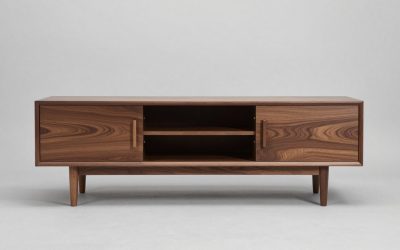
A mid century coffee table is defined by more than a walnut tone: tapered legs, a low visually light base, and clean or organic forms are what actually make the style. This roundup compares four verified picks whose makers describe genuine mid-century cues, then weighs form, footprint and storage so you buy the look, not just the color.
As an Amazon Associate we earn from qualifying purchases.
By KK Home Furnishings Editorial Team
How to Choose a Mid Century Coffee Table
The word walnut gets attached to anything brown, so the first job is to read past the color to the design. A true mid-century coffee table shows it in the legs, the proportions and the form, not just the finish, so look for described style cues, then choose organic or rectangular shapes and decide whether hidden storage is worth the mass.
Look for Tapered, Sculptural or Visually Light Bases
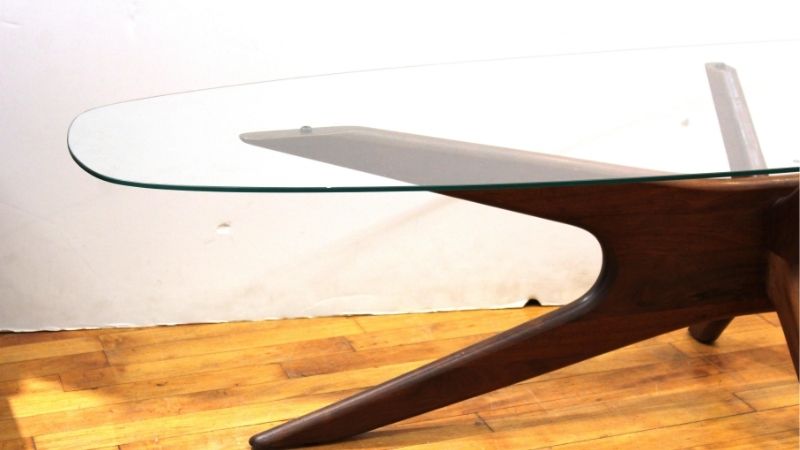
The base is where mid-century design shows most clearly. Tapered or sculptural legs that lift the table and keep it visually light are a hallmark, and the picks here reflect it: West Elm and Crate & Barrel describe tapered legs, while the Amoeba uses a sculptural solid-walnut form. The base, more than the top, signals the style.
Judge a base by how it carries weight visually. A leg that angles in and tapers reads lighter than a boxy pedestal, which is why mid-century pieces feel airy even when solid. Look at whether the legs lift the body off the floor and taper toward the foot, because that is the detail that separates the style from a generic brown table.
Match the base to the room’s other pieces. A visually light, legged table keeps a small living room feeling open, while a heavier form anchors a larger space. The leg style also affects stability and cleaning underneath, so weigh the look against the practicality of a base you will vacuum around and that must stand up to daily knocks.
Use Walnut as a Style Cue, Not a Requirement
Walnut is associated with the era, but it is a cue, not a rule. The Article Cooper and Amoeba use walnut, the Crate & Barrel Tate a walnut veneer, and the West Elm combines walnut veneer with marble, so the style comes from the overall treatment, not the wood alone. A walnut tone does not by itself make a table mid-century.
Read the material in context with the form. Solid walnut, as on the Amoeba, and walnut veneer, as on the Tate, can both read authentically mid-century when the legs and proportions fit; solid is not more authentic than veneer. Judge the whole piece, since veneer over engineered wood is a period-appropriate construction too.
Do not rule out other materials. Marble, as on the West Elm, belongs squarely in mid-century design, so a marble top paired with tapered legs is not a contradiction. Treat walnut as one signal among several, and weigh the base, the form and the proportions together rather than letting the finish color decide whether a table counts.
Choose Organic Curves or Clean Rectangular Geometry
Mid-century design runs from organic curves to crisp rectangles, and the shape changes the room. The Article Amoeba is a round, organic form, the Cooper a softer rectangle at 35.5 by 28.5 inches, and the West Elm and Tate are clean 48-by-24-inch rectangles, so you can choose the geometry that suits your seating and your available space.
Pick the form for the layout. A round table like the Amoeba has no corners to catch a walkway and suits a tighter or more casual grouping, while a long rectangle like the Tate anchors a sofa and seats more around it. Measure the seating arrangement, since the shape should follow how people sit rather than just the look you like.
Footprints here are closer than they look, so compare carefully. The West Elm and Tate tie at exactly 8 square feet, while the Cooper and Amoeba sit within about 2.2 percent of each other near 7, so neither rectangle is larger than the other and the Cooper is not much bigger than the Amoeba. Judge size by the measured area.
Decide Whether Hidden Storage Is Worth the Added Visual Mass
Storage adds function but also bulk, so decide if you need it. The West Elm has a pop-up lift top and the Crate & Barrel Tate a full-extension drawer, while the Article Cooper and Amoeba have no hidden storage and stay visually lighter. A low, open table reads more purely mid-century; a storage table trades some of that for utility.
Match the choice to how you use the room. A lift-top or drawer keeps remotes, blankets or work within reach and hides clutter, which suits a table that doubles as a workspace or a family room centerpiece; a clean, storage-free top suits a formal or minimal living room. Weigh the daily usefulness against the heavier look storage brings in.
Factor the mechanism into longevity. A pop-up top and drawer glides are moving parts that can wear or loosen over years, where a solid top has nothing to fail, so a storage table asks for a little more care. If you rarely need the storage, the simpler Cooper or Amoeba is one less thing to maintain in the room over time.
Top Picks
Each pick below fills a clear role, with style cues, dimensions and storage drawn from the makers’ listings, current as of October 2026. Prices move and one reflects clearance, so confirm before buying. The table pairs the standout detail with the main catch for each table before the fuller notes that follow just below here.
| Product | Best For | Key Spec | Watch Out For |
|---|---|---|---|
| Article Cooper 35.5 | Best Overall | explicit MCM style; 35.5 × 28.5 in; walnut | No hidden storage |
| Article Amoeba 35.5 | Best Sculptural Solid-Walnut | solid American black walnut; round | Footprint near-tied with Cooper |
| West Elm Marble Pop-Up 48 | Best Lift-Top Storage | pop-up top; walnut veneer + marble | Larger 8 sq ft footprint |
| Crate & Barrel Tate 48 | Best Drawer Storage | tapered legs; 1 drawer; 48 × 24 in | Veneer, not solid walnut |
Article Cooper 35.5: Best Overall
The Article Cooper 35.5 is the overall pick because its maker describes it explicitly as mid-century modern and the form backs that up. It measures 35.5 inches wide by 28.5 deep by 16 tall in solid and veneered wood with a walnut finish, occupies about 7 square feet, and lists around $349 at Article as of October 2026 in the mid tier.
It suits a living room that wants a clear mid-century look without extra bulk, since the low 16-inch height and softened-rectangle top read light and period-appropriate. The walnut finish pairs with warm and neutral schemes. Measure the roughly 7-square-foot footprint against your seating, as its size sits close to the Amoeba’s.
The catch is no hidden storage: the clean top keeps the style pure but offers nowhere to tuck remotes or blankets, so if you want that, the Tate or West Elm fit better. Its footprint is also only about 2.2 percent larger than the Amoeba’s, so it is not meaningfully bigger; choose the Cooper for the balanced rectangular form.
Article Amoeba 35.5: Best Sculptural Solid-Walnut
The Article Amoeba 35.5 is the pick for a sculptural, solid-walnut piece. It is a round, organic form 35.5 inches in diameter by 17.5 tall in 100 percent solid American black walnut, occupies about 6.87 square feet, and lists around $299 at Article as of October 2026 in the mid tier, the most solid-wood-forward option here.
It suits a room that wants a statement curve with no corners to catch a walkway, and the organic shape is a classic mid-century gesture that works in casual groupings. Solid walnut gives it weight and warmth. Measure the 35.5-inch diameter against your seating, since a round table reads differently in a layout than a long rectangle does.
The catch is that its footprint is nearly tied with the Cooper’s, within about 2.2 percent, so it is not dramatically smaller despite the round form, and it has no hidden storage. Solid walnut also costs and weighs more than veneer. Choose the Amoeba when the sculptural solid-wood form is the point, not the floor it saves you.
West Elm Marble Pop-Up 48: Best Lift-Top Storage
The West Elm Mid-Century Marble Pop-Up 48 is the pick when you want a lift-top that still looks the part. The 48-inch rectangular table pairs a pop-up storage top with beveled edges and tapered legs in eucalyptus, engineered wood and walnut veneer with marble, occupies 8 square feet, and lists around $799 at West Elm as of October 2026.
It suits a table that doubles as a workspace or a spot to hide clutter, since the pop-up top rises to a comfortable height and stores items beneath, while the marble and tapered legs keep the mid-century look. Confirm the 8-square-foot footprint fits your room, as the 48-by-24-inch size is larger than the two Article tables here.
The catches are size, price and the mechanism. At 8 square feet it needs a larger room, at around $799 it is the priciest here, and the pop-up is a moving part that asks for a little care over the years. Its footprint ties exactly with the Tate’s, so it is not larger than that table; choose it for the lift-top function.
Crate & Barrel Tate 48: Best Drawer Storage
The Crate & Barrel Tate 48 is the pick for drawer storage in a mid-century rectangle. It measures 48 by 24 inches with tapered legs, beveled detail and a full-extension drawer in walnut veneer over poplar and engineered wood, occupies 8 square feet, and lists around $699.99 on clearance from $899 at Crate & Barrel as of October 2026.
It suits a living room that wants hidden storage without a lift mechanism, since the full-extension drawer holds remotes or coasters and glides fully open, while the tapered legs and beveled top carry the style. Measure the 48-by-24-inch footprint against your sofa, as it ties with the West Elm as the largest here at 8 square feet.
The catch is construction: it is walnut veneer over poplar and engineered wood, not solid walnut, so set expectations on material even though that does not make it any less mid-century. The clearance price may also change, so confirm it before buying. Choose the Tate when a drawer and a long rectangular form suit the room best.
Frequently Asked Questions
Buyers of mid-century coffee tables ask the same core questions, mostly about what defines the style, whether walnut is required, and which shape suits a room. Each answer below leads with the direct reply, then adds the condition that changes it, so you can apply it to your space and taste rather than a single idea of the look.
What makes a coffee table mid-century modern?
It is the combination of form, proportions, legs and material treatment, not any single feature. Tapered or sculptural legs that lift the body, low and visually light proportions, and clean or organic forms together create the style, which is why the makers here point to described cues like tapered legs and beveled edges, not color alone.
Read the whole piece, since one cue is not enough. A walnut tone without the right legs is just a brown table, while tapered legs under a clean low top read mid-century even in another finish. Look at how the base carries the body, the height and the overall silhouette, because those together place a table in the style or outside it.
Authenticity is about coherence, not a checklist. Article labels the Cooper and Amoeba mid-century modern outright, West Elm cites beveled edges and tapered legs, and Crate & Barrel calls the Tate classic mid-century styling, so trust described cues and the form you can see over a vague association with a wood color or a decade.
Does a mid-century coffee table need to be walnut?
No. Walnut is strongly associated with the era, but it is a cue, not a requirement, and other materials belong in the style too. The West Elm table here pairs walnut veneer with marble, which is squarely mid-century, so a table can read authentically of the period without being walnut, or while combining walnut with stone or metal.
What matters more is the treatment and the form. A marble top on tapered legs, or a painted or lighter wood with the right proportions, can sit comfortably in a mid-century room, so do not let the finish color be the deciding test. Judge whether the legs, the silhouette and the proportions fit the style, then let the material follow.
Solid walnut is not more authentically mid-century than veneer, either. Walnut veneer over engineered wood, as on the Tate, is period-appropriate and reads the same in a room, so choose solid or veneer on durability and budget, not authenticity. The style lives in the design, not in whether the walnut goes all the way through.
Is round or rectangular better for a small living room?
A round table often suits a small or casual room better, because it has no corners to catch a walkway and eases traffic around tight seating, as the Article Amoeba does. A rectangle like the Cooper or Tate anchors a sofa and seats more, but needs more clear floor, so the better shape depends on your layout, not a universal rule.
Match the shape to how people move and sit. In a snug room where you squeeze past the table, a round or softened form reduces bumped shins; where a long sofa needs a table in front of it, a rectangle lines up better. Measure the seating and the walkways first, then let the shape follow how the space is actually used.
Size matters alongside shape, and these are closer than they look. The Cooper and Amoeba sit within about 2.2 percent of each other in footprint, so the round one is not meaningfully smaller, while the two rectangles tie at a larger 8 square feet. So compare the measured area, not just the shape, when fitting one into a small room.
Do lift-top coffee tables still look mid-century?
They can, when the design keeps the right cues. The West Elm pop-up table here holds its mid-century look through beveled edges, tapered legs and a walnut-and-marble palette, even with the lift mechanism inside, so a storage table is not automatically off-style. The function sits beneath a top that still reads of the period above it.
The trade-off is visual mass, not authenticity. A lift-top or drawer adds a little bulk compared with a clean, open-legged table, so it reads slightly heavier, which suits a family room better than a minimal one. Decide whether the daily usefulness of hidden storage is worth that extra presence in the room you are furnishing now.
Weigh the mechanism against your needs. A pop-up top and drawer glides are moving parts that can wear over years, where a solid top has nothing to fail, so a storage table asks for a little more care. If you rarely need the storage, a clean table like the Cooper keeps the look pure with one less thing to maintain.
Final Thoughts
Choosing a mid century coffee table means reading the design, not the wood tone: look for tapered legs and right proportions, treat walnut as a cue not a rule, pick organic or rectangular form, and weigh storage. The clean Cooper, sculptural Amoeba, lift-top West Elm and drawer Tate each suit a particular room and need.