Key takeaways
- A small side table is only as small as its footprint, and the word in the name is no guarantee: a table marketed as compact can take more floor than one that is not. This roundup compares four verified picks…
A small side table is only as small as its footprint, and the word in the name is no guarantee: a table marketed as compact can take more floor than one that is not. This roundup compares four verified picks by the floor area they actually occupy, from about 1.07 to 1.88 square feet, so you choose on space, not on labels.
As an Amazon Associate we earn from qualifying purchases.
By KK Home Furnishings Editorial Team
How to Choose a Small Side Table
The trap with small tables is judging them by width or by the name on the box. A 14-inch tabletop can still sit on a wide base, and a round tray table can eat more floor than a slim C-table, so the first move is to compare the real footprint, then height, function and any load or weather limits before you buy one of them.
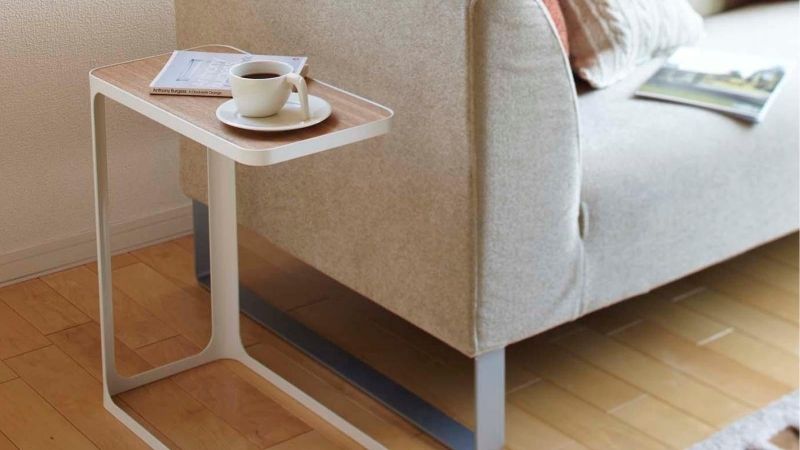
Compare Floor Footprint, Not Marketing Labels
Footprint, the floor area a table occupies, is the number that decides whether it fits a tight spot. Measured in square feet, the picks here run from the West Elm Pavel at about 1.07 to the Article Torme at about 1.88, with the IKEA GLADOM near 1.67 and the CB2 concrete table around 1.36. Width alone hides those gaps entirely.
Work out the area for each shape before comparing. A rectangular table is width times depth; a round one is roughly three times the radius squared, so a 14-inch round top covers far less floor than a 15-by-18-inch C-table. Convert everything to the same unit, square feet, so a slim-looking table does not surprise you in the room.
Do not trust the marketing name. The GLADOM reads as a small tray table, yet the Pavel occupies far less floor despite also being compact, so the smallest footprint here is the Pavel, not the one branded hardest as small. Measure the gap beside your sofa or chair first, then match it to the actual area each table needs on the floor.
Match Table Height to the Seat Beside It
Height matters as much as footprint, because a side table should land near the arm of the seat beside it. These range from the 17.9-inch West Elm Pavel to the 23-inch Article Torme, with the GLADOM at 20.625 and the CB2 at 22 inches, so the right one depends on your sofa or chair arm height more than on the price.
Measure the seat or arm you will set the table against, then pick a height within a couple of inches of it so a drink or lamp sits at a natural reach. A lower table like the Pavel suits a low-slung sofa; a taller one like the Torme suits an armchair or a bed. The gap between the lowest and highest here is over five inches.
A mismatch is more than cosmetic. A table far below the armrest makes you reach down awkwardly, while one much taller can block the arm or look ungainly, and neither is comfortable for daily use. Because height is fixed once you buy, confirming it against the exact seat beside the table is worth the quick measurement up front.
Choose Tray, C-Table, Pedestal or Solid Base
The base style changes how a small table works, not just how it looks. The GLADOM is a tray table with a lift-off top, the Torme a C-table that slides over a sofa seat, the Pavel a solid pedestal, and the CB2 a solid concrete form, so each suits a different use and a different spot in the room you are furnishing.
Match the style to the job. A C-table like the Torme tucks its base under a sofa so the top hovers over your lap, which suits a laptop or a plate; a tray table like the GLADOM lifts off to carry; a solid pedestal anchors a lamp. Decide what the table is for before choosing the base, because the form really follows that use.
Each style has a long-term trade-off. A lift-off tray can loosen at the frame over time, a C-table needs seat clearance underneath, and a heavy solid base is stable but hard to move. None is best in the abstract, so weigh the function you need against the maintenance and the weight you are willing to live with day to day.
Check Load and Indoor/Outdoor Limits
Capacity and weather rating separate tables that look alike. The West Elm Pavel is rated to a published 300 pounds on its solid acacia, while the IKEA GLADOM lists a 22-pound tabletop maximum for indoor use only, so what you can put on each and where you can put it differ a great deal despite both being compact tables.
Match the limit to the load and the location. A 22-pound ceiling is fine for a lamp and a book but not for sitting on or stacking; a 300-pound rating is far more forgiving. For outdoors, the CB2 concrete table is made for it, but even outdoor-safe pieces have conditions, so read the rating against how you will actually use it.
Treat outdoor-safe as conditional, not weatherproof. CB2 lists its concrete table for indoor or outdoor use yet still directs owners to cover or store it in bad weather and bring it in during extreme freezing, so it is not weatherproof year-round. Following those conditions keeps the concrete top from cracking or staining.
Top Picks
Each pick below fills a clear role, with footprint, height and limits drawn from the makers’ listings, current as of October 2026. Prices move and one has conflicting snapshots, so confirm before buying. The table pairs the standout figure with the main catch for each table before the detail underneath it in the notes.
| Product | Best For | Key Spec | Watch Out For |
|---|---|---|---|
| West Elm Pavel | Best Overall | ~1.07 sq ft; 300 lb capacity | Low 17.9 in height |
| IKEA GLADOM | Best Portable Tray | ~1.67 sq ft; lift-off tray | 22 lb max; indoor only |
| Article Torme | Best C-Table | 15 × 18 in; 23 in tall | Largest footprint here |
| CB2 Ivory Concrete | Best Indoor/Outdoor | 14 × 14 in; outdoor-safe | Heavy; price snapshots conflict |
West Elm Pavel: Best Overall
The West Elm Pavel is the overall pick because it combines the smallest footprint with the highest published capacity. At about 14 inches in diameter it occupies roughly 1.07 square feet, is built on solid acacia rated to a published 300 pounds, and lists around $199 at West Elm as of October 2026 in the mid tier for a small table.
It suits a tight spot beside a sofa or chair where floor space is scarce but you still want a sturdy surface, since the 300-pound rating shrugs off far more than a typical side table needs. The round top avoids sharp corners in a walkway. Measure the roughly 1.07-square-foot footprint against the gap before buying this one.
The catch is height: at 17.9 inches it is the lowest table here, which suits a low sofa but can sit below the arm of a taller chair or a bed, leaving a drink at an awkward reach. Match that 17.9-inch height to the exact seat beside it, because the low profile is only an advantage when it actually lines up.
IKEA GLADOM: Best Portable Tray
The IKEA GLADOM is the pick when you want a light, movable table. It is a tray table about 17.5 inches across and 20.625 inches tall with a lift-off top, occupies roughly 1.67 square feet, and lists around $19.99 at IKEA as of October 2026, by far the cheapest option here and a genuinely budget buy for the role.
It suits anyone who wants to carry the top to serve drinks or snacks, then set it back down, since the removable tray is the whole point. The light build moves easily between rooms. At roughly 1.67 square feet it is not the smallest here, so measure the footprint rather than assuming a tray table is automatically the most compact one.
Its limits are load and location: IKEA rates the top to just 22 pounds and for indoor use only, so it cannot hold heavy items, be sat on, or live on a patio. That 22-pound ceiling is fine for a lamp and a cup but little more, so keep it to light duty indoors and it will serve well for the low price it asks.
Article Torme: Best C-Table
The Article Torme is the pick for a C-table that works over a sofa seat. It measures 15 inches wide by 18 inches deep by 23 inches tall, built from solid and veneered oak with pine, MDF and steel, and lists around $249 at Article as of October 2026 in the mid tier, with the tallest usable height in this group of four.
It suits working on a laptop or eating from the sofa, since the base slides under the seat so the top hovers over your lap at a comfortable 23 inches. The mixed-material build keeps it sturdy for the shape. Confirm there is clearance beneath your sofa for the base to slide in, as a C-table needs that gap to function at all.
The catch is footprint: at 15 by 18 inches it covers about 1.88 square feet, the largest here, so it is the least compact of these despite the slim profile of a C-table. If floor space is the priority, a smaller pedestal fits better; choose the Torme when the over-seat function matters more than the floor area it takes up.
CB2 Ivory Concrete: Best Indoor/Outdoor
The CB2 Ivory Concrete table is the pick that moves between indoors and the patio. It measures 14 inches square by 22 inches tall, occupies about 1.36 square feet, and is listed by CB2 across snapshots from roughly $249.97 on clearance to $399 at full price as of October 2026, so confirm the live figure before you buy.
It suits a buyer who wants one solid table for a living room and a balcony, since the concrete form is made for indoor or outdoor use and the square top sits neatly in a corner. The weight makes it stable in a breeze outside. Measure the roughly 1.36-square-foot footprint and plan for its heft when you decide where to place it.
Two cautions apply. The price appears at very different figures across CB2’s own pages, so do not treat a clearance figure as lasting, and outdoor-safe is not weatherproof year-round: CB2 still says to cover or store it in bad weather and bring it in when freezing. That keeps the concrete from cracking or staining.
Frequently Asked Questions
Shoppers ask the same practical things about small tables, mostly about size, height and where a table can live. Each answer below starts with the direct reply, then adds the condition that changes it, so you can apply it to the exact spot and use you have in mind rather than a generic idea of what counts as small.
How small is a small side table?
There is no fixed figure, which is why footprint is the useful measure. In this group the smallest, the West Elm Pavel, covers about 1.07 square feet, while the largest, the Article Torme, covers about 1.88, so small spans nearly a two-to-one range here. Compare the floor area in square feet, not just the width on the label.
What counts as small depends on the gap you are filling. A table beside a narrow armchair needs a tighter footprint than one anchoring a corner, so measure the available space first and work back to the area a table can occupy. A round top usually covers less floor than a rectangle of the same nominal width, so shape matters.
Do not let the name decide it. A piece marketed as small can still take more floor than a plainer rival, as the GLADOM does against the Pavel, so the honest check is square feet on the floor. Convert each table’s dimensions to area, line them up, and the genuinely smallest one is clear regardless of the branding.
Is a 14-inch side table wide enough?
Often yes, for a lamp, a drink and a book, which is what most side tables hold. The Pavel at about 14 inches and the CB2 at 14 inches square both work for that, and the Pavel’s 300-pound rating means width, not strength, is the limit. Measure what you actually set down before deciding 14 inches is too small for you.
It depends on the items and the surface shape. A 14-inch round top gives less usable area than a 14-inch square because of the rounded corners, so a square or rectangular top of the same width holds a little more. If you routinely place a wide tray or a large lamp base, step up a couple of inches in width to suit it.
Balance width against the floor it costs. A wider top is more useful but occupies more room, and in a tight spot that trade rarely pays off. For most bedside or sofa-side duty, 14 inches is enough; reserve the larger tops for where you genuinely need the extra surface and have the floor area to give to it in the room.
What height should a side table be?
Aim within a couple of inches of the arm or seat beside it, which for these tables means somewhere in the 18-to-23-inch range. The West Elm Pavel sits at 17.9 inches, the GLADOM at 20.625, the CB2 at 22, and the Article Torme at 23, so the right one is the table that matches your specific sofa or chair arm.
Measure the armrest or the mattress height you will set the table beside, then choose a table close to it so a drink or lamp is at an easy reach. A low sofa pairs with a lower table like the Pavel; an armchair or bed pairs with a taller one. The spread here is over five inches, enough to feel in daily use.
Remember the height is fixed, so there is no adjusting later. A table far below the arm forces an awkward reach and one much taller can block it, so the quick measurement against the real seat prevents a daily annoyance. When between sizes, slightly taller usually reads better beside a chair than slightly too low does.
Can an indoor side table be used outside?
Only if the maker rates it for outdoor use, which most indoor tables are not. The IKEA GLADOM, for instance, is listed for indoor use only, so moisture would damage it, while the CB2 concrete table is made for indoor or outdoor use. Check the listing’s use rating before putting any table on a patio or a balcony.
Even outdoor-rated pieces come with conditions. CB2’s concrete table is outdoor-safe but the maker still says to cover or store it in bad weather and bring it indoors during extreme freezing, so outdoor-safe does not mean weatherproof year-round. Following those conditions is what actually protects the table across the seasons outside.
Putting an indoor table outside risks warping, rust or finish damage that erases any sense of value. Wood and particleboard swell with damp, and unrated metal can corrode, so the saving disappears when the table fails. If you need one piece for both, buy one rated for it, like the CB2, and still follow its weather conditions.
Final Thoughts
Choosing a small side table well means reading the floor plan before the label: compare footprint in square feet, match the height to the seat, pick the base style, then check load and weather limits. The compact Pavel, portable GLADOM, over-seat Torme and indoor-outdoor CB2 each suit a specific spot, not every room.