Key takeaways
- You do not pick a replacement filter by brand loyalty; you match it to the exact unit you own. A genuine humidifier HEPA filter lists the specific models it fits and a replacement interval, so you buy the right part…
You do not pick a replacement filter by brand loyalty; you match it to the exact unit you own. A genuine humidifier HEPA filter lists the specific models it fits and a replacement interval, so you buy the right part and know what it costs per year rather than guessing from a photo.
As an Amazon Associate we earn from qualifying purchases.
By KK Home Furnishings Editorial Team
How to Choose a Humidifier HEPA Filter
A replacement filter is judged on fit first and cost over time second, not on marketing. These criteria start with exact part-number compatibility and why one filter never fits a whole brand, then cover the separate humidifier wick, the real annual cost, and the genuine-versus-aftermarket question that decides how well it performs.
Exact Part-Number Compatibility
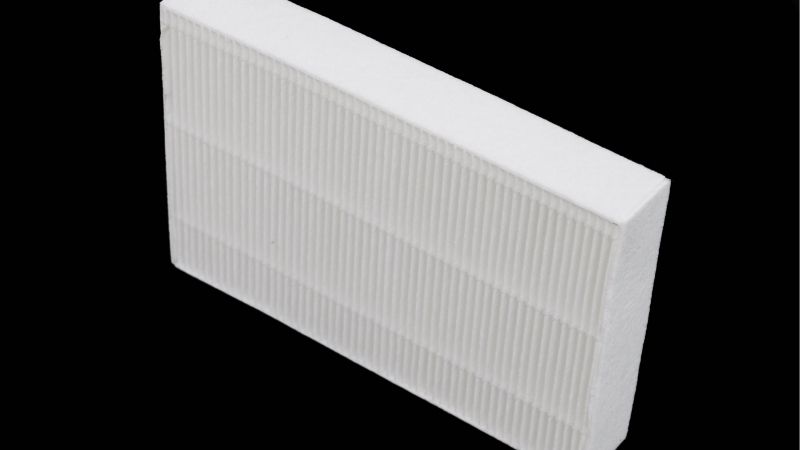
The one thing that matters is whether the filter fits your exact unit, so start with the part number and model list. The Sharp FZC100HFU fits the KC850U, the FZP11HFU fits the KCP70UW and KCP110UW, and the Philips FY1410/30 fits a specific run of AC-series models, so confirm your appliance appears on the filter’s list before buying.
Do not assume a filter fits every model from the same brand, because it does not. A Sharp filter for one unit will not fit another Sharp unit, so avoid any listing that claims to fit all Sharp or all Philips humidifiers. Find your model number on the appliance, then match it to the filter’s stated compatibility exactly.
Buying the wrong part is the most common and avoidable mistake here. If your model is not explicitly listed, treat the filter as incompatible rather than hoping it is close enough, since a filter that does not seat properly lets air bypass it and defeats the filtration you paid for, even if it physically fits the housing.
The Humidifier Wick Is Separate
A HEPA filter and a humidifier wick are two different consumables, so replacing one does not refresh the other. The HEPA filter captures airborne particles, while the humidification side uses a separate wick or demineralization cartridge to add moisture; a combined unit needs both maintained on their own schedules to keep doing both jobs.
Check which parts your unit uses before ordering, since buying only the HEPA filter leaves a tired wick circulating stale moisture. Some models bundle a carbon layer with the HEPA stage, like the Dyson 965432-01, which combines HEPA and carbon in one unit; confirm whether yours separates them or replaces them together as a single cartridge.
Factor both consumables into the running cost, since a unit that needs a yearly wick plus a periodic HEPA filter costs more to maintain than the filter price alone suggests. Check the wick interval and price when you order the filter, so the moisture side does not quietly fall behind the filtration you just refreshed.
Replacement Interval and Annual Cost
Interval and price together give the real cost, which is where filters differ most. The Sharp FZC100HFU lasts up to five years at around 100 dollars as of October 2026, roughly 20 dollars a year, while the FZP11HFU is recommended about every two years at a similar price, closer to 50 dollars a year over its life.
A shorter interval raises the annual cost even at the same sticker price. The Dyson 965432-01 runs about 80 dollars as of October 2026 and is replaced roughly every twelve months, so it costs near 80 dollars a year, several times the longer-lived Sharp. Divide the price by the interval to compare filters on the same yearly basis.
Use that yearly figure to plan ownership, not the one-time price. Prices shift, so confirm the current cost of your specific part, and factor the wick or cartridge into the total where your unit uses one. The cheapest filter on the shelf is not the cheapest to own if it has to be replaced three times as often.
Genuine Versus Aftermarket
Genuine filters are built to the unit’s exact dimensions and media spec, which matters for a part whose whole job is to seal and filter. Aftermarket filters are cheaper but vary in fit and media quality, and a poor seal lets air slip past the filter, so weigh the saving against whether the part actually performs as the original does.
If you choose an aftermarket filter, confirm it lists your exact model and buy from a seller with clear returns, since a filter that fits loosely is worse than useless. For allergy or smoke concerns where real filtration matters most, a genuine filter is the safer choice despite the price, because the seal and media are known quantities.
Whichever you pick, store spares flat and sealed until needed, and note the install date so you can track the interval. A filter left in the packaging past its shelf life or crushed in storage will not perform, so treat the replacement as a scheduled maintenance item rather than something you remember only when the output drops.
Top Picks
You do not choose between these filters; you buy the one that fits your appliance, so each pick below is matched to the units it serves and the real annual cost it carries. Read a humidifier HEPA filter by its compatibility list and replacement interval first, then weigh genuine against aftermarket for the filtration you actually need.
| Product | Best For | Key Spec | Watch Out For |
|---|---|---|---|
| Sharp FZC100HFU | KC850U owners | Fits KC850U; ~5 yr; ~$100 (Oct 2026) | Fits only the KC850U, not all Sharp |
| Sharp FZP11HFU | KCP70UW / KCP110UW owners | Fits those two; ~2 yr; ~$100 | ~$50/year; different models than FZC100HFU |
| Dyson 965432-01 | Humidify+Cool owners | HEPA+carbon; ~12 mo; ~$80 (Oct 2026) | Yearly swap; ~$80/year running cost |
| Philips FY1410/30 | Philips AC-series owners | Fits AC1214/1215/1217/2721/2726/2729; ~2 yr | Confirm your exact AC model number |
Sharp FZC100HFU: For KC850U Owners
The Sharp FZC100HFU is the filter for the KC850U, recommended for up to five years of use at around 100 dollars as of October 2026. That long interval makes it the cheapest to own here, close to 20 dollars a year. Confirm your unit is the KC850U before ordering, since it fits that model alone.
Its advantage is that five-year life, which spreads the cost thin and means fewer replacements to remember. Note the date you install it so you can track the interval, and remember the KC850U also uses a separate humidifier wick; replacing only the HEPA filter leaves the moisture side unmaintained, so check both parts at the same time.
The honest caveat is specificity: it fits only the KC850U, not other Sharp units, so match your model number exactly. If you own a different Sharp humidifier, this is the wrong part; find the filter listed for your exact model instead, and treat any listing claiming to fit all Sharp humidifiers as a warning sign to avoid.
Sharp FZP11HFU: For KCP70UW and KCP110UW Owners
The Sharp FZP11HFU fits the KCP70UW and KCP110UW, recommended about every two years at around 100 dollars as of October 2026. That shorter interval puts its annual cost nearer 50 dollars, more than double the FZC100HFU, so budget for a swap roughly every other year. Confirm your model is one of those two before buying.
Its advantage is a straightforward genuine fit for those specific units, with a known media spec that seals as intended. Note the install date, and check the separate humidifier wick at the same time, since the HEPA filter handles particles only and the moisture side needs its own cartridge or wick replaced on its own schedule.
The caveat is the two-year interval and the model match: it serves different units than the FZC100HFU despite the similar price, so do not swap one for the other. If your appliance is not the KCP70UW or KCP110UW, this is not your part, and an aftermarket substitute should still list your exact model before you trust it.
Dyson 965432-01: For Humidify+Cool Owners
The Dyson 965432-01 serves the Purifier Humidify+Cool family, combining HEPA and activated carbon in one unit at around 80 dollars as of October 2026, replaced roughly every twelve months. That yearly swap makes it near 80 dollars a year to run, the highest annual cost here, so factor that in before committing to the ecosystem.
Its advantage is an all-in-one cartridge that handles particles and gases together, simplifying maintenance to a single part on a predictable yearly cycle. The unit tracks filter life and prompts a replacement, so you are less likely to run it past due, and a genuine cartridge keeps the HEPA and carbon performing as the original did.
The honest caveat is cost over time: a yearly replacement at 80 dollars adds up faster than a five-year Sharp filter, so the running cost is real. It also replaces HEPA and carbon as one, so you cannot extend the HEPA alone; budget the annual cartridge, and confirm it is the genuine part for a filter that both filters and adsorbs.
Philips FY1410/30: For Philips AC-Series Owners
The Philips FY1410/30 fits a defined run of Philips AC-series models, including the AC1214, AC1215, AC1217, AC2721, AC2726, and AC2729, recommended up to about every two years. It suits owners of those specific units. Confirm your exact AC model number against that list before ordering, since nearby model numbers are not interchangeable.
Its advantage is broad compatibility across that AC family, so one part number covers several Philips units, and the up-to-two-year interval keeps the annual cost moderate once you know the price. Note the install date, and remember any Philips combo unit may also use a separate humidification part on its own replacement schedule.
The caveat is matching the exact model, since Philips uses many similar numbers and this filter fits only the listed ones. Check the figure on your appliance, not the box it came in, and if your model is absent from the list, find the filter Philips specifies for it rather than assuming this one is close enough to work.
Frequently Asked Questions
Owners replacing a filter ask the same questions about fit, cost, and what the part actually does. Each answer below opens with the short version, then the detail that changes it, so you can match a humidifier HEPA filter to your exact unit and budget rather than ordering a part that only looks like the one you need.
Does a HEPA filter also humidify?
No. A HEPA filter captures airborne particles like dust, pollen, and smoke; it adds no moisture. Humidification is handled by a separate wick or cartridge, so a combined unit needs both parts maintained. Replacing only the HEPA filter leaves the moisture side tired, which is why many owners miss the second consumable entirely.
Check your unit’s parts list, since combos vary. Some keep the HEPA filter and the humidifier wick as distinct items on different schedules, while others bundle filtration layers together. Order both parts your model uses at once, and note each install date, so the filtration and the moisture output stay fresh rather than falling out of step.
If your only concern is dry air, the wick or cartridge is the part to watch; if it is particles, the HEPA filter is. Treating them as one leads to replacing the wrong consumable, so read the manual for which part does which job before assuming a new HEPA filter will fix a humidifier that has stopped misting.
Will one filter fit all units from the same brand?
No. Filters are model-specific, so a Sharp filter for one unit will not fit another Sharp, and the same is true for Philips. Match the filter’s stated compatibility to your exact model number before buying, and treat any listing claiming to fit a whole brand as unreliable, since real filters list the precise models they serve.
Find your model number on the appliance itself, not on a box or a memory of what you bought, since similar units carry very different part numbers. Then check that number against the filter’s compatibility list; if it is not there, the part is wrong even if the shape looks right in the product photo.
This is where most wrong orders happen, so slow down and confirm the match. A filter that does not seat properly lets air bypass it, which defeats the filtration, so when your model is absent from a list, find the part the maker specifies for it rather than buying the closest-looking option and hoping it fits.
How do I compare the real cost of filters?
Divide the price by the replacement interval to get a yearly figure, since that is what you actually pay to own the filter. A 100-dollar filter lasting five years costs about 20 dollars a year, while an 80-dollar filter replaced yearly costs about 80, so the cheaper sticker is not always the cheaper filter over time.
Interval matters as much as price. A long-life filter spreads its cost thin, while a frequently replaced one adds up fast even at a lower price, so always pair the two numbers. Confirm the current price of your specific part, since filter prices shift, and factor in a separate wick or cartridge where your unit uses one.
Build the full annual cost before deciding whether a unit is affordable to run. A combined filter that bundles HEPA and carbon on a yearly cycle, plus a wick, can cost noticeably more per year than a long-life HEPA filter, so weigh the running cost alongside the appliance’s price rather than looking at the purchase alone.
Are aftermarket filters as good as genuine?
Sometimes, but the fit and media quality vary, which matters for a part that must seal and filter. Genuine filters are built to the unit’s exact dimensions and spec, while aftermarket ones differ, and a loose seal lets air slip past the filter. For allergy or smoke concerns, the genuine part is the safer, more predictable choice.
If you choose aftermarket, confirm it lists your exact model and buy from a seller with clear returns, since a filter that fits poorly is worse than the one you replaced. Reputable third-party filters exist, but a cheap, generically described part that merely looks right is a gamble on the very seal you are paying for.
Weigh the saving against the stakes. For a unit cleaning air you breathe for health reasons, the certainty of a genuine filter usually justifies the cost; for general freshness in a low-stakes room, a well-reviewed aftermarket part that lists your model can be a reasonable economy, provided the fit and returns are genuinely sound.
Final Thoughts
The right humidifier HEPA filter is simply the genuine part that lists your exact model and seals properly, judged by yearly cost rather than sticker price. Before ordering, read the model number off the appliance and divide the price by the interval, since the cheapest filter on the shelf often costs the most to own.